torsdag 29 maj 2025

Bangkok Post - Bangkok Bank tightens account rules for some foreigners. Bangkok Bank has adopted stricter requirements for opening new deposit accounts in Thailand for foreign customers, affecting tourists and potentially any expats who do not hold long-term visas. It said new conditions apply to opening new accounts and applications for credit cards and mobile banking services.

Bangkok Bank tightens account rules for some foreigners

Bangkok Bank has adopted stricter requirements for opening new deposit accounts in Thailand for foreign customers, affecting tourists and potentially any expats who do not hold long-term visas.

The bank said the tighter conditions align with Thailand's efforts to improve cybersecurity and combat financial scams.

It said new conditions apply to opening new accounts and applications for credit cards and mobile banking services. The aim is to prevent financial fraud, particularly the use of so-called mule accounts.

ADVERTISEMENT

The adjustment could affect certain foreigners, it said, and clients experiencing difficulties with financial transactions are encouraged to contact the bank through any of its available channels.

"If a customer is classified as suspicious under regulatory requirements, identity verification with the bank is mandatory," said a statement issued by Thailand's largest bank by total assets.

Foreign customers of other commercial banks are also encouraged to contact them if they have any concerns about the status of their accounts, given the likelihood that they too will adopt the new standards.

According to the Facebook page of the Bangkok Community Help Foundation, Bangkok Bank has reportedly begun freezing accounts and blocking the cards of Russian nationals who fail to meet the new eligibility criteria.

"There are also rumours that the bank may apply similar measures to all nationalities that don't meet the new criteria, raising serious concerns across Thailand's diverse foreign resident and traveler communities," it said. "If you have a Bangkok Bank account and don't meet the requirements we advise to contact the bank as soon as possible."

Russians having trouble

Some Russian nationals have also posted notes on social media saying they were having trouble accessing their accounts.

The official Russian news agency TASS quoted a BBL spokesperson as saying it stopped opening new accounts for foreign tourists, regardless of where they are from, at the beginning of this year.

"Since January, Bangkok Bank has been operating under new rules. Foreign tourists are no longer allowed to open bank accounts here," TASS quoted the spokesperson as saying.

"This also applies to holders of the Destination Thailand Visa (DTV), which allows them to stay in the country for up to 180 days, because it is categorised as a tourist one."

Commenting on reports that some Russians had had their accounts blocked, the spokesperson said: "I can't confirm that an account being blocked necessarily means it will be closed. In certain cases, bank clients are asked to come to the office to sort out the situation. Sometimes, we need to do a face scan so that we can confirm their biometric data."

To open new deposit accounts, the bank now requires applicants to hold long-term visas, be married to Thai nationals or own property in Thailand, among other criteria.

"An account with Bangkok Bank can be opened by foreigners present in the country under retirement or non-immigration visas," she stressed. The latter are issued to foreign nationals who come to the kingdom to work, study or due to family reasons. These people normally have work permits issued by Thai authorities.

Central bank push

Last week, the Bank of Thailand reiterated that in cases where foreigners wish to open deposit accounts in Thailand, banks are required to adopt stricter procedures for verifying identity documents and conducting thorough customer due diligence.

"If the process does not comply with central bank regulations, banks must take immediate corrective action," said Daranee Saeju, assistant governor for financial consumer protection and payment systems supervision.

The central bank's move follows a case last week in which four employees of an unidentified commercial bank (not Bangkok Bank) in Pattayafacilitated the opening of accounts that were later used for criminal activities by a call centre scam syndicate.

Ms Daranee said the central bank is preparing to issue new digital fraud management guidelines, enhancing "know your customer" and customer due diligence procedures to reduce the risk of financial scams.

Under the upcoming guidelines, banks will be required to verify not only customers' identities but also additional information. For instance, banks must cross-check client names against the mule account database of the Anti-Money Laundering Office and assess the risk of misuse.

Furthermore, banks must carry out customer profiling based on risk levels and adopt suitable risk mitigation measures, such as setting daily transaction limits or lowering the deposit amount for accounts opened via facial recognition.


Foreign Nationals Face Account Bans in Bangkok Bank Crackdown. Bangkok Bank has tightened account-opening rules for foreign nationals in Thailand, raising concerns among tourists and expats without long-term visas. This move is part of a broader effort by Thai authorities to crack down on financial fraud and the misuse of "mule" accounts. ASEAN NOW


BANGKOK – Bangkok Bank has tightened account-opening rules for foreign nationals in Thailand, raising concerns among tourists and expats without long-term visas. This move is part of a broader effort by Thai authorities to crack down on financial fraud and the misuse of "mule" accounts.


As the country's largest bank by assets, Bangkok Bank now requires foreigners to meet stricter eligibility criteria to open deposit accounts, apply for credit cards, or use mobile banking services.


Effective since January, these new conditions aim to bolster national cybersecurity efforts and prevent criminal syndicates from exploiting the banking system. In practical terms, tourists, including those on the newly introduced Destination Thailand Visa (DTV), are now prohibited from opening accounts with Bangkok Bank. Only foreigners with long-term visas, property ownership, or Thai spouses qualify under the updated requirements.


A Blow to Short-Term Visitors


This policy shift marks a significant change for travellers who have relied on local bank accounts for convenience during extended stays. It adds a layer of complexity for digital nomads and seasonal expats without permanent residency or work permits.


A Bangkok Bank spokesperson confirmed to Russia's TASS news agency that the policy applies to all tourists, regardless of nationality.


It includes DTV holders, who are technically classified as tourists despite being allowed to stay for up to 180 days. Social media posts, especially from Russian nationals, suggest the bank has started freezing accounts or restricting access for those who don't meet the criteria.


While some users report being locked out, the bank clarifies that not all blocked accounts are closed. In some cases, customers must visit a branch to verify their identity, including biometric scans.


Ripples Across the Foreign Community


The Bangkok Community Help Foundation, a local non-profit, has received reports of account issues affecting foreigners. "There are also rumours that the bank may apply similar measures to all nationalities who don't meet the new criteria, raising serious concerns across Thailand's diverse foreign resident and traveller communities," the group stated on its Facebook page.


Expats and travellers with existing accounts are urged to check their status and contact the bank if in doubt. This policy shift raises fears that other Thai banks may follow suit, imposing strict measures in response to rising fraud concerns.


Central Bank Sets the Tone


These changes come amid pressure from the Bank of Thailand, requiring financial institutions to enhance identity verification and due diligence processes. Recently, the central bank highlighted a case in Pattaya where four bank staff, not from Bangkok Bank, were implicated in opening mule accounts for call centre scams.


Daranee Saeju, assistant governor for financial consumer protection, confirmed that new digital fraud guidelines are being developed. These will require banks to screen customer names against the Anti-Money Laundering Office's database, assess individual risk profiles, and enforce stricter transaction limits as necessary.


"If the process does not comply with central bank regulations, banks must take immediate corrective action," Ms. Daranee said.


What Foreigners Need to Know


Currently, Bangkok Bank stipulates that only those with long-term residence, such as retirees, foreign workers, or individuals married to Thai nationals, can open new accounts. These individuals typically hold work permits or non-immigrant visas issued for employment, study, or family reasons.


The message to tourists is straightforward: if you're here for a short stay, don't expect to open a local account. If you already have one, it's advisable to verify your continued eligibility.


Though well-intentioned, this financial crackdown represents a sudden and disruptive development for many in Thailand's foreign community, potentially complicating financial management in the Land of Smiles.


  Adapted by ASEAN Now from Bangkok Post 2025-05-28


måndag 26 maj 2025

Pattaya named one of ASEAN's safest cities — but expats aren’t buying it and share their own stories. When Pattaya was recently named one of the safest cities in ASEAN by the data aggregator Numbeo — as reported by Pattaya Mail — the reaction online was swift, loud, and deeply divided.- Pattaya Mail

Pattaya named one of ASEAN's safest cities — but expats aren't buying it and share their own stories
Conflicting Views – While Pattaya was named one of ASEAN's safest cities by Numbeo, many long-term visitors disagree loudly online. (Photo – Pattaya Beach Road Soi 6, Thailand)

PATTAYA, Thailand – When Pattaya was recently named one of the safest cities in ASEAN by the data aggregator Numbeo — as reported by Pattaya Mail — the reaction online was swift, loud, and deeply divided. While some long-term visitors applauded the recognition, a flood of sarcastic, skeptical, and downright outraged comments from expats poured into social media threads, raising questions about how safety is truly measured in a city that's anything but quiet.

"Safest city? Lol, the craziest headline I've heard today," wrote one user. That tone set the stage for dozens more to weigh in, ranging from humorous disbelief to serious criticism.


"It is safe," another user chimed in sarcastically. "I went out for a bottle of milk at 4 a.m. last week and two ladyboys followed me to 7-Eleven, waited till I did my shopping, then followed me back to my digs to make sure I was safe. Unfortunately, the hotel security guard chased them away."

Another added, "Must be joking!! Daily fights in the bars, crazies running amok in town…"

Some challenged the survey's credibility directly. "Voted by whom? The bargirls?" and "A lot of envelopes changed hands!" were echoed by multiple commenters who seemed convinced the ranking was either paid for or simply inaccurate.

Others turned to humor with a dark edge.

"Is this a sick joke?" asked one.
"Yes, along with no prostitution," another added, mockingly.
"Safe for Russians," quipped one expat, while another said, "Worst place in the world is Pattaya. For Indians, it is paradise."

A few defended the city, noting that safety depends on behavior and perspective.

"I feel safer here than in the UK for sure," one said.

"Been going to Pattaya since 2017 — never seen any trouble. Very safe on my own," another added.
"Only those who put themselves in danger will die," said one commenter. "Stay away from drunk people and nothing happens."

Still, even those more measured in tone offered nuanced views:

"Although daily crime makes the news every day, the per capita crime rate is probably low," one user said.

"Been to Pattaya eleven times — not a problem if you do the right thing. Don't look for trouble," added another.

"Every little tiff quickly escalated by ten Thai men," a commenter warned.

"Look out! Thai gangsters everywhere," said one more.

Critics were especially vocal about visible crime, infrastructure, and traffic danger:

"Safe? Unless you want pavements to walk on. You get pushed into the road where idiots race up and down."

"Not the healthiest city! Pollution, road carnage, and aggression," another added.

"Unless you're an Indian wearing a 5-baht gold necklace at 3 a.m. on Beach Road," one joked grimly.

For some, the announcement was pure comedy.

"All those street fight videos must be AI-generated, right?"

"The place looks like a complete dump," claimed another.


Others dismissed the media coverage entirely:

"The f—in' news media in Thailand is nothing but crap."

"They must be on weed — safe??"

"With all the white and brown foreigners, the country is not safe."

"Pattaya officials must've paid to get on that list. It's the homicide capital of Thailand and only getting worse."

"Don't they count the daily stabbings and shootings?" another asked.


Still, a few lone voices stood firm in support:

"Why say one of the safest? It is the safest!"

As debate raged on, one user perhaps summed it up best:

"It's fine if you just stay in and don't go anywhere."

While rankings like Numbeo's offer a data-driven snapshot of safety based on reported crime, cost of living, and survey responses, public perception paints a far messier picture. In Pattaya — a city that blends beachside charm with nightlife chaos — the question of safety may be less about numbers and more about perspective.

Whether paradise or powder keg, Pattaya continues to be a place where reality depends on who you ask — and where you stand when the sun goes down.

Earlier Report: https://www.pattayamail.com/news/pattaya-named-one-of-aseans-safest-cities-for-2025-as-chiang-mai-tops-the-list-501179


Thailand records over 50,000 new Covid-19 cases in one week MONDAY, MAY 26, 2025. The Nation

The Covid-19 situation in Thailand continues to be a cause for concern. Between May 18 and 24, a total of 52,917 new cases were reported, with four additional deaths.
.
Of the new infections, 50,133 were outpatients, while 2,784 required hospitalisation, according to the Department of Disease Control (DDC). Since the beginning of 2025, the cumulative number of infections has reached 186,308, with a total of 44 deaths.
.
The five provinces with the highest number of cases were Bangkok (9,560 cases), Chonburi (3,337 cases), Samut Prakan (2,439 cases), Nonthaburi (2,279 cases) and Rayong (2,152 cases).
.
The DDC noted that Covid-19 cases continue to be reported, especially during the rainy season and the school term, which increases the risk of transmission in crowded places such as public transport, schools, hospitals and elderly care centres.
.
The department advised the public to take simple precautionary measures: wear a mask if experiencing fever or cough, avoid close contact with individuals showing respiratory symptoms, wash hands frequently, and use an ATK test if infection is suspected. If the test is positive, seek medical attention immediately.
.
"Do not bring the virus home to vulnerable groups such as the elderly or those with underlying health conditions," the DDC warned.
.

torsdag 22 maj 2025

The Department of Disease Control warns of rising Covid-19 cases—nearly 50,000 last week—and expects the outbreak to continue for 2–3 months. Flu cases are steady with 300,000+ infections and 33 deaths. The Nation

The Department of Disease Control warns of rising Covid-19 cases—nearly 50,000 last week—and expects the outbreak to continue for 2–3 months. Flu cases are steady with 300,000+ infections and 33 deaths.

Dr Jurai Wongsawat, an expert physician and spokesperson for the Department of Disease Control, provided an update on the current situation of Covid-19 and influenza outbreaks. As of May 21, 2025, Covid-19 cases are still on the rise. Over the past week (May 11–17), there were 49,065 new cases reported, while from May 18 to the present, 12,524 new cases have been recorded.

Meanwhile, the influenza situation remains steady. New cases for the week of May 11–17 totalled 6,837, and for this week so far, about 1,447 cases have been reported. The number of new flu cases is notably lower than Covid-19, as there was already a significant flu outbreak before the Songkran festival. Since then, the trend has stabilised but remains at around 6,000 to 8,000 cases per week.

Covid-19 and Influenza Fatality Rates

"Although Covid-19 cases are increasing, the mortality rate this year has not been as high as during the initial outbreak. The current death rate stands at 0.02%, down from 0.14% earlier, and slightly higher than the flu's fatality rate of 0.01%. This may be because antiviral treatments and vaccines are available for influenza," Jurai explained.

måndag 19 maj 2025

Thailand Plans 10-Year Tourist Visa and 99-Year Land Lease to Boost Economy. Thailand is gearing up to inject a fresh lease of life into its faltering economy with bold policy proposals. Deputy Prime Minister and Finance Minister Pichai Chunhavajira announced intentions to introduce a 10-year tourist visa, allowing foreigners extended stays and work opportunities in the Land of Smiles.

Picture courtesy of ET Travel world


Thailand is gearing up to inject a fresh lease of life into its faltering economy with bold policy proposals. Deputy Prime Minister and Finance Minister Pichai Chunhavajira announced intentions to introduce a 10-year tourist visa, allowing foreigners extended stays and work opportunities in the Land of Smiles.


This plan coincides with proposals to offer 99-year lease rights on government land, poised to attract international interest and spur various economic sectors.


In the "Thailand's Capital Market Forum 2025", Pichai outlined these ambitious measures as part of a broader strategy to counteract global economic issues, especially those triggered by US President Donald Trump's trade tariffs.


Scheduled for further discussion at the economic stimulus policy committee, chaired by Prime Minister Paetongtarn Shinawatra, these proposals aim to clarify responsible agencies and financial allocations necessary for implementation.


Tourism stands at the forefront of this economic revitalisation push. The proposed 10-year visa scheme intends to facilitate longer stays for foreigners, potentially transforming Thailand into a preferred hub for work and lifestyle.


Coupled with 99-year land leases under the "land use rights" framework, Thailand hopes to tap into the burgeoning demand for long-term international residency and business initiatives.


This isn't all; the Thai government is also focusing on long-term infrastructure and technological advancements. These include enhancing the digital economy, establishing Thailand as a regional data centre, boosting the electric vehicle industry, and expanding dual-track railway systems.


Moving towards a logistic powerhouse, the nation also plans the development of land bridges and essential water channels to drive agricultural productivity.


Pichai highlighted the fluctuating Thai stock market, which has dipped from 1,700 to 1,200 points over two years. He urged stability, noting the government's reluctance to introduce further capital market stimulus amidst existing, effective measures.


These strategic plans signify Thailand's approach to tackling external economic pressures while revitalising internal growth, potentially reshaping the country's global economic position.


  Adapted by ASEAN Now from Thai Newsroom 2025-05-19


fredag 16 maj 2025

Quake Risk Lurking Under Bangkok: Fault Lines Spell Trouble. Bangkok's unique geography makes it susceptible to earthquakes, despite Thailand's low overall risk of tremors, warns Prof Pennung Warnitchai from the Asian Institute of Technology. Speaking at the Bangkok Post Knowledge Forum, he shed light on how the city’s soft soil amplifies seismic waves, posing a potential hazard for high-rise buildings even from distant quakes. ASEAN NOW


File photo for reference only


Bangkok's unique geography makes it susceptible to earthquakes, despite Thailand's low overall risk of tremors, warns Prof Pennung Warnitchai from the Asian Institute of Technology. 


Speaking at the Bangkok Post Knowledge Forum, he shed light on how the city's soft soil amplifies seismic waves, posing a potential hazard for high-rise buildings even from distant quakes.


Prof Pennung illustrated the impact of these features by referencing the earthquake felt in Bangkok on March 28, which originated from Myanmar's Sagaing Fault.


"The city's soft soil and basin-like terrain slow and amplify seismic waves, resulting in long-period ground motion," he said. This soil composition can magnify ground motion by up to four times, significantly affecting tall structures.


With the possibility of local and regional earthquakes, Prof Pennung described three hypothetical quake scenarios that could threaten Bangkok.


These include a 7.5-magnitude quake along the Kanchanaburi Fault, an 8.0-magnitude quake along the Sagaing Fault in Myanmar, and a rare 8.5-9.0 magnitude quake from the Andaman Sea fault.


Despite the statistical improbability of these occurrences, with a mere 10% chance of happening in a lifetime, they highlight a non-zero risk.


In response, since 2007, Bangkok has imposed building regulations requiring new constructions to adhere to earthquake-resistant standards.


The city is divided into ten zones, each with tailored building codes to manage local risk levels. Additionally, Bangkok employs five seismic monitoring stations that gather data to support these safety measures.


Most damage reported in the capital has been minor, affecting non-structural aspects of buildings rather than causing structural failures. However, the collapse of the State Audit Office building in Chatuchak after a recent tremor suggests lapses.


Prof Pennung, part of the investigation committee, indicated the building's unstable state contributed to its downfall, pending further inquiry into potential factors like corruption, poor materials, or design flaws.


This analysis underscores Bangkok's vulnerability while reminding that robust building practices and monitoring are crucial in mitigating seismic risk.


  Adapted by ASEAN Now from Bangkok Post 2025-05-16 

Bangkok Post - Tourism reform call as foreign arrivals in Thailand plunge. Thailand needs to urgently address the freefall in foreign arrivals, which is more pronounced this quarter among both leisure and corporate travellers, by reforming the sector and creating new destinations, according to a former head of the Tourism Authority of Thailand (TAT).

Tourism reform call as foreign arrivals in Thailand plunge
Roads virtually devoid of vehicles at Pathumwan intersection during the New Year period. Thailand's tourism industry has faced consecutive decreases in tourist arrivals since the start of this year. (Photo: Nutthawat Wichieanbut)
Roads virtually devoid of vehicles at Pathumwan intersection during the New Year period. Thailand's tourism industry has faced consecutive decreases in tourist arrivals since the start of this year. (Photo: Nutthawat Wichieanbut) 

Thailand needs to urgently address the freefall in foreign arrivals, which is more pronounced this quarter among both leisure and corporate travellers, by reforming the sector and creating new destinations, according to a former head of the Tourism Authority of Thailand (TAT).

Yuthasak Supasorn, former governor of the TAT and current chairman of the Industrial Estate Authority of Thailand, said foreign arrivals have contracted 1% this year as of May 11, attributed to a decrease from the East Asian market, which typically comprises 60% of the inbound market.

He said the greatest concern was the Chinese, Hong Kong and South Korean markets, which dropped 31%, 20.8% and 14.9%, respectively.

ADVERTISEMENT

The Southeast Asian market has contracted by 2.2%, with Vietnam dipping 15%, while the only market in the region that grew was Myanmar, by 13.5%.

Tourist arrivals from China previously averaged 900,000 per month, or 30,000 a day. However, in the first four months of this year, only 13,739 Chinese a day visited Thailand, said Mr Yuthasak.

Total daily arrivals have plunged to less than 60,000 this year, down from an average of 100,000 prior to the pandemic.

Moreover, the Mice (meetings, incentives, conferences and exhibitions) segment also declined in the first quarter of 2025, with the international market plunging 15% and revenue dropping 21% year-on-year.

"We must stop this freefall and halt the crisis in Thai tourism, bringing back tourists and using this opportunity to restructure to attract higher-quality visitors," said Mr Yuthasak.

As safety has become a critical tourist concern, rebuilding the nation's image is insufficient to restore the market, as the hospitality sector needs to be elevated to regain travellers' trust, he said.

Mr Yuthasak said fundamental development in the industry has been neglected for many years, as evidenced by the Travel & Tourism Development index conducted by the World Economic Forum (WEF) in 2024.

According to the WEF, Thailand was 47th in the rankings, down 12 places, the sharpest decline among Southeast Asian nations, with an average score lower than the region in all pillars.

On safety and security, Thailand plummeted by 16 places, while travel and tourism demand sustainability also plunged by 59 places.

Competitors have a stronger reputation than Thailand in terms of safety, so the government should accelerate improvement in this field for tourists by upgrading both products and services, Mr Yuthasak said.

Thailand should encourage tourists to visit new destinations to help refresh perceptions of the country, rather than relying on a few popular but crowded beaches and islands, he said.

In terms of tourism products, he said boosting the high-spending segment in particular was necessary, especially the health and wellness segment as well as business travellers who want to blend their leisure trips together.

"It's time to shift the development approach from a demand-driven to a supply-driven model via quality products," said Mr Yuthasak.

"This involves developing high-value products and services to meet the needs of quality tourists, creating satisfaction and excitement, and strengthening a healthy ecosystem that ensures the fair and equitable distribution of tourism income to local areas and communities."


tisdag 13 maj 2025

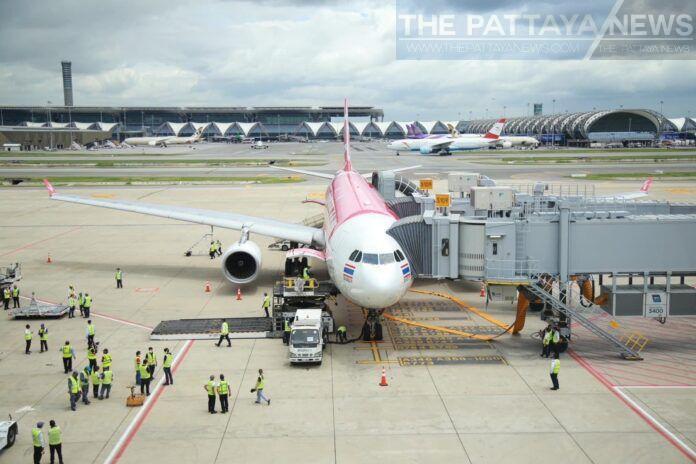
Thailand Increases Passenger Rights with New Flight Delay and Cancellation Protections. Approved by the Civil Aviation Board, chaired by Deputy Prime Minister and Minister of Transport Suriya Jungrungreangkit, these measures aim to enhance the rights of passengers on both domestic and international scheduled flights, addressing disruptions such as delays and cancellations with a focus on fairness and accountability.- The Pattaya News

Thailand Increases Passenger Rights with New Flight Delay and Cancellation Protections

Bangkok, May 12th, 2025 – The Civil Aviation Authority of Thailand (CAAT) has unveiled new passenger protection regulations under Civil Aviation Board Notification No. 101, set to take effect on May 20, 2025.

Approved by the Civil Aviation Board, chaired by Deputy Prime Minister and Minister of Transport Suriya Jungrungreangkit, these measures aim to enhance the rights of passengers on both domestic and international scheduled flights, addressing disruptions such as delays and cancellations with a focus on fairness and accountability.

The new rules come as Thailand's aviation sector continues to recover and grow post-pandemic, with the country welcoming millions of tourists annually. The regulations are part of a broader effort to align Thailand's aviation standards with international benchmarks.

Enhanced Protections for International Flights

The regulations place a strong emphasis on supporting passengers impacted by unannounced delays or cancellations, particularly those already at the airport. For international flights, the measures outline specific obligations for airlines based on the duration of the delay:

  • Delays Over 2 Hours: Airlines are required to provide complimentary food and beverages or vouchers tailored to the time of day and length of the delay. Additionally, passengers must have access to free communication tools, such as phone calls or email, to manage their plans.

  • Delays Over 5 Hours: In addition to food and communication support, airlines must offer at least 1,500 baht (approximately $45 USD) in cash compensation, credit, travel vouchers, frequent flyer miles, or equivalent alternatives within 14 days. Passengers who choose to cancel their travel plans can opt for a full refund or alternative transportation arrangements, such as flights to the same or nearby destinations.

  • Delays Over 10 Hours: Compensation increases to between 2,000 and 4,500 baht (approximately $60–$135 USD), depending on the flight distance. Airlines must also provide accommodation and shuttle services for passengers requiring overnight stays.

In cases of flight cancellations without at least seven days' notice, airlines must provide the same level of assistance as for delays exceeding 10 hours. However, exemptions apply if the airline arranges alternative flights within three hours of the original schedule or if cancellations are due to unavoidable external factors, such as severe weather or air traffic control issues.

Tarmac Delays and Onboard Protections

The regulations also address tarmac delays, ensuring passengers are not left stranded onboard aircraft for extended periods. Airlines must maintain adequate ventilation, air-conditioning, and access to toilets during such delays. If a delay exceeds three hours without a confirmed takeoff time, passengers must be allowed to disembark unless safety or air traffic control restrictions prevent it. Immediate medical services must be available for passengers in need.

For domestic flights, the new rules increase existing compensation levels to better protect travelers within Thailand. For delays exceeding five hours, compensation rises from 600 baht to 1,200 baht (approximately $36 USD). For cancellations, compensation increases from 1,200 baht to 1,500 baht. Airlines may offer alternatives like travel vouchers or miles, but cash remains an option. As with international flights, no compensation is required for disruptions caused by weather, disasters, etc.

Industry and Passenger Implications

The regulations are expected to place additional operational and financial responsibilities on airlines, particularly low-cost carriers that dominate Thailand's domestic market. Airlines failing to comply could face criminal penalties under the Air Navigation Act, reinforcing the seriousness of the new measures. For passengers, the rules promise greater peace of mind, especially for international travelers navigating Thailand's busy airport hubs like Suvarnabhumi and Don Mueang airports.

As the May 20, 2025, implementation date approaches, CAAT plans to roll out awareness campaigns to ensure both airlines and passengers are well-informed. With these protections, Thailand is positioning itself as a leader in passenger rights in Southeast Asia, balancing the needs of travelers with the demands of a dynamic aviation sector.