The Public Health Ministry will start vaccinating the general public against COVID-19 in phase 2 around mid-May, when the first lot of the locally manufactured AstraZeneca vaccine will be ready.
Public Health Permanent Secretary Dr Kiattiphum Wongrajit said people can register to get the vaccine via four channels: the "MOPH Connect" (Doctors Ready) Line official account; the mobile Mor Phrom application that will be ready for download on May 1 initially on Android phones; at hospital via telephone, or by contacting public health volunteers nationwide.
He said the government aims to have 50-60% of the population vaccinated as soon as possible to effectively control the outbreak, and will also expand the vaccination units by collaborating with the private sector, which will maximize the number of people getting vaccinated per day from the current rate of 500 per day per hospital.
Those who have been vaccinated will receive both a paper and digital certificate (in the form of a QR code), which they can use to verify their vaccinations. The ministry expects vaccine passports for international travel to be ready in June, once the World Health Organization (WHO) finalizes the all-important criteria.
On February 8, Thailand's Centre for Covid-19 Situation Administration (CCSA) has repeated its commitment to give everyone in the country – including expats and migrant workers – vaccinations against COVID-19. Expats and foreign workers are likely to be vaccinated in phase 3 from June.
Purchases made earlier based on situation at the time, says PM
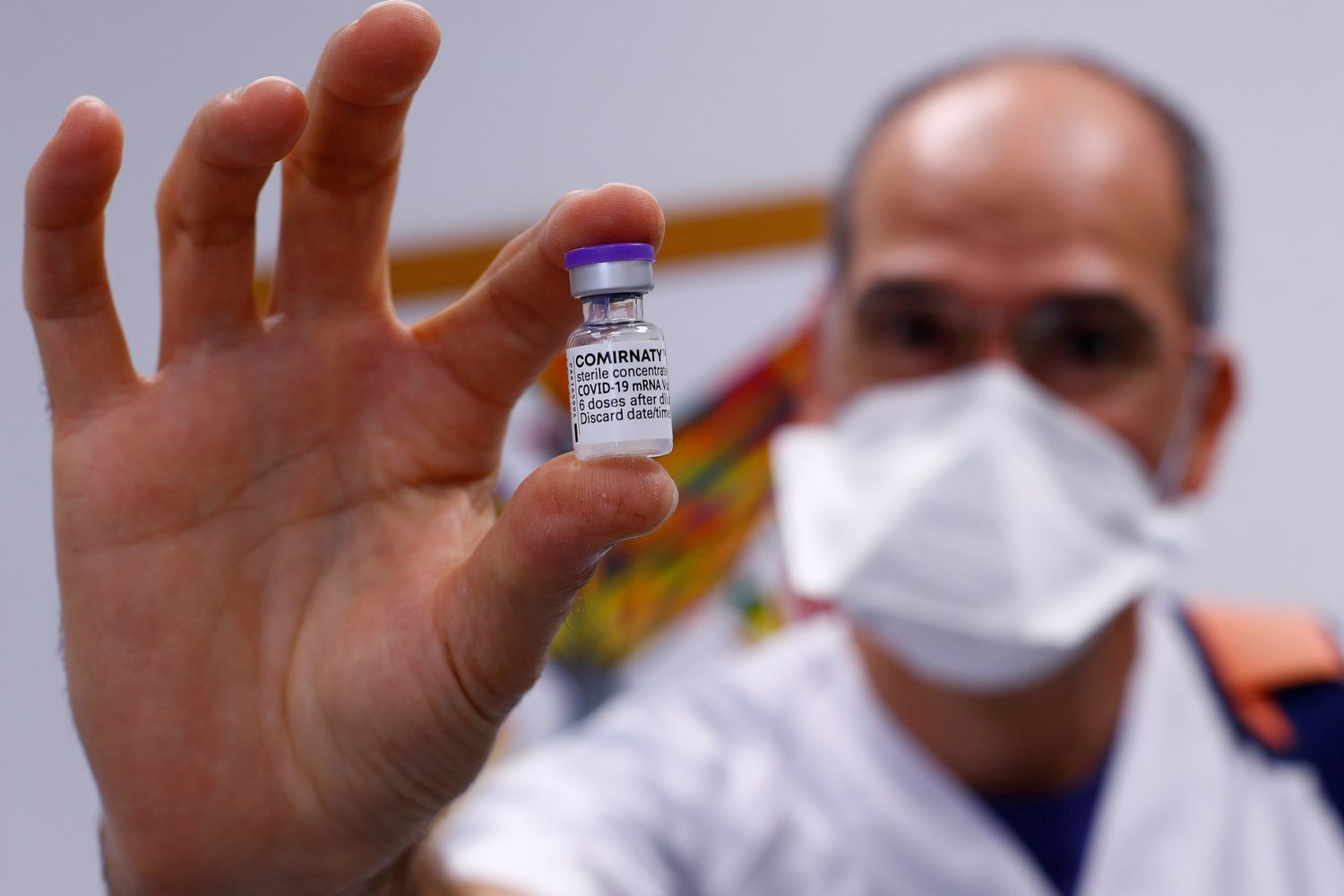
Nurse Guillermo Monzon holds a vial of Pfizer's Covid-19 vaccine in Telde on the island of Gran Canaria, Spain, on March 31. (Reuters photo)
Thailand is waiting for price quotes from US-based Pfizer Inc before the country can buy 5-10 million doses of Pfizer/BioNTech Covid-19 vaccine to be shipped from July to December this year, according to the prime minister.
Gen Prayut Chan-o-cha said on Tuesday the National Vaccine Institute had been in talks to make a purchase and was waiting for the price quotes and conditions from the Manhattan-based company.
"I can't confirm [whether Thailand will get it or not] but if all goes well, 5-10 million doses can be delivered as soon as July. The government is not dragging its feet," he said during a briefing.
He added he had responded to calls, especially from social media users, to buy vaccines from manufacturers other than the two it had already bought — AstraZeneca and CoronaVac by Sinovac Biotech.
The premier explained he had set up a panel to consider "alternative vaccines".
"Initially, the purchases Thailand made were based on the situation at that time, when we were very successful in containing the outbreak," he said, perhaps implying that the government did not realise the importance of vaccinations in a country that received almost 40 million foreign tourists in 2019, the source of about 20% of its gross domestic product.
Back then, the government did not want to put people's lives at risk since some of the available vaccines used untried technology, he said without elaborating.
Now that such vaccines have been successfully used elsewhere, the government allowed the private sector to make proposals and help them buy the shots.
"Let me be clear. It's not that we acted too late or too little. Everything depends on the situation at a given time. We don't want to subject people to risk when the vaccine was first produced. Several countries opted to do the same," Gen Prayut said.
He assured the shots Thailand has now were being administered quickly and thoroughly.
"The idea of monopolising local vaccination has never crossed our mind. All we think about is safety. We can't afford to make the shots freely available because they are for emergency use only and the manufacturers won't be liable for undesirable side effects.
The prime minister said another 500,000 doses of Sinovac Biotech vaccine would likely arrive this weekend and another 1 million were expected in May.
In June, he said, 4-6 million doses of the locally produced AstraZeneca vaccine will be available. More will be shipped in the following months until the total reaches 61 million doses by the end of the year.
To date, the country took delivery of more than 2 million doses. According to the Centre for Covid-19 Situation Administration data, 666,210 shots were administered as of Tuesday.
The AstraZeneca vaccine uses a more traditional viral vector technology — injecting a harmless genetically modified virus to stimulate an antibody. The same technology is used in making the Ebola vaccine.
Sinovac Biotech uses the inactivated virus to cause bodies to produce an immune response. This technology is used in making rabies, hepatitis-A and whooping cough vaccines.
Pfizer uses the messenger RNA (mRNA) technology which has never been used in any licensed vaccines in its Comirnaty Covid vaccine. Part of the virus' genetic code is injected into the body, triggering it to begin making viral proteins, but not the whole virus, which is enough to train the immune system to attack.
BANGKOK (NNT) - New clusters of COVID-19 infection have been linked to entertainment venues in many areas of Thailand. As a precaution, Prime Minister and Defense Minister, Gen. Prayut Chan-o-cha, has directed Deputy Prime Minister and Public Health Minister, Anutin Charnvirakul, to prepare resources for future outbreaks.
Deputy Minister of Public Health, Dr. Satit Pitutecha, has chaired a meeting of five networks to ensure proper preparations are made, with the Department of Medical Services assigned to manage the number of hospital beds in Bangkok and other areas of the country.
Currently, there are 28,147 hospital beds available for COVID-19 patients in public and private hospitals; some hotels are turning into temporary hospitals known as hospitels, and field hospitals have been constructed. More beds are being added, as the number COVID-19 patients may increase.
As of February 24, Thailand had 10,138 respirators. The country may order more respirators, depending on the situation.
As of April 16, Thailand had 1,657,232 N95 masks in reserve, and more orders have been placed. At the same time, the country had 94,281,550 medical masks and 544,141 personal protective equipment (PPE) suits.
In addition, Thailand is distributing the antiviral drug favipiravir to all areas of the country. As of April 16, the country had 341,200 favipiravir tablets in reserve, with a million more on order. The government also plans to order 1 million more tablets to meet the potential need.
Thailand has 270 COVID-19 testing laboratories, with each lab having the capacity to test around 81,000 samples a day.
Concerning treatment efficiency, the fatality rate of the COVID-19 outbreak in Samut Sakhon province was 0.1 percent, according to data released on February 24.
The current wave of COVID-19 is severe, with most clusters detected in entertainment venues. However, the situation is within the scope of remedial action taken by the government and the Ministry of Public Health. With proper preparation, the ministry is able to adapt to the changing circumstances rapidly, while maintaining effective disease-control measures to protect people's lives.
A survey conducted among people in China has revealed that Chinese tourists want to come back to Thailand.
But the overwhelming majority are waiting for Thailand to vaccinate most of its people before making a decision, reported Manager.
Quarantine would need to end with more than a third saying even then they would wait SIX MONTHS before returning to Thailand.
The survey done online from the Thai China Intelligence Center at the start of April came as Thailand was in the grip of a third wave of Covid-19 infection.
And at a time when less than 1% of the Thai population had been vaccinated. The government has said that most people will need to wait until June at least and jabs at private hospitals are yet to get going.
And quarantine for foreign tourists remains in place at least until July and possibly longer.
The survey indicated that 93% of Chinese people were taking the vaccine rollout into account in their decision to holiday in Thailand.
33% of people said they wanted to see 70% of the Thai population vaxxed before returning, while 28% said half the population would be okay.
77% said they would only come when quarantine was completely ended.
But this was broken down revealing further interesting attitudes:
30% said they would wait between one and three months after the end of quarantine.
28% said they'd wait 4-6 months
and
36% said they wouldn't come to Thailand again until six months or more after the end of quarantine.
Just over half, 51% said they would be holidaying in China for now.
The good news for the Thai tourism industry was that Thailand was number one on the list for places that the Chinese wanted to go to.
55% said Thailand, 24% listed Japan, 11% Singapore, 5% South Korea, 4% Europe and just 1% wanted to go to America.
Within Thailand the places the Chinese wanted to go to most were as follows:
Bangkok 40%
Phuket 34%
Pattaya 12%
Chiang Mai 12%
Koh Samui 3%.
Those questioned were 57% fully independent travellers and 43% who would opt for tour groups.
Pre-pandemic estimates put the percentage of Chinese tourists of the total visitors from abroad to Thailand at about 20%, easily the highest of any nation.
Thaivisa notes that with the biggest tourism market wanting to see vaccination in Thailand, the much criticized slow rollout of jabs will be brought into even sharper focus.
WHO:s nödkommitté vill inte att särskilda vaccinpass införs för internationella resenärer, rapporterar AFP. Det framgår av det protkoll som ställts samman efter kommitténs möte den 15 april.
Beslutet motiveras med att vaccinpass skulle öka ojämlikheten.
EU-länderna enades förra veckan om att införa ett gemensamt vaccinpass som ska börja användas den 26 juni inför turistsäsongen. USA har tidigare meddelat att de inte kommer att kräva vaccinpass för inresande.
The Chonburi Department of Public Health announced 82 new and confirmed cases of Covid-19 this morning in the popular province that includes Pattaya. This reflects a downward trend from the past week overall and the least number of new cases since January 9th.
The districts that cases were found in are as follows: Mueang Chonburi 23, Si Racha 10, Banglamung (Pattaya area) 43, Sattahip 3, and 3 cases from other provinces brought for treatment.
The details for cases located in the past 24 hours are as follows:
1 person infected with COVID-19 from a cluster at the Flintstones Pub in Mueang Chonburi in the Don Hualor sub-district. (Since April 6th, 2021, a total of 152 cases from this venue)
People infected with COVID-19 From other entertainment venues: 2.1 Cetus club pattaya 3 cases 2.2 808 Club Pattaya 2 cases 2.3 Top one pub 1 person 2.4 Bone Pattaya 1 person 2.5 Queen Club 1 person 2.6 Version pub 1 person 2.7 Pin up go-go 2 people 2.8 Happy Wet Bar 1 person 2.9 Friend Zone, Rayong Province: 1 person
1 medical personnel
49 people in close contact and family members of previous COVID-19 patients
18 cases are being investigated.
In the past day, a total of 252 close contacts were tested, and 344 more proactive ones were searched for Covid-19. All are waiting for their test results and are currently in isolation.
Authorities are asking for residents to work from home if possible, avoid crowded places, wear masks at all times outside, practice social distancing, limit their contacts with people outside of their household, and follow other Covid-19 precautions.
Additionally, authorities are specifically warning people returning to work from Songkran to work from home if possible for two weeks. If not, they should avoid eating with other staff members, wear masks, keep their distance, and follow other Covid-19 precautions at work.
Sunday, April 18th, started the first day of stricter precautions and restrictions for the Chonburi area. You can read more about these restrictions here.
A display board shows cancelled flights at Suvarnabhumi Airport on Sunday following CAAT's decision to suspend flights. Wichan Charoenkiatpakul
Airlines are bracing for further turbulence as the fresh round of infections is depressing the prospect of recovery, while urging the government to step up the vaccination program to end the crisis.
Puttipong Prasarttong-Osoth, president of Bangkok Airways, said the airline has to wait for an update on the situation which has raised more concern than the second wave late last year.
In the meantime, airlines have to quickly adapt and comply with the government's guidelines.
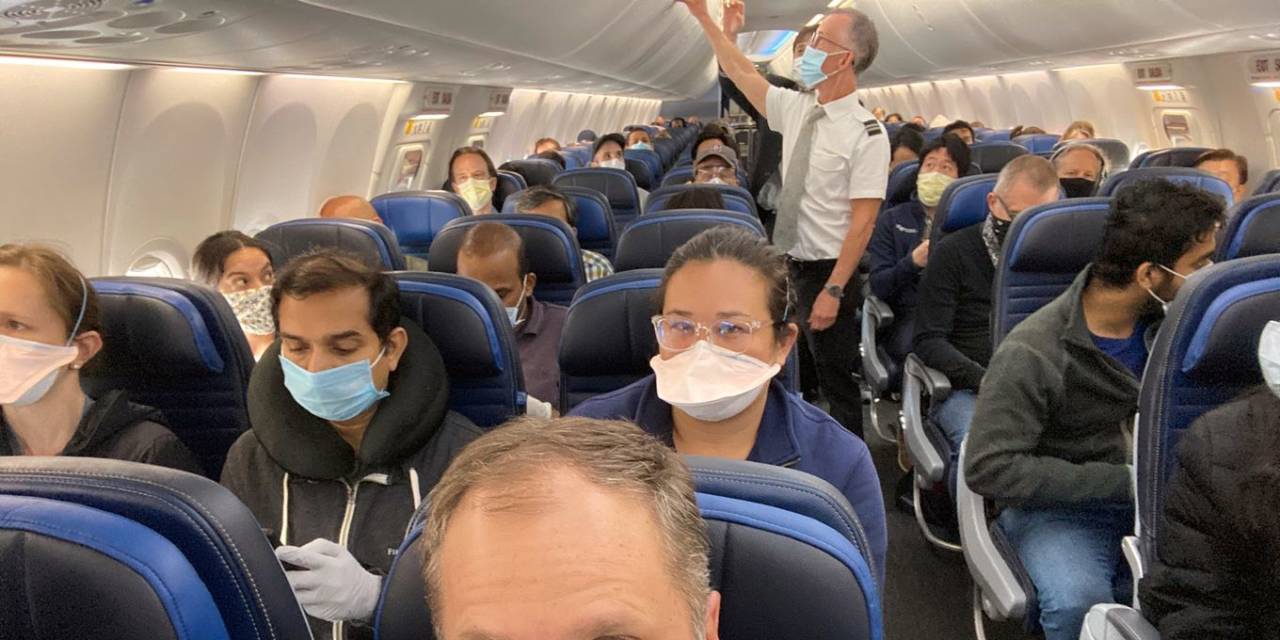
Recently, the Civil Aviation Authority of Thailand (CAAT) announced the suspension of all domestic flights between 11pm and 4am, while asking airlines to adopt social distancing for passengers.
Mr Puttipong, who is also president of the Airlines Association of Thailand, said the urgent need is to bring many doses of vaccines as possible, whether by the government or private sector, to curb the outbreak and continue with the Phuket sandbox -- the reopening scheme for international travellers.
If the government can control the latest wave within one month, the industry might not be severely impacted.
"Layoffs are the last resort for airlines, because it will be more difficult to recruit new staff when air travel rebounds in the next 3-6 months," said Mr Puttipong.
Nuntaporn Komonsittivate, head of commercial operations at Thai Lion Air (TLA), said the tourism industry has not fully recovered from the previous outbreak.
The latest outbreak lowered demand during Songkran, leading to a load factor of around 60-63%, down from the 85% level expected prior to the latest high rate of infections.
The average load factor in April is expected to close at 60%. It also has to adjust flight frequencies on a daily basis and comply with the CAAT's regulations.
Ms Nuntaporn said the airline has to closely monitor policies from both the government and each province as well as the changes in load factor in order to its plan day-to-day operations.
The number of passengers is estimated to significantly drop after the Songkran festival, especially after the spike in new cases triggered stricter travel policies.
In the worst-case scenario, TLA might possibly reduce flight frequencies to only 10-20 flights a day as seen in January due to the second outbreak.
"The government has to speed up the vaccination process because vaccines are the light at the end of the tunnel which help improve not only the tourism sector but also livelihoods of everyone in the country," said Ms Nuntaporn.
Meanwhile, Woranate Laprabang, chief executive of Thai Vietjet, said the CAAT's flights suspension after 11pm affected around 5-8% of total flights. The airline would like the order to be lifted as soon as the situation improves.
"We still hope that the government would understand how much airlines were impacted from the outbreak and offer support through soft loans for airlines," he said.
From this Wednesday Phuket joins other provinces after additional entry restrictions were announced today by the Phuket Governor.
If you're flying into Phuket you'll need either a certificate of proof that you've had both doses of an approved Covid-19 vaccine, a Covid-19-free certificate, not older than 72 hours, or you'll have to do a Rapid Covid Test at a cost of 300 baht at the airport.
This situation will apply until at least the end of April. The downside of coming to Phuket at this time will be risking a positive Rapid Covid Test, if you don't have the other paperwork, and ending up in a field hospital.
If you're arriving in Phuket by road, through the Thachatchai road checkpoint at the top of the island, only travellers from the red zone provinces will be affected by the new restrictions. If you're from an orange zone you'll be able to enter without the paperwork, for now anyway.
You need to have downloaded and filled out the Mor Chana app and register through the www.gophuget.com (Yes, Phuket with a 'g') website. The app will track you during your time on the island should officials need to contact you.
The government is asking people to limit their travel, particularly to red zone provinces. Here's a list of the red zone provinces.
Thailand Ministers ponder the next steps to re-start it's massive tourism industry, initially set for July 1, 2021 in Phuket. The plan may need to be overhauled as Phuket struggles to immunise the whole island in the wake of the third wave of hotspots. Phuket, prior to the third wave had already secured more than 100,000 doses and planned to receive an additional 930,000 doses by June.
This would be enough for 70% of the population – the target needed to achieve herd immunity. The spike in Covid-19 cases has interrupted this plan, as vaccines must also be allocated to other provinces urgently to help fight the latest outbreaks.
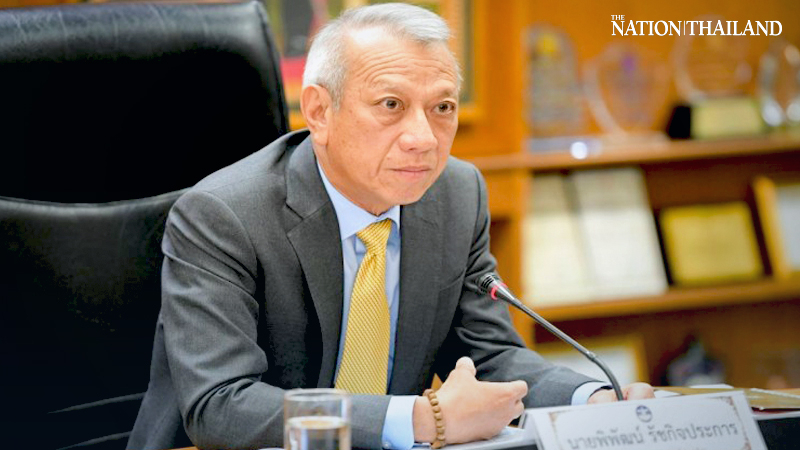
Not deterred, the Tourism and Sports Minister Pipat Ratchakitprakarn said he plans to meet next week with all relevant agencies to discuss the reopening plan, previously set for July this year. Eighteen provinces have now been declared red zones, with a partial lockdown and stay at home order. The alert warning was also raised across the rest of the country to orange, in all the remaining 59 provinces many of which had previously been green and considered safe.
Deciding to ignore expert warnings, the government allowed the Songkran holidays to go ahead, even adding an extra day. However no mass gatherings or water splashing were allowed.
(Songkran is the Thai New Year celebration which typically lasts 3-4 days, leading to a mass exodus of cities like Bangkok).
Last year, due to Covid-19, the holiday was cancelled. As a result of the holiday this year, a few outbreaks in Bangkok allowed the virus to spread widely. The Bangkok outbreaks centred on entertainment places; restaurant-pubs and nightclubs around the Thonglor area, plus a high-society wedding at a new riverside hotel, whose guest list included a number of government Ministers and prominent business leaders.
The Covid virus from these few hotspots were quickly spread throughout the whole country, as people returned to their homes for the holidays. Unfortunately this was a perfect storm for spreading the virus. Up until this point, since the beginning of the pandemic, Thailand had only recorded 28,889 cases and 94 deaths as at April 1, 2021. Eighteen days later this has risen to 43,742 cases and 104 deaths. An increase in cases of 51%.
During my recent visit to Hua Hin, empty beaches were very much in evidence already with the third wave leading to mass cancellations. Some resorts, previously 70-80% occupied, saw domestic arrivals decimated. Already hurting from a lack of international visitors, this latest outbreak was a most unwelcome guest.
The question of re-opening Thailand to Tourism, starting with Phuket, has obviously taken a knock backwards.
"The key determinant is insufficient vaccines, we are concerned about the re-opening timeline. We still need to discuss the vaccine administration plan. If the herd immunity goal cannot be achieved, we may have to consider opening only certain areas in Phuket".
However, to continue with the same plan, even with restricted zones, will not be easy as long as the country still has increasing new daily infections, said Minister Pipat.
"Most importantly, we still have to hear from other countries that we already started travel bubble negotiations with about their confidence regarding the same timeline."
Like Hua Hin, hotels in the North reported cancellations of more than 70% with Chiang Mai a cause for concern and currently experiencing increased coronavirus cases. Prior to the pandemic, the province was a popular destination to celebrate Thai New Year.
Regrettably Minister Pipat is in self-quarantine after being in close contact with Transport Minister Saksayam Chidchob, who was diagnosed with Covid-19. The Minster fortunately has already received his first vaccination jab last month (AstraZeneca) and will remain in isolation until next week when all tests are complete (3 swab tests).
ANDREW J WOOD
Andrew J Wood was born in Yorkshire England, he is a professional hotelier, Skalleague and travel writer. Andrew has 48 years of hospitality and travel experience. He is a hotel graduate of Napier University, Edinburgh. Andrew is a past Director of Skål International (SI), National President SI Thailand and is currently President of SI Bangkok and a VP of both SI Thailand and SI Asia. He is a regular guest lecturer at various Universities in Thailand including Assumption University's Hospitality School and the Japan Hotel School in Tokyo.
The content of this article reflects the writer and does not necessarily reflect the editorial stance of The Thaiger.
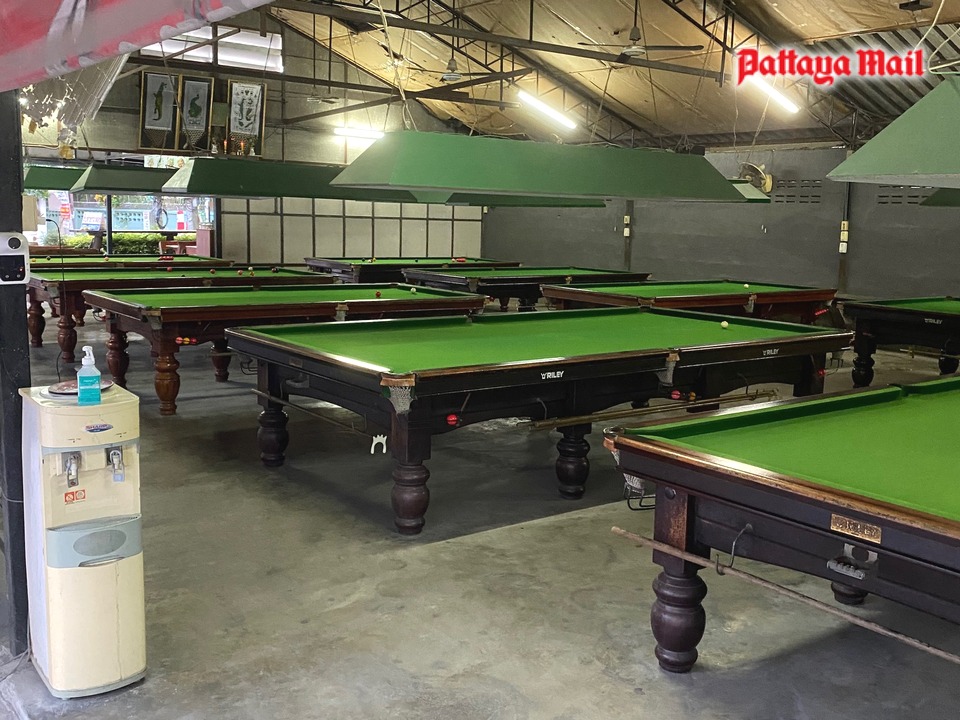
Snooker and pool hall, popular with Thai locals, must bite the dust until further notice.
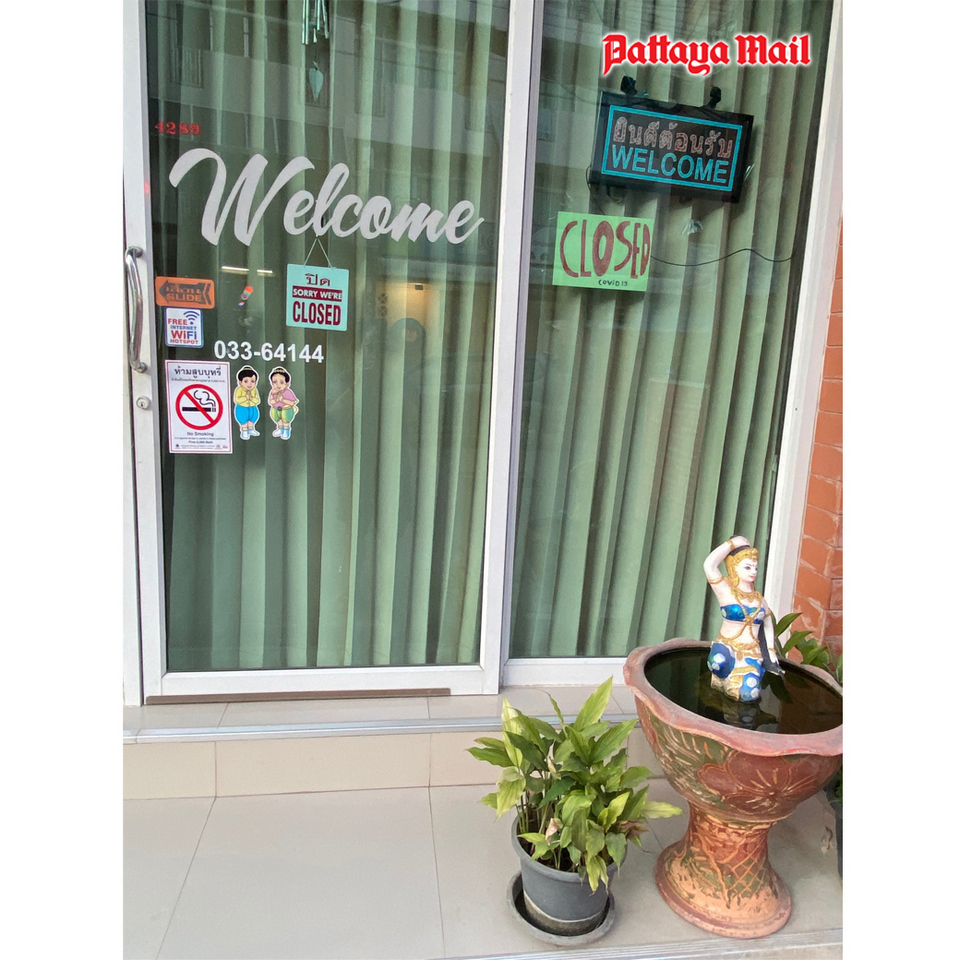
Thailand's most famous and infamous seaside resort is again in the doldrums after recent government and province-specific orders cancelled most forms of relaxation. Expats and locals can still eat in restaurants up to 9 pm, but without a legal glass of wine even if served in a teacup. Parks, beaches and reservoirs remain open for exercise, but group activities and picnicking are "not recommended".
Gyms and fitness facilities have survived the crackdown, but the emphasis is on solo self-improvement and not group activities or spectators ogling the proceedings. They have to close at 9 pm so you still have two hours to get that double-cheese pizza or a three-patty burger since take-out food is available until 11 pm.
Initially only soapies were prohibited, but now all massage parlors are out of bounds.
Otherwise, what counts as leisure has taken a huge hit. The detailed no-no list includes virtually anything pleasurable you can think of and some activities you probably can't. The Chonburi draft writers even remembered to ban stand-alone video machines alongside the exhaustive list of bars, clubs and the like. Cockfighting is also unthinkable, but it was never popular with the elderly retirees who now dominate the Pattaya expat community.
Although snooker halls are out-of-action, boxing matches are not specifically mentioned. But they are doubtless included in the catch-all phrases "and similar activities" and "where people gather". If in doubt you can always phone the hotline number 1337 for further advice. Best of luck with that. Most churches have already abandoned mass gatherings of their own volition.
A few holdouts are trying to defy gravity by analyzing the wording of the enforcement documents. Although it is illegal to serve alcoholic drinks in restaurants, bars and clubs, one enterprising Thai lady, Madam Clean, is selling beer to customers on a stone bench and table outside her laundry. "I'm not a restaurant or a bar," she said, "so I'm in the clear."
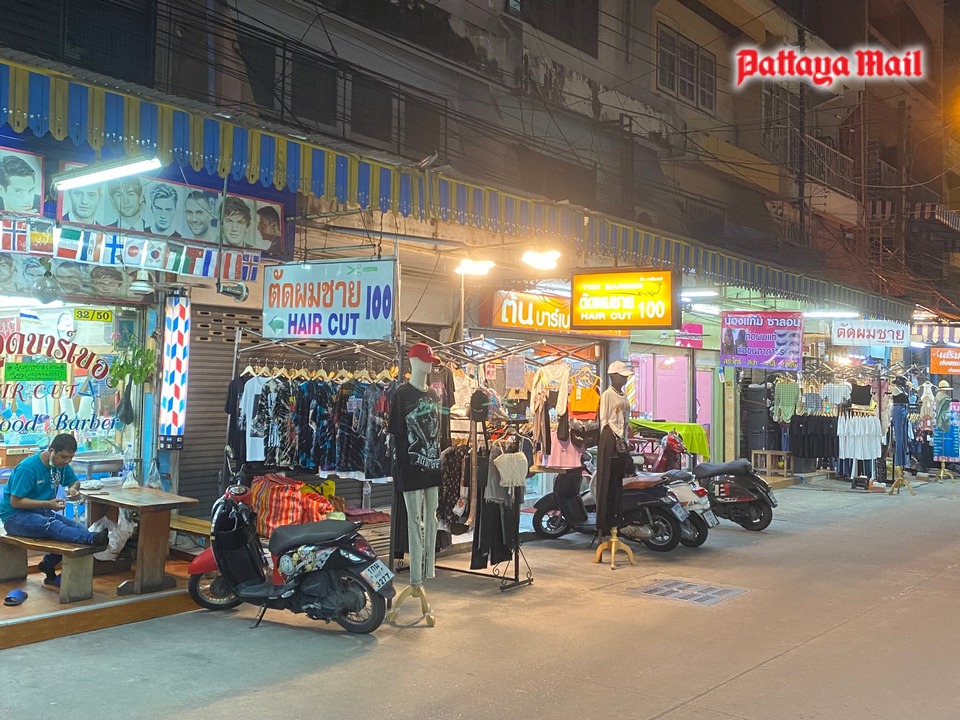
To the surprise of some, barbers and hairdressers have escaped the purge so far.
A British guy said he was still going to organize quizzes in a restaurant because they were still open and because you only needed "special permission from the provincial governor" if your group activity was for more than 50 people. This guy would have made an excellent medieval theologian, but his chances of convincing the Pattaya gendarmerie are zero. It's doubtful if any general knowledge buffs will turn up anyway.
Swimming at public beaches seems to be still tolerated, although police patrols are already discouraging it. Swimming pools, by contrast, are always difficult to control as they are both publicly and privately-owned and are found inside premises and in the open air. But a Pattaya City spokesperson said they were all dubious as the closure orders specifically mention protection for children who are major users. Waterparks are specifically outlawed in the latest orders by the way.
Surprising omissions from the list of banned activities are barbers and hairdressers, although beauty clinics are ordered closed. So you can still get a haircut or a blow wave and might even stretch your luck to a shave or manicure. In the April 2020 lockdown, they were all ordered to close. Even when they were reopened, barbers were initially ordered to put chairs for waiting customers outside their premises to encourage social distancing.
The government-led Covid-19 Situation Administration (CCSA) has stated that if current measures are insufficient to contain the virus, then more serious measures will be on the cards. These would likely include a nightly curfew, a ban on inter-provincial travel, abolition of in-dining to be replaced by take-away only and even making it a crime to purchase or consume alcohol. Meanwhile, the recorded infection figures in Thailand are marching inexorably towards 2,000 daily.
The government plans to reopen the country to foreign tourists in three phases, Tourism and Sports Minister Phiphat Ratchakitprakarn said on Monday.
He added that process will be completed in cooperation with other authorities, such as the Public Health and Foreign ministries.
"However, the plan to reduce quarantine period for vaccinated tourists from this month and launching the Phuket sandbox on July 1 may not happen if there is opposition," he said.
To make the Phuket sandbox happen, 900,000 doses of the Covid-19 vaccine will have to be administered to Phuket residents by June.
"If this project is a success, we will expand it to other areas," he said, adding that 100,000 doses have already been administered in Phuket.
He said the Phuket sandbox will focus on drawing tourists from the UK, Russia, Germany, Italy, Spain and the US.
"From October, the sandbox project will focus on Chinese tourists, but that will depend on Beijing's decision whether Chinese citizens will be allowed to leave their country," he said.
He added that the ministry will also discuss the option of setting up a travel bubble to draw more tourists and is planning to discuss the subject with the governments of Singapore, Hong Kong, New Zealand, Australia, Vietnam and Laos.
"Talks are expected to start from October 1. The government believes at least 60 per cent of the population should be vaccinated by the end of this year," he added.
This page collects up-to-date information on COVID-19 spread at the Province-level in Thailand in English Language as PDF reports. The daily reports start from April 12th 2021, during the 3rd Wave:
These PDF reports are provided "as is and with no guarantees", it's there for a little added clarity (especially for non-Thai readers). The sources are included to confirm up-to-date (and some outdated**) sources.
Equivalent Public Data Sources:
Thailand's MOPH release a situation report in English with a lag time of several days (currently -5 days) and a situation report in Thai (usually -1 day). The situation reports data differs from the reports above; some have more detailed data and some have less detailed data.
On Thailand's COVID-19 Testing Statistics:
SeeDylan Jay's COVID Thailand Testing Statisticswhich is a daily updated report on testing over the 13 health public areas of Thailand and per province. It's sources include the Thai MOPH situation reports in Thai, and other recent sources.
Most of Thailand's famous holiday destinations were nearly empty last week during the long Songkran holiday. The latest Covid-19 wave -- with daily infections climbing all week and hitting a record 1,582 on Friday -- scared tourists away from popular beach resorts close to Bangkok such as Pattaya, Cha-am and Hua Hin, which has also become a coronavirus hotspot following a superspreader event at a local pub.
Chiang Mai, which is celebrating its 725th anniversary, has also experienced a sharp drop in arrivals as new Covid infections pass 200 a day. Authorities have expressed grave concern in the northern province, which ranks second after Bangkok since the new outbreak erupted early this month.
The government jumped on the source of the new outbreaks -- bars, clubs and entertainment venues -- and promptly shut them down for at least two weeks. Those closures will be extended at least through the end of the month under measures announced on Friday, which also included school closures and a ban on alcohol sales in restaurants.
Businesses are also taking action to help curb the further spread of the virus, now mostly the highly contagious B117 strain. Banks have cut back their operating hours, and shopping malls nationwide are closing at 9 pm, an hour earlier than usual, until further notice.
The Tourism Authority of Thailand (TAT) estimated that the Covid resurgence could cut tourist spending during Songkran by around 2.4 billion baht, as many travellers cancelled their trips and accommodation bookings.
Kasikorn Research Center forecasts a decline of at least 130 billion baht in tourism revenue in the first half of this year due to the new outbreak and the second wave that emerged in late December.
Tourism contributed roughly 20% of Thailand's gross domestic product in 2019, when the country welcomed almost 40 million foreign tourists. That number plunged to 6.7 million last year, almost all of them in the first three months.
Globally, countries experienced declines of 35% to 48% in tourism expenditure last year compared with 2019. Tourist arrivals in Asia Pacific economies declined by 84% in 2020, steeper than the 74% contraction globally, according to the World Tourism Organization. Most countries across the region have strict controls on international tourism to stem imported cases, and the restrictions were tightened in recent months.
Despite the region's relative success in containing the coronavirus, a recent spike in cases in countries such as India, which has now surpassed Brazil for the world's second-most Covid cases, international travel has remained essentially on hold.
Cambodia, where cases have been surging since February when an outbreak was first detected among the Chinese expatriate community, last week extended the curfew in Phnom Penh. Malaysia last Monday extended its so-called movement control orders as new cases continued to climb, reaching 2,148 on Friday -- the 20th straight day of four-digit increases.
To revitalise its hobbled tourism industry, the Thai government has come up with an ambitious model to resume quarantine-free travel for vaccinated visitors from selected cities and countries to Phuket starting on July 1. The southern island once relied on 10 million annual foreign guests to drive its economy, and has been one of the country's hardest hit provinces as a result.
Tourism and Sports Minister Phiphat Ratchakitprakarn also said two weeks ago that he would discuss a travel bubble with Singapore that could also bring in Australians travelling via the city-state. The Phuket Hotels Association, which represents 80 properties, confirmed that discussions were continuing about designating the island as a bubble destination.
But the resurgence of Covid cases threatens the plan to reopen Phuket to the world. The government must seriously rethink it if it cannot flatten the current third wave of infections.
And unless the government can effectively isolate Phuket from the rest of Thailand, welcoming tourists from all over the world can put the whole country at greater risks of further spread of the new outbreak.
Recovery hinges on containment and vaccination. The focus now should be on domestic travellers, particularly to low-risk and emerging destinations. Reinventing the tourism industry will involve industry professionals working with industry groups and government, as well as local administrations, travel agencies, hotels and airlines.
A return to international tourism should be done cautiously and slowly by making sure first that the spread is under control. Thailand can now accelerate the industry's recovery by capturing emerging growth opportunities domestically as they gradually rebuild international travellers' confidence.