lördag 8 maj 2021

PM unveils new vaccination plan with focus on inoculating all adults The government aims to procure 150 million or more doses of vaccine to tackle Covid-19 in Thailand, Prime Minister General Prayut Chan-o-cha posted on his Facebook page on Saturday. The Nation


PM unveils new vaccination plan with focus on inoculating all adults

"The original goal was to get 100 million doses of vaccine for 50 million adults in Thailand, with some manufacturers scheduled to make deliveries next year," he said in the post. "However, as the outbreak situation is highly volatile, we cannot set a vaccination plan based on the assumption that herd immunity will be achieved when the majority of the population is vaccinated.

"The government has, therefore, set a new target of 150 million doses, or enough for all adults in Thailand or roughly 60 million people, while having some left in reserve," Prayut said.

"The reserve also aims to respond in cases where the immunity of vaccinated people weakens, requiring additional jabs."

Prayut added that the government would employ a more aggressive approach in procuring the vaccine as well as seek alternatives from new vaccine manufacturers. "Currently we have negotiated with seven manufacturers and are planning to branch out more to ensure that we get vaccines on time. We have to race with all other countries who are also eyeing getting more vaccines for their people as well," he added.

"Lastly, the government is discussing with doctors and experts in public health over adjusting the vaccination plan to prioritise giving the first jab to as many people as possible," said Prayut.

"Doctors unanimously agree that the risk of contracting the virus and developing severe symptoms, or even death, fall considerably after receiving the first jab. Therefore, we should focus on vaccinating as many first-dose receivers as possible.

"If we follow this adjusted plan, it is estimated that by the end of July about half of the adult population of Thailand will have been vaccinated with the first jab and therefore are well-protected against Covid-19," said Prayut.

Published : May 08, 2021

Chonburi Covid – 19 cases drop to 72 confirmed and new infections with one new fatality Saturday, 8 May 2021, 10:30. Pattaya News


Chonburi –

The Chonburi Department of Public Health announced 72 new and confirmed cases of Covid-19 this morning (May 8th), a slight drop from yesterday with one new death.

This makes a total of 3,202 cases of Covid-19 in the current round of infections, with 1,520 still in medical care, with eight recorded deaths in Chonburi since the start of this recent round of infections in early April.

Additionally, 1,674 people in total have now been released from medical care and fully recovered since this current wave began. 125 were released yesterday. Today's cases are the lowest since April 9th, 2021.

The district-level new cases were as follows today:

Mueang Chonburi with 14, Si Racha 9, Banglamung (including Pattaya) 37, Sattahip 4, Ban Bueng 4, Bor Thong 1, Ko Chan 1 and 2 patients from other provinces transferred to Chonburi for medical care.

The details on today's cases given were:

  1. Back from Nakhon Pathom, 1 case
  2. Contact from previous confirmed cases from Chanthaburi, 1 case
  3. Close contact from previous confirmed case
    1. In work places, 4 cases
    2. In families, 8 cases
    3. Funeral cluster, 1 case
  4. Work in places with many people, 4 cases
  5. Close contact from previous confirmed cases under investigation, 24 cases
  6. In the process of investigation in general 29 cases

In the last day, a total of 192 close contacts were tested from contact tracing, and 877 people were tested in proactive testing when medical staff goes out into the community.

All are pending results. Additionally, another 817 people were tested from Royal mobile testing vans and are also waiting for results as officials step up aggressive community testing. 

There have now been 52,411 new cases since 1st April and 288 deaths. The number of people in serious condition has dropped slightly but the number on ventilators has increased. Today 1,138 (⬇️32) patients in serious condition and 380 (⬆️13) on ventilators #Thailand. Richard Barrow


🔴 BREAKING: Thai health ministry reporting 19 deaths and 2,419 cases on Saturday. Full update at 12:30pm.


Prime Minister Prayut Chan-o-cha has vowed to procure up to 200 million Covid-19 vaccine doses to prepare for unforeseeable emergencies as the pandemic continues to rage unabated in several countries. Bangkok Post

PM eyes huge vaccine stockpile
Covid-19 vaccination in Klong Toey district, Bangkok, on Wednesday. (Photo: Varuth Hirunyatheb)


Speaking during his PM Podcast on Friday, Gen Prayut said the global pandemic showed no signs of going away anytime soon, so the government had to be prepared to deal with any situation that might arise.

"The first priority will be to increase our vaccine doses to 150 million doses or more and to prepare for any risk related to those vaccines,'' Gen Prayut said.

The government had set a target of buying 100 million doses to inoculate 50 million Thais and thus create herd immunity, he said.

"But I think it is not enough. If we listen to information from around the world, it is still not clear whether herd immunity against this virus can actually be achieved," Gen Prayut noted.

He said Thailand had an adult population of about 60 million and thus required at least 120 million vaccine doses, with everyone needing two shots. Labourers, including migrant workers, in the business sector also needed to be taken into account in that respect, he pointed out.

"To prepare for potential risks and uncertainty, we may need 150-200 million doses of vaccine for future phases [of the vaccine rollout]," he said, "but we have to consider the shelf life of vaccines and next year's situation."

The PM said government agencies had until now been negotiating with seven manufacturers but he had instructed them to be even more proactive in procuring vaccines. Efforts were also underway to hold talks with other vaccine producers, he added.

However, purchases had to follow regulations from the relevant authorities such as the Food and Drug Administration (FDA), Gen Prayut said, adding that those agencies must also expedite their approval of manufacturers' applications for vaccine registrations.

Another priority would be to administer as many first doses of the vaccine as quickly as possible by July, when it is expected that half of the adult Thai population will have had their first shot and thus have sufficient protection against the worst effects of the virus.

Government spokesman Anucha Burapachaisri said on Friday a committee on the procurement of Covid-19 vaccines had agreed that they should be added to the controlled goods list. The meeting also discussed potential government procurement of the Pfizer, Sputnik V and Johnson & Johnson vaccines.

The committee also agreed private hospitals should buy their own vaccines from manufacturers other than those which the government had already bought or planned to buy, Mr Anucha said. He added that these alternative vaccines should be ready for delivery to Thailand by the end of this year.

Mr Anucha added that the Government Pharmaceutical Organization (GPO) would also be responsible for managing private hospitals' vaccine procurement and liaising with vaccine manufacturers. All procurements must follow product liability law, he said.

Moreover, any private hospitals or private companies that wanted to import alternative vaccines would have to make full payment in advance to the GPO as well as arrange for insurance against any side effects caused by the vaccines.

The private sector can appoint representatives from vaccine manufacturers and submit letters of intent (LOI) to the GPO, he said. 

Bangkok Post highlights 8/5


Phuket to reopen as planned. OBSERVERA FORMULERINGAR AVSEENDE STEG 3 OCH STEG 4 I PLANERINGEN ATT ÖPPNA LANDET !!!!!! Bangkok Post

Phuket to reopen as planned

The government still intends to press ahead with its plan to reopen Phuket to foreign tourists on July 1, despite battling another surge of Covid-19 infections.

Phiphat: Hopefulabout reopening

The government's committee on national tourism policy, chaired by Tourism and Sports Minister Phiphat Ratchakitprakarn, yesterday confirmed the plan -- made before the new outbreak of Covid-19 struck Bangkok and other parts of the country early last month -- will still be implemented.

The reopening would later be expanded to cover Krabi, Phangnga, Surat Thani, Chiang Mai, Chon Buri, Buri Ram, Phetchaburi, Prachuap Khiri Khan and Bangkok, said deputy government spokeswoman Traisuree Taisaranakul.

The reopening plan will be divided into four phases -- the first phase has already been in place since April 1, when a number of foreign tourists with proof that they had been fully vaccinated against Covid-19 were allowed to enter Thailand provided they agreed to undergo a period of quarantine as imposed by the Centre for Covid-19 Situation Administration (CCSA).

The second phase called "Phuket Sandbox" is due to begin on July 1, when vaccinated tourists will be allowed to enter Thailand via Phuket, where they won't have to undergo any Covid-19 quarantine, said Ms Traisuree.

In the third phase, due to begin on Oct 1, the vaccinated tourists in Phuket will then be allowed to travel to Krabi, Phangnga, Surat Thani, Chiang Mai, Chon Buri, Buri Ram, Phetchaburi, Prachuap Khiri Khan and Bangkok without any new quarantine requirements.

The fourth and final phase, due to begin on Jan 1 next year, will allow any foreign tourists certified to have been fully vaccinated to be allowed to enter Thailand and freely travel around.

In 2019, before Covid-19 hit Thailand, those 10 provinces drew 39.9 million foreign tourists and racked up 1.5 trillion baht in income, accounting for 80% of the country's entire tourism revenue, said Ms Traisuree.

It is hoped the reopening plan will attract at least 3.5 million foreign tourists and generate 298.1 billion baht, she said.

The hope is that Phuket Sandbox demonstrates to the rest of the world that the resort island is safe to visit while at the same assuring local Thais that the country's tourism industry is on the road to recovery, said Tossaporn Sirisamphan, chairman of the Tourism Authority of Thailand (TAT) board.

Phuket governor Narong Wunsiew said Phuket's plan to vaccinate 60-70% of its population was now 22% complete, with 15,000 people getting jabs each day.

The province will next increase the number of vaccination venues from five to nine, in a bid to achieve its goal well before its scheduled July reopening, he said. 

fredag 7 maj 2021

Bangkok hard hit with 869 daily Covid cases, 18 fatalities May 7, 2021 TNR Staff


OF Thailand's 2,044 new coronavirus cases over the past 24 hours to this morning (May 7) 869 emerged in Bangkok with the capital also having the highest number of fatalities at 18 out of 27 nationwide, Amarin TV said 

The Centre for Covid-19 Situation Administration (CCSA) said the 2,044 new Covid cases took the cumulative confirmed total to 78,855, with 49,732 appearing in the third wave of the infection that started early April.

Another 2,377 patients have recovered while the 27 fatalities that occurred across the nation over the past day raised the death toll to 363.

Of the third wave's total of 49,732 cases, 25,995 emerged in Bangkok and its vicinity while the provincial total is 23,737. 

Bangkok's record 869 cases today shoots up from over 500 cases a day from May 1 with the capital's total now reaching 16,917.

As of yesterday, there were 1,170 critically ill patients with 818 being in Bangkok and its vicinity and 352 in other provinces.

Bangkok alone also has the most critically ill patients totaling 496, followed by Nonthaburi with 129 as these totals continue to increase.

There have been 269 fatalities in the third wave with 183 occurring in Bangkok and its vicinity and 86 in other provinces. Bangkok alone has the highest cumulative death toll at 122 with 18 of 27 fatalities occurring over the past day taking place in the metropolis. 

Prices for international travel are set to rise this year due to pent-up demand and fewer aeroplanes in service, a travel boss has warned. Many airlines have significantly reduced the number of flights they operate due to travel restrictions. Despite huge demand, uncertainty makes it hard for airlines to plan bringing more planes back into service, he said. BBC News

Holiday costs to jump in summer, warns travel boss

By Jonathan Josephs
Business reporter, BBC News

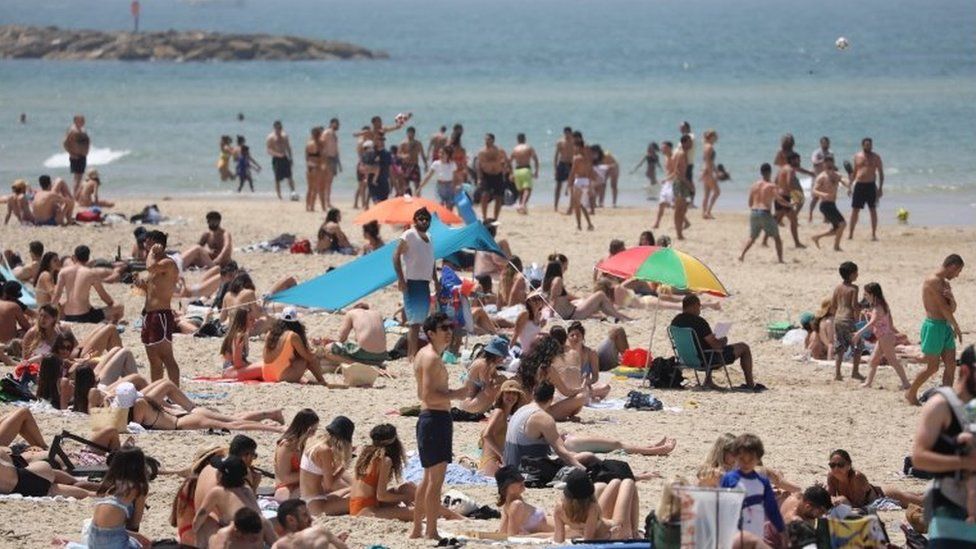
people on Tel Aviv beachEPA
Tel Aviv's beaches have been busy again as coronavirus restrictions have eased

Prices for international travel are set to rise this year due to pent-up demand and fewer aeroplanes in service, a travel boss has warned.

Booking.com's chief executive Glenn Fogel told the BBC that holiday "prices are already going up". 

Many airlines have significantly reduced the number of flights they operate due to travel restrictions. 

Despite huge demand, uncertainty makes it hard for airlines to plan bringing more planes back into service, he said.

"There's so much pent-up demand," said Mr Fogel. "Everybody wants to go travelling, but we all want to do it safely."

John Grant, an aviation analyst with global travel data provider OAG agrees that this will have a knock-on impact on air fares as travel restrictions are eased. 

"That will, in the short term, create a rush of pent-up demand and revenge spending," he said.

"In turn, the airline algorithms will detect an uptick in demand and move prices up accordingly".

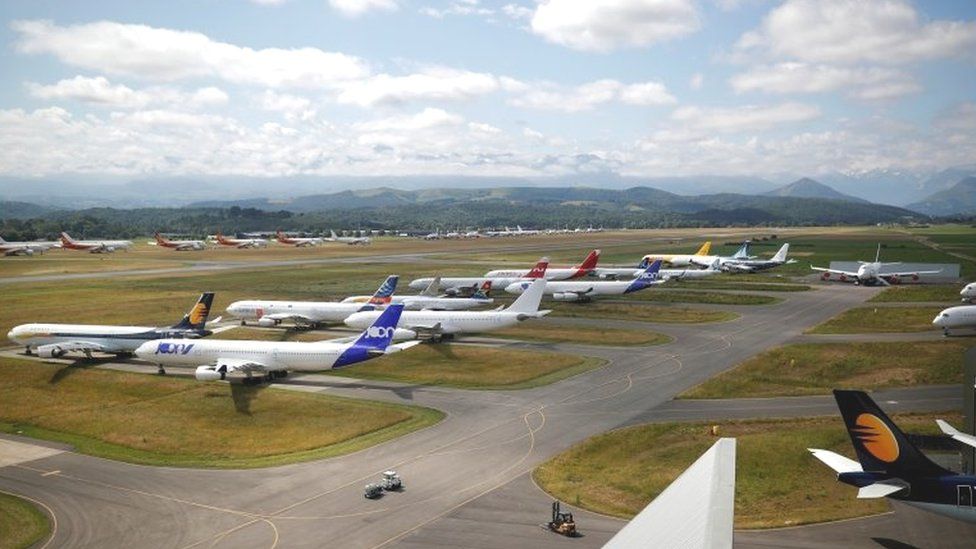
Lots of planes at a facility in Tarbes in FranceReuters
Airlines have reduced capacity by putting aeroplanes into storage, such as these in France

A lack of clarity about how governments will go about recognising vaccine and testing statuses from other countries is troubling the travel industry, which has been hit hard by the coronavirus pandemic. 

Confusing systems 

Mr Fogel believes a single system would be helpful: "So many different people in so many different governments are talking about different programmes, but right now, there is nothing out there that is unified, so it's very confusing. 

"I listened to the prime minister of Italy saying how they want to let people into Italy soon and you just have to prove that you have a vaccine and it'd be great. 

"And my thinking is, well, I have my vaccine myself, but how do I prove it? Do I just bring my little white card that I got in the US that said I got it, is that going to be good enough? We need some clarifications."

Several systems are being explored, including the International Air Transport Association (IATA)'s travel pass, which is being trialled by a number of airlines.

Meanwhile, the European Union is working on having a digital pass ready in time for the summer holidays.

Split society?

The idea of a scheme that allows passengers who have had the vaccine to travel has proved divisive. 

The UK equality watchdog recently warned it could create a "two-tier society, whereby only certain groups are able to fully enjoy their rights". 

That's a view supported by the World Health Organization (WHO) but Mr Fogel disagrees.

"It's true that if you're not vaccinated, you may not be able to enter a country under this type of a system," he said.

"But I'm okay with that. Because the alternative is what - nobody gets to go in? That doesn't make a lot of sense to me." 

He added that there are countries that people cannot go into if they don't have proof of vaccination against yellow fever, for example. 

"There's nothing wrong with using technology to prove you are a safe traveller that can help get the industry up faster," said Mr Fogel.

Financial pain

The lack of clarity has hurt the finances of Booking.com's US owner Booking Holdings, which also owns Kayak and rentalcar.com. 

Revenues for the three months to the end of March fell to $1.1bn (£790m) - 50% lower than the same period a year ago.

Figures from the World Travel & Tourism Council (WTTC) reflect a similar picture across the industry, showing tourism's value to the global economy fell from nearly $9.2tn in 2019 to $4.7tn in 2020. 

As a share of the global economy that equates to a fall from 10.4% to just 5.5%.

But Mr Fogel, who is chief executive of both the Dutch-based Booking.com and its parent firm Booking Holdings, told investors that there is still reason to be optimistic things will improve.

"While the pace of vaccine distribution remains frustratingly slow in most places around the world, Israel, the UK and the US are benefiting from successful vaccine distribution programs," he said.

"In each of these countries, we have seen encouraging booking trends, which supports our view that vaccine distribution is key to unlocking pent-up travel demand."


Overseas Thai embassies update visa guidance for foreigners - Pattaya Mail

Overseas Thai embassies update visa guidance for foreigners

Visas, extensions and reports dominate the lives of most visitors to Thailand.

Many Thai embassies, particularly those based in the EU and the UK, are revising their instructions to foreigners wishing to come to Thailand. The updates fall into two distinct time periods this year: May 1 to September 30and October 1 onwards.

May 1-September 30

The Special Tourist Visa (STV) is being completely withdrawn and the final end-date for flyers is July 2. Extensions once here are possible up to September 30 but not afterwards. The STV was introduced last year to cater for "snowbirds" and other tourists wanting a Thai vacation lasting up to nine months. It was never popular numerically and was heavily bureaucratic, requiring for example general medical insurance on top of Covid-19 cover. It might have proved more popular if travel bubbles and charter flights had been introduced, but frequent coronavirus flare-ups in Thailand and other Pacific-rim countries prevented that.


According to the Thai embassy in Bern, visas for medical tourists have now been suspended until further notice. Some other embassies, but not all, have quietly dropped medical tourism as a valid reason to request entry to Thailand. In normal times, about one million tourists a year have come under this category, the biggest single catchment being gender-reassignment and plastic surgery. No formal announcement has been made about this apparent visa cancellation, but is likely linked to the latest Covid-virus clusters plaguing Bangkok in particular.

Another cancellation is the visa-on-arrival which has been suspended until September 30. This visa covers 18 countries, China and India being the main sources, who were entitled to a stay of 14 days (plus 7 days extension) in pre-Covid times on payment of 2,000 baht on arrival in Thailand. Instead they have been told to apply for visas in their own country. There were only four European countries included in the visa-on-arrival arrangement: Bulgaria, Cyprus, Malta and Romania.

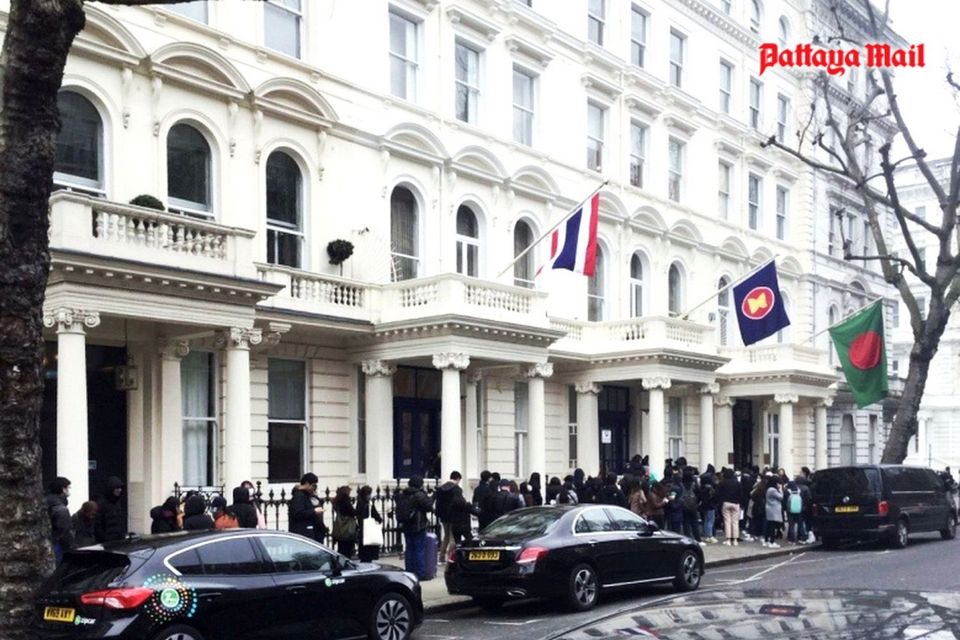
Just another busy day at the Royal Thai Embassy in London.

The visa exempt category – 58 countries including the UK, the US and most of Europe – traditionally entitled to 30 days on arrival has survived the axe in this time zone. But their stay has been extended to 45 days because of the recent re-introduction of a two weeks' mandatory hotel quarantine on all arrivals (whether vaccinated or not) required by the Thai authorities. The visa-exempt category was formerly very popular with short-stay tourists, but is now expensive because costs include health checks prior to departure, compulsory Covid-19 insurance and an isolated two weeks' sojourn in a Thai hotel.


All other visa categories remain more or less the same in the period before the end of September. Tourists, students, retirees, foreigners with Thai families, permanent residents, business people, Elite visa holders and condominium owners are all eligible to apply for a certificate of entry from the Thai embassy in the country of departure. The documentation required varies according to the specific visa required.

October 1 onwards

All depends on the virus, but Thai embassies are outlining possible developments.

Quarantine relaxation

The plan is to allow foreign tourists and expats who have been fully vaccinated to enter Thailand to visit one of several Sandbox destinations which include Pattaya and Chiang Mai. This assumes that 70 percent of the local host population in receiving areas has been vaccinated by the end of September. The pilot Sandbox is Phuket which is scheduled to open on July 1, again provided a mass vaccination program on the island has been completed by the end of June. Assuming the Sandboxes actually see the light of day, the required documentation for entrants has not yet been stated.


The end of general medical insurance?

The termination of the STV (see above) means that general medical insurance – as opposed to specific coronavirus cover – will mostly have disappeared from embassy visa requirements. The one exception will be those applying for any kind of visa based on retirement, whether type "O" or "OA" or "X". Unless the issue is addressed, they will continue to need general medical cover to the tune of 400,000 baht (inpatient) and 40,000 baht (outpatient) on top of Covid-19 cover. Whether this idiosyncratic logic is a deliberate attempt to squash retiree applications (but no others), or a simple oversight, remains to be seen.

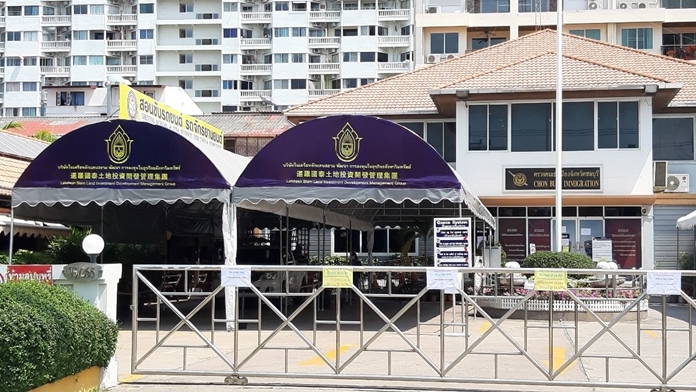
Jomtien Immigration has abolished the car park to provide more space for its customers.

90 days report

The unpopular three months' address reporting for expats and long-term visa holders is likely to be cancelled. It might be replaced by a computer app. which will record the relevant details and require updating only if the foreigner moves house. Such a system seems to work well in Cambodia.


Encouraging the rich

The government has set up a top-notch committee to recommend changes to immigration law from October. It is due to report in June. Leaks so far suggest there will be a new set of rules for the super-rich and those with special talents. There will likely be an expansion of the four-year Smart visa to include more digital nomads, extra bonuses for those holding the more expensive Elite visa options and the right to own land/property (not just condos) costing at least ten million baht in nominated and newly built housing estates in specific areas. The very wealthiest investors could even one day achieve permanent residency. Provided, of course, they keep on investing. 


7/5


Thailand will collect 300 baht tourist fee from all international visitors arriving in the country from next January. Thai Visa


1pm.jpg.8e0dcbf7f8e35037123a35cca367080d.jpg

 File photo: Phiphat Ratchakitprakarn//Credit: Daily News 


Thailand will collect 300 baht tourist fee from all international visitors arriving in the country from next January.


Speaking to Thai language news site Khaosod, Thailand's Tourism and Sports Minister Phiphat Ratchakitprakarn said the 300 baht fee will go towards creation of a tourism fund that will help the tourism industry deal with other unforeseen problems or hardships in the future.


Mr Phiphat said that if Thailand can attract 20 million tourists in 2022, then some 6.2 billion baht  could be generated for the fund. 


The proposal to introduce a tourist fee was first mooted in 2019 and then formally approved by the National Tourism Policy Committee in January this year. 


The idea behind the fee was that any money generated would be used in the management of tourist attractions as well as helping to cover the medical bills of uninsured tourists.


In 2019, a report by Nikkei Asia said that unpaid medical bills in Thai hospitals from tourists costs the state 448 million baht. 


Last year Thai media suggested that 34 baht will go towards insurance while the rest would be used for the maintenance and development tourism sites. 


Mr Phiphat also spoke on plans to re-open the country to foreign tourists from July 1. 


He said that cases would need to drop to zero before the country could implement its 'Sandbox' model.


Initially, Thailand had hoped to re-open Phuket to vaccinate foreign tourists, who could stay on the island without the need to quarantine. 


Mr Phiphat said there was still a chance the Phuket sandbox could go ahead but cases on the island would likely need to be zero and at least 70% of the island's population would need to have received the vaccination.


In the event the number of those vaccinated reaches its target but there are still cases being found on the island, the tourism ministry would need to seek further guidance from health officials as to whether the island could re-open.


logo.thumb.jpg.58700f12f9218149b3e2f82126b72e4d.jpg


🔴 BREAKING: The Thai health ministry reporting 27 deaths and 2,044 cases on Friday. Full update at 12:30pm. Richard Barrow


Bangkok Post Highlights 7/5


Foreigners to get 'equal access'.

Foreigners to get 'equal access'.
Jab booking systems to get upgrade to include everyone
A truck sprays disinfectant on to the streets in Ratchaburi's Muang district on Thursday after a spike in Covid-19 cases. Several of those infected were found to have taken part in social activities. (Photo: Saichon Srinuanjan)

Three million foreigners living in Thailand have as much right to Covid-19 vaccinations as Thais because the goal is to achieve herd immunity, the government declared on Thursday.

The policy is to vaccinate everyone in Thailand no matter whether they are Thais or foreigners. This would be carried out with people's consent and without discrimination, said Rungruang Kitpati, spokesman for the Public Health Ministry.

Some expats have vented their frustrations on social media about a lack of public information, problems registering for vaccinations and the lack of private vaccines.

"Anyone living in Thailand, be they Thai or foreign, will be able to get the vaccine if they want it," Opas Kankawinpong, head of the disease control department, said on Thursday. "No one is safe until everyone is safe."

Thailand's population is estimated at 70 million, of whom about three million are foreigners living here long-term, said Dr Opas.

"To protect this country against the novel coronavirus, we need to immunise at least 70% of the total people living here," he added.

He said the Public Health Ministry had vaccinated a vast number of legally registered immigrants in Samut Sakhon.

"Foreigners who want vaccinations can also contact their own embassy to get one," he said.

Dr Opas said the process for foreigners to register their interest would be the same as for Thais -- those in vulnerable and risky groups, such as healthcare staff, those living in at-risk areas, the elderly and those with underlying diseases, would be vaccinated first.

The government's mass immunisation programme has not started yet, since only frontline workers are getting their shots from a small stock of 2.5 million Sinovac doses.

The government's main stock is expected to come from a local manufacturer, who is set to reproduce AstraZeneca's vaccines from supplied ingredients from next month.

Pensom Lertsithichai, news division director at the Foreign Ministry, acknowledged that it was not yet possible for foreigners to apply for vaccines via the Mor Prom medical app or Line account but the Public Health Ministry was working on the issue and hoped it would be updated by next month.

"The ministry is trying their best to help foreigners, so they can either use the mobile app or contact hospitals directly and register to be vaccinated," she said.

For the second phase, she said that would start in June and run until the end of this year. The public and foreigners would be included in this phase, depending on their membership of at-risk groups.

Regarding Mor Prom, the medical application, and Line Official account platforms, she said the system did not allow foreigners to register for a jab at present, though the Public Health Ministry was working on it and aimed to have the change made by June.

"Foreigners might also be able to contact hospitals directly as soon as possible," she said.

The state sector had also insisted the only way the private sector could gain access to the vaccines was through jabs purchased by them.

"This is because vaccine producer usually does not sell vaccines to the private sector but rather goes through the government. Therefore, public entities such as the Government Pharmaceutical Organisation can act on behalf of the private sector in securing supplies," she added. 


From tourists to residents, Thailand is quietly changing. What is different now is not the attraction itself, but who is staying and for how long. In 2025- Pattaya Mail

From tourists to residents, Thailand is quietly changing Victor Wong (Peerasan Wongsri) December 22, 2025 Thailand has long drawn people in ...