Explainer: Thailand's vaccine plans and rollout timeline
views 1,128
About 1.3 million Thais have been vaccinated by the Thai government so far, with over 510,000 people having received both doses of either Sinovac's CoronaVac or the AstraZenecaversion, mainly the former.
With almost 2% of the local population inoculated and no clear plans yet for non-Thai residents, questions have been raised about the full picture of vaccination in Thailand, both forlocals and expatriates alike, especially in light of the third wave,which is seeing about 2,000 new infections a day.
Here are the latest details about Thailand's vaccination programme, timeline and answers to some other questions.
Q: Who has already been vaccinated?
A: Medical personnel, MPs and senators, some government officials, security officers and high–risk groups, such as members of crowded communitiesand those with seven underlyingNon-Communicable Diseases (chronic respiratory disease, heart and blood vessel disease, chronic kidney disease, cerebrovascular disease or stroke, cancer, obesity and diabetes)
Q: Who will be vaccinated? How many? Are non-Thai citizens covered?
A: The government aims to vaccinate 50 million people living in Thailand, including both Thai citizens and non-citizens. This is approximately 70% of the population, with the aim of developing herd immunity by the end of 2021, and the entire populationof 70 million, 67 million Thais and 3 million non-Thais, in the future.
For non-citizens, only pink card holders (Permanent Residents), who are either 60 or older or have any of the seven health problems mentioned above can register now for vaccination in June or July. Registration results have varied, with many hospitals still not accepting non-Thais.
The vaccination of foreign dignitaries will be on a voluntary basis.
The criteria and plans for future vaccination of other non-Thai citizens remainunclear.
Q: What will be the main vaccine administered in Thailand?
A: The UK's AstraZeneca vaccine (locally produced by Siam Bioscience) will be the main vaccine employed from June this year. Other brands are being considered but have not yet been procured. About 5-10 million doses are targeted from each new brand for import.
Q: How to register for vaccination?
A: Through the Mor Prom App,the Mor Prom Line Official Account, or through hospitals which hold your health records
Q: Will there be paid alternative vaccinesat private hospitals? What will the vaccines be?
A: Presently, no private vaccination, where people can pay for their vaccine of choice, is available in Thailand, and such procurement of vaccine will have to be made through the Government Pharmaceutical Organization (GPO), as manufacturers of vaccines approved for emergency use can only deal with governments.
Moderna is likely the first elective paid-for vaccine. After approval from Thailand'sFood and Drug Administration (FDA), expected later in May, the US-made vaccine can be procured by private hospitals throughthe GPO. According to the Private Hospital Association, the price for a Moderna vaccine package (two doses and service fees) will be no more than 3,000 Baht. However, the timing for the vaccine's delivery remains unclear.
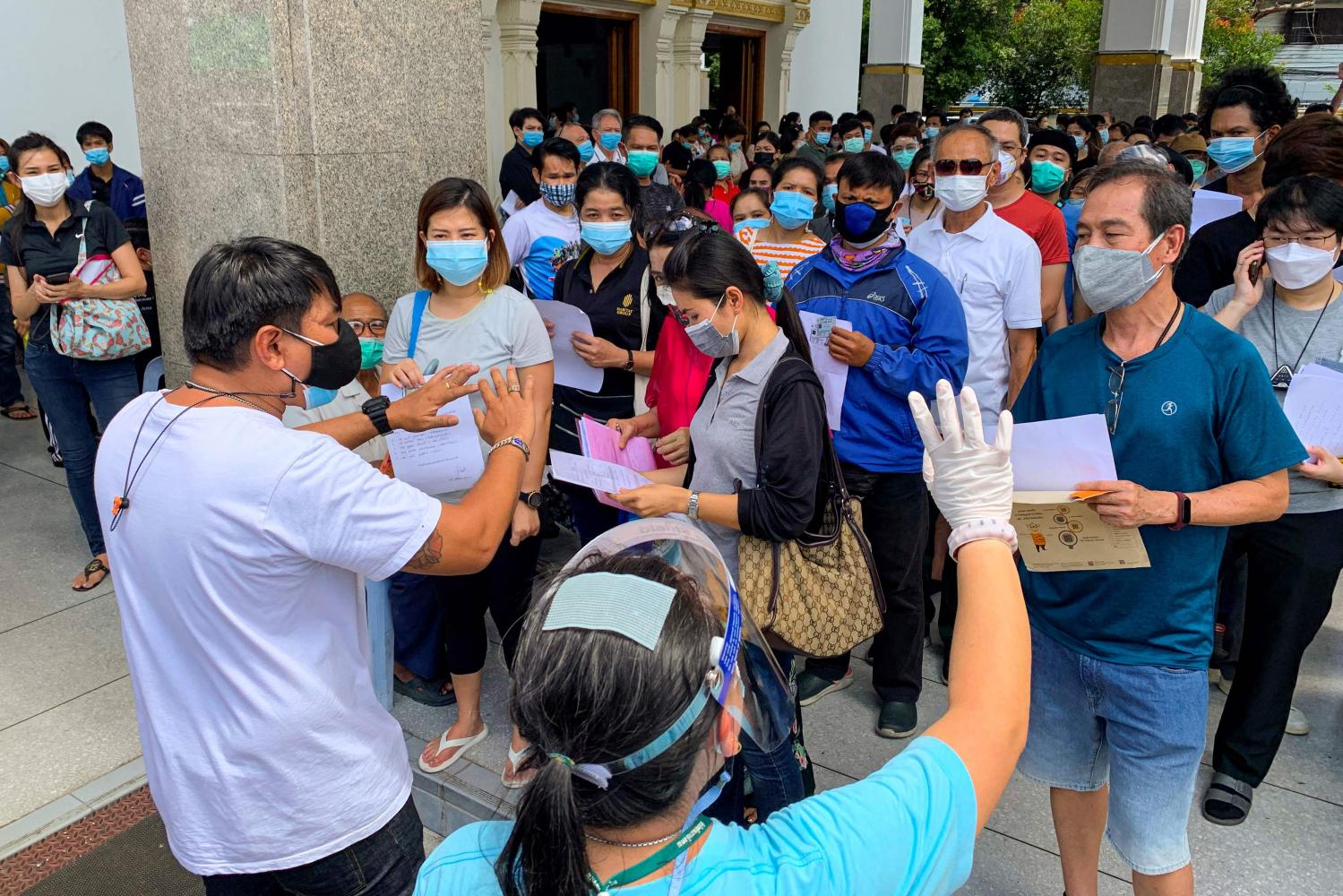
People wait to be inoculated with a Covid-19 vaccine at the Holy Redeemer Catholic church in Bangkok on Monday. AFP
Thailand should try its best to curb a fourth wave of Covid-19 infections, especially preventing the spread of the Indian variant which might enter the country via the Myanmar border. Otherwise, additional borrowing to fight the new outbreak and rehabilitate the economy will be inevitable, warned Kobsak Pootrakool, former minister to the Prime Minister's Office.
The government will have a limited budget to fight a new Covid-19 outbreak as current public debt is getting close to the ceiling set by the state's fiscal sustainability framework, which caps public debt at 60% of GDP, said Mr Kobsak, now senior executive vice-president of Bangkok Bank.
According to Mr Kobsak, a fourth wave will cause a more drastic effect on the Thai economy, forcing the government to borrow more to rehabilitate the economy.
Mr Kobsak said the priority of the government should be to tackle the third wave of infections by speeding up the administration of vaccines, reopening the country for tourism and rolling out measures to stimulate the economy and investments.
"If the government succeeds in tackling the third wave of [Covid-19] infections and vaccinations go ahead as planned, the reopening of the country for tourism starting with Phuket is possible."
He also advised the government to apply its vaccination management plan for Phuket to the rest of the country as well, saying that Phuket can now administer seven million doses in seven days.
Cooperation from the private sector to provide software needed for the vaccination process and public relations will be necessary, he added.
Amid the current economic crisis, government borrowing is instrumental in shoring up the economy. However, the 60% ceiling set as part of the fiscal sustainability framework is based on normal economic conditions, Patricia Mongkhonvanit, the Public Debt Management Office (PDMO) chief, admitted recently.
Last year, the government had issued a royal decree to borrow 1 trillion baht in order to revitalise the virus-ravaged economy.
However, even with the decree, Thailand's public debt-to-GDP ratio is expected to stay below the 60% ceiling -- estimated to be 57% at of the end of fiscal 2021 -- in late September this year.
Thailand has managed to keep public debt to GDP figure below the sustainability framework ceiling for decades by leaving space in the fiscal policy for the government to buffer against economic shocks.
The public debt level was around 40% of GDP before the pandemic emerged in early 2020.
A review of the government's fiscal sustainability framework is conducted every three years and a check-up is due this year.
Wanchat Suwankitti, deputy secretary-general to the National Economic and Social Development Council (NESDC), said that as of May 3, the government had already endorsed 762.90 billion baht for 283 projects under the 1-trillion baht loan decree.
With the 237 billion baht that remains, the government will have room to handle the third wave of infections, he said.
While the county battles its menacing third wave of Covid-19, experts have recently come out to warn that if there is a fourth, it is likely to be the result of illegal border crossings.
This is a far from groundless speculation with the Centre for Covid-19 Situation Administration (CCSA) reporting on Sunday that five recent Covid patients were Thais caught illegally sneaking back from Cambodia --where the highly contagious UK variant has run rampant.
The number of illegal entries this year has certainly been significant enough to justify this hypothesis. From Jan 1-May 9, officials arrested 15,378 illegitimate border crossers -- the majority migrant labourers from Myanmar (6,072), Cambodia (5,114) and Laos (882).
A few days ago, esteemed virologist Dr Yong Poovorawan warned that the South African mutation, which is estimated to be five times more contagious than the variants currently sweeping through Thailand, had been found in Malaysia and posed a risk of entry from the South.
The now-infamous Thong Lor cluster has already demonstrated just how much more dangerous certain strains of Covid-19 can be -- in that case it was found that a Thai national who had visited Cambodia had brought back more than their luggage in the form of the UK variant. A subsequent night out at a number of popular local venues quickly resulted in the severe outbreak.
Yesterday, the CCSA admitted that a returnee from Pakistan had tested positive in quarantine for the variant currently causing heartache and death from New Delhi to Chennai.
With each variant comes a new set of challenges which raise the risk of health services being overwhelmed as cases mount and isolating outbreaks becomes impossible.
There is also the unthinkable possibility that if Covid is not brought under control, variants could emerge that render vaccines ineffective before they have even been widely administered.
Prime Minister Prayut Chan-o-cha, with his gamut of self-given legal powers, must make border control as much of a priority as stockpiling vaccines to achieve the fabled herd immunity that is beginning to seem more like a speck on the horizon than an achievable goal.
One does not need a particularly long memory to recall the outbreak in Samut Sakhon where, despite the diligence and expertise of Thailand's health workers to prevent that cluster taking an even greater toll on lives and livelihoods, not one official has been held to account for the glut of illegal border crossings that swelled the migrant workforce in the province.
The rote response from Immigration Bureau chief Pol Lt Gen Sompong Chingduang to questions on Sunday regarding the state of Thailand's porous borders did not inspire confidence either.
The bureau head simply repeated the well-worn mantra that the borders are sealed and "Those who enter Thailand illegally will be prosecuted under the immigration law, the communicable disease and the emergency decree". Going forward, we can only hope he's right.
It would be a shameful waste of resources and lives if 200 million plus shots of vaccine, and hundreds of thousands of beds, ventilators and doses of favipiravir are wasted on cases caused by the actions of the state itself.
It is imperative that the government pulls itself together to prevent this and subsequent waves of Covid-19 becoming deadly tsunamis of tragic proportions.
Creditors want THAI reinstated as state-owned enterprise
The majority of creditors agree with moves to have Thai Airways International (THAI) reinstated as a state-owned enterprise, an adviser to THAI's rehabilitation plan said on Monday.
THAI lost its status as a state-owned enterprise last year when the Finance Ministry cut its stake to less than 50 per cent as part of the airline's debt-rehabilitation plan.
Finance Minister Arkhom Termpittayapaisith is thought to support THAI's reinstatement as a state enterprise, but the State Enterprise Policy Office has indicated the debt-laden airline will not be recapitalised by the ministry.
Creditors and their official receiver will hold an online meeting to consider THAI's rehab plan on Wednesday.
The adviser said reinstatement as a state enterprise would mean THAI could boost its liquidity by seeking loans from the Finance Ministry.
"THAI would gain benefits under the Public-Private Partnership Act, such as contracts with Airports of Thailand for public infrastructure," he said.
However, he cautioned that as a state enterprise, THAI would not know how many times the government was willing to inject cash into the company.
"If Covid-19 does not impact THAI's rehabilitation plan, we believe that it will be able to recover its business quickly because this is not the first time the company has faced losses," he said.
He added that the rehab plan had made significant progress, with a plan to reduce expenditure by cutting the number of THAI employees from around 20,000 to 14,000.
Government Savings Bank president Vitai Ratanakorn said the bank is ready to approve THAI's rehab plan. He added that the airline has a plan to inject funds of THB25 billion each to shareholders and creditors.
"We understand that the company will discuss who will get the funds after the rehabilitation plan is approved," he said.
Poramate Intarachumnum, chair of the Cooperative League of Thailand, said 84 cooperatives had agreed to allow THAI to continue in business but insisted that it clarify financial support from the government and other matters.
Government considers widening ban on foreign arrivals throughout subcontinent
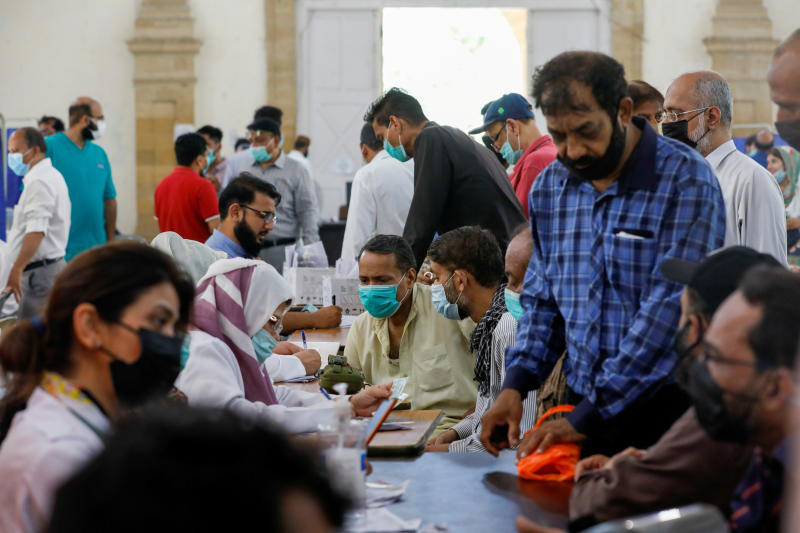
People gather to receive their coronavirus vaccine doses at a vaccination centre in Karachi, Pakistan, on April 28. (Reuters photo)
The Indian variant of Covid-19 has arrived in Thailand.
The variant was detected in a Thai woman and her young son arriving from Pakistan, prompting authorities to consider widening the ban on international arrivals to other countries besides India.
Apisamai Srirangson, the assistant spokeswoman for the Centre for Covid-19 Situation Administration, said on Monday the woman and her three sons, aged four, six and eight, arrived in Thailand from Pakistan via Dubai on April 24.
All were in a state-arranged state quarantine facility after the arrival and the first tests found the mother and her youngest son were positive, while the other children were not infected.
A whole genome sequencing test conducted at Chulalongkorn Memorial Hospital on Sunday confirmed the virus detected on them was the variant from India, named B.1.617.1.
"These were the first detections of the Indian variant in the country," Dr Apisamai said.
The B.1.617.1 variant was recorded for the first time in India in October before spreading to other countries. Pakistan, Nepal and Bangladesh were among the nations on the subcontinent where this virus was found. In Southeast Asia, Singapore, Malaysia and Indonesia have detected the same variant.
Dr Apisamai said authorities were worried by the arrival of this version of the virus and the new danger it poses. "There is concern about this variant and about the possibility that it could mutate in Thailand," she added.
Thailand has barred foreign arrivals from India since the beginning of this month due to worries about the Indian variant. The Thai embassy in India does not issue certificates of entry (COE) to any non-Thai nationals, effectively meaning they cannot travel to the kingdom.
The assistant spokeswoman said the Foreign Ministry and Department of Disease Control were on Monday holding discussions about halting the issuance of the entry permit in other countries to try to keep the Indian variant of Covid-19 out of Thailand.
She did not name the countries but said the variant had been recorded in Pakistan, Bangladesh and Nepal.
"There is a possibility of delaying COEs in other countries," she added.
FILE PHOTO: Empty vials of the Pfizer-BioNTech coronavirus disease (COVID-19) vaccine are seen at The Michener Institute, in Toronto, Canada Jan 4, 2021. (Reuters)
Covid jab maker BioNTech said Monday it would build a southeast Asia headquarters and manufacturing site in Singapore to produce hundreds of millions of mRNA-based vaccines per year.
Construction of the site will start this year, and it could become operational by 2023, the German company said in a statement.
"With this planned mRNA production facility, we will increase our overall network capacity and expand our ability to manufacture and deliver our mRNA vaccines and therapies to people around the world," said BioNTech chief executive Ugur Sahin.
The vaccine produced by BioNTech jointly with Pfizer of the United States became the first Covid-19 jab to be approved for use in the West late last year.
It is now supplying more than 90 countries worldwide, and is expecting to ramp up its production to up to three billion doses by the end of the year from 2.5 billion doses expected previously.
The pace will further accelerate to more than three billion doses in 2022.
Messenger RNA genetic technology trains the body to reproduce spike proteins, similar to that found on the coronavirus.
When exposed to the real virus later, the body recognises the spike proteins and is able to fight them off.
US pharmaceutical firm Moderna uses the same technology for its vaccine.
The Chonburi Department of Public Health announced 63 new and confirmed cases of Covid-19 this morning (May 10th), a major drop from yesterday with one new death.
This makes a total of 3,361 cases of Covid-19 in the current round of infections, with 1,507 still in medical care, with nine recorded deaths in Chonburi since the start of this recent round of infections in early April.
Additionally, 1,845 people in total have now been released from medical care and fully recovered since this current wave began. 78 people were released yesterday. Yesterday's 63 cases is the fewest number of cases since April 9th, 2021.
The district-level new cases were as follows today:
Mueang Chonburi with 20, Si Racha 16, Banglamung (including Pattaya) 14, Sattahip 2, Ban Bueng 3, Phan Thong 5, and 3 patients from other provinces transferred to Chonburi for medical care.
The details on today's cases given were:
3 confirmed patients from Samut Prakan Province
One person who contacted a confirmed previous Covid-19 patient from Chanthaburi Province.
24 family members of prior Covid-19 patients
6 co-workers of prior Covid-19 patients
Under investigation 29 cases
Today, a total of 485 contacts were searched and 660 more proactive (pending results).
In the last day, a total of 485 close contacts were tested from contact tracing, and 660 people were tested in proactive testing when medical staff goes out into the community.
All are pending results. There were no recorded Royal mobile testing results over the past day and although case numbers are lower The Pattaya News notes the number of tests performed is also lower than the average of 2,000 a day over the past several weeks.
Details on the new fatality were not given. Chonburi Public Health Department officials stated that almost all of the new cases are being driven by private gatherings, primarily small ones with 2-3 people outside of the household having drinks or food together. They continue to urge people to not participate in any activities with anyone outside of their own household at this time and continue to work from home if possible and avoid public places.
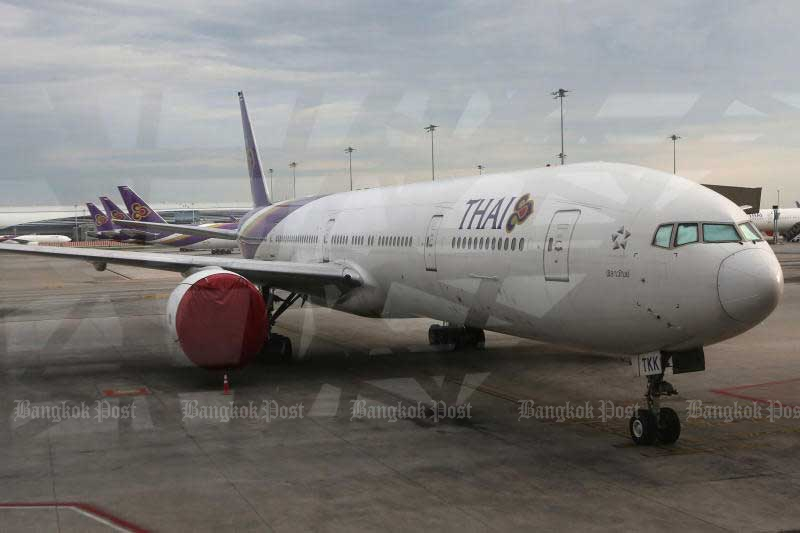
A Thai Airways International jet sits parked on the tarmac of Suvarnabhumi airport. (Photo by Wichan Charoenkiatpakul)
The Finance Ministry will not recapitalise financially troubled Thai Airways (THAI) of which it is the biggest shareholder, the State Enterprise Policy Office (SEPO) chief said.
The remark by SEPO director-general Pantip Sripimol comes amid concerns the carrier will regain the status of a state enterprise through the re-acquisition of the ministry's majority stake in THAI.
The airline lost its state-owned status last year when the ministry decided to reduce its stake to under 50%, to help ease the debt-rehabilitation process.
Several cabinet ministers, however, were concerned the government would need to guarantee a loan worth billions of baht to prop up THAI if it were to come under the state enterprise umbrella again.
Reportedly supporting THAI's reinstatement as a state enterprise were Finance Minister Arkhom Termpittayapaisith and Deputy Prime Minister Supattanapong Punmeechaow, who is also chief of the government's economic team.
They argued the reinstatement, which would require the Finance Ministry returning as a majority shareholder, would boost the airline's financial strength and its bargaining power with creditors.
Creditors are meeting on Wednesday to decide whether to accept the airline's debt restructuring plan.
Meanwhile, Ms Pantip insisted the ministry would not seek to recapitalise the airline and was prepared to see its stake diluted if other shareholders bought more shares.
The ministry holds a 49.9% stake in THAI. She said if the ministry injected more funds into the company, it would be akin to attempting to divert money to "fill up the sea", a move which be hard to justify to taxpayers.
Now that THAI is operating as a private company, it is no longer entitled to state assistance and the Finance Ministry is under no legal obligation to offer help to a private firm despite the vast shares it owns in the airline.
SEPO director-general declined to say whether THAI should be reinstated as a state enterprise, saying it is a matter of policy yet to be considered.
CCSA spokesman Dr Thavee Visanuyothin revealed that 15,378 people have sneaked across the border into Thailand since the start of the year.
And they continue to come.
These people posed a serious threat for the spread of Covid-19, he said, asking that Thais inform on illegal immigrants.
Of the total 6,072 are from Myanmar, 5,114 Cambodia and 882 crossed from Laos.
Despite PM Prayuth Chan-ocha's policy to shore up the borders they continue to cross over natural land areas with the latest daily figures for those caught being 15 from Myanmar, four each from Laos and Cambodia and one on the southern border with Malaysia.
Thaveesin was giving the latest updates on the world Covid situation and the numbers in Thailand on Sunday as reported by Daily News.
Worldwide the figure stood at 158 million infections and 3.2 million deaths, he said.
The latest daily figures among Asian neighbors were 6,000+ in Japan, Indonesia and the Philippines and about 4,500 in Malaysia.
In Thailand there were 2,101 new cases and 17 more deaths.
Those recovered and sent home were more than new cases at 2,186.
Some 29,371 people were still being treated in hospitals in the kingdom and of these 1,142 were in a serious condition with 394 on incubators.
Infections in places like entertainment, from parties, concerts and restaurants in Bangkok were down but spread of the virus was being increasingly seen in markets, communities and at bus stations.
Of the latest number 1,457 cases were in Bangkok and surrounding areas and 629 in 71 other provinces.
Today, May 10th, 2021, marks one month that the bars have been shut, with no sign of opening any time soon as the Thai Government continues to implement stricter and stronger restrictions across the country to attempt to control an ongoing Covid-19 outbreak that is currently seeing around 2,000 infections a day, mostly in and around Bangkok, and infections in Chonburi anywhere from around 75 to over 100 daily.
The Center for Covid-19 Situation Administration is set to make decisions later this week around the current "dark red" provinces, of which Chonburi is one, and the current measures in place. These measures include an unpopular, but what officials call needed, ban on dine-in at restaurants, swimming in pools, and mingling at the beach amongst other restrictions instituted at a provincial level like closures of gyms, cinemas, playgrounds, amusement parks, and essentially anything "fun" that causes people to mingle or socialize.
The Pattaya News doesn't speculate and takes a neutral stance in general to our approach on news, but it doesn't take a rocket scientist to see that based on current caseloads in the province and country a loosening of these measures is unlikely at this point, as cases continue to be steadily announced, primarily driven by close contacts and private gatherings despite all major social places closed for weeks now.
It didn't have to be this way, say many owners and staff online, pointing to what they perceive as delays on the countries vaccine program or lack of preparation in a timely fashion for the future. The Thai Government, however, has countered these claims and stated that this perception is wrong and that Thailand took a cautious approach out of respect for their citizens to see if any major side effects took place from the vaccine rollout in other countries whole maintaining border controls and attempting to keep the virus out of the country.
However, Thailand is not an island like some other successful countries that have kept the virus out, has porous land borders with several nations, and has seen many people pass over the borders and sneak through border patrols and other nets without proper Covid-19 testing and controls. This, combined with many other things, led to the current outbreak and sets Thailand in the difficult position of wrestling with their third (and really first major) outbreak in a year and a shutdown that nobody wanted of thousands of businesses, once again putting millions out of work and causing a dangerous domino effect even on businesses that can open in tourist reliant places like Pattaya, Koh Samui, Phuket, and others.
Thailand is still hoping to open up to vaccinated tourists without quarantine later this year, says the government, and Pattaya is one of several designated "economic priority" zones that will get priority on vaccines in hopes of gaining herd immunity in the resort town that in 2019 was the 19th most visited city in the world and welcomed about 10 million foreign tourists and 7 million domestic, according to the Thai Tourism Authority. Pattaya is reliant on tourism and related events for officially about 80 percent of their GDP, and unofficially it is even higher.
Pattaya officials state that their vaccine allocation and rollout program is still on track and they understand the severity of the situation that has essentially turned the majority of the city into a ghost town for the third time in a year and the sense of urgency to turn the situation around. The current plan, according to the Thai government, is to vaccinate the majority of the local population of Pattaya to allow opening the area to vaccinated tourists from foreign countries without quarantine by October.
The question, of course, remains around when businesses will be allowed to re-open and domestic tourism is allowed to resume, which was keeping many local businesses afloat until the current round of Covid-19 in early April. Indeed, compared to more remote islands and locations like Koh Samui, Pattaya has not been hit as hard, despite rows of shuttered businesses and abandoned buildings in the heart of the city on Second Road and surrounding areas. Some places, like LK Metro and Soi Buakhao, had managed to weather the recent storms fairly well on a mixture of local ex-pats and domestic tourists, especially folks coming down from Bangkok on weekends. Ex-pat and local resident-focused areas on the Dark Side and Jomtien have not been hit nearly as hard as Central Pattaya.
The closure of dine-in restaurants and the entertainment industry, which has thousands of venues still in Pattaya, as well as most "fun" tourist attractions and nearly all popular places like beaches, Koh Larn, Ramayana, and Instagrammable restaurants and locations, however, is causing, just like last year, a horrific "domino" effect on the city that Bangkok and other locations that are deep red zones don't mostly get due to the proportion of regular residents and occupations as to tourism-related ones. Although malls and non-essential shops are allowed to open, they are a shadow of their former selves with very little foot traffic in the past few weeks. Restaurants can open for take-away, but many have chosen not to open at all and the 9:00 P.M. shut down on takeaway has heavily affected the profits of many restaurants as well. That is without even mentioning the loss of revenue at restaurants on alcohol sales, which were forbidden even before the dine-in ban for the past month as according to Public Health Officials it causes people to socialize and gather.
The closure of beaches (Officially, ordered to be open just for exercise, but in reality, this is limited to walking on the paths by the beach in Pattaya and Jomtien), Koh Larn, and most tourist attractions further caused a domino effect and once again hotels sit at almost zero occupancy across the city, the few that remain open, according to local hotel associations. All the business that rely on all these aforementioned businesses and accompanying foot traffic, like security, DJ's, musicians, maids, repair workers, street vendors, food carts, taxi drivers, hair salons, laundry mats, market vendors, tailors, dentists, tour groups, and many, many more are also struggling regardless of being allowed to open "for business" or not.
Unlike many Western countries, where generous furlough packages and business protections were implemented during shutdowns, the general financial aid, especially to informal workers which is an estimated 60% of workers in the country and the majority of the tourism industry and related businesses, has been little to none.
Many businesses were barely hanging on before this current closure, hanging onto the hope of a rise of domestic tourism, more local events, and eventual foreign tourism returning later this year. A proper rollout of vaccines with a huge sense of urgency can still see many saved, but it must become THE top priority to do so. The question is, how long will it take, and how much longer will businesses stay closed and manage to stay afloat.
For now, the city is a sad shadow of its former self and the longer this current round of measures and restrictions lasts the harder it will be to recover. It doesn't help that many ex-pats, as evidenced from our recent surveys and discussions, are considering leaving and returning to their own countries, many that are now well vaccinated or re-opening like the UK and USA. Many of these ex-pat residents kept Pattaya afloat over the past year, but with their departure, things could get worse before they get better. These departures are for a variety of reasons, but generally many fear months of shutdowns.
It is unknown how long this current round of restrictions will last, with officials only stating they are taking it a day at a time and focusing their attention and urgency on a vaccine rollout. Let us hope that goes well, but even in the best-case scenario, a proper rollout will likely take several months. Last year, we had a roadmap of lifting restrictions to follow that, although many felt was slow, at least gave people guidance and things to look forward to.
This year, there is no "threshold" on when restrictions will be lifted,it is unclear what metrics or measures will be made to decide when to open certain businesses or lift restrictions, and this has only caused people to be further upset. Last year, the Thai Government was clearly going for an elimination strategy with a goal of zero Covid-19 infections. That is now unrealistic, but it is unclear what the threshold or goal is to relax measures and get people back to work, other than the vaccine rollout.
Pattaya, its business owners, residents, workers, and many tourists around the world who wish to return someday, can now only wait and see what happens.
The latest Covid-19 outbreak decreases the likelihood of the planned reopening taking place during the peak season, as slow vaccination might derail the ability to open up more broadly, says STR, a hospitality market analyst.
Jesper Palmqvist, area director of Asia-Pacific for STR, said the global situation is still volatile because of setbacks from new outbreaks or variants, causing a delay in recovery. The latest outbreak in Thailand makes the outlook for the final two quarters more precarious, he said.
This third wave is hampering the confidence of tourists and authorities, as well as slowing efforts to reopen the country.
"The Phuket sandbox, which is scheduled to begin 60 days from now, sounds quite ambitious," said Mr Palmqvist. "But this is a long game and we need to be ready for surprises."
Once the latest wave is brought under control, the hospitality business would gradually return for certain groups, such as hotels within driving distance from Bangkok in Hua Hin and Pattaya. Unfortunately little demand is projected for hotels elsewhere, he said.
It is hard to project any noticeable demand in the third quarter, given the speed of the vaccine rollout in Thailand, said Mr Palmqvist.
Forward bookings for hotels in Bangkok saw the occupancy rate stand at 10% in May, with fluctuations between 4-7% until the middle of January next year, with a slight peak during the New Year holidays.
He said the sluggish bookings rate could be attributed to the lack of inbound travel and the third wave of the pandemic, which is reducing interest in hotel accommodation.
However, the rate of bookings is much higher at resort islands such as Koh Lanta and Koh Samui, as tourists want to skip big cities because they have a higher risk of infection.
There are two main strategies countries can take to restart international travel, said Mr Palmqvist. One is the Maldives model, in which isolated islands offer testing protocols in combination with accelerated public vaccination.
"My concern with Thailand is vaccinations, which are the key factor, are taking a long time," he said.
"As a result, it could jeopardise the speed at which international travel returns."
The other strategy is governments offering the tourism industry direct financial support to help retain employment, as seen in Singapore and Australia, as well as tourism campaigns to boost domestic travel, said Mr Palmqvist.
Singapore's government already extended its Jobs Support Scheme, which it started in February 2020, to offer wage support of up to 30% for the aviation, aerospace and tourism sectors until September.
The Australian government introduced the Tourism Aviation Network Support programme to offer 800,000 half-price domestic airfares to selected regions that depend on tourism, running from April to July 31 for travel until Sept 30, he said.
There are no signs the Covid-19 pandemic will leave us any time soon. Thus, it is important for Thailand to stockpile vaccines and let the public choose their own vaccines.
After being criticised for its slow vaccination programme, Prime Minister Prayut Chan-o-cha announced on Friday the government would increase its procurement of Covid-19 vaccines to 150-200 million doses from the current target of 100 million doses.
This is the right decision and comes about through bitter experience after the government previously underestimated the pandemic, causing delays in the arrival of vaccines and inadequate supplies on hand to get people inoculated fast.
Apart from that, some virologists say two doses of the vaccine may be not enough for long-term prevention of infection. It is possible people will need to get vaccinated against the coronavirus annually.
That's why the government is racing against time amid high global demand in Covid-19 vaccine market to build up a local stockpile.
But the government should not go it alone in buying vaccines. It should rope in the private sector including private hospitals and corporates, to give the public a choice of jabs.
Unfortunately, the government has not provided enough support to enable the private sector to access the vaccines. Government spokesman Anucha Burapachaisri last week said a committee on the procurement of Covid-19 vaccines had agreed Covid-19 vaccines would be added to the controlled goods list.
Despite that, the committee agreed the private sector can import its own vaccines from manufacturers, though they are prevented from buying the vaccine brands that the government is using for the state vaccination programme. In fact, the private sector should have access to any Covid vaccines that are endorsed by the World Health Organization (WHO).
Thai authorities seem intent on putting a lid on access to vaccines, which is a shame. Recently, Public Health Minister Anutin Charnvirakul reiterated that people cannot choose Covid-19 vaccine options under the government scheme as Thailand has a shortage of supply right now.
But as supplies increase, particularly if the private sector is allowed to import vaccines freely, why would the government block people's opportunity to make their own vaccine choices?
Everyone knows that Covid-19 vaccines are available under emergency conditions. The production process has been shortened from 10 years normally to less than 12 months, without any scientifically proven term-side effects.
The vaccines are produced according to various techniques, with only a small minority linked to blood clot problems which may be fatal.
Policy-makers say these amount to just 1 in 100,000 cases, and the benefits of vaccines by far outweigh the risks.
But for the individual, the risk of becoming the one among 100,000 who gets a fatal blood clot could be off-putting.
In the US, the Centers for Disease Control and Prevention (CDC) allows people to choose a vaccine suitable for their health condition. The CDC has guidelines and provides information on the side effects.
Thailand might not be able to follow in the US's footsteps just yet, but should take care to avoid any policy that blocks choice. Thailand's vaccination programme must be pro-choice, letting people choose vaccines that are in line with their health conditions.