torsdag 27 maj 2021

According to the Center for COVID-19 Situation Administration (CCSA), five new COVID-19 infection clusters have been discovered in Bangkok, bringing the total to 38 clusters across 30 districts. Of all the clusters in the capital, 10 have been brought under control. CCSA


Ranking of 10 provinces with highest COVID-19 transmission, as of 27 May 2021. PRD


VACCINE NEWS: Is this what Thailand has been delaying for? Which raises the question, ‘is this why Thailand has been fumbling their vaccine roll-out, for many, many months and at what cost, in an attempt to make sure the money stays within the Kingdom? Bangkok Jack

VACCINE NEWS: Is this what Thailand has been delaying for? 

The first nine batches of AstraZeneca vaccine produced in Thailand have passed official quality checks, the Department of Medical Sciences (DMS) announced on Wednesday.

Which raises the question, 'is this why Thailand has been fumbling their vaccine roll-out, for many, many months and at what cost, in an attempt to make sure the money stays within the Kingdom?

The department is awaiting results of its checks on another five batches of vaccine sent by local manufacturer Siam Bioscience, DMS chief Dr Supakit Sirilak said.

Siam Bioscience delivered the five batches for checking on Tuesday (May 25), with results expected after three days.

Each batch contains between 1 million and 2 million doses. However, the next batches may be increased to 2.5-3 million doses each once the company gains confidence in the product, said Dr Supakit.

The vaccine is being produced by Siam Bioscience via a technology-transfer deal with AstraZeneca.
AstraZeneca has confirmed that the first batch of vaccine will be delivered next month. Mass vaccination in Thailand is due to start on June 7. – Source article – by The Nation 


In government guidelines previously issued, it was clarified that Sandbox tourists will need proof of full vaccination, a certificate of entry from the local Thai embassy, Covid-19 insurance of at least US$100,000, a downloaded Thailand Plus tracking app, a negative PCR test prior to departure and a further Covid-19 test on arrival and proof of accommodation in Pattaya for at least the first seven days. Confirmation from the Thai immigration bureau or the Ministry of Foreign Affairs is still awaited on the precise entry documentation which will be required for any Sandbox aspirants. If Thai embassies abroad must work with the current regulations, then that should be announced. It is not uncommon for immigration announcements to be made at the last minute. Pattaya Mail

Pattaya's no quarantine proposal needs more detail

Pattaya waits for an international tourist injection.

There are many iffs and buts. Yet, assuming Phuket manages to get off the ground its Sandbox tourist plan on July 1 – fully vaccinated foreigners need not quarantine – Pattaya hopes to follow from October 1. Pattaya Mayor Sonthaya Kunplome chaired a "Pattaya Move On" conference at City Hall on May 26.

The biggest question mark is whether Pattaya can manage to vaccinate 70 percent of its host population by the operating date as well as achieving a single-figure daily infection rate. Chonburi health authorities are reasonably confident they can achieve both aims, so let's assume they are right.


In government guidelines previously issued, it was clarified that Sandbox tourists will need proof of full vaccination, a certificate of entry from the local Thai embassy, Covid-19 insurance of at least US$100,000, a downloaded Thailand Plus tracking app, a negative PCR test prior to departure and a further Covid-19 test on arrival and proof of accommodation in Pattaya for at least the first seven days.

Confirmation from the Thai immigration bureau or the Ministry of Foreign Affairs is still awaited on the precise entry documentation which will be required for any Sandbox aspirants. If Thai embassies abroad must work with the current regulations, then that should be announced. It is not uncommon for immigration announcements to be made at the last minute.


What isn't currently clear is how successful entrants will travel from the airport to Pattaya. The most likely solution would be sealed transport, such as special buses, although the logistics would be difficult as well as unpopular. An alternative approach might be use of the Thailand Plus tracking app to prove personal movements. What consequences might follow if the tourist turned off the app are an ongoing blur issue.
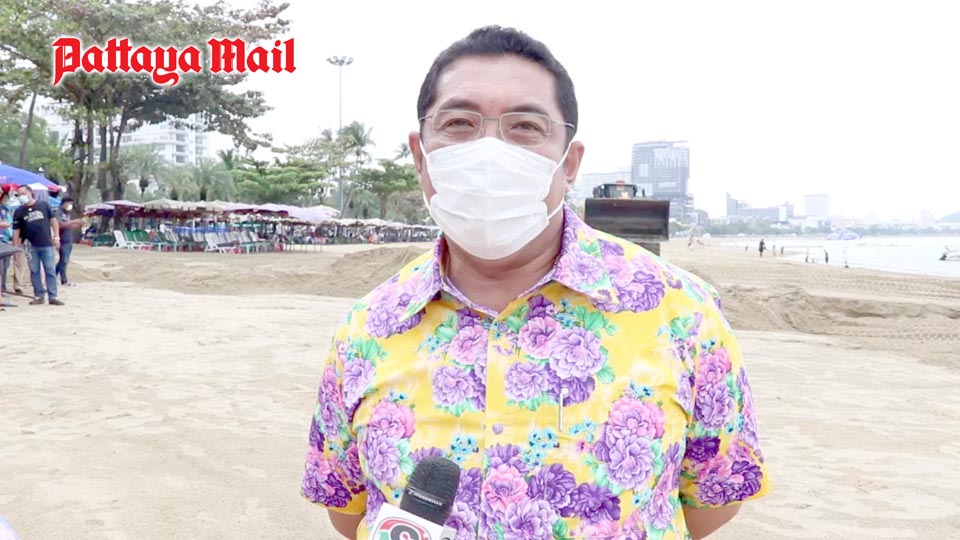
Mayor Sonthaya Kunplome publishes initial Sandbox guidelines.

The Pattaya mayor has confirmed that tourists must stay at hotels carrying government-approved hygiene standards and engage in activities in areas designated by the management. How tourists electing to stay at the home of a relative or friend would fit into this paradigm is another enigma to resolve. All Sandboxers will likely have to report to health authorities after seven days, maybe through the app or perhaps with a swab test.

The international market for Pattaya Sandbox is speculative. It is the third most popular resort area after Bangkok and Phuket. Chinese and Indian authorities are unlikely to allow their citizens to participate this calendar year, especially in charter tours which have been a mainstay in the past. The Pattaya mayor in his speech mentioned Germany and Russia. Brits are currently being advised not to travel to Thailand as it is an "amber" or Covid-risky destination.
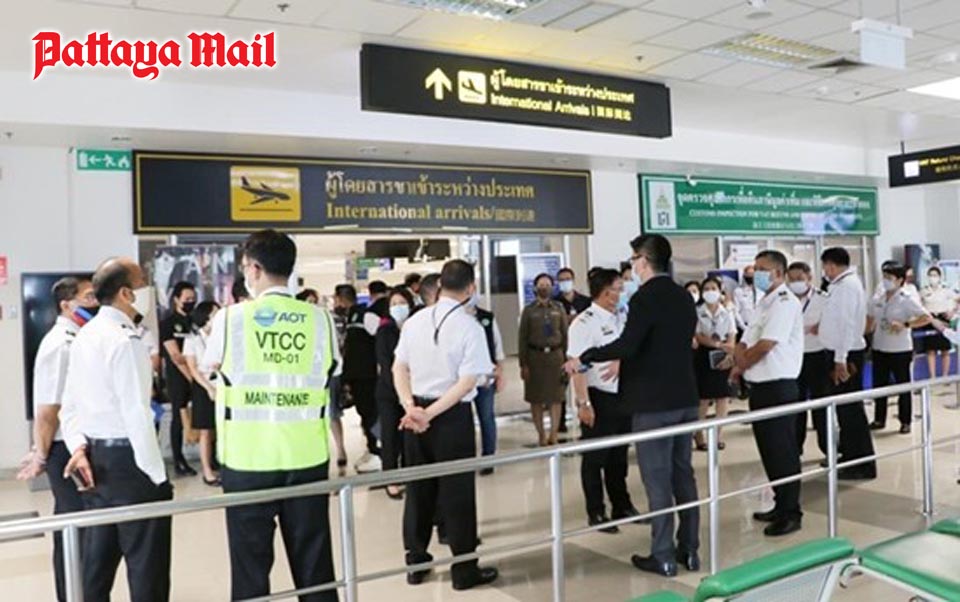
Thai Immigration has yet to announce any specific Sandbox entry rules.

Assuming the vaccinated tourists actually arrive in Pattaya (presumably the map will be broadly drawn to include neighboring areas such as Banglamung and Sattahip), what will they actually do? One has to assume by then that beaches will reopen and that bars and clubs, or some of them, will have removed their padlocks. The unrelated announcement that 300 American servicemen will be visiting Pattaya this August will hopefully provide some clues.

Pattaya is currently an internationally-deprived ghost town and it is reassuring that City Hall is being proactive in publishing its initial Sandbox proposals for onward consideration by the Centre for Covid-19 Situation Administration next month. But a great deal of detail is waiting to be filled in. And the clock is ticking.


Another 52 Covid-19 cases have been reported in Chon Buri, raising the provincial total to 4,395. Of the total infections, 3,476 patients had been treated and recovered and 898 were still being treated, the provincial public health office said on Thursday on its Facebook page. The accumulated provincial death toll remained at 21. Bangkok Post

52 new Covid-19 cases in Chon Buri

Deputy Chon Buri public health office chief Dr Wichai Thanasophon leads an inspection of living quarters of migrant workers in tambon Bang Sai of Muang district in Chon Buri on Monday. (Photo: Chon Buri public health office)

CHON BURI: Another 52 Covid-19 cases have been reported in Chon Buri, raising the provincial total to 4,395.

Of the total infections, 3,476 patients had been treated and recovered and 898 were still being treated, the provincial public health office said on Thursday on its Facebook page. The accumulated provincial death toll remained at 21.

The new infections were reported in five districts – Muang, 24; Si Racha 11; Bang Lamung 10; Phan Thong 5;  and Sattahip 2.

Most new cases were from a cluster at Talad Mai market, the biggest wholesale vegetable and fruit market in the East, Thai media reported.

On Thursday, seven new cases were detected at the market, raising the total number of infections at this market to  24.  Two other people caught the virus from previously confirmed cases at this market.

Two other new infections were caught from previous Covid-19 patients at two factories. Seven got it from infected family members and colleagues.

Disease investigation was continuing  into the remaining cases. 


Nine production lots of the AstraZeneca vaccine manufactured by Siam Bioscience passed a quality inspection conducted by the Department of Medical Sciences on May 25, department director-general Dr Supphakit Siriluck said on Wednesday. The Nation

Locally produced AstraZeneca vaccine passes inspection

Nine production lots of the AstraZeneca vaccine manufactured by Siam Bioscience passed a quality inspection conducted by the Department of Medical Sciences on May 25, department director-general Dr Supphakit Siriluck said on Wednesday.

Locally produced AstraZeneca vaccine passes inspection

"Since then Siam Bioscience has submitted another five lots for inspection, which should take about three days to complete," he said. "We found no problem in the first nine lots and expect the other five to pass the inspection as well."

Supphakit said each batch submitted for inspection could contain a different number of doses.

Locally produced AstraZeneca vaccine passes inspectionLocally produced AstraZeneca vaccine passes inspection

"Normally the manufacturer sends a smaller batch of about 1 million to 2 million doses for inspection first, and then increases this to 2.5 million to 3 million doses per batch when they have more manufacturing experience or have streamlined the process," he added.

Siam Bioscience has promised the Public Health Ministry that it would start delivering doses to vaccination units in June, while Public Health Minister Anutin Charnvirakul confirmed on Tuesday that the locally produced AstraZeneca vaccine would be available for the masses from June 7 as per the original schedule.

So far, four kinds of vaccines have been approved by the Food and Drug Administration and registered for use in Thailand – AstraZeneca, imported by AstraZeneca (Thailand) and manufactured domestically by Siam Bioscience; CoronaVac, or Sinovac, which is imported by the Government Pharmaceutical Organisation; Johnson & Johnson, imported by Janssen-Cilag; and the Moderna vaccine imported by Zuellig Pharma.


ASEAN statistics. The Nation


Covid-19 on surfaces


🔴 BREAKING: 47 deaths (*New High) and 3,323 cases (*1,219 from prisons) on Thursday. Full update at 12:30pm. 23 May: 3,382 - 17 dead 24 May: 2,713 - 30 dead 25 May: 3,226 - 26 dead 26 May: 2,455 - 41 dead 27 May: 3,323 - 47 dead <— TODAY. Richard Barrow


Institute u-turns on vaccine jab delay. Bangkok Post

 Institute u-turns on vaccine jab delay

Bamrasnaradura Infectious Diseases Institute said yesterday inoculations with the AstraZeneca vaccine will proceed as scheduled in June, after having announced earlier that it will postpone giving the second dose of AstraZeneca jabs to July.

The institute's director, Kitpong Sunchatawirul, said yesterday its earlier announcement was based on a misunderstanding, and people who have registered for a vaccine in June will receive their jabs on their appointment date.

When asked if the institute plans to use the AstraZeneca or Sinovac vaccine in its jab drive, the director said the decision will be made by Nonthaburi's provincial authorities.

On concerns about the national communicable diseases committee's decision to allow individuals over the age of 60 to be inoculated with the Sinovac vaccine, Dr Kitpong said the institute has vaccinated its doctors -- many of whom were above 60 years of age -- with the jabs without any problems.

Doubts around the safety of the Sinovac jabs for the elderly emerged at the start of the pandemic, when there wasn't enough empirical data to arrive at a conclusion about the matter. However, the government said, the vaccine has now been proven to be safe for older people.

Separately, Deputy Public Health Minister Sathit Pitutecha said yesterday he hasn't received any information about possible delays in the delivery of the AstraZeneca vaccine, which is expected to be the main jab in the national rollout.

He said the Government Pharmaceutical Organisation is responsible for overseeing the delivery process, before adding the Public Health Ministry and other state agencies will meet later today to set the delivery date.

Rungrueng Kitphati, spokesman for the Public Health Ministry, said AstraZeneca will ship its vaccines to Thailand within June, but not on June 1.

"The company is aware of the government's mass vaccination campaign and is obligated to comply with the vaccine purchase contract," he said, adding the government has devised a contingency plan for every situation.

Meanwhile, Supakit Sirilak, director-general of the Department of Medical Sciences, said the department has approved all nine batches of the domestically-produced AstraZeneca vaccine.

After the vaccines are checked by Thai authorities, AstraZeneca will conduct a final check before the vaccine can be distributed to the public.

Five more batches produced by Siam Bioscience, contracted by AstraZeneca to produce the vaccine locally, were sent to the department for quality checks on Tuesday.

Checks usually take three days to complete, he said.


Stigma, fear hamper Covid recovery Thais admit to anxiety over getting the jab and say public attitudes to those infected are hampering the recovery process. Bangkok Post

Stigma, fear hamper Covid recovery
Thais admit to anxiety over getting the jab and say public attitudes to those infected are hampering the recovery process
People are vaccinated on Wednesday at the Bang Sue Grand Station which has not yet officially opened. The station, with its vast space, has been designataed as a non-hospital vaccination unit for jabbing front-line officials at the Transport Ministry and the public. (Photo: Nutthawat Wicheanbut)

Thailand has been fighting the third wave of Covid-19 since April. Needless to say, everybody wants to see the country conquer the disease as quickly as possible.

The Bangkok Post spoke to Thais about their experience getting through this ordeal. They said they feared contracting the disease and wanted access to a safe, free, Covid-19 vaccine to build herd immunity, even if some were concerned about the vaccine's side effects.

Fear can't keep us out

A family physician in Trang, 28, who asked not to be named, said she had joined the government vaccine scheme and received her second jab on April 29.

She was worried about the side effects but decided to go ahead as she was responsible for a primary care unit, in which almost every patient had contact with her. She wants the government to vaccinate as many people as possible to gain herd immunity.

"I needed to get a jab to protect my patients in case I spread the virus, especially youngsters and elders," she said.

She also enjoyed travelling and many countries had started to require Covid-19 vaccine passports for entry, even if some countries in Europe might not accept certain vaccines.

"If they do not accept the vaccine I have, I will get a new one before I go there,'' she said.

An unemployed man, 27, who was treated for Covid-19, revealed his fears after he was infected.

He said he was diagnosed with the strain of virus first identified in the UK and was hospitalised from April 13-27 at a local governmental hospital in Nakhon Ratchasima.

"I was scared of dying as I started to develop pneumonia. My doctor did not talk much about the process to the extent she forgot to tell me my lungs were infected.

"When she finally told me I felt despair. I even cried in the bathroom that night because I was scared that I would not get the chance to see my mother again,'' he said.

Even though his body had now developed immunity, he wanted to receive the Covid-19 vaccine. However, he was looking at which type as some may have side effects.

Pandemic stigmatisation

This ex-patient said it was not only him affected by the pandemic, but also his family.

His family was labelled the "Covid family" by neighbours as they recognised his mother on a local news Facebook page.

"They posted a photo of my mother and my house. People in my area recognised my house and started to panic. Some even pressured my mother to quarantine and have a Covid-19 test," he said.

Returning from Bangkok on April 5, he decided to quarantine himself in an isolated house in a rural area, after he learned that a friend of his was infected.

"I was notified that I was infected on April 7. Luckily my mother did not come to meet me. However, it was unfair for my mother that she was nagged by others even though she was not involved," he said.

His mother owned a stall in the market. After news of his infection spread, no one was willing to buy her goods.

He was discharged from hospital on April 27.

However, his anxiety remained as the doctor did not do a post-Covid-19 test to ensure he was virus-free. Instead, the doctor suggested he spend another 14 days in quarantine at home.

"This time my whole family joined the quarantine with me as they came to pick me up at the hospital. We lived with fear for another 14 days," he said.

Types of fear

Bussabong Wisetpholchai, a health researcher working with the Klong Toey community, a recent virus hotspot, classified fear over the third Covid–19 wave into five categories: fear of infection and death, fear of rejection in the workplace, fear of being a spreader, fear of infecting a family member, and fear of causing death to people in frail health.

"The last group, especially mothers with new-borns, is the most concerning as the mother has developed an emotional attachment to her baby.

The mother must feed her children, which if she leaves home to buy goods puts her at risk of being infected. They would feel guilty if their children are infected as a result.

"In Thailand, many families have only one breadwinner, most are poor, and they have to risk their lives to feed the family.

"If the breadwinner is infected, everyone else can end up infected too.

"As they cannot protect themselves, the bug spreads further, as does people's fear."

Health and psychology were bound up together, she said.

The challenge for the government was not just tackling public fears, but also solving stigmatisation.

At the broad level, the government should look at whether social factors are affecting people.

"It should also ensure that every voice is heard," Ms Bussabong said.

Tackling fake news

Warat Karuchit, the Centre for Covid-19 Situation Administration (CCSA) communications adviser, admitted communications during the third wave of the pandemic have occasionally lacked unity.

"In the first wave, we talked about protection, but now we have many issues such as hospitals, medication, vaccines, the national budget.

There are also more parties involved, so miscommunications have occurred.

"It is hard to speak in a single voice as we did during the first wave," he said.

He suggested people not prejudge or believe in information unless it comes from a reliable source.

"You do not need to praise the government but we would ask people to consider the national benefit and how to make the country move forward," he aid.

"It is the time to care about everyone around you."


Fewer conventional taxis are expected to remain in service if the Transport Ministry has its way with its draft ministerial regulation allowing the use of private cars for ride-hailing taxi services via apps. Bangkok Post

Taxis likely to switch to Grab
Taxis are seen at Suvarnabhumi airport. (Bangkok Post file photo)

Fewer conventional taxis are expected to remain in service if the Transport Ministry has its way with its draft ministerial regulation allowing the use of private cars for ride-hailing taxi services via apps.

Drivers or owners of conventional taxis carrying yellow number plates, which signify their status as public transport vehicles, are likely to switch to driving their own cars instead, according to Vithoon Naewpanich, president of the Thai Taxi Network Association.

His comment came after the cabinet this week approved a draft regulation allowing the use of private cars for ride-hailing taxi service via apps. The regulation would be a boon for GrabCar drivers who have provided the service without proper legal status for years.

Under the regulation, vehicles equipped with up to seven seats that are now registered as personal cars can double as taxis.

The Transport Ministry said the change is expected to be finalised in about a month from now.

On Wednesday, Mr Vithoon cried foul over the move, saying it amounted to the government capitulating to pressure from illegal ride-hailing taxi services.

At the same time, yellow-plate taxis feel they are being punished for complying with the law. They registered legally and invested heavily to provide their service only to be put at risk of losing out to rivals, Mr Vithoon added.

There are about 80,000 yellow-plate taxis. Currently, only about 30,000 are in service because the Covid-19 pandemic has sapped demand.

"Taxi drivers feel they are being bullied by the draft regulation," he said.

Even though he agreed with the deputy government spokeswoman, Traisuree Taisaranakul, that consumers will have greater choice, Mr Vithoon said the draft regulation spoke volumes about the government's inability to right a wrong. He said it chose instead to pander to those who failed to comply with the law.

He said if the regulation takes effect, many yellow-plate taxis will turn to driving ride-hailing taxis with black number plates for a living. By contrast, the yellow-plate taxis are subject to a rigorous registration process. Yellow-plate taxi drivers are not happy with the regulation but they cannot gather to protest due to Covid-19 restrictions.

Giving ride-hailing taxis legal status where they can freely pick up passengers will hurt the already dwindling income of the yellow-plate taxi drivers, Mr Vithoon added. These taxis also operate their own hailing app, which shows they try to keep up with innovation and improve their service, he added.

Under the regulation, drivers are required to obtain a public transport driving licence, pass a criminal background check by the Royal Thai Police and use taxi-hailing apps certified by the Transport Ministry.


Thai Airways has started selling direct flights from four cities in Europe to Phuket as the province counts down to its planned quarantine-free reopening in July, with hundreds of tour agents invited to take experimental trips during the third quarter to test the scheme. Initial interest expected to be soft. Bangkok Post

Thai Airways tests demand in Europe
Initial interest expected to be soft
Thai Airways is offering direct flights from Paris, Frankfurt, London and Copenhagen to Phuket. (Photo by Somchai Poomlard)

Thai Airways has started selling direct flights from four cities in Europe to Phuket as the province counts down to its planned quarantine-free reopening in July, with hundreds of tour agents invited to take experimental trips during the third quarter to test the scheme.

However, with the cabinet on Wednesday extending a nationwide state of emergency until July 31, all services to the island have to be conducted as semi-commercial flights, requiring passengers to obtain a certificate of entry prior to arrival as part of Covid-19 containment measures.

Siripakorn Cheawsamoot, deputy governor for Europe, Africa, the Middle East and the Americas at Tourism Authority of Thailand (TAT), said tourism demand during the initial stage of the Phuket sandbox is expected to be soft because of tight travel restrictions in both Thailand and some tourist origin countries.

For instance, a travel advisory in the UK rates Thailand on the amber list, mandating travellers returning from Thailand to quarantine at home for 10 days.

Even though vaccinated tourists are exempt from quarantine in Phuket, they may be reticent to travel if it means isolation for many days when they return, said Mr Siripakorn.

Most of them will likely resume travel once the situation in Thailand improves, he said.

TAT is working with Thai Airways in preparation for the July reopening, with the flag carrier launching ticket sales to test the market, with one returning flight for each route per week.

Thai Airways offers direct flights from Paris, Frankfurt, London and Copenhagen to Phuket via a triangular pattern.

Inbound flights from Europe will fly direct to Phuket airport before stopping over at Suvarnabhumi airport for departure.

The flag carrier also plans two routes from Asian cities -- Seoul and Taipei -- to Phuket from July, while the schedule from Tokyo still requires confirmation.

Mr Siripakorn said the agency plans to work with Thai Airways and other international airlines to bring hundreds of overseas tour agents to Phuket, but as a small group at different times.

In addition to feedback on the entry process and travel experiences during the pandemic, Phuket wants to hear from these guests about new tourism products that include local stakeholders, such as farmers and local communities.

"Our travel surveys in several countries found tourists still want to come to Thailand, but seek unique, quality experiences," he said.

"Phuket must strictly follow the plan to improve its standards this year."

For the Phuket sandbox, TAT plans to scale down its marketing to a city level instead of designated areas around the country, as several parts of Thailand still report high daily infections.

The agency admitted the destination has a geographic advantage.

Islands such as Phuket and Samui have limited entry points, allowing them to better control the flow of tourists and administer health screening measures more efficiently, said Mr Siripakorn.


Bangkok Post highlights 27/5


onsdag 26 maj 2021

Krungsri Research lowers forecast of number of foreign tourists expected to Thailand this year to around 300,000 - The Pattaya News

Krungsri Research lowers forecast of number of foreign tourists expected to Thailand this year to around 300,000

Bangkok –

Krungsri Research lowered its forecast of the number of foreign tourists coming to Thailand this year to 3.3 hundred thousand with an economic expansion overall of 2 percent.

According to the forecast, the third wave of Covid-19 outbreaks in Thailand could extremely affect the entry of foreign tourists this year. Based on the number of new daily infections, it is estimated that the number might drop to below 100 between late July and late August based on both vaccinations and control of the Covid-19 situation in Thailand. The results could affect the plan to welcome vaccinated foreign tourists without quarantine in pilot areas like Pattaya.

It is likely that foreign tourists will still be few in the third quarter of 2021 but will gradually increase in the fourth quarter with the assistance of the Phuket Sandbox operation scheduled to begin on July 1st. A successful roll-out of the sandbox and implementation of similar programs like "Move On" in Pattaya, could see tourists gradually return to Thailand.

Additionally, factors that pressure Thailand's major tourist markets are likely to recover more slowly than previously expected. For example:

  1. A Thai-Chinese Intelligence Center survey shows that one-third of Chinese tourists said they would wait for about six months after the outbreak was over before traveling, even if China allowed travel and group tours.
  2. The daily numbers of new infections in India and Malaysia remain high, both key tourism markets for Thailand.
  3. Delayed vaccination in Japan and South Korea as well as their current conditions that may limit cross-country travel at the moment. Both countries are also popular tourist markets for Thailand.
  4. Australia is unlikely to allow its citizens to travel internationally for tourism this year.

Krungsri Research's forecast, therefore, estimates that the number of foreign tourists coming to Thailand in 2021 will be approximately 3.3 hundred thousand people from the previous estimation of 3 million this year. Expected tourist markets will likely be Russia and Germany at this time, according to Thai Tourism Authority research. UK and America are also possibilities.

As a comparison, notes TPN media, in 2019 Thailand welcomed roughly 40 million tourists. Pattaya, home of TPN media, welcomed almost 10 million tourists that year and was the 19th most visited city in the world.


From tourists to residents, Thailand is quietly changing. What is different now is not the attraction itself, but who is staying and for how long. In 2025- Pattaya Mail

From tourists to residents, Thailand is quietly changing Victor Wong (Peerasan Wongsri) December 22, 2025 Thailand has long drawn people in ...