


Thailands newest wave of Covid, as well as the most virulent, and the lockdowns and restrictions because of it, is set to ruin hundreds of restaurants.
One restaurant owner, 79 year old Kamol Trisitthichet, who owns Arlek Ratchawongse, spoke to Thai media about his ongoing struggles. He says that his business has lost 500,000 baht since the pandemic started. Further, despite being open for take away, his traditional Chinese establishment is not ideally suited for take away.
"Take-away or online deliveries aren't recommended and my regular customers know well that I am against it".
The restrictions that have been killing the restaurant industry, such as dine in only (ending may 17), and restricted hours in "dark red" zones, and only allowing 25% of capacity, have meant that businesses have to compromise the dining experience, adding pressure to opening hours, and depriving the restaurants of potential customers.
According to some experts, the Covid-19 pandemic will eventually force an estimated 500,000 restaurant establishments to shut down across the country.
Dylan Jones, former co-founder of the Michelin starred Thai fine dining restaurant Bo.lan, was particularly blunt in his criticisms of the situation. From his Instagram…
"The current situation regarding the government's Covid response, and their collective incompetence in shepherding Thailand's hospitality industry through this pandemic, with an utter lack of financial and political support for small business owners (and in particular our hospitality industry) has certainly contributed to our decision to call it a day."
Other restaurant owners have chimed in on the invitation-only audio app Clubhouse to voice the difficulties they've experienced with having to rely on take away orders to keep their businesses solvent. Owners such as Sahaswas Chobchingchai have cited issues such as managing stock properly and how he's been forced to sell food at discount prices rather than just throwing it away.
I may lose money but it is better than 100% loss when the materials are spoiled.
SOURCE: Thai PBS World
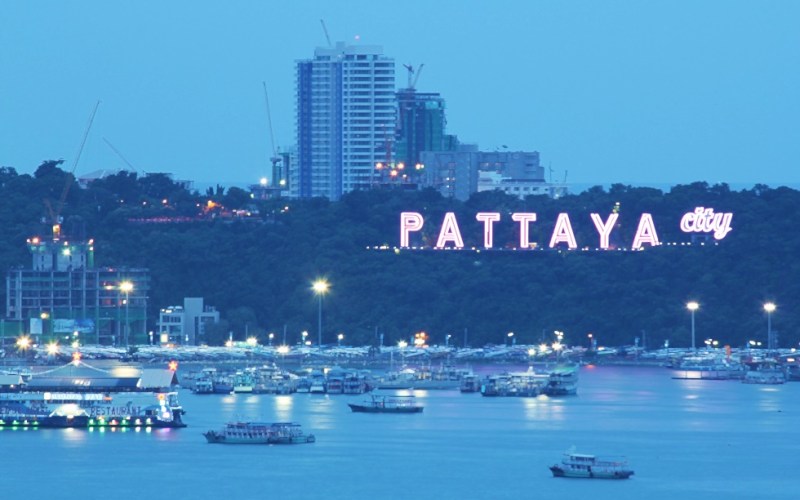
The mayor added that the "Pattaya, Move on" project will be implemented under standard operating procedures for international arrivals, such as COVID-19 testing and guidelines for sealed routes.
It has also been reported that ALL visitors must present themselves for a health-check every seven days.
The proposals will be presented to the Public Health Ministry, before being forwarded to the Centre for COVID-19 Situation Administration for approval next month.

Chonburi –
The Chonburi Department of Public Health announced 62 new and confirmed cases of Covid-19 today, May 31st with three new deaths, mostly driven by clusters at factories and migrant worker camps.
This makes a total of 4,669 cases of Covid-19 in the current round of infections, with 992 still in medical care, and with a total of 28 recorded deaths in Chonburi since the start of this recent round of infections in early April. Three additional deaths were announced this morning although details were not released.
Additionally, 3,649 people in total have now been released from medical care and fully recovered since this current wave began. 41 people were released yesterday.

The district-level new cases were as follows today:
Mueang Chonburi with 39, Si Racha 14, Banglamung (including Pattaya) 2, Sattahip 1, Ban Bueng 1, Pan Thong 2, and three patients were transferred from another province to Chonburi for medical care.
The details on today's cases given were:
5.1 In families, 8 cases
5.2 In workplaces, 1 case
In the last day, a total 151 close contacts were tested from contact tracing, and 1,093 people were tested in proactive testing when medical staff goes out into the community. All are pending results.
Public health officials continue to urge people to not socialize outside of their direct household until the situation improves. Most cases have come from small social gatherings according to authorities.
Chonburi has significantly stepped up testing at industrial estates and their worker dormitories as well as workplaces in the province.
There were no new timelines for the second day in a row.

THAILAND: The Rural Doctors Society has accused the government of concealing information about the real situation facing supplies of the AstraZeneca vaccine promised for this week.
Suphat Hasuwankit, president of the Rural Doctors Society, posted on the society's Facebook page that a source told him the government now has to order 500,000 doses of the vaccine from South Korea to supply its mass vaccination campaign which kicks off on June 7, instead of sourcing from local production.
The government had to pay a lot more money for the AstraZeneca vaccine from South Korea simply to fulfil its promise that the AstraZeneca vaccinations will be available on time, Dr Suphat said.
And as the government had previously promised up to 1.8 million doses of the AstraZeneca vaccine will arrive in the first batch in June, people who have already booked their vaccination appointments may end up getting Sinovac jabs instead, he said.
As COVID-19 vaccine supplies remain insufficient worldwide due to low global manufacturing capacity, vaccine makers are handling vaccine orders strictly in chronological order, while some urgent orders are accepted with extra charges. Currently, only the Sinovac vaccine has been obtained by Thailand in an "urgent" manner, he said.

Dr Suphat said that as the government has a limited amount of the AstraZeneca vaccine, it has instructed hospitals to get 12 doses from each vial, instead of the 10 doses that the label recommends.
The idea is to increase the number of people who receive the vaccine by 20% while using the same amount of the vaccine, he said.
Given the vaccination situation, Thailand's COVID-19 outbreak will remain serious for several more months, while June is likely to be particularly chaotic in terms of vaccination management, he said.

Virus cases as of 30th May*
INN reported that 22 Thai provinces were now in the white zone meaning there are no Covid-19 cases at all.
Just four provinces including Bangkok remain in the red zone with more than 100 cases.
Five are in orange, 12 in yellow, and 34 in green.
*Virus cases as of 30th May
* Red - more than 100: Bangkok, Phetchaburi, Samut Prakan and Nonthaburi
* Orange - between 51 and 100: Chonburi, Pathum Thani, Narathiwat, Chachoengsao and Samut Sakhon
* Yellow: - between 11 and 50: Trang, Songkhla, Ayutthaya, Prajuab Khiri Khan, Yala, Saraburi, Chanthaburi, Ranong, Surat Thani, Nakhon Sri Thammarat and Ratchaburi.
* Green: - between 1 and ten: (includes) Rayong, Chiang Rai, Udon, Korat, Phuket, Khon Kaen.
* White: No cases reported: Chiang Mai, Phatthalung, Ubon, Chaiyaphum, Lamphun, Lampang, Phichit,Nakhon Phanom, Trat, Nan, Sukhothai, Phayao, Loei, Phrae, Uttaradit, Chainat, Phangnga, Amnat Charoen, Mae Hong Son, Mukdahan and Satun.


Thai embassies and consulates are issuing a Certificate of Entry (COE) for all travellers to Thailand, including those in the visa exemption list, as well as 60-day tourist visas and special tourist visas (STV).
Foreigners entering Thailand are required to have an ASQ hotel reservation and Covid-19 insurance.
At present, only semi-commercial flights are allowed to land in Thailand.
Foreigners allowed entry include diplomats and foreign workers, including their families, business representatives and experts invited by the government, permanent residents, foreigners with Thai families, students and their guardians, medical tourists and their attendants, business visa holders, Thai Elite Visa holders, APEC cardholders, STV and tourist visa holders, non-immigrant O retirement visa, non-immigrant OA and OX holders and migrant workers with official documents.
All foreigners are required to get in touch with their local Thai embassy to apply for a COE and for more information.
Until September 30, 2021, Thailand will allow a limited number of long-stay tourists under the STV programme. This long-stay visa is open to foreign nationals travelling to Thailand with the intention of staying long-term as a tourist.
Those eligible can get in touch with the Tourism Authority of Thailand Office or Thai embassy in their current location for more information.

What is visa amnesty?
As of May 29, 2021, all foreign nationals living in Thailand affected by the Covid-19 crisis will be granted a 60-day visa extension.
Who is covered by the visa amnesty?
All foreign nationals living in Thailand legally with a visa exemption entry stamp, tourist visa, non-immigrant visa or yearly extension of stay.
What are the rules related to visa amnesty?
Visa or permit to stay that is still valid and updated by the local immigration office.
Foreigners holding long-term visas, such as a work visa, marriage visa or retirement visa are required to apply for their yearly extension at the immigration office as usual.
Foreigners do not need an embassy letter to be granted the automatic visa extension due to Covid-19.
Is the Covid-19 visa extension free of charge?
No, the Covid-19 extension of visa costs 1,900 baht.
Will the visa amnesty be extended?
There is no indication that this visa amnesty or grace period will be extended.
What happens when the visa amnesty is lifted or not extended?
When the situation is resolved and returns to normal, foreigners must leave Thailand on or before the permit to stay date in their passports is up or must apply for the proper type of visa at the immigration office.
Travel Ban
Most international flights are banned, though some semi-commercial flights are allowed to land in Thailand.
Foreigners qualified to enter Thailand must apply for a "Certificate of Entry to Thailand" before they book a seat on the available repatriation flight.
90-day reporting
If you are a foreigner staying in Thailand for a period longer than 90 consecutive days holding a Non-Immigrant Visa or Extension of Stay, you are required by Thai Immigration to report your current address every 90 days. You may file for the TM47 notification in person, by mail, online, or through an agent.
Consequences of visa overstay
During this Covid-19 crisis in Thailand, some foreign nationals may find themselves overstaying in Thailand either by mistake, miscalculating the length of stay, forgetting their visa expiration date or by unforeseen cancellation of their flights due to travel restrictions.
As a foreigner, you are strongly advised to avoid overstaying in Thailand. But if you do find yourself in Thailand on an expired visa it is very important that you act fast and in the right way.
Cancellation of Visa on Arrival
Travellers from the following countries are no longer allowed visa on arrival: Bulgaria, Bhutan, China, Cyprus, Ethiopia, Fiji, Georgia, India, Kazakhstan, Malta, Mexico, Nauru, Papua New Guinea, Romania, Saudi Arabia, Taiwan, Uzbekistan, and Vanuatu.
Travellers from these countries are required to obtain a proper visa to travel to Thailand.
Though the visa on arrival for Russia has been cancelled, Russian passport holders may still enter Thailand for 30 days under the bilateral agreement. – The Nation
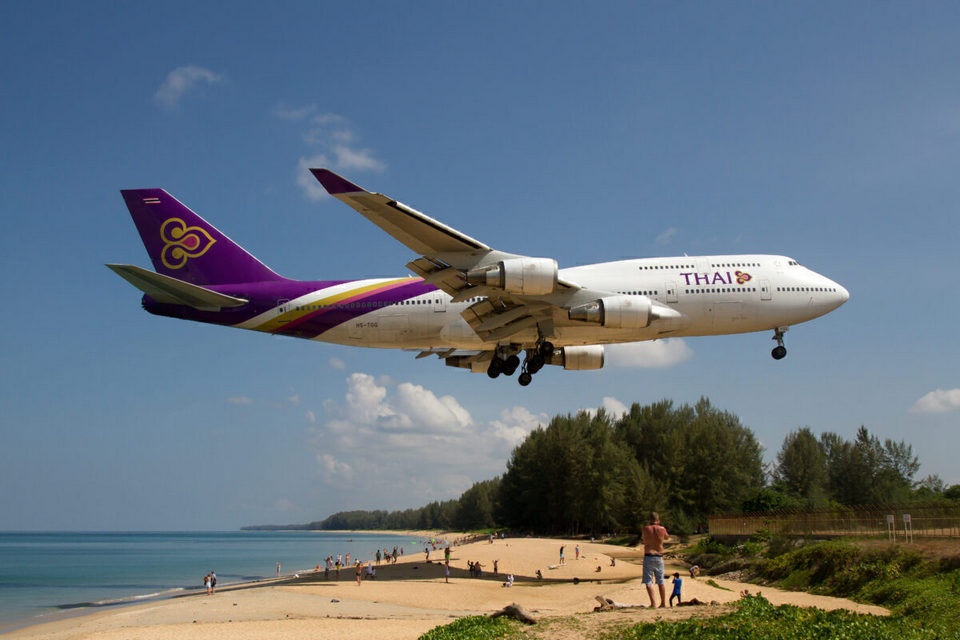
Travel agents say they are simply being overwhelmed by numerous questions of potential holidaymakers considering vacation choices this summer. Companies such as Discount Travel, TUI and Siam Tours say there has been considerable interest in Thailand as other neighboring countries – Cambodia, Vietnam, Singapore and the Philippines – have more or less banned pleasure visits altogether. But the situation is becoming more muddy rather than less.
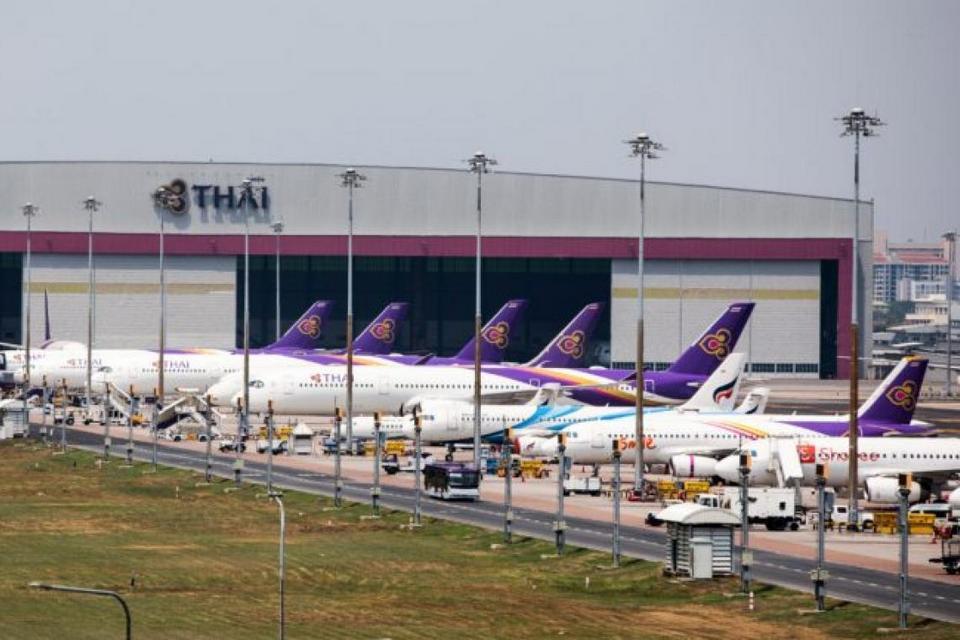
The latest question mark is the future of Thai Airways International plc following the decision of the Bangkok Bankruptcy Court on May 28 to defer a decision on a bailout plan by creditors until mid-June. The airline would need a cash injection of at least 50 billion baht (1.65 billion US) to continue its "Smooth as Silk" tradition. Currently, most THAI planes are parked idly on runways, although the company does undertake semi-commercial repatriation flights for Thais and non-Thais stuck abroad.
A spokeswoman for Siam Tours said, "The delay about the future of the national carrier, coming on top of a third wave of Covid-19 infections here, has unnerved many would-be vacationers from Europe who are frightened of losing their money or falling ill far from home." The Tourist Authority of Thailand has confirmed that the most likely source of income this year will European as both China and India have de facto banned their citizens from pleasure trips pending the coronavirus pandemic.
Defenders of THAI say that the airline in recent years has already taken gigantic steps to reduce losses. They include massive staff redundancies, the slashing of routes and huge reductions in the privileges enjoyed by executives. But critics say that the airline made heavy annual losses since 2013 (except for a small profit in 2016), has long suffered from blatant corruption and made awful choices when buying new planes in the 1990s. THAI's current liabilities are in the region of 400 billion baht (13.2 billion US).
Other worries that would-be travellers to Thailand raise are the complex visa procedures required for the certificate of entry from Thai embassies, confusion between specific Covid-19 insurance and more general illness and accident cover, lack of clarity about the Sandbox concept for quarantine-free visits and concerns that bars, clubs, beaches and tourist sites will still be closed when they get here.
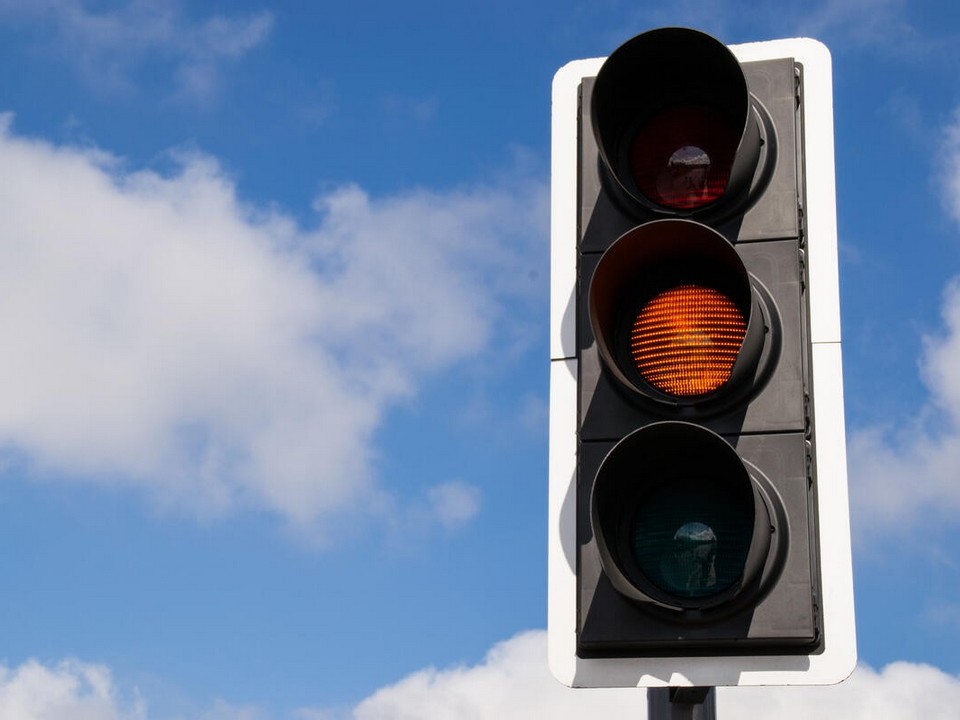
British tourists thinking of long haul have the extra worry about their government's weird traffic lights identification of foreign countries into green, amber and red. Thailand is an amber-designated country and official government advice is not to come here. Brits returning are expected to self-quarantine at home, but will need to be isolated in hotels at their own expense if amber turns to red. Thailand's recorded infections are rising daily at the moment.
From tourists to residents, Thailand is quietly changing Victor Wong (Peerasan Wongsri) December 22, 2025 Thailand has long drawn people in ...


