söndag 28 juli 2024

Thaksin isn’t too old to be prime minister at 75. Ex Thai premier and former exile Thaksin Shinawatra says he won’t stand again to become prime minister as 75 years is too old to lead a country.- Pattaya Mail

Thaksin isn't too old to be prime minister at 75

Thaksin is still a young man to scale the heights of political power.

Ex Thai premier and former exile Thaksin Shinawatra says he won't stand again to become prime minister as 75 years is too old to lead a country. Of course, advancing years are often a factor in high office, especially in countries defined loosely as democracies. Joe Biden has recently withdrawn his hat from the American presidential ring at age 81, although suggestions of mental decline (rather than age as such) were likely the key determinant. Yet advancing years in world leaders have been a constant factor since Old Testament times.

In Thailand, General Prem Tinsulanonda died in 2019 at the age of 98, having retired as Regent of Thailand only three years before. Whilst prime minister in the 1980s, he became the ninth oldest man in the 20th century to hold that position. The head of state currently being the most mature is president and dictator Paul Biya of the Cameroons at 91 years. He has been in power for four decades and supporters want him to run again in the 2025 elections. Biya's health is claimed to be good although a doctor who divulged to an American journalist that the president had a heart condition was found two days later in a roadside ditch.

Other record breakers have included Giovanni Paolo Lascaris who died as ruler of Malta and head of the Knights Hospitaller at age 97 in the 17th century. More recently, Queen Elizabeth II died in office in 2022 at 96, whilst pope Francis is still battling at age 87. It is very rare to have legislation in place to force leaders to stand down at a given age. A US senator two years ago did propose 75 years as the cut-off point to be a presidential candidate, but the matter was never even discussed officially.

Old men over 70 are currently heads of state in two thirds of countries, mostly third world dictaorships. Research published by Business Insider suggests that historically such guys are at considerable risk of a violent death. In the last one hundred years, 40 percent of presidents and prime ministers have met their doom by assassination or in suspicious air crashes with the occasional suicide also thrown in. But if they made it into retirement, almost all died in bed of heart disease, cancer or a stroke.

Perhaps the last word on ageing and power should go to Brunhilde Pomsel, Joseph Goebbels' secretary, who died in 2017 at age 106. Asked what she remembered best about Adolf Hitler, she replied "Not a Thing!" before adding she couldn't give any more details as it was lunchtime.



lördag 27 juli 2024

The 60 days visa exempt and Destination Thailand Visa empower immigration officers. An interview between the Bangkok Post and a deputy director general of the foreign affairs ministry has clarified some visa ambiguities but left others to immigration discretion.- Pattaya Mail

The 60 days visa exempt and Destination Thailand Visa empower immigration officers
The latest visa rules boost short term holidaymakers and "activity" tourists, but the rule book has ambiguities.

An interview between the Bangkok Post and a deputy director general of the foreign affairs ministry has clarified some visa ambiguities but left others to immigration discretion. The actual recording is, according to the newspaper, available only by downloading the digital web player Spotify. Naruchai Ninnad, representing the ministry, emphasized that the new policies were designed to increase foreign tourism, in accordance with the prime minister's desire to benefit the economy.

Khun Naruchai clarified that tourists from 93 countries receiving the visa-exempt 60 days on entry could indeed extend for a further 30 days at local immigration. They could then, if they wished, leave the country and return the following (not the same) day to obtain a new 60 days and repeat the whole procedure. This has implications for the celebrated, single-day border runs which have traditionally operated through agencies in Bangkok and the provinces. If implemented fully, repeat if, these tourists would need to pay for a night's accommodation in a foreign country, thus raising costs.

The deputy director general emphasized the number of repeatable visa exempts will depend on individual immigration officers who have absolute discretion. Accordingly, it appears that tourists could still be challenged with the cry "you come to Thailand too often without a visa". The interview also clarified that if visa-exempt tourists wanted to do ad hoc work – lasting fewer than 15 days – they needed to inform the immigration officer on entry or report to the employment ministry soon afterwards.


Turning to the new Destination Visa Thailand, available only at foreign embassies or via the e-portal of the foreign affairs ministry, Khun Naruchai emphasized that the main target group were digital nomads and remote workers employed by overseas companies. But applications are also welcome from "activity" based tourists, assuming they have suitable documentary evidence such as enrolment for Thai boxing or cookery classes. Or even as hospital patients. Another surprising category is "music festivals" though precisely what evidence and updates would be required for any of the above remains blurry. These matters are presumably for the discretion of the immigration officer on entry throughout the multiple-entry five years validity of the DTV.
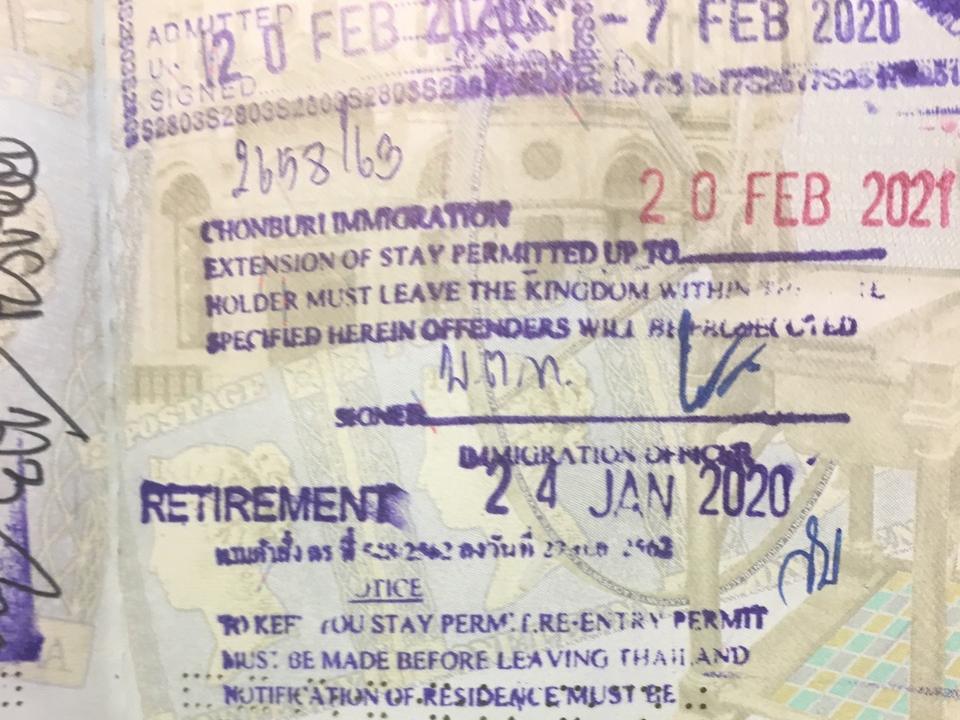
Expats with one year extensions of stay based on marriage or retirement or the Elite visa are virtually ignored in the latest set of changes. It will probably be many months before the visa exempt and DTV ambiguities begin to clear up, so expats are probably safer to stick with what they have. Separately, any foreigner (with any visa or no visa at all) now residing in Thailand for 180 days or more in a calendar year is subject to taxation on "assessable" overseas income with many details yet to be unfolded. There is no elephant in the room. There are several.

torsdag 25 juli 2024

Thailand's Visa-Free Policy Draws Record Tourist Numbers from Taiwan, India. ASEAN NOW


Thailand anticipates a record influx of tourists from Taiwan and India this year, thanks to its recent visa-free policy.


The visa exemption, initiated in late 2023, now allows Taiwanese and Indian tourists an extended stay of 60 days in Thailand, lasting until November 11. 


The Tourism Authority of Thailand (TAT) has revealed plans for a reciprocal annual visa-exemption programme with Taiwan and India, set to launch shortly. 


TAT Taipei office director Sarima Chindamat expressed optimism, estimating Taiwanese visitor numbers could reach one million this year, surpassing the base-case scenario of 700,000. This would exceed the 2019 visitor count of 781,674.


"During the first half of 2024, the visa policy resulted in 533,000 Taiwanese visitors, a 34% increase compared to the same period in 2019, which saw 396,000 arrivals," Chindamat stated.


An estimated 18 million Taiwanese are expected to travel abroad this year, surpassing the 17 million who did so in 2019. Popular destinations for Taiwanese tourists include Thailand, Japan, China, Hong Kong, South Korea, and Vietnam.


Chindamat noted lucrative market segments such as LGBTQ tourists, active seniors, families, young people, and golfers, with average spending per Taiwanese visitor around 40,000 Baht (US$1,100) per trip. Flight capacity between Taiwan and Thailand has returned to 2019 levels, offering 1.5 million seats.


TAT aims to draw over two million Indian tourists this year, supported by a subsidy for Indian meeting and incentive groups visiting during the low season from July to September. TAT Mumbai office director Isada Saovaros reported that tour operators receive 200 Indian Rupees (86 Baht or US$2) per guest for groups of 100 to 1,000 guests staying over four days and three nights. 


"In the first half of the year, Thailand welcomed 1.04 million Indian tourists, with average spending of 38,000 Baht (US$1,000) per trip," Saovaros added.


With an expected 29 million trips by Indian tourists by 2025, TAT New Delhi office offers a similar incentive programme for meeting groups exceeding 100 participants. 


Siriges-a-nong Trirattanasongpol, TAT New Delhi office director, estimated flight capacity for Indian travellers this year to recover to 90% of 2019 levels. 


"Besides major destinations like Bangkok and Phuket, we encourage airlines to consider new routes to Krabi and Chiang Mai," she added, targeting Indian tourists from second-tier cities. 


As Thailand enhances its tourist attractions and accessibility, it aims to solidify its position as a premier travel destination in Asia.


Picture courtesy: Positioning


-- 2024-07-25


onsdag 24 juli 2024

Thai Government Appears to Back Off Recriminalization of Cannabis as an Illegal Narcotic - The Pattaya News

Thai Government Appears to Back Off Recriminalization of Cannabis as an Illegal Narcotic

National —

At 11:50 AM on July 23rd, 2024, Deputy Prime Minister and Interior Minister Anutin Charnvirakul addressed the media following a cabinet meeting about Prime Minister Srettha Thavisin's discussion with Public Health Minister Somsak Thepsuthin regarding the proposal of a reclassification of cannabis as an illegal narcotic.

Thai national media inquired of Anutin about his relationship with Somsak, Anutin said it was better for the Prime Minister to speak on the matter, indicating mutual understanding and mentioning the need for regulatory legislation for cannabis. Anutin appreciated the Prime Minister's consideration and decision to implement a specific law for cannabis control.

Anutin was referring to multiple reports that the Prime Minister had reportedly called for controlling cannabis via laws passed by a democratic process in the Parliament and Senate versus using ministerial regulations to make cannabis illegal again, which could have seen a return to imprisoning people for a small amount of marijuana. This followed a meeting with multiple senior Thai government leaders, such as Anutin, before the cabinet meeting today.

It also followed weeks of protests and hunger strikes by pro-cannabis protesters. They have also been calling for regulation, not recriminalization, of marijuana. They also released a response to the reported U-turn by the Thai Government which is further below. 

On whether Bhumjaithai Party's stance remained unchanged, Anutin confirmed it, expressing gratitude for the decision to enact legislation. He added that discussions would involve Deputy Prime Minister Phumtham Wechayachai and others to draft the law, noting Bhumjaithai already had a draft bill ready.

Anutin denied any discussions about cannabis policy or any political topics with former Prime Minister Thaksin Shinawatra, whom he recently met for a golf game in Pak Chong, Nakhon Ratchasima.

Meanwhile, the "Writing Thailand's Cannabis Future" network released a statement in response to the Prime Minister's directive for cannabis control:

  1. The network emphasized the importance of creating a comprehensive cannabis control law, urging the public to follow the legislative process as cannabis remains regulated but not classified as an illegal narcotic.
  2. They pledged to continue their advocacy until the cannabis bill was approved by Parliament and enforced.
  3. The network thanked the Prime Minister and all responsible parties for their consideration, and Bhumjaithai Party for steadfastly defending cannabis policy, ensuring its control under specific legislation.

The statement highlighted the collaborative effort across academic, political, and public sectors to establish a proper cannabis policy for Thailand.


fredag 19 juli 2024

Expats angry at huge concessions in latest Thai visa announcements. The disenchanted argue that the 60 days visa-exempt can evidently be extended at local immigration for 30 days more followed by a border run to start the whole process again. Some immigration officers at Bangkok’s Suvarnabhumi airport have allegedly told new arrivals they can now do as many border runs as they like. - Pattaya Mail

Expats angry at huge concessions in latest Thai visa announcements
There are many ambiguities concerning the latest visa options.

Longstay expats with expensive visas say the new 60 days visa-exempt policy and the 180 days Destination Thailand Visa have made the Elite visa and the annual extensions of stay for retirement and marriage worthless. Geoffrey Fisher, a Brit who recently paid 900,000 baht (about 20,000 UK pounds) for the five year Elite visa said he had wasted his money as more or less anyone can now stay in Thailand almost indefinitely for a paltry sum.

The disenchanted argue that the 60 days visa-exempt can evidently be extended at local immigration for 30 days more followed by a border run to start the whole process again. Some immigration officers at Bangkok's Suvarnabhumi airport have allegedly told new arrivals they can now do as many border runs as they like. Separately, the five years and multi-entry Destination Thailand Visa (DTV) offers 180 days on entry for 10,000 baht (around 200 UK pounds) plus the chance to extend for a further 180 days. The process can then be repeated by briefly leaving the country.

American expat Dan Silverman, who holds a yearly extension based on retirement, said, "It's just ridiculous. I have to keep 800,000 baht in a Thai bank, obtain medical insurance, face ever-changing regulations and regularly report my Thai address throughout the year, or be fined." He added, "And for what, when you can come and go as you please with the new visas?" Views such as this are currently being voiced widely on social media as expats digest the latest visa announcement.

Of course, the critics may be over-reacting. Information officially published so far does not specify the number of times the visa-exempt discretion may be used. The DTV requires a cash bond or other proof of 500,000 baht. It is principally aimed at digital nomads and freelancers working for foreign companies (not Thai based) and applicants are expected to show to embassies contracts of employment or portfolios of work undertaken.

Yet the foreign affairs ministry also accepts DTV applications from participants in Thai "soft power" activities such as Thai cooking classes, Muay Thai training, medical treatment, music festivals or seminars. Although applicants have to show some relevant documentation on application, there is wide concern about the ambiguities. One expat with a one year marriage extension said, "Would an appointment letter from a hospital for extracting your teeth enable you to get 180 days plus an extension of 180 days? Does a foreigner learning Thai cuisine need five years to learn how to cook?"

Immigration consultants say that the basic problem is that the foreign affairs ministry controls visas from embassies, but the immigration bureau under the interior ministry is responsible for extensions and what happens after arrival. Immigration lawyer Jessataporn Bunnag said, "The DTV throws a great deal of responsibility on embassies to check out initial applicants and on the immigration bureau to monitor extensions and repeats." He expected some clarification once the impact of the changes had been analyzed.

Meanwhile, the Bangkok Post suggests that questions may be emailed to deeperdiveThailand@gmail.com Next week that newspaper will interview Narunchai Niddad, deputy director of consular affairs at the foreign affairs ministry. One is bound to wonder how many of the beneficiaries of the new visas will understand that, once they are in Thailand for six months or more in a calendar year, they become tax residents of Thailand and subject to the income tax policy of the Thai Revenue Department. Whatever that is.


Revanschresor ebbar ut: Flygbolagen vacklar. Efter pandemin såg vi en kraftig ökning av så kallade revanschresor – där människor spenderade stort på semestrar efter lång tid av restriktioner. Men nu, med ökade levnadskostnader, är resenärer mindre benägna att betala höga priser för flygbiljetter. Detta tvingar flygbolagen att erbjuda rabatter för att fylla sina säten. - Dagens PS

Revanschresor ebbar ut: Flygbolagen vacklar
Flygbolagen går inte med vinst

Sommarens semesterperiod är i full gång. Om flygbolagen jublar över det? Knappast. 

United Airlines har nyligen meddelat att de förväntar sig en svagare lönsamhet, vilket följer samma trend som Alaska Airlines och Delta Air Lines. Orsaken? Ett priskrig som pressar ner biljettpriserna.

Pessimismen sprider sig till Europa

Den dystra stämningen i USA börjar nu kännas av även i Europa. 

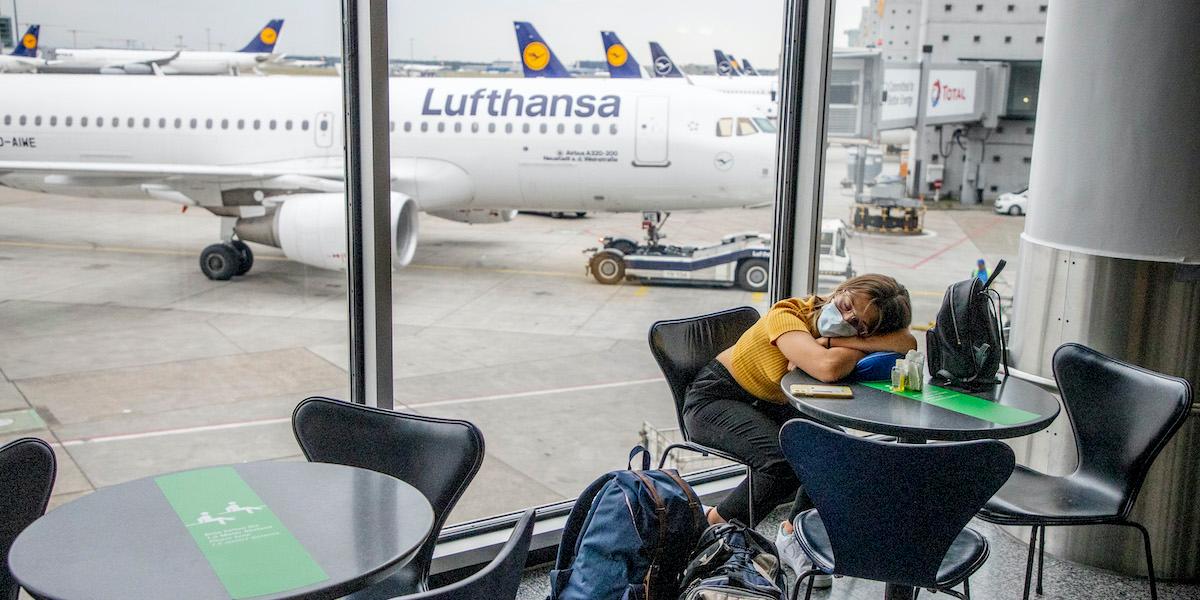
Deutsche Lufthansa har sänkt sin vinstprognos för året och varnar för att det blir svårt att nå lönsamhet för deras tyska enhet. 

Qatar Airways påpekar att överkapacitet på marknaden pressar ner priserna ytterligare.

I Sverige har SAS i sin tur rapporterat ett ökat flygande under årets andra kvartal, men likt de amerikanska kollegorna har man gått med förlust

Återgått till normala resvanor

Efter pandemin såg vi en kraftig ökning av så kallade revanschresor – där människor spenderade stort på semestrar efter lång tid av restriktioner. 

Men nu, med ökade levnadskostnader, är resenärer mindre benägna att betala höga priser för flygbiljetter. 

Detta tvingar flygbolagen att erbjuda rabatter för att fylla sina säten.

Överkapacitet och störningar skapar problem

Ett av de största problemen flygbolagen står inför är överkapacitet, när de återupptar tjänster som pausades under pandemin, skriver Bloomberg. Trots att människor just nu flyger en hel del, är det svårt att fylla alla platser till lönsamma priser.

Lufthansa expanderar för snabbt, enligt analytiker Johannes Braun, vilket kan leda till långsiktiga problem för företaget. 

Samtidigt skapar problem med flygtrafikkontroll och lönekonflikter på bolag som Aer Lingus ytterligare störningar och avskräcker resenärer.

Aktiemarknadens reaktion: En dämpad sommar

Aktiemarknaden har reagerat på den dämpade stämningen. 

Lufthansa har tappat omkring 27 procent av sitt värde i år, medan Air France-KLM har sjunkit 38 procent, delvis på grund av att folk undviker Paris under sommarens OS. 

En ljuspunkt är IAG SA, ägare av British Airways, Iberia och Aer Lingus, vars aktier har ökat med 12 procent tack vare förväntningar om en stark transatlantisk efterfrågan.

Framtidens test: Farnborough Air Show

Flygindustrins hälsa kommer att sättas på prov nästa vecka när flygbranschens ledare samlas på Farnborough Air Show nära London. 

Vanligtvis är detta en plats för stora affärer, men årets mässa väntas bli lugnare då både Boeing och Airbus kämpar med produktionsproblem.

Kommande rapporter

Nästa vecka kommer flygbolagen Ryanair och EasyJet rapportera sina resultat, vilket kommer ge viktiga insikter i efterfrågan på resor i budgetsegmentet. 

Ryanair har redan genomfört flera omgångar av rabatter för att stimulera efterfrågan, och vd Michael O'Leary har sagt för att sommarens biljettpriser blir lägre än tidigare beräknat.

Trots de utmaningar flygindustrin står inför, är det vissa analytiker som menar att det värsta kan vara över. 

Medan biljettpriserna i andra kvartalet var svagare, finns det förhoppningar om att sommarens topppriser kommer att vara högre.


onsdag 17 juli 2024

Bangkok Post - Airport wait to be cut. The Immigration Bureau (IB) is set to take measures to ensure immigration control at airports takes no more than 45 seconds per person. The move is part of efforts to support the government's expanded visa-free scheme for foreign visitors, which took effect on Monday.

Airport wait to be cut
Travellers at immigration booths in Suvarnabhumi airport, Samut Prakan. (File photo: Somchai Poomlard)
Travellers at immigration booths in Suvarnabhumi airport, Samut Prakan. (File photo: Somchai Poomlard) 

The Immigration Bureau (IB) is set to take measures to ensure immigration control at airports takes no more than 45 seconds per person.

The move is part of efforts to support the government's expanded visa-free scheme for foreign visitors, which took effect on Monday.

Pol Maj Gen Phanthana Nutchanart, the IB deputy chief, said on Tuesday that the bureau is ready to follow the government's policy.

The number of immigration officials will also be increased to ease long queues in front of immigration check-in booths at airports during peak passenger hours.

"We will try to ensure that each arriving passenger will take no more than 45 seconds to pass through immigration," Pol Maj Gen Phanthana said. 

He added that airports are also implementing biometric technology to guard against transnational criminals.

Section 38 of the Immigration Act also allows immigration authorities to keep track of foreigners who are staying in the country, Pol Maj Gen Phanthana said.

The section stipulates that house owners, heads of household, landlords or managers of hotels who accommodate foreign visitors must report their presence to immigration authorities within 24 hours of their arrival, he said.

The government's expanded visa-free scheme for foreign visitors will now bring the number of countries and territories whose citizens can enter the kingdom without a visa from 57 to 93. 

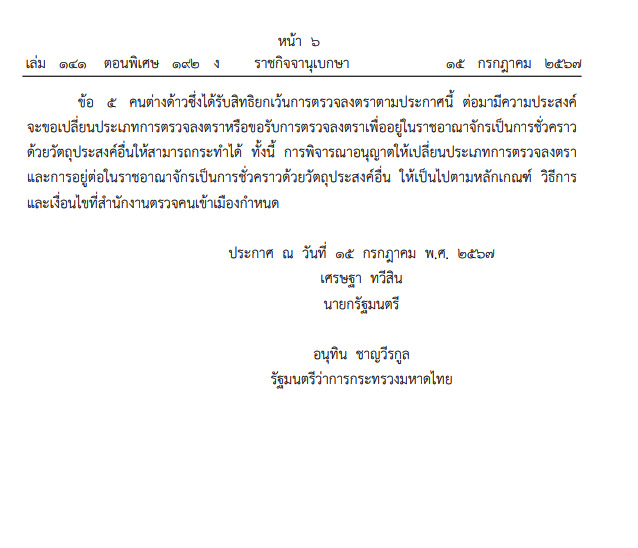
The details of the expanded visa-free scheme were published in the Royal Gazette on Monday.

Those arriving under the visa-free scheme can now stay in the country for 60 days.

Prime Minister Srettha Thavisin previously said the immigration police and security authorities would have the necessary arrangements in place.

"I believe the scheme will bring benefits in the long run," the prime minister said.

The Ministry of Interior initiated the move to expand the visa-free scheme.

The updates to the scheme include expanding the list of countries exempt from visa requirements, increasing the number of countries whose nationals are eligible for visas on arrival, introducing a new Destination Thailand Visa (DTV) for remote work and tourism, and extending the stay of foreign students for employment opportunities after graduation.

The DTV allows foreigners to stay in Thailand for up to 180 days at a time for tourism and remote work. The multiple-entry visa is valid for five years. Eligible foreigners are remote workers, also known as digital nomads or freelancers, and those who participate in activities such as Muay Thai courses, Thai cooking classes, sports training, medical treatment, seminars, and music festivals. 

Spouses and dependent children of DTV holders are also included.

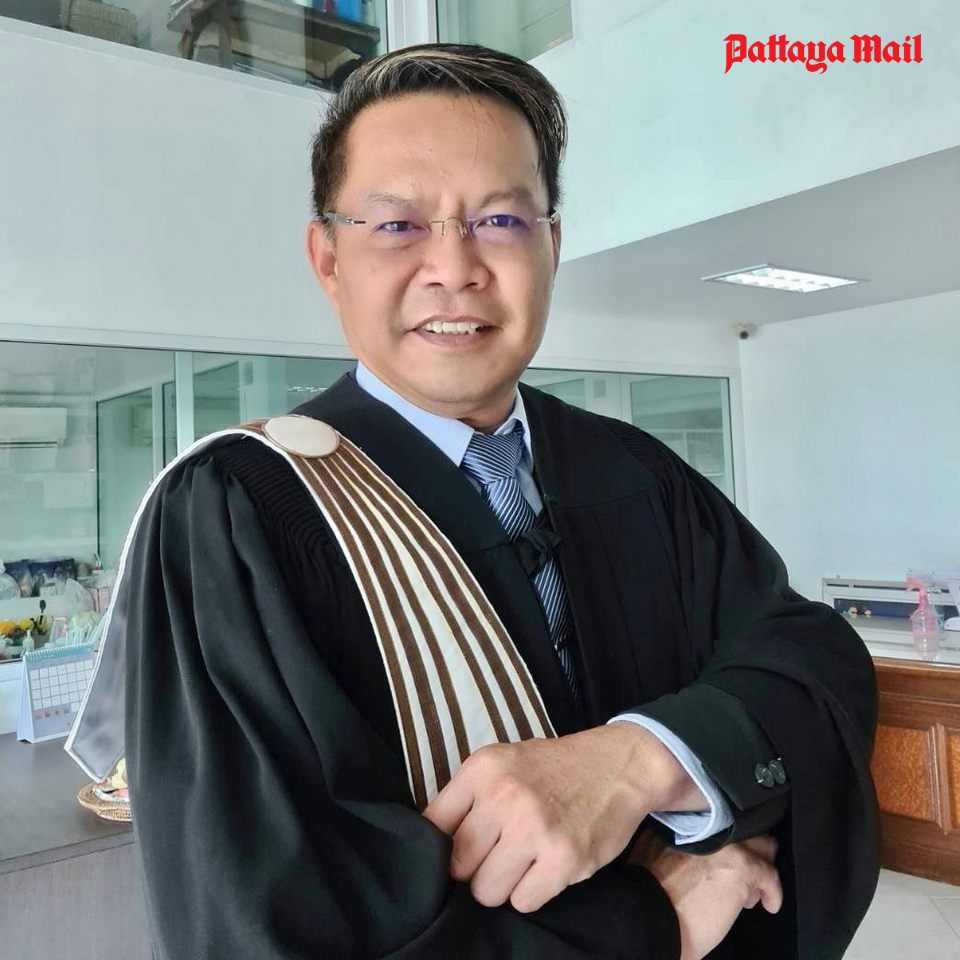
Pol Maj Gen Phanthana Nutchanart, Immigration Bureau deputy chief, says the bureau is ready to follow the government's expanded visa-free scheme for foreign visitors. (Photo supplied)


Thailand Officially Grants 60-Day Visa Exemption to Passport Holders from 90 Countries and Territories. On July 15th, 2024, the Royal Gazette announced new regulations from the Ministry of Interior, granting visa exemptions for passport holders from 90 countries and territories for short-term visits up to 60 days.- The Pattaya News

Thailand Officially Grants 60-Day Visa Exemption to Passport Holders from 90 Countries and Territories

National —

On July 15th, 2024, the Royal  Gazette announced new regulations from the Ministry of Interior, granting visa exemptions for passport holders from 90 countries and territories for short-term visits up to 60 days. 

This move aims to boost tourism and business travel as part of Thailand's economic recovery post-COVID-19.

Effective immediately, travelers from the following countries can enjoy visa-free entry for tourism, business, or short-term work: Albania, Andorra, Australia, Austria, Bahrain, Belgium, Bhutan, Brazil, Brunei, Bulgaria, Cambodia, Canada, China (including Hong Kong, Macao, and Taiwan), Colombia, Croatia, Cuba, Cyprus, Czech Republic, Denmark, Dominica, Dominican Republic, Ecuador, Estonia, Fiji, Finland, France, Georgia, Germany, Greece, Guatemala, Hungary, Iceland, India, Indonesia, Ireland, Israel, Italy, Jamaica, Japan, Jordan, Kazakhstan, South Korea, Kosovo, Kuwait, Laos, Latvia, Liechtenstein, Lithuania, Luxembourg, Malaysia, Maldives, Mauritius, Malta, Mexico, Monaco, Mongolia, Morocco, Netherlands, New Zealand, Norway, Oman, Panama, Papua New Guinea, Peru, Philippines, Poland, Portugal, Qatar, Romania, Russia, San Marino, Saudi Arabia, Singapore, Slovakia, Slovenia, South Africa, Spain, Sri Lanka, Sweden, Switzerland, Tonga, Trinidad and Tobago, Turkey, Ukraine, United Arab Emirates, United Kingdom, United States, Uruguay, Uzbekistan, and Vietnam.

This special measure underscores Thailand's effort to attract more international visitors and revitalize the economy by enhancing ease of travel. The initiative seeks to encourage foreign investments and tourism, recognizing their vital roles in economic stimulation.

Travelers wishing to extend their stay beyond 60 days can apply for a 30-day extension at the Immigration Office. Additionally, those seeking to change their visa type for other purposes can follow the standard procedures set by the Immigration Bureau.

This announcement, however, does not yet apply to other recent updates including visa on arrival for 31 countries, Destination Thailand Visa (DTV), and Post-Graduate Stay Extension, noted TPN.

Read more about the Secretary to the Thai Minister of the Interior announcing the issuance of four updated ministerial regulations to modernize visa measures effective on July 15th.


tisdag 16 juli 2024

Don’t panic because Thai Revenue has written to 100,000 tax residents urging registration - Pattaya Mail

Don't panic because Thai Revenue has written to 100,000 tax residents urging registration

Contrary to fake news, no expats have received Thai Revenue letters urging them to register.

Panicky expats in Thailand have been advised that none of the 100,000 tax residents in receipt of advisory letters from the Thai Revenue Department (TRD) are foreigners. Nor does the letter have anything to do specifically with transmitting overseas income to Thailand. According to mainstream media, TRD Director General Kulaya Tantitemit stated that the letters had been posted to Thai nationals with financial assets, urging them to register. About half that number had done so and staff were following up on the rest.

Director General Kulaya stated that her department was widening the tax base and looking to increase revenue which had been negatively affected by the reduction in the number of condominium units sold over the past year. She anticipated that the main growth areas in taxation would be in energy businesses, financial services and tourism. She made no specific reference to overseas income although, of course, that is potentially taxable.

Expats are currently concerned about the closing of a tax loophole which means that their "assessable" overseas income to Thailand becomes taxable from the start of 2024 provided they are tax residents remaining in Thailand for at least 180 days during the calendar year. The actual parameters and liabilities remain unclear to say the least with some tax lawyers saying they expect TRD to make further announcements before the year's end.

The TRD does not have access to foreigners' Thai addresses unless, of course, they choose to register with the government department. It has been rumored that such registration could become part of the process of renewing annual extensions of stay based on retirement or marriage, but the immigration bureau knows nothing of such a plan. In any case, there is no automatic connection between the type of visa granted and eligibility for tax residency. For example, some tourists could clock up 180 days in a year by exploiting the recently revised exempt visa regulations. There's a huge amount of water still to pass under this particular bridge.


Dengue infections in Thailand reach record 44,387 cases in first six months of 2024. The latest epidemiological surveillance report from Thailand’s Department of Disease Control (DCD) has revealed an alarming surge in dengue fever cases in 2024. As of July 10, the number of reported cases has reached a staggering 44,387, representing a 1.06-fold increase from the same period in 2023. | Thaiger

Dengue infections in Thailand reach record 44,387 cases in first six months of 2024

Visa exemption-60 days


söndag 14 juli 2024

Navigating Foreign Pension Income Tax for Expatriates in Thailand. After receiving numerous inquiries about personal tax management from foreigners residing across Thailand, I am revisiting this topic to explain the implications of foreign pension income in light of new regulations.- Pattaya Mail

Navigating Foreign Pension Income Tax for Expatriates in Thailand

Peerasan Wongsri (Victor Wong]) Financial Analyst and Tax Expert.

After receiving numerous inquiries about personal tax management from foreigners residing across Thailand, I am revisiting this topic to explain the implications of foreign pension income in light of new regulations.

This report provides an in-depth look at how P.O. 161-162/2567 affects foreign pension income in Thailand, equipping expatriates with the knowledge to navigate this new regulatory environment effectively.

As Thailand continues to refine its taxation policies to accommodate its growing expatriate population, the recent introduction of regulations P.O. 161-162/2567 by the Thai Revenue Department is pivotal for those receiving foreign pension income. This change aims to streamline the financial transitions for foreigners living in Thailand, particularly those who rely on pensions sourced from abroad.

Decoding P.O. 161-162/2567
Effective as of early 2023, these regulations provide crucial clarifications for foreign nationals regarding the taxation of their pension incomes. Notably, P.O. 162 explicitly states that foreign-sourced pension income received before January 1, 2024, can be brought into Thailand without incurring local taxes, at any future point. This provision marks a significant shift in Thailand's approach to the fiscal management of foreign pensions, potentially affecting thousands of retirees across the kingdom.

Role of Double Taxation Agreements (DTAs)
Thailand's network of Double Taxation Agreements (DTAs) plays a crucial role in the implementation of these regulations. These agreements, designed to prevent the same income from being taxed by two countries, ensure that pensions are taxed only in the country of origin. Under the new rules, DTAs will continue to protect expatriates by preventing Thailand from taxing pension incomes that have already been taxed abroad or are set to be taxed by retirees' home countries. However, should there be any discrepancy in tax rates, additional taxes may still be collected in Thailand, although such measures are not yet officially declared and enforced.

Financial Planning Considerations
Understanding and leveraging P.O. 161-162/2567 involves more than just knowing the law it's about strategic financial planning.
Tax Planning: Expatriates should consider how and when they remit their pensions to Thailand, taking advantage of the tax exemptions for income earned before 2024.
My Advice: Given the complexities of DTAs and Thai tax law, consulting with a financial advisor or tax professional is advisable. I can provide tailored advice on how to optimize pension remittances and minimize tax liabilities.

Challenges Ahead
Despite the clear benefits, the implementation of P.O. 161-162/2567 isn't without challenges. Expatriates must navigate.

Documentation Requirements: Ensuring proper documentation and compliance with both Thai and international tax regulations is essential.

Regulatory Changes: Staying informed about any future changes in Thai tax policy that could affect their financial planning.

Conclusion
The Thai Revenue Department's update via P.O. 161-162/2567 offers a more favorable and clear tax landscape for expatriates with foreign-sourced pensions. As Thailand becomes an increasingly popular retirement destination, these changes are welcomed by many in the expatriate community, providing clarity and confidence in managing their retirement finances.

Call to Action
Expatriates benefiting from foreign pensions are encouraged to review their financial strategies and consult with tax professionals to fully understand the implications of these new regulations on their personal financial situations.

Victor Wong
(Peerasan Wongsri)
Financial Analyst and Tax Expert
Tel: 062 879 5414 Email: victorlawpattaya@gmail.com

For additional insights and the original article discussing expat legal concerns in Pattaya, click here: New tax rules for foreign-sourced income