fredag 1 november 2024

Dental insurance: A guide for expats in Thailand. Choosing the right health and dental insurance plans. ASEAN NOW


For expatriates living in Thailand, dental health insurance is essential. Many expats rely on private dental insurance plans to cover routine and major dental treatments, as employer-provided coverage often falls short. 

To sum up, expats living in Thailand should invest in dental insurance from a private provider to ensure that they and their families are adequately covered in the event of dental emergencies.

This article by our friends at Pacific Prime explores the importance of dental insurance for expats in Thailand, the types of treatments covered, and why securing private insurance is a necessity.

Why dental insurance matters for expats

Expatriates living abroad face unique healthcare challenges, and dental care is no exception; in fact, it's very expensive. While Thailand boasts a high standard of dental care at affordable rates, having dental insurance in Thailand provides peace of mind by covering routine and emergency treatments, making up for the gaps in coverage offered by employer-provided insurance. 

As such, expats are advised to opt for expat dental insurance to ensure that they and their families are protected from unexpected dental costs, from routine checkups to more complex procedures. Dental treatments can be grouped into routine (preventive)and major (restorative or surgical) procedures, each playing a vital role in maintaining oral health. Here's a breakdown of their importance, ordered by priority.

1. Routine dental treatments (preventive care)

Routine dental treatments, also known as preventive care, are essential for maintaining long-term oral health. These treatments focus on early detection and prevention of common dental issues such as cavities and gum disease. 


Regular check-ups, cleanings, and x-rays allow for early intervention, helping to avoid more complex and costly procedures later. By promoting oral hygiene and addressing minor problems before they escalate, preventive care not only supports dental health but also contributes to overall well-being.

·      Consultations & examinations: These are crucial as they help detect dental issues early, before they worsen. Regular check-ups often prevent more serious conditions like cavities or gum disease.

·      Tooth cleanings: Professional cleanings remove plaque and tartar, reducing the risk of decay and periodontal disease. They maintain both oral and systemic health by preventing bacteria from spreading to other parts of the body.

·      X-rays: Essential for diagnosing hidden issues such as tooth decay between teeth, infections, or bone loss that are not visible during a regular examination.

·      Fillings: They restore teeth damaged by cavities, preventing further decay and preserving tooth structure.

·      Emergency treatments: Emergency care addresses sudden dental issues like tooth pain or trauma, preventing infection or complications.

2. Major dental treatments (restorative or surgical)


Major dental treatments, often restorative or surgical in nature, are necessary to address severe dental issues that go beyond routine care. These procedures, such as crowns, bridges, root scaling, and oral surgery, aim to restore both function and aesthetics to damaged teeth. 


By treating complex conditions like gum disease or tooth decay, major dental treatments play a crucial role in maintaining oral health and preventing further complications. Expats in Thailand are encouraged to have dental insurance in place to cover these higher-cost treatments and ensure access to quality care.

·      Tooth adjustments & root scaling: These treatments manage gum disease by removing plaque and tartar from beneath the gum line, preventing further bone loss and tooth loss.

·      Periodontal treatments: In advanced gum disease cases, procedures like root planing and flap surgery help prevent tooth loss and reduce the need for future dental surgeries.

·      Crowns & bridges: Crowns protect severely damaged teeth, while bridges replace missing teeth, both essential for maintaining oral function and aesthetics.

·      Dentures & repairs: Dentures restore the ability to chew and speak for those with missing teeth, improving quality of life. Repairs help prolong the longevity of existing dentures.

·      Surgical procedures: These include complex extractions and dental implants, which are often necessary when preventive care is no longer sufficient.

Choosing the right health and dental insurance plans

For those looking for broader coverage, expats can choose from plans that combine both dental and health insurance. These plans offer a variety of benefits, such as inpatient and outpatient medical coverage, emergency services, and vision care. 

Keep in mind that the vast majority of expat dental insurance policies will pay for any dental issues that an employee may have had in the past. That's because it's very rare for someone to have never had dental cleanings or simple treatments before in their life, so almost everyone has a pre-existing dental condition.

Some popular plan options include international health insurance, expat health insurance, and private health insurance, which have been listed and described below: 

International health insurance

International health insurance offers worldwide coverage for both medical and dental expenses. It is designed for people who travel frequently or live abroad for extended periods. This insurance ensures you receive care not only in your home country but also in the countries you visit or reside in. 

A comprehensive plan may include emergency dental treatment, general check-ups, and restorative care. One key benefit is access to private healthcare facilities, including dental clinics, and English-speaking professionals in various countries. This makes international health insurance ideal for expats who want global consistency in healthcare quality.

Expat health insurance 


Tailored specifically for expatriates, expat health insurance often provides both medical and dental coverage, which is vital when living abroad. These plans focus on the specific needs of expats, offering flexible coverage that includes preventive and emergency dental care. In many cases, dental coverage can be added as an optional benefit. 

Expatriates benefit from having access to local dental clinics and hospitals, and many policies allow them to choose providers. Moreover, some plans may include dental cleanings, fillings, crowns, and even orthodontics, depending on the level of coverage you select.

Private health insurance in Thailand

For expatriates residing in Thailand, private health insurance is a popular choice due to its customisation options. Many private insurers offer plans specifically designed for expats, which include both medical and dental care. 

In Thailand, these policies often allow you to tailor your coverage by adding dental benefits, which could range from routine check-ups and cleanings to more advanced procedures like root canals or dentures. The waiting period for major dental procedures is usually around 10 to 12 months, making early enrolment crucial if significant dental work is anticipated.

Altogether, dental insurance is an essential component of healthcare for expatriates living in Thailand. Relying on employer-provided coverage may leave gaps, especially for major dental procedures, which can lead to significant out-of-pocket expenses. 

By securing international health insurance, expats can ensure comprehensive coverage for both routine care, such as check-ups and cleanings, and major treatments like crowns or root canals. This proactive approach helps avoid unexpected financial burdens and ensures access to high-quality care in Thailand's reputable dental clinics.

Additionally, many expat-specific health insurance plans offer customisable dental options that cater to the unique needs of individuals and families. For more detailed quotes or to explore the best dental insurance options available for expats in Thailand, our friends at Pacific Prime offer a range of plans from top insurers.

torsdag 31 oktober 2024

Thailand’s medical insurance rules for foreigners are a muddle. Following the failure of an injured Brit to obtain free hospital treatment in Thailand, British insurers are calling for clarity.- Pattaya Mail


 Mer om försäkring och oklarheter 

Thailand's medical insurance rules for foreigners are a muddle
Each Thai visa or permission of stay has its own health regulations.

Following the failure of an injured Brit to obtain free hospital treatment in Thailand, British insurers are calling for clarity. Jonathon Cobb, 28, was injured when he fell off his motorcycle in Pattaya and broke his arm plus facial injuries. He told Pattaya Mail he was advised to go to a local hospital as the Thai government had granted cost-free treatment to foreigners as long as they held a tourist visa. Cover exists for up to one million baht, or 28,000 pounds, according to specific injuries or (at worst) death on a case-by-case, discretionary basis.


But John was told by hospital administrators as well as by police officers that he was not covered by the government grant and must pay his own bills. The Health Insurance for Non Thais or HINT scheme specifically excludes those who show "negligence, intent, illegal acts or risky behavior". John's problem was that he was not wearing a crash helmet, but his parents in UK paid the 300,000 baht or 7,000 pounds final bill. He also had to pay the rental company 30,000 baht or 700 pounds for damage to the bike.

UK-based insurers Worldwide Travelling said the Thai government scheme mainly covers compensation for death or loss of limbs or organs, but the bureaucracy is confusing. A Thai tourist ministry website gives a specific internet address for registration which appears to have been hacked. The actual data base for claims is with the Tourist Police Bureau and the National Institute for Emergency Medicine, although few foreigners are aware. The central medical fund of 50 million baht, in place till the end of 2024, is apparently underspent to date according to the tourist and sports ministry.

As visitor numbers to Thailand rise, medical insurance becomes ever more significant.

More broadly, say Worldwide Travelling, Thailand's requirements for medical insurance need updating. There is now a visa valid for five years, known as Destination Visa Thailand, which is technically a "tourist" permit but probably does not qualify for free accident cover as it offers an initial stay of 180 days. The 5-20 years Elite or Privilege Visa does not need hospital cover, but the 10-year Long Term Residence visa requires cover of US$50,000, or a Thai bank account showing a US$100,000 bond for an extended period.

Foreign retirees with one type of yearly visa, known as OA, require medical insurance on an ongoing basis, whilst those with the similar O type do not. The difference is that OA is initially awarded by a Thai embassy abroad whereas the O is an annual extension of stay issued by a different agency – the immigration police. Other visas not requiring medical insurance are annual extensions for foreigners married to Thais and permits to study the Thai language. However, foreigners with a Department of Employment work permit must pay a small proportion of their salary to be included in the Thai social security s scheme.

Immigration lawyer Jessataporn Bunnag said, "The government in recent years has introduced a host of different entry choices for tourists and longstay expats to increase treasury income. However there has been little coordination which has led to confusion." He pointed to a government working party which is currently examining various visas including those specifically catering for retirees. There has been no announcement or news since the establishment of the committee last July.


Thailand’s Medical Insurance Rules Confuse Tourists. Jonathon Cobb, a 28-year-old tourist from the UK, uncovered this muddle firsthand. While travelling in Pattaya, Cobb suffered a severe accident after falling from a motorcycle, resulting in a broken arm and facial injuries. Under the impression that the Thai government offered free medical treatment to foreigners holding tourist visas, he sought assistance, only to find out otherwise. ASEAN NOW


Picture courtesy: Freepik


Recent events have highlighted a pressing issue that has left many tourists in Thailand perplexed: medical insurance coverage. Jonathon Cobb, a 28-year-old tourist from the UK, uncovered this muddle firsthand. While travelling in Pattaya, Cobb suffered a severe accident after falling from a motorcycle, resulting in a broken arm and facial injuries.


Under the impression that the Thai government offered free medical treatment to foreigners holding tourist visas, he sought assistance, only to find out otherwise. Though the Thai government does provide coverage under the Health Insurance for Non-Thais (HINT) scheme, specifics seem to elude many.


Cobb's insurance was denied due to a clause excluding incidents involving "negligence, intent, illegal acts or risky behaviour," exacerbated by his lack of a crash helmet, reported Barry Kenyon for Pattaya Mail


The scheme covers amounts up to one million baht, roughly £28,000, but his case didn't qualify. Ultimately, Cobb's family faced a hospital bill of approximately £7,000, besides another £700 for motorcycle damages. The scenario has drawn attention to the broader misunderstanding many tourists face regarding Thailand's medical insurance provisions.


UK-based insurer Worldwide Travelling points out the current inconsistencies: coverage ideally includes major health outcomes like the loss of limbs or death, but the process remains fraught with complexities. An official Thai tourist ministry website offers a registration link that seems compromised, while actual claim data is managed by separate institutions, leaving many foreigners unaware of where to turn.


Adding to the complexity, Thailand's numerous visa types come with varied medical insurance requirements. The newly introduced Destination Visa Thailand, Elite Visa, and Long-Term Residence visa all bear distinct conditions, further clouding the picture for long-stay foreigners. Notably, foreign retirees with an OA visa mandatorily need insurance, whereas others don't.


As this issue garners attention, Thailand aims to streamline its processes. Immigration lawyer Jessataporn Bunnag notes that a governmental committee is reviewing existing visa conditions, but clarity remains awaited since its formation last July. For now, tourists and expats tread carefully amidst policy intricacies, hoping for a more straightforward system soon.


-- 2024-10-31


Thailand Postpones Start of Winter Season. A spokesperson from the Meteorological Department explained that the northern and northeastern regions are the only places currently experiencing temperatures below 23 degrees Celsius, while the rest of the country is still seeing rain. ASEAN NOW

😂😂😂😂😂😂😂😂😂😂😂Thailand är fantastiskt 


Thailand's Meteorological Department has delayed announcing the start of winter due to unusual weather conditions throughout the country. The department expected winter to begin on October 29.


A spokesperson from the Meteorological Department explained that the northern and northeastern regions are the only places currently experiencing temperatures below 23 degrees Celsius, while the rest of the country is still seeing rain.


Therefore, they will wait for a more widespread cold air mass before officially declaring winter. Officials hope to make an announcement within the next two weeks.


Last night's heavy rain and thunderstorms in Bangkok and nearby areas were the result of a strong cold air mass from China meeting a western wind system.


As this cold air pushes the western wind system south, northern Thailand should see drier and cooler weather soon.


File photo for reference only


-- 2024-10-30

onsdag 30 oktober 2024

Thai visa woes: From easy as pie to digital fly, book before you buy. Once upon a time, jetting off for a Thai visa was as easy as pie. A quick border dash to a nearby country, pop into a consulate in Laos, Malaysia, or Vietnam, and voilà! You’d be done and dusted, ready for an evening drink by the Mekong River. Ah, the good old days! But hold onto your hats, because the digital age has swept in like a whirlwind, turning the visa game on its head. | Thaiger

Thai visa woes: From easy as pie to digital fly, book before you buy

Once upon a time, jetting off for a Thai visa was as easy as pie. A quick border dash to a nearby country, pop into a consulate in Laos, Malaysia, or Vietnam, and voilà! You'd be done and dusted, ready for an evening drink by the Mekong River. Ah, the good old days!

But hold onto your hats, because the digital age has swept in like a whirlwind, turning the visa game on its head. In recent years, many consulates have swapped the spontaneous stroll-in method for an appointment-only system, meaning you have to jump online and nab a slot before making your visa run.

Now, brace yourselves: several Thai consulates in the region have ditched paper applications altogether, opting for the online-exclusive e-visa route. Others still cling to the good old-fashioned paper method but insist on an online appointment first. Confused about which consulate offers what? Don't fret! Here's the ultimate guide to prevent a wasted trip across the border.

Consulates going E-visa only

These days, some consulates won't even entertain the idea of a face-to-face submission. Moving exclusively to e-visas are:

  • Vietnam: Hanoi, Ho Chi Minh City
  • Malaysia: Kuala Lumpur, Penang, Kota Bharu
  • Cambodia: Phnom Penh

Thinking of strolling in? Think again! Applications must be submitted online, and here's a crucial tip: you've got to be in the country where the Thai consulate is based when applying. Unfortunately, no cheeky attempts from afar are allowed.

E-visa dilemma

Now, the e-visa concept might sound as smooth as silk—head to Vietnam, apply online, and zip back post-application. But here's where it gets sticky: what if they ask for more documents after you've returned home? Or worse, if they reject your application, you're stuck reapplying. Suddenly, staying put for the 5-10 day processing time seems unavoidable, turning the supposedly slick e-visa tech into a sticky wicket compared to the speedy traditional walk-in approach, Thailand Life reported.

Consulates requiring appointments for paper applications

Prefer the tangible world of paper? Some consulates still accept in-person submissions but demand an online appointment first. This mixed-method madness is available at:

  • Laos: Vientiane, Savannakhet
  • Myanmar: Yangon

While they technically offer walk-ins, don't try rocking up unannounced—you'll need that online appointment as your golden ticket. Rumours suggest agents may help you nab an appointment (for a fee, of course), but tread cautiously.

Walk-ins still welcome here

For those who crave nostalgia, a handful of consulates still embrace the classic walk-in system without appointments:

  • Indonesia: Jakarta
  • Taiwan: Taipei
  • Philippines: Manila

Special note for marriage-based non-immigrant O visas

For those gunning for the long-term, marriage-based Non-O visa, a once-hot commodity in Ho Chi Minh City, the shift to e-visas means looking elsewhere. Savannakhet in Laos and Yangon in Myanmar are now your best bets.

E-visa futures

As the e-visa trend continues, globetrotters and expats must fine-tune their Thai visa strategy. Spontaneous jaunts to Laos or unplanned flights to Penang are fading into memory. With digital control tightening, who knows which consulate will be the next to switch? Stay sharp and double-check the specifics for each location before packing those bags. The visa landscape is shifting—don't be caught off guard!


Tourists Panic as Teenagers Fight and Shoot at each other at a Crowded Restaurant in Pattaya. Pattaya News

Tourists Panic as Teenagers Fight and Shoot at each other at a Crowded Restaurant in Pattaya

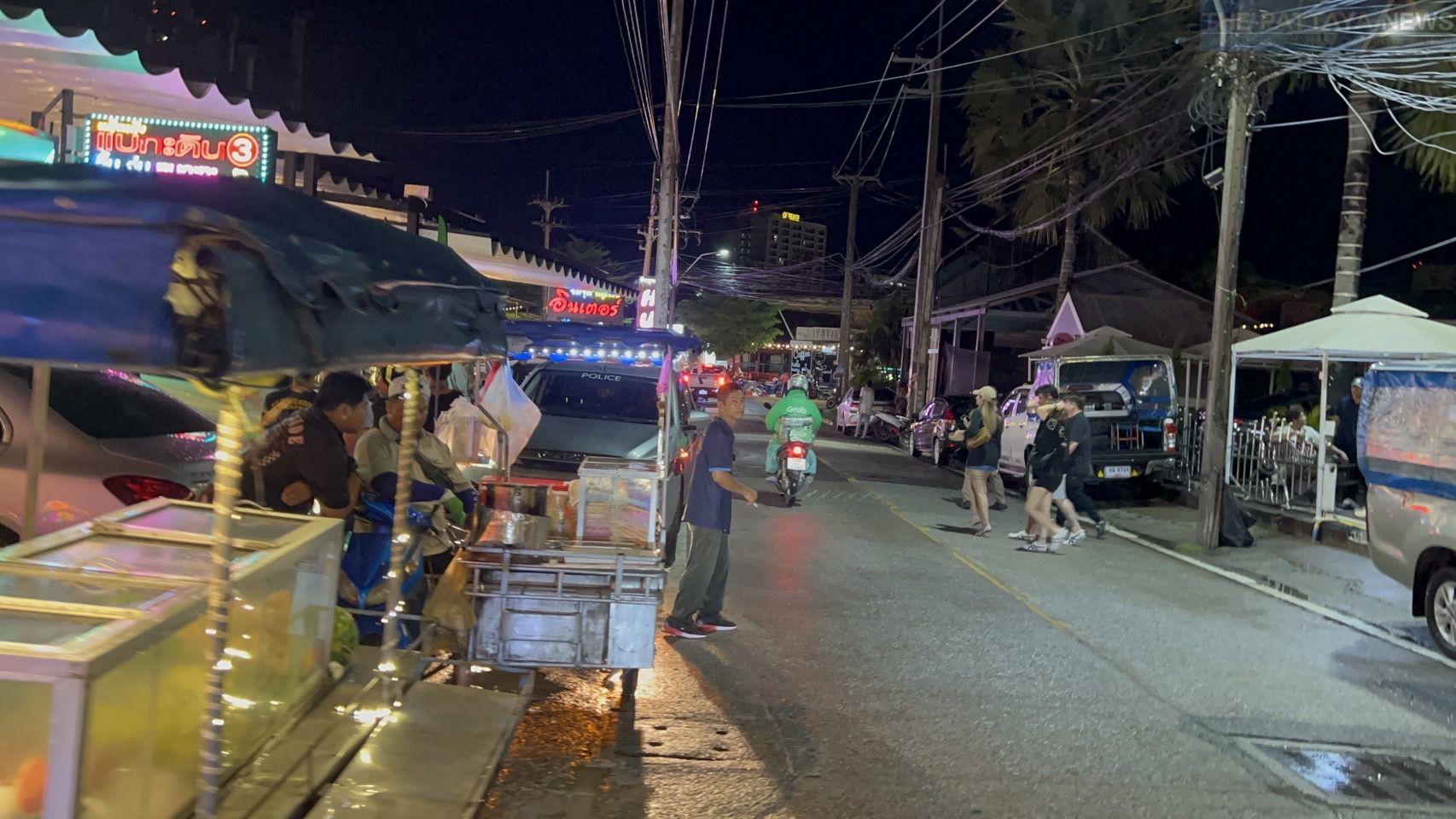
Pattaya, Chonburi Province – On October 30th, 2024, at 4:06 AM, R.T.O. Wuttikorn Plodprong, deputy chief of the Pattaya City Police Station, received a report of a shooting incident in front of the Moo Krata Baek Kap Din Sam restaurant on Petchtrakul Road in Pattaya City, Nongprue Subdistrict. The report was promptly relayed to Pol. Col. Nawin Thirawit, chief of the Pattaya City Police Station, who led a team of patrol and investigation officers to the scene.

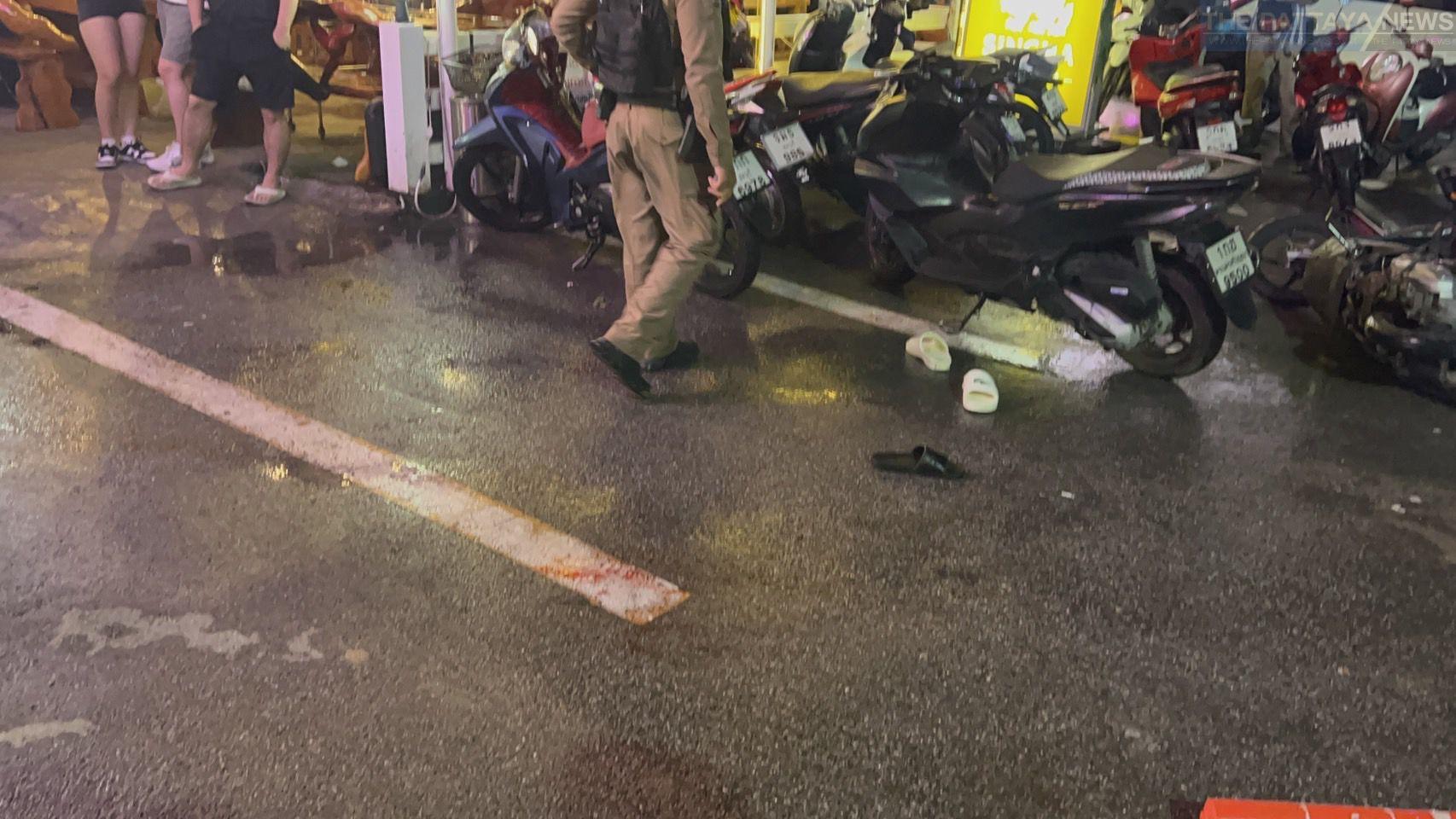
Upon arrival, officers found tourists, bus operators, and local residents in a state of panic. The scene showed signs of a fight, including a damaged motorcycle, scattered belongings, and blood on the ground. Both parties involved had fled in separate directions before the police arrived.

Eyewitness Mr. Amnuay, 65, reported seeing a gunman approach alone and shoot at the injured group, believed to be foreigners. The injured individual fell to the ground before being quickly taken away by friends in a black Alphard van, whose license plate number remains unknown. The gunman had already fled the scene.

Initial investigations suggest the altercation may have stemmed from a dispute after leaving an entertainment venue. Some witnesses indicated that the injured person and the perpetrator were part of the same group, likely Thais, who argued and then engaged in a fistfight before the gunshot was fired. The incident caused locals and tourists to flee in terror.

This is a developing story and still under investigation.


tisdag 29 oktober 2024

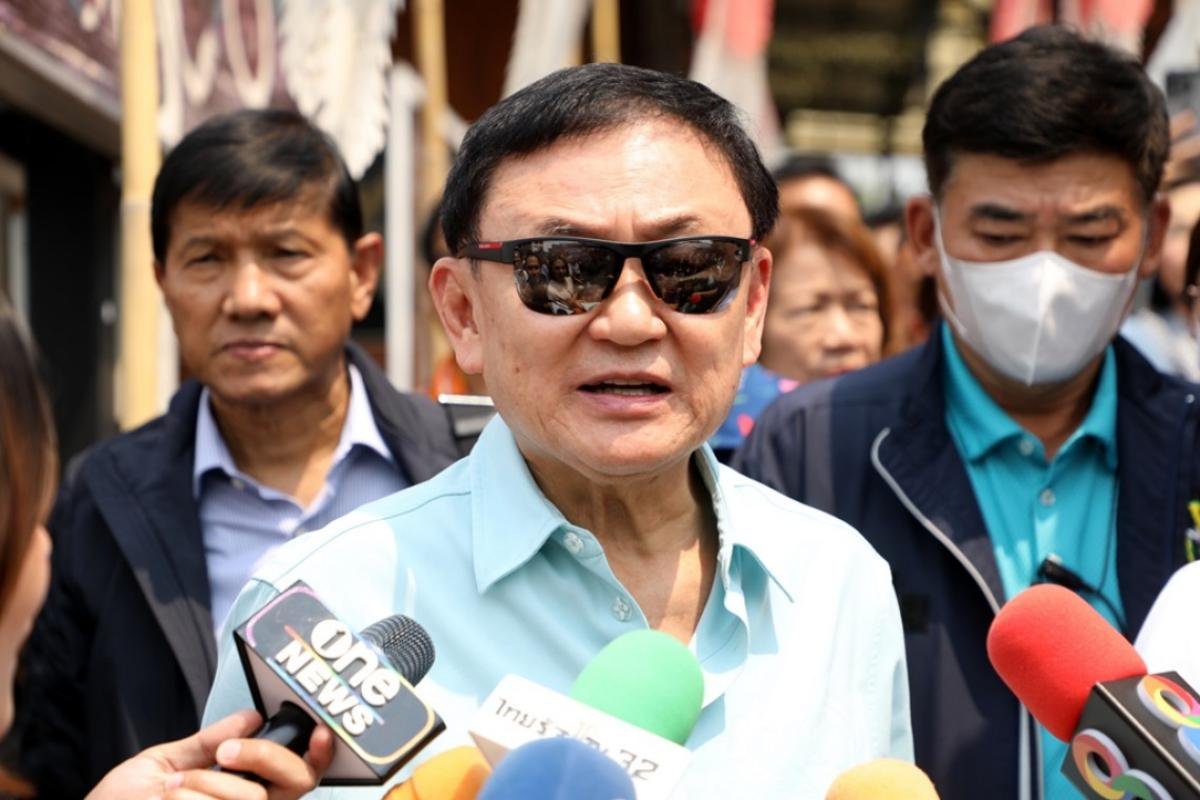
Thaksin Shifts from Cheerful Power Broker to Cautious Strategist. Thaksin Shinawatra, the de facto leader of Pheu Thai, is adopting a more cautious approach amid ongoing legal threats that could endanger his daughter Paetongtarn's role as prime minister, dissolve his party’s ruling coalition, and even risk his own return to jail. ASEAN NOW


Thaksin Shinawatra, the de facto leader of Pheu Thai, is adopting a more cautious approach amid ongoing legal threats that could endanger his daughter Paetongtarn's role as prime minister, dissolve his party's ruling coalition, and even risk his own return to jail.


Sources reveal that Thaksin, who previously exuded confidence and dared critics to sue, has become more alert to covert moves by his opponents, carefully navigating power struggles within Thailand's political landscape.


With his party, his daughter, and himself entangled in multiple lawsuits since his recent return from self-imposed exile, Thaksin is now committed to protecting his political standing.


Political activists have filed cases alleging Thaksin's covert influence over Pheu Thai, including coalition formation and policy-making. In particular, accusations focus on Thaksin's orchestrating of the coalition and policy control from behind the scenes, possibly in violation of Thailand's anti-corruption laws.


Additionally, the Election Commission, Thailand's Constitutional Court, and National Anti-Corruption Commission may weigh in on whether Thaksin manipulated his medical condition to avoid prison time following his recent sentencing. His alleged backroom dealings to oust reformist Move Forward as a condition of his return are also under scrutiny.


Despite the mounting legal and political pressures, Thaksin appears determined to maintain Pheu Thai's grip on power until the legislative term ends in 2027.


Sources suggest he is aiming to avoid dissolving parliament, as an early election would likely favour the People's Party, a reformation of the banned Move Forward, reported Thai Newsroom.


Thaksin is reportedly focused on keeping his coalition intact, despite fraught alliances with parties like Bhumjaithai and Ruam Thai Sang Chart, both of whom may work against him when advantageous.


Picture courtesy: Siam Rath


-- 2024-10-28

Thailand can engage with either Harris or Trump. Whoever wins the US presidential election on November 5, Thailand is prepared to engage with the new president. As a treaty ally and the first Asian country to recognize the US over two centuries ago, Thailand’s relationship with America has stood the test of time. This enduring partnership has weathered many challenges, establishing a strong and pragmatic bond between the two countries. PBS World

Thailand can engage with either Harris or Trump

Photo: AFP

Whoever wins the US presidential election on November 5, Thailand is prepared to engage with the new president. As a treaty ally and the first Asian country to recognize the US over two centuries ago, Thailand's relationship with America has stood the test of time.

This enduring partnership has weathered many challenges, establishing a strong and pragmatic bond between the two countries.

If Kamala Harris wins the presidency, the US will likely continue its current foreign policy in Southeast Asia, focusing on strengthening alliances and partnerships.

Harris would likely maintain commitments to the Indo-Pacific Economic Framework (IPEF), an initiative introduced to foster economic collaboration in response to the gap left by the Trump administration's withdrawal from the Trans-Pacific Partnership (TPP).

Through the IPEF, the US would aim to bolster trade, investment, and economic integration with regional allies, a strategy Harris is expected to support.

Should Donald Trump emerge victorious, Thailand is equally prepared. During Trump's previous term (2016–2020), US -Thai relations remained stable, largely thanks to Trump's security team, which had substantial knowledge of Thailand and the surrounding region.

Trump's administration focused on reducing trade deficits, and Thailand responded by pledging to increase investment in the US and purchase more American goods.

Since then, both Thai-US. investment and trade have grown significantly.

Regarding China, both Harris and Trump are likely to take a firm stance. Under Biden, US policy toward China has aimed to curb Chinese influence in key areas, especially advanced technology and imports.

Trump has indicated he would impose even steeper tariffs on Chinese products, though this could ultimately backfire on American consumers.

Harris would likely face similar domestic pressure to protect the local economy, suggesting that US-China relations will remain competitive and cautious.

Thailand's relations with the US and China will follow a similar pattern to the rest of the region. 

No ASEAN member will choose to align fully with either superpower. Both are important sources of security and trade for the region.

Regional countries are striving to diversify their relationships, seeking new partners, markets, and a balance of power.

Thailand will continue its strategic alliance with the US in the Indo-Pacific region regardless of who wins.

However, the depth and character of this relationship may vary based on leadership in both nations. Under Trump, US -Thai ties strengthened even while Thailand was under military rule, while Biden's approach has emphasized collaboration with democracies. Moving forward, these dynamics may shape how Thailand and the US interact.

In the coming years, US - Thai relations will likely adjust to the changing geopolitical landscape as global power shifts toward multipolarity.

For more than 40 years, Thailand has served as a key partner in US military cooperation, hosting the annual Cobra Gold exercises that promote regional security and interoperability. 

However, as American power projection declines, these military exercises may evolve in scope and focus.

Across Southeast Asia, the US may increasingly look to allies such as Japan and Australia to help shoulder regional security responsibilities.

For Thailand, this means an ongoing but perhaps more balanced partnership as both countries adapt to new regional realities. 


måndag 28 oktober 2024

Bangkok Post - No more boarding passes: facial recognition to start in 6 Thai airports. The six airports that will use the system are Suvarnabhumi International Airport, Don Mueang International Airport, Chiang Mai International Airport, Mae Fah Luang/Chiang Rai International Airport, Phuket International Airport and Hat Yai International Airport.

No more boarding passes: facial recognition to start in 6 Thai airports
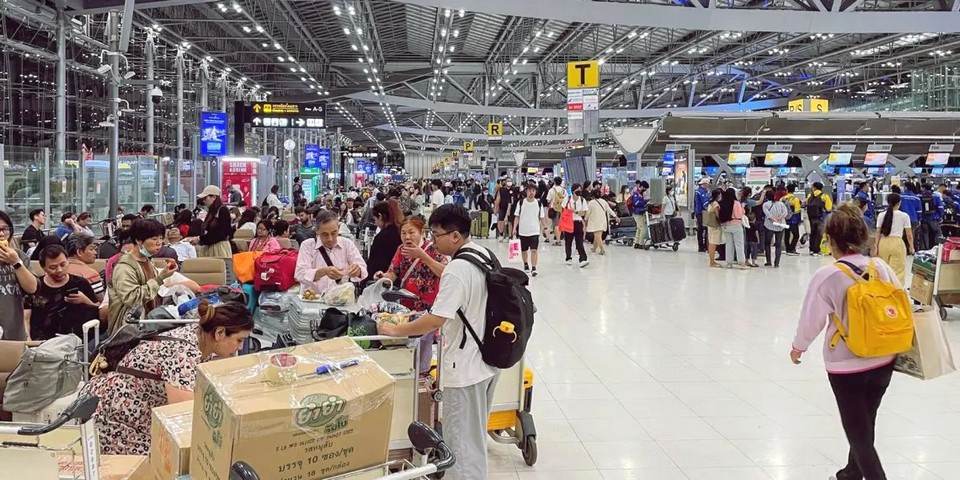
Passengers are seen queuing up at the check-in counter at Thailand's Phuket International Airport on Oct 15. (Photo: Achadthaya Chuenniran)
Passengers are seen queuing up at the check-in counter at Thailand's Phuket International Airport on Oct 15. (Photo: Achadthaya Chuenniran) 

An automated biometric identification system using facial recognitiontechnology will be implemented in six Thai airports later this year to let passengers show their physical ID only once.

The system will be ready for domestic passengers on Nov 1 and for international passengers on Dec 1, according to operated by the Airport Authority of Thailand director Kirati Kitmanawat.

To use the system, passengers will be required to allow access to their identification information when checking in at the counter or self-service check-in at the airports.

The system will collect passengers' biometric information and travel itineraries electronically, allowing air travellers to go from the baggage drop to the boarding gate without showing passports and boarding passes. Each registration is for only one journey.

The six airports that will use the system are Suvarnabhumi International Airport, Don Mueang International Airport, Chiang Mai International Airport, Mae Fah Luang/Chiang Rai International Airport, Phuket International Airport and Hat Yai International Airport.

Passenger numbers using the airports in September and October have risen almost 20% from the same period last year, and are expected to be still higher next year, Mr Kirati said. 


PM Paetongtarn May Dissolve House Ahead of Court Ruling. Thailand is on tenterhooks with speculation swirling about a potential move by Prime Minister Paetongtarn Shinawatra to dissolve the House of Representatives. The court is set to rule on a lawsuit concerning Thaksin Shinawatra, Paetongtarn's father and the influential figure behind Pheu Thai, one of the ruling parties. ASEAN NOW

Jag säger bara en sak: THAILAND 😂😂😂


Composite pictures courtesy: Daily News


Thailand is on tenterhooks with speculation swirling about a potential move by Prime Minister Paetongtarn Shinawatra to dissolve the House of Representatives. 


A member of the Democrat Party has predicted this event may occur within the next 90 days, presumably to preempt an impending decision by the Constitutional Court.


The court is set to rule on a lawsuit concerning Thaksin Shinawatra, Paetongtarn's father and the influential figure behind Pheu Thai, one of the ruling parties.


This claim came to public notice through the insights shared by Mongkolkit Suksintharanon, a former maverick MP now aligned with the Democrat Party.


He took to Facebook to voice his prediction, suggesting that a fresh election announcement might precede any court-mandated dissolution of Pheu Thai and other parties. Mongkolkit assessed the likelihood of this scenario at over 70%.


This political tremor stems from a legal complaint led by activist lawyer Thirayut Suwankesorn, directed at Thaksin and Pheu Thai. The charges involve allegations of Thaksin's undue influence over the party, primarily orchestrated through his daughter, Prime Minister Paetongtarn.


The lawsuit contends that Thaksin managed a secretive convergence of coalition leaders at his residence, shortly after the Constitutional Court's dismissal of Thailand's former Prime Minister Srettha Thavisin.


Such a move from Paetongtarn could complicate an already bewildering political landscape, with new parties potentially entering the fray under unfamiliar banners, potentially confusing the electorate.


The urgency now lies with the Office of the Attorney-General, bound by the court's order to process this lawsuit within the designated 15-day timeframe, adding a ticking clock to the unfolding political drama, reported Thai Newsroom.


-- 2024-10-28


Phuket's new tourism tax won't affect foreign residents or workers. Phuket’s Ministry of Tourism and Sports (MoTS) has confirmed that the upcoming tourism tax, expected to be implemented early next year, will not impact foreigners who reside or work in Thailand. “The tourist tax will depend on the type of visa a traveller holds,” the official explained. Foreigners holding non-immigrant or immigrant visas or those with valid work permits proving employment in Thailand will be exempt from the tax. | Thaiger

Phuket's new tourism tax won't affect foreign residents or workers