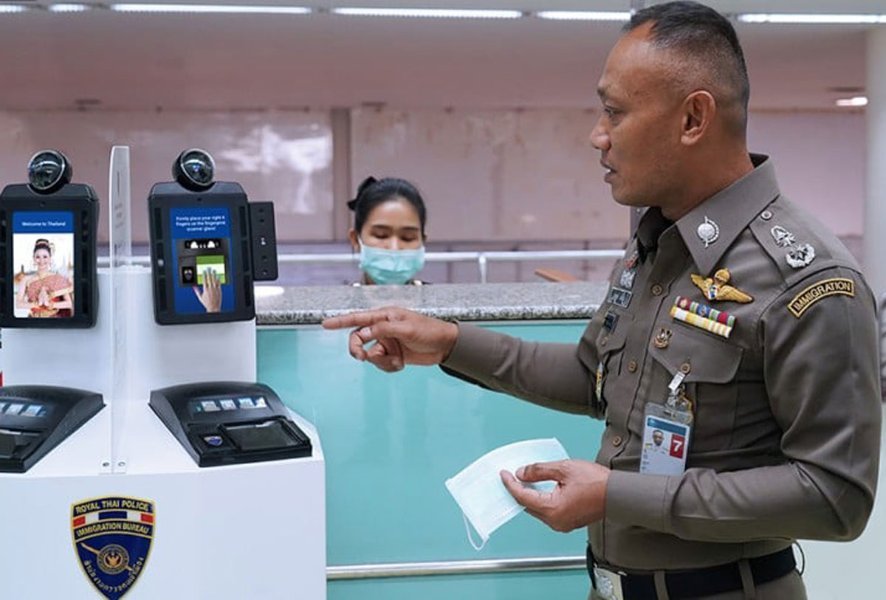
File photo for reference only. Courtesy: Biometric
Thailand's Immigration Bureau has admitted to lapses in its biometric system, affecting the tracking of about 17 million travellers last year. According to opposition MP Rangsiman Rome, the system's capacity was maxed out, halting biometric data collection and posing security risks by potentially allowing criminals to re-enter undetected.
Rangsiman, chairing the House Committee on National Security, revealed that since the licensing for the system expired, the Bureau has only been capturing facial images and fingerprints, not true biometric data. He warns it could take up to 29 months to reinstate a functioning system, with procurement yet to commence.
Despite discussions across government committees, higher authorities have not actioned the necessary measures to rectify the issue. Rangsiman claims this lapse contributes to unchecked activities by transnational criminal groups within Thailand.
Pol Col Neti Khanboon, speaking before the committee, conceded the system's limited capacity, which currently holds data for 50 million individuals. An upgraded system requiring a substantial budget is in development, aimed at resolving current limitations.
Initially introduced in 2019 for 2.1 billion baht, the biometric system faced scrutiny and controversy. Notably, high-profile officer Pol Gen Surachate Hakparn had criticised its procurement, linked to an infamous but unsolved gun attack on his vehicle in 2020. Further, allegations of corruption during procurement surfaced, involving former national police chief Pol Gen Chakthip Chaijinda and others.
Rangsiman underscores the ongoing security risks and inefficiencies in Thai border control if systemic failures aren't promptly addressed, reported Bangkok Post.
While most tourists in Thailand enjoy their holidays without needing a bank account, some are encountering difficulties when trying to open one.
Currently, there is no outright ban on Thai banks opening accounts for foreign nationals. Still, recent government efforts to curb call centre scams and the volatile cryptocurrency market have posed significant challenges.
New regulations slated for April 2025 will require biometric authentication, like facial recognition, for opening accounts. Each account will also need to be linked to a single registered device.
These rules may aid short-term tourists in opening accounts if they can show valid reasons, such as property purchases or applying for long-term visas.
For those facing hurdles, alternatives exist. Some embassies continue to offer income verification, even if funds are not transferred to Thailand, and may issue letters of guarantee for various nationalities.
Wealthier expats can explore visa options like the Elite or Long-Term Residence visas, which don't initially demand Thai bank accounts.
The Destination Thailand Visa, available at select embassies, offers multiple ways to prove the required 500,000 baht (approximately £12,000). Each visa has pros and cons, so personal research is key.
For a temporary solution, a border run might suffice. This allows a visa-exempt entry for 60 days, extendable by 30 days at local immigration for 1,900 baht (around £45) with proper paperwork.
However, ensure compliance with address registration (TM30) and 90-day notifications (TM47) to avoid fines. Although not a long-term strategy, it can be a stopgap while awaiting clearer banking policies.
Looking ahead, other government agencies could confirm expat income. Registering with the Thai Revenue Department (TRD) and submitting tax returns on overseas transfers might provide receipts that help open bank accounts. These receipts include official government logos, offering credible documentation.
Not all expats need to report to the TRD. Those who find it necessary to get a tax ID for overseas transfers may find this approach viable for obtaining a Thai bank account.
The retiree permit system, particularly the "O" non-immigrant visa with annual extensions, has stayed largely unchanged for 30 years, except for increased cash requirements. Given the changing landscape, assuming it will remain the same for decades is likely optimistic, writes Barry Kenyon for Pattaya Mail.
Officials pose for a photo on Doi Kloselo in Mae Hong Son's Sop Moei district to promote the mountain as a tourist attraction. (File photo: Wassayos Ngamkham)
The unruly behaviour of tourists in Mae Hong Son has increasingly riled locals, particularly the habit of smoking marijuana in public, disobeying traffic rules and illegally working in prohibited jobs.
Last week, news reports indicated some locals in Pai district refused to welcome tourists after unpleasant incidents involving some groups that were drunk and high, causing chaos in the public area of the small town.
Following the outburst, several Israeli tourists were deported after a rampage at Pai Hospital.
Chaivit Summachewawat, vice-president of the Pai Tourism Business Association, said some small local groups oppose tourists from particular countries, not all foreign markets.
He said the government should help to balance tourism growth with the social impact.
Foreigners who misbehave or disobey the laws should be warned, then punished if they continue their behaviour, said Mr Chaivit.
He said it would be more effective if the government could set up a task force, gathering related authorities and tourist police, to help handle the increasing tourist numbers.
Phanuwat Khatnak, director of the Mae Hong Son office of the Tourism Authority of Thailand (TAT), earlier last week said the agency, stakeholders and public authorities in Mae Hong Son attended a meeting with the provincial governor and representatives from the Internal Security Operations Command to seek solutions to the tourism situation.
He said several issues were raised, such as tourists disobeying traffic rules, disturbing the peace and smoking marijuana in public areas, which severely disturbed locals.
The responsible authorities have pledged to enforce the law and instruct tourists to follow the rules, as well as putting up new advice signs in foreign languages at major spots, said Mr Phanuwat.
Regarding Pai River tubing, the TAT has been collaborating with operators to ensure safety for tourists and minimise the environmental impact.
Tour operators must be able to prohibit tourists from drinking alcohol and disturbing the peace as some tourists were seen partying after tubing, which disturbed locals, he said.
The security and administrative authorities might impose a fine or withdraw the licences of tour operators if they do not cooperate.
Although locals have voiced concerns over foreign tourists taking local jobs, he said they found no clear evidence after conducting on-site inspections.
Mr Phanuwat said the negative perception of foreigners would not disrupt tourism growth, since most operators are still eager to welcome tourists.
The agency is also promoting tourism in another six districts, luring tourists to explore other places apart from Pai.
According to the TAT, Mae Hong Son welcomed 1.4 million tourists, generating 7.5 billion baht last year. The province is projected to earn 8 billion baht this year.
Over 30% of tourists were foreigners, rising from 23% in the past. Major markets included the UK, Israel, the Netherlands and Germany.
Pai, a once-tranquil town nestled in the mountains of Northern Thailand, is experiencing growing pains as it grapples with an overwhelming influx of tourists. This surge, while beneficial for local businesses, has intensified existing tensions among the community residents.
For years, Pai has been celebrated as a haven for backpackers due to its picturesque scenery and relaxed lifestyle. However, recent visitor numbers have soared, turning the charming destination into a bustling tourist hotspot. The transformation has resulted in a clash of cultures between locals and tourists, as crowded streets and nightlife disrupt the peaceful atmosphere that once defined the area.
Local shopkeepers report an increase in revenue, yet alongside this economic benefit comes cultural friction. As tourists explore Pai's natural beauty and participate in popular activities such as tubing down the Pai River, some locals feel their traditions and way of life are increasingly marginalised.
Alex Chambers, a frequent visitor to Pai, comments on the shift: "There's definitely a clash. With so many people coming in, sometimes tourists forget they're guests and act in ways that aren't respectful to the local customs."
The booming tourism industry bolsters Pai's economy but strains resources and infrastructure, putting pressure on town services. Overflowing rubbish bins and congested roads are common, with some residents finding it increasingly difficult to navigate daily life amid the tourist deluge.
Efforts to bridge cultural differences have been made, with local businesses and community groups working to foster a more harmonious relationship. They aim to educate visitors about local customs and emphasize mutual respect. Despite these initiatives, challenges remain as the tourist numbers show no signs of abating.
Local authorities are debating the implementation of measures to manage the crowds, such as improving public transport, enhancing waste management systems, and possibly introducing visitor limits during peak seasons. These strategies aim to preserve Pai's charm while ensuring that both locals and visitors can enjoy the area harmoniously.
As the high tourist season approaches, some locals remain hopeful that tensions will ease as many visitors depart. The lingering question is whether Pai can find a way to balance its popularity as a tourist destination with the preservation of its distinctive cultural identity., reported Bangkok Post.
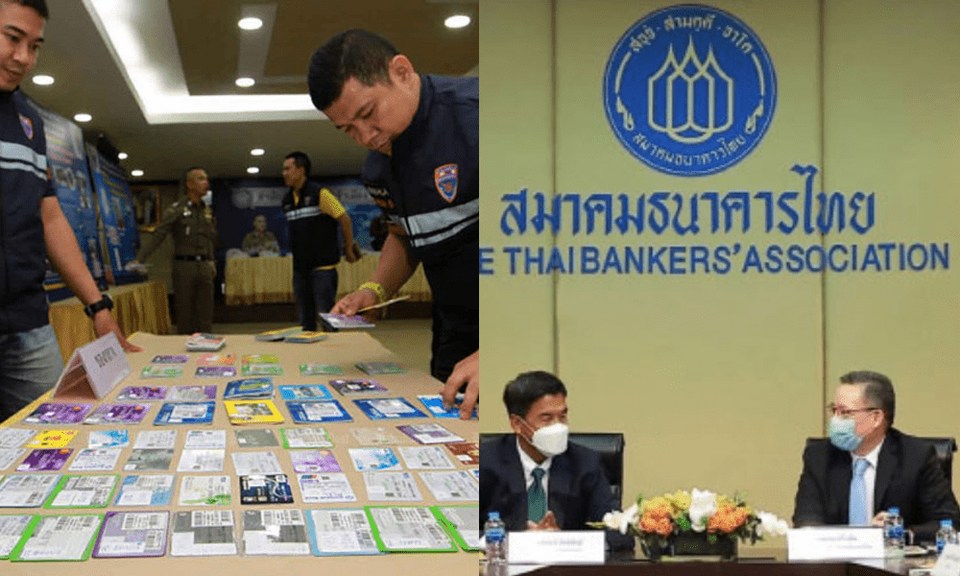
Immigration police investigate hundreds of fake SIM cards used in banking crime.
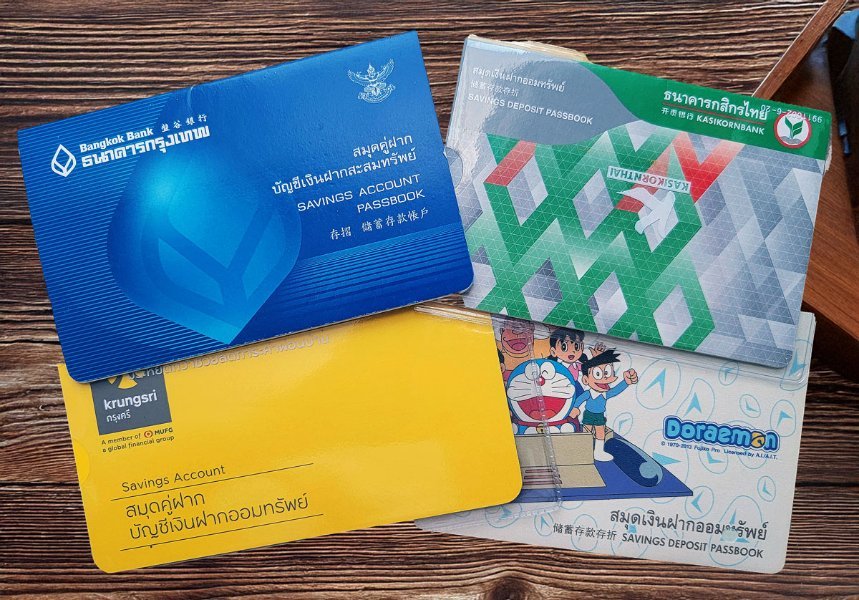
Foreigners wishing to open a Thai account face additional hurdles from Monday February 17. Even those who require a savings or current account to apply for a Destination Thailand Visa (with 500,000 baht) or for a non-immigrant "O" retirement permit (with 800,000 baht) are likely to find difficulties. Well-connected and popular agencies, such as Tik Tok based in Jomtien, have advised on social media that they will be unable to assist with opening bank accounts for foreign customers until further notice.
The Thai government, via the Bank of Thailand, has officially launched a renewed attack on mule accounts in Thailand aiming to curb financial fraud and money laundering. Freezing a staggering 1.8 million bank accounts suspected of being mule accounts, the Anti-Money laundering Office says that 2,500 account holders have actually been arrested during the past year. Police enquiries are now centering on telecommunications companies, digital platforms, e-wallet service providers as well as actual consumers.
The timing of the announcement likely reflects the Thai government's allied campaign against scam call centers, especially those based in Myanmar and Cambodia. Thai electricity supplies have been cut in some areas with limited success. Meanwhile, attempts continue to ensure that Thai mobile banking accounts match with the SIM card holder's name. That has already led to various difficulties, for example for foreigners using their wife's name or for registered corporate accounts registered under the managing director's personal phone number.
Government officials are reluctant to give a timescale for the latest crackdown on foreigners trying to open bank accounts in Thailand. Tellers at Thai banks told Pattaya Mail that the problem might last for several weeks whilst investigations continue into fake websites, messaging apps, social media and individuals suspected of involvement in banking criminality. Some bank staff say that the biggest single issue involves Asian tourists opening bank accounts to launder cash into capital-flight cryptocurrency which is hard to track.
There is currently no formal ban on banks opening new accounts, but they commonly refuse on the grounds that "the applicant's intentions are unclear" a catch-all phrase which penalizes (for example) all tourist visa holders with permission to stay less than one year. Banks can also suspend accounts if they suspect money laundering, fraud, terrorist financing or drugs and human trafficking proceeds.
According to Siam Development, the overall situation highlights how regulatory solutions in Thailand often create more problems than they solve. The fight against mule accounts is necessary, but a more precise strategy is required: one that targets the actual criminals before freezing bank accounts indiscriminately. For the short term at least, businesses and foreign nationals must brace for further banking difficulties in an already challenging environment. In other words, Keep Calm and Carry On. As best you can.
Thailand's struggle with English proficiency has been highlighted in a global ranking, placing the nation 106th out of 116 countries, according to the EF English Proficiency Index released recently. This result underscores a significant challenge, positioning Thailand in the "very low proficiency" category.
The survey, conducted by EF Education First, a leading name in English language education, assesses proficiency levels worldwide. Thailand's score of 415 points highlights its positioning as 21st in Asia and 7th among ASEAN countries, lagging behind neighbours like Myanmar, Indonesia, Vietnam, Malaysia, and the Philippines.
Globally, the top rankings were claimed by the Netherlands (636 points), with Norway (610 points) and Singapore (609 points) closely following. This stark contrast emphasizes the formidable language barriers Thailand faces in comparison to these nations.
This ranking has prompted reflection within Thailand's educational sphere. The Ministry of Education has previously explored efforts to modernise its basic educational curriculum, which has remained unchanged since 2008. The Office of the Basic Education Commission (OBEC) spearheaded this initiative last year, proposing a revision of the curriculum to include more contemporary, technology-centred subjects.
OBEC Secretary-General Thanu Wongjinda mentioned that an appointed revision panel would soon commence work to re-evaluate subjects and propose enhancements, particularly focusing on reducing school hours. Thai students currently face some of the longest school hours globally, a factor that might contribute to insufficient focus on effective language learning.
This issue raises the critical question: Will Thailand implement effective strategies to enhance its global communication skills, or remain behind in the linguistic race? Adopting measures that focus on practical English use beyond traditional classroom learning could be pivotal in overcoming this barrier.
As nations worldwide make strides in English proficiency, Thailand stands at a crossroads—either to embrace and enhance its educational strategies or continue facing challenges in global arenas. Now, more than ever, is the time for transformational changes in the educational landscape to equip future generations with the skills they need to thrive internationally, reported The Thaiger
Pattaya, a bustling tourist hub on Thailand's eastern Gulf coast, is at the heart of a pertinent discussion around justice and equality under the law for foreign visitors. This topic resonates strongly amid the numerous experiences that shape perceptions of tourists regarding their interactions with local law enforcement.
In theory, the principles of justice dictate that everyone, irrespective of nationality, should be treated equally under the legal framework. However, some foreign tourists in Pattaya have reported instances where they feel differently—particularly in the context of minor disputes or traffic incidents.
There are claims that local police might exhibit a degree of leniency towards Thai nationals, while imposing steeper fines on foreigners. This perception may stem not only from financial assumptions about tourists but also from potential language barriers and cultural misunderstandings.
Despite these concerns, there are numerous instances highlighting the professionalism and fairness demonstrated by the Thai police towards tourists. Many officers in Pattaya are adept at handling the complex scenarios brought about by the influx of international visitors.
In crowded tourist spots, the presence of bilingual officers often plays a crucial role in bridging communication gaps, enabling clearer dialogues and more amicable resolutions to disputes.
The issue at its core is complex. The experiences of equality under the law can vary significantly depending on specific circumstances, the individuals involved, and how well tourists understand or respect the local norms and regulations.
Tourists who take the time to acquaint themselves with Thai laws and customs often report positive interactions with the police, noting their readiness to address concerns respectfully.
Ultimately, fairness in legal treatment in Pattaya—and Thailand more broadly—remains a dynamic area open to enhancement. It's crucial for continuous dialogues between the international community and local law enforcement to ensure a balanced and fair approach, reinforcing Pattaya's reputation as a welcoming and reliable destination for all.
As this vibrant city continues to attract millions of visitors annually, fostering transparent interactions, understanding, and equitable treatment under the law will remain vital. Law enforcement agencies are, therefore, encouraged to maintain and enhance training and communication to bolster mutual trust and understanding between local authorities and the diverse array of international visitors, reported Pattaya Mail.
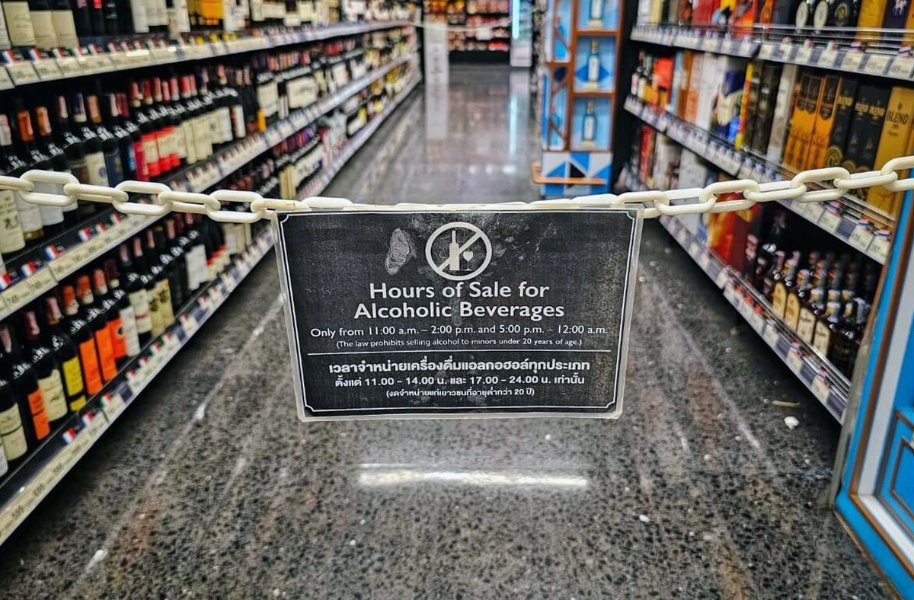
Prime Minister Paetongtarn Shinawatra has initiated a review of Thailand's longstanding afternoon alcohol sales ban, responding to business community calls for regulatory relaxation to enhance tourism.
Government spokesman Jirayu Houngsub confirmed this examination of the 53-year-old rule, originally introduced in 1972 under Thanom Kittikachorn's coup regime to curb officials drinking during work hours. This outdated regulation is not part of the Alcoholic Beverage Control Act and has never been repealed.
Business groups have pressured for this ban's removal, coinciding with planned amendments to the Alcoholic Beverage Control Act. These amendments have passed a parliamentary committee and await further readings in the House of Representatives.
Following a cabinet meeting, Prime Minister Paetongtarn acknowledged businesses' concerns that alcohol sales restrictions hinder economic stimulation. She has tasked relevant agencies with reviewing the afternoon ban and the prohibition of alcohol sales on Buddhist holy days, as these impact tourism.
Additionally, alcohol sales are prohibited on election days, starting the evening before voting begins. Authorities are also reviewing bans on electronic alcohol sales, sales restrictions in zoned areas, certain Covid-19 era rules, and other regulations established since 1972.
Emphasising safety, Prime Minister Paetongtarn stressed preventing easy alcohol access for youths, highlighting the need for responsible sales control. While acknowledging adults' maturity, she pointed out the necessity for stringent control over who can sell alcohol and in which locations, particularly focusing on youth access.
When asked about potentially allowing alcohol sales on Buddhist holy days, Paetongtarn indicated plans to consult a government panel. She noted foreigners' general unawareness of Thai religious days and related alcohol bans, a factor influencing tourism negatively.
Reflecting on the government's recent declaration of 2025 as the Amazing Thailand Grand Tourism and Sports Year, she stated, "This year's theme is the year of tourism. Therefore, this issue must be reconsidered," underlining tourism's importance in forthcoming policy evaluations, reported Bangkok Post.
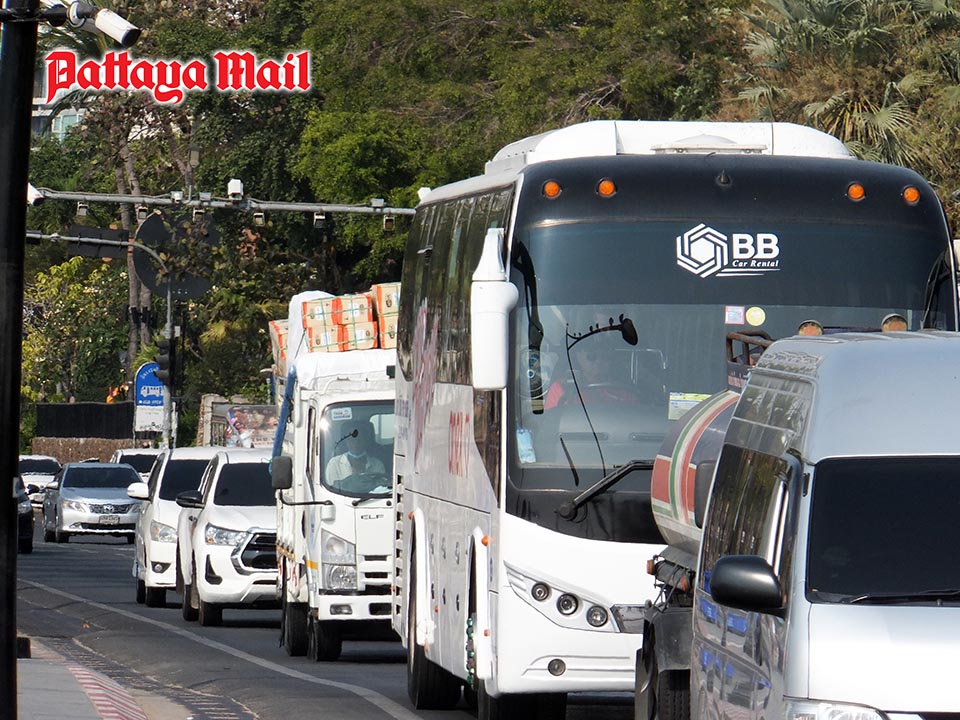
Big tour buses may be fueling Pattaya's tourism, but are they driving away the peaceful getaway atmosphere the city is known for?"
PATTAYA, Thailand – Pattaya, long known as a bustling beach city and a vibrant tourist hub, has earned a reputation as a "getaway heaven" for those looking to unwind by the sea. With its nightlife, entertainment, and beautiful coastal views, it's a destination many flock to for a quick escape from the everyday. However, one growing concern has begun to overshadow this reputation: the increasing number of large tour buses.
The Rise of Big Tour Buses in Pattaya
Over the past few years, Pattaya has experienced an influx of tourists arriving in large, often overcrowded buses. These vehicles bring thousands of visitors from nearby cities and provinces, contributing significantly to Pattaya's tourism industry. While this surge in tourism is beneficial for local businesses and the economy, the sheer volume of these buses is beginning to strain the city's infrastructure and negatively impact its once-charming atmosphere.
The Negative Impacts of Tour Buses on Pattaya's Charm
Traffic Gridlock and Congestion: One of the most immediate consequences of the large tour buses is the severe traffic congestion. Popular areas such as Beach Road, Walking Street, and Bali Hai Pier, often see roads clogged with buses and their passengers, resulting in long traffic delays. For tourists seeking a peaceful getaway, this is hardly the serene experience they expect. Tour buses frequently stop to drop off or pick up tourists in already crowded streets, disrupting the flow of traffic and causing chaos.
Loss of the 'Getaway' Atmosphere: Pattaya has long been advertised as a quick escape from the hustle and bustle of everyday life. However, with the influx of tour buses and their passengers, many of the city's once tranquil areas have become overrun with tourists, creating a sense of overcrowding. This detracts from the very essence of a getaway destination. The noise, the constant movement of people, and the overcrowded attractions erode the sense of relaxation that tourists once sought.
Environmental and Aesthetic Concerns: Large tour buses contribute to air pollution and traffic-related noise, diminishing the overall quality of the environment. With the stunning views of the coastline now often interrupted by a parade of buses lining the roads, the city's natural beauty is overshadowed. The sight of buses parked near beaches or scenic spots detracts from the idyllic setting that Pattaya is known for.
Pressure on Local Infrastructure: Pattaya's infrastructure, including its roads, parking spaces, and public services, was never designed to handle the volume of large vehicles. Many roads are too narrow, and parking spaces for buses are limited. As a result, buses often park in illegal areas, further exacerbating the congestion. The lack of space for buses to park properly also leads to safety concerns, both for pedestrians and other vehicles on the road.
The Dilemma: Tourism vs. Tranquility
While tourism is vital to Pattaya's economy, it is clear that the growing number of large tour buses is having a negative effect on the city's charm. Tourists who come to Pattaya seeking peace and relaxation may find themselves instead grappling with overcrowded streets and long waits. The balance between boosting tourism and maintaining the peaceful, "getaway" atmosphere that originally made Pattaya attractive is becoming more difficult to maintain.
What Can Be Done?
To preserve Pattaya's reputation as a getaway heaven, a more sustainable approach to tourism is needed. Here are a few potential solutions:
Designated Bus Parking Areas: Creating designated, off-peak parking zones for tour buses can help reduce congestion. This would prevent buses from blocking key areas and allow tourists to move around freely.
Smaller Tour Vehicles: Encouraging tour operators to use smaller, more efficient minibuses rather than large coaches can reduce the strain on Pattaya's narrow roads. This would also make it easier to navigate through busy areas, lessening congestion.
Regulated Tourist Entry Points: Implementing regulated entry points where tourists can enter and exit in an orderly fashion, and perhaps even limiting the number of buses allowed to park in one area at any given time, could help control the flow of tourists more effectively.
Enhance Public Transport Options: Expanding public transportation, such as electric buses or shuttle services, could provide an alternative for tourists to travel around without relying on large buses.
Sustainability Practices: Moving toward more eco-friendly and sustainable tourism practices, such as encouraging walking, cycling, and the use of electric vehicles, can help reduce environmental pollution and preserve Pattaya's natural beauty.