måndag 5 maj 2025

Thailand Enforces Stricter Education Visa Rules to Combat Misuse. BANGKOK, May 5, 2025 — Thailand has rolled out a crackdown on Non-Immigrant ED (education) visas, introducing five new measures to address widespread misuse by foreigners exploiting these visas to extend their stay without pursuing studies.- The Pattaya News

Thailand Enforces Stricter Education Visa Rules to Combat Misuse
Oplus_0

BANGKOK, May 5, 2025 — Thailand has rolled out a crackdown on Non-Immigrant ED (education) visas, introducing five new measures to address widespread misuse by foreigners exploiting these visas to extend their stay without pursuing studies. Announced on April 30 by the Ministry of Higher Education, Science, Research and Innovation (MHESI) and the Immigration Bureau, the reforms aim to restore integrity to Thailand's international education system while aligning with broader immigration controls.

The crackdown was spurred by cases of visa abuse, notably at a Chiang Mai campus, where over 500 Chinese students held ED visas but did not attend classes. Authorities also flagged instances of scammers and individuals involved in illegal activities using these visas, prompting a reevaluation of the system. Below are the five measures now in effect:

  1. Mandatory Program Approval: Educational institutions must submit detailed information about non-degree international programs to MHESI for approval before enrolling foreign students. This ensures that courses meet educational standards and are not merely fronts for visa issuance.

  2. Enhanced Data Reporting: Schools are required to provide regular, detailed reports on student enrollment, attendance, and program progress. This measure aims to create a transparent record, making it easier to identify discrepancies or non-compliance.

  3. Random Compliance Inspections: The Immigration Bureau and MHESI will conduct unannounced checks at educational institutions to verify that students are actively attending classes. These inspections target institutions with suspicious enrollment patterns to ensure visa holders are genuinely studying.

  4. Data Sharing for Investigations: Any irregular or suspicious data identified during inspections or reporting will be shared with MHESI for further investigation. This could lead to visa revocations for students and penalties for institutions failing to comply.

  5. Program Revocation Penalties: Institutions found violating the new regulations risk having their programs revoked. Such penalties could also impact their ability to offer international programs in the future, incentivizing compliance.

The measures come amid Thailand's broader immigration reforms. While the crackdown aims to protect Thailand's reputation as an educational destination, it may pose challenges for legitimate international students, who now face increased scrutiny, and for institutions, which must navigate heightened administrative requirements.

Authorities added that the reforms target visa abusers while preserving opportunities for genuine students. However, some worry that overly stringent rules could deter prospective learners, potentially impacting Thailand's education sector. The Immigration Bureau has pledged to monitor the measures' impact and adjust as needed to balance security and accessibility.

Photos: Stock photos of Thai law enforcement. 


Surely it’s time to stop bashing Pattaya. The last few weeks have seen a veritable explosion of negative news about Pattaya in both mainstream and social media. The main emphasis has been on the loutish behavior of tourists (often Brits) variously found peeing disgustingly in public places, attempting copulation on the beach with varying degrees of success, attacking strangers or policemen in a drunken stupor and getting badly beaten up.- Pattaya Mail

Surely it's time to stop bashing Pattaya

Pattaya's Walking Street in the 2020s and in the 1980s, but has the city really changed?

PATTAYA, Thailand – The last few weeks have seen a veritable explosion of negative news about Pattaya in both mainstream and social media. The main emphasis has been on the loutish behavior of tourists (often Brits) variously found peeing disgustingly in public places, attempting copulation on the beach with varying degrees of success, attacking strangers or policemen in a drunken stupor and getting badly beaten up. The professional name for such news is doomscrolling, though it's actually click bait or enticement to click on the story. Pattaya Mail is certainly no exception.

The most recent moan is that the 60 days visa-exempt policy is responsible for a decline in the number of quality tourists and a rise in the arriving hordes of riff-raff. Yet there is absolutely no evidence that naughty boys need two months to create mischief, or that a reduction to 30 days visa exempt would reduce their quantity. In any case, these guys could easily double their 30 days visa exempt to 60 days by obtaining an easy extension at local immigration. The belief that shuffling round how many days tourists can receive on entry will actually improve the respectability of arriving visitors is a doomscroller's fancy.

Pattaya or Sin City, of course, is well used to being rubbished in the media. The shock-horror began in the 1970s when the News of the World found out there were actually brothels for foreigners in Walking Street. In the 1980s, the magazine Your Travel predicted that the advent of AIDS would drive the cesspool Pattaya back into the stone age. Next came the unsavory publicity about underage boys servicing pedophiles via bars in Sunee Plaza (all of which were permanently closed by 2014). The COVID crisis of the early 2020s also gave rise to the Facebook clairvoyance that Pattaya would remain a permanent ghost city.

City Hall's attempts to reorientate Pattaya's future have been mostly ignored by doomscrollers: they don't want to know about luxurious condos and hotels, family entertainment venues, the expansion of sports facilities, international music festivals and high class restaurants to rival those in Bangkok or most other Asian capital cities. Critics have also ignored the establishment of the internationally-funded Eastern Economic Corridor which has already transformed Pattaya's hinterland with circular roads and improved communications. To the doomscroller, nothing much has happened to change Pattaya since the end of the Vietnam war, except the influx of Chinese and Indian tourists who are invariably seen as bad news.

Nobody denies that night revelry and commercial sex are still part of the vibrant Pattaya scene. But many of the traditional playgrounds have been knocked down in redevelopment programs, whilst Walking Street has radically diversified and now contains many fewer gogo clubs actually still open. These days the main night spots are Soi Buakhao and Soi Six, whilst the gay crowd can relax in Pattaya's Boyztown or Jomtien's Complex. Mayor Poramet Ngampichet believes that the sex trade has declined substantially, as a percentage of gross revenue, and stresses the region's economic growth potential for both Thai and foreign investors.

Of course, Pattaya's transition is far from complete. Many of the same historic problems, flooding in particular, remain in parts of the city. Chaos on the roads is getting worse as traffic police retreat to clamping vehicles and towing away motorbikes rather than actually being on duty. The "new" or "neo" Pattaya may be years away from completion. But the idea that the city is sinking into the abyss is as ridiculous as ever it was.


söndag 4 maj 2025

Re: From Honk to Harm - When a simple car horn turns violent in Pattaya. In many countries, a short honk of the horn is nothing more than a harmless signal — a polite way to alert another driver or express impatience in traffic. But in Pattaya, Thailand’s bustling seaside city known for both its nightlife and chaos, a single honk can quickly spiral into something far more dangerous. For foreigners behind the wheel, this seemingly minor act could provoke road rage, confrontation, or even violence.- Pattaya Mail

Hallo Ola , meine Freundin Lada hatte mir gesagt ich solle nicht Hupen mit den Tuk Tuk das könnte schnell zum Boxing führen
LG Thomas


Ola Jansved <olajnsvd@gmail.com> schrieb am So., 4. Mai 2025, 09:31:
From Honk to Harm – When a simple car horn turns violent in Pattaya
Pattaya MailMay 4, 2025
Pattaya-7-From-Honk-to-Harm-When-a-simple-car-horn-turns-violent-in-Pattaya-1-copy.jpgWhat's just a beep in your country could be seen as a fight in Pattaya. (File Photo)

PATTAYA, Thailand – In many countries, a short honk of the horn is nothing more than a harmless signal — a polite way to alert another driver or express impatience in traffic. But in Pattaya, Thailand's bustling seaside city known for both its nightlife and chaos, a single honk can quickly spiral into something far more dangerous. For foreigners behind the wheel, this seemingly minor act could provoke road rage, confrontation, or even violence.

Stories abound of minor traffic interactions turning ugly. In one recent case, a foreign driver tapped his horn after being cut off by a local motorbike rider. Instead of an apology or even indifference, he was met with aggressive shouting, intimidation, and an attempted assault. What started as a reasonable response to careless driving nearly turned into a physical altercation — all over a horn.

This isn't an isolated incident. Pattaya's roads are filled with unspoken rules, and for foreigners, not understanding these "norms" can carry unexpected consequences. Unlike in the West, where honking is often used casually, in Thailand — especially in places like Pattaya — the sound of a horn is often taken personally. It's interpreted not as a signal, but as a challenge or insult.

Should Foreign Drivers Adapt to Local Sensitivities?

Absolutely — if they value safety. While no one should have to fear violence over a traffic signal, the reality in Pattaya suggests that self-preservation might require more cultural sensitivity than logic would suggest. Local drivers, especially in chaotic urban settings, often interpret honking as a sign of disrespect. This can trigger knee-jerk reactions, especially when the perceived "offender" is a foreigner.

Pattaya has a long-standing tension beneath its tourist-friendly surface. That tension — combined with high emotions, congested roads, and occasional nationalist undertones — can create a powder keg on the streets. Something as simple as a horn becomes a spark.

Driving in Thailand: Beyond the Rules of the Road

Foreign drivers are advised not just to follow traffic laws but to understand local behavior. Be patient. Let things go. Avoid honking unless absolutely necessary — and even then, consider whether it's worth the risk. Avoid eye contact after a confrontation. Don't engage with anger.

Because while Thailand is known as the "Land of Smiles," on the roads of Pattaya, those smiles can disappear fast.

Pattaya-7-From-Honk-to-Harm-When-a-simple-car-horn-turns-violent-in-Pattaya-2-copy.jpgCultural sensitivity isn't just polite — on Pattaya roads, it might just keep you safe. (File Photo)


From Honk to Harm - When a simple car horn turns violent in Pattaya. In many countries, a short honk of the horn is nothing more than a harmless signal — a polite way to alert another driver or express impatience in traffic. But in Pattaya, Thailand’s bustling seaside city known for both its nightlife and chaos, a single honk can quickly spiral into something far more dangerous. For foreigners behind the wheel, this seemingly minor act could provoke road rage, confrontation, or even violence.- Pattaya Mail

From Honk to Harm – When a simple car horn turns violent in Pattaya
What's just a beep in your country could be seen as a fight in Pattaya. (File Photo)

PATTAYA, Thailand – In many countries, a short honk of the horn is nothing more than a harmless signal — a polite way to alert another driver or express impatience in traffic. But in Pattaya, Thailand's bustling seaside city known for both its nightlife and chaos, a single honk can quickly spiral into something far more dangerous. For foreigners behind the wheel, this seemingly minor act could provoke road rage, confrontation, or even violence.

Stories abound of minor traffic interactions turning ugly. In one recent case, a foreign driver tapped his horn after being cut off by a local motorbike rider. Instead of an apology or even indifference, he was met with aggressive shouting, intimidation, and an attempted assault. What started as a reasonable response to careless driving nearly turned into a physical altercation — all over a horn.

This isn't an isolated incident. Pattaya's roads are filled with unspoken rules, and for foreigners, not understanding these "norms" can carry unexpected consequences. Unlike in the West, where honking is often used casually, in Thailand — especially in places like Pattaya — the sound of a horn is often taken personally. It's interpreted not as a signal, but as a challenge or insult.

Should Foreign Drivers Adapt to Local Sensitivities?

Absolutely — if they value safety. While no one should have to fear violence over a traffic signal, the reality in Pattaya suggests that self-preservation might require more cultural sensitivity than logic would suggest. Local drivers, especially in chaotic urban settings, often interpret honking as a sign of disrespect. This can trigger knee-jerk reactions, especially when the perceived "offender" is a foreigner.

Pattaya has a long-standing tension beneath its tourist-friendly surface. That tension — combined with high emotions, congested roads, and occasional nationalist undertones — can create a powder keg on the streets. Something as simple as a horn becomes a spark.

Driving in Thailand: Beyond the Rules of the Road

Foreign drivers are advised not just to follow traffic laws but to understand local behavior. Be patient. Let things go. Avoid honking unless absolutely necessary — and even then, consider whether it's worth the risk. Avoid eye contact after a confrontation. Don't engage with anger.

Because while Thailand is known as the "Land of Smiles," on the roads of Pattaya, those smiles can disappear fast.

Cultural sensitivity isn't just polite — on Pattaya roads, it might just keep you safe. (File Photo)


lördag 3 maj 2025

Thailand Faces Tourism Crisis – Minister Sorawong urges urgent action amid foreign visitor slowdown. Pattaya Mail

Thailand Faces Tourism Crisis – Minister Sorawong urges urgent action amid foreign visitor slowdown
Minister Sorawong Thienthong chairs a high-level meeting with key tourism industry leaders to address the decline in foreign tourist arrivals.

PATTAYA, Thailand – Minister of Tourism and Sports, Sorawong Thienthong, chaired an urgent meeting with key private-sector tourism associations—such as the Association of Thai Travel Agents (ATTA), the Thai Hotels Association (THA), the Tourism Council of Thailand (TCT), and the Airline Association of Thailand—to address the growing concerns over the sharp slowdown in foreign tourist arrivals to Thailand.

Minister Sorawong acknowledged that the situation is reaching a crisis point. From January 1 to April 27, 2025, Thailand recorded 11,841,911 international visitors—an increase of just 0.12% compared to the same period last year. Despite the stagnation in numbers, total revenue from foreign tourists reached 565.6 billion baht, reflecting a trend toward higher-spending, quality tourists. The top five source markets during this period were China (1.6 million), Malaysia (1.48 million), Russia (865,634), India (729,414), and South Korea (571,409).

The Minister attributed the drop in tourist numbers mainly to safety concerns and negative perceptions spread through international media, particularly in Chinese and English, sometimes due to mistranslations. He emphasized the importance of collaboration across all sectors to improve Thailand's global image and communicate accurate, positive news.

Addressing complaints about the rising costs of travel in Thailand—including accommodation, tourist attractions, and airfare— Sorawong stated that the focus should be on value and fairness rather than low prices. He also proposed reducing the excise tax on aviation fuel and increasing charter flights to attract more tourists. Furthermore, discussions are underway with the Ministry of Transport to standardize public transport fares across land, rail, and sea.

Sorawong warned that if negative media trends persist, they could damage Thailand's overall international reputation beyond just the tourism industry, highlighting the increasing competition from countries like China aggressively targeting the same tourist markets.

From Jan–Apr 2025, Thailand welcomed 11.84 million tourists—just a 0.12% increase from last year, signaling a looming crisis.


fredag 2 maj 2025

Re: Latest news on Thailand Digital Arrival Card. Pattaya Mail

Danke Ola , ich hoffe dir geht es gut 👍 und du bist gesund. LG Thomas und Lada


Ola Jansved <olajnsvd@gmail.com> schrieb am Fr., 2. Mai 2025, 10:27:
Latest news on Thailand Digital Arrival Card

Pattaya MailMay 2, 2025
Pattaya-9-Latest-news-on-Thailand-Digital-Arrival-Card.jpgThe introduction of the digital arrival card has been less bumpy than feared.

Same day border hoppers – those obtaining extra time in Thailand by crossing briefly into Cambodia or another neighbouring country – do have to fill in the online TDAC form whilst waiting an hour or two before returning here. Those travelling with an agency may find the TDAC form is filled in by accompanying staff, but those travelling alone will need to deal alone with the new bureaucracy.


Most of those undertaking border runs are Destination Thailand Visa holders seeking another six months' sojourn, visa-exempt foreigners looking for a further 60 days and some multiple entry non-immigrant visa holders who must leave Thailand after three months stay. Immigration officers at land entry points say that the rules and regulations for border hops are under renew by a governmental working party examining visa exempt regulations and their many repercussions. For now, there are no national changes.

In other developments, foreign visitors at Thai airports who have not filled in the TDAC in advance may find computer desks and helpful officers on duty to assist the forgetful and the computer illiterate. The foreign affairs ministry has stated again that the TDAC has to be filled in 72 hours or less (not more) prior to arrival in Thailand. In general, inauguration day on May 1 went smoothly at airports and land and sea entry points, although some passengers believed they must print the confirmatory email to give to the immigration officer on arrival. In fact, it is OK simply to show him or her the email on your mobile phone.


Foreign visitors are reminded by the Thai cyber police about fake websites which charge a processing fee for completing TDAC before absconding with people's biometric information and credit or debit card details. Investigations are underway and at least one fake site has been blocked already. The legitimate TDAC service is presently free but must be repeated before every entry to Thailand. It's http://tdac.immigration.go.th


Latest news on Thailand Digital Arrival Card. Pattaya Mail

Latest news on Thailand Digital Arrival Card

The introduction of the digital arrival card has been less bumpy than feared.

Same day border hoppers – those obtaining extra time in Thailand by crossing briefly into Cambodia or another neighbouring country – do have to fill in the online TDAC form whilst waiting an hour or two before returning here. Those travelling with an agency may find the TDAC form is filled in by accompanying staff, but those travelling alone will need to deal alone with the new bureaucracy.


Most of those undertaking border runs are Destination Thailand Visa holders seeking another six months' sojourn, visa-exempt foreigners looking for a further 60 days and some multiple entry non-immigrant visa holders who must leave Thailand after three months stay. Immigration officers at land entry points say that the rules and regulations for border hops are under renew by a governmental working party examining visa exempt regulations and their many repercussions. For now, there are no national changes.

In other developments, foreign visitors at Thai airports who have not filled in the TDAC in advance may find computer desks and helpful officers on duty to assist the forgetful and the computer illiterate. The foreign affairs ministry has stated again that the TDAC has to be filled in 72 hours or less (not more) prior to arrival in Thailand. In general, inauguration day on May 1 went smoothly at airports and land and sea entry points, although some passengers believed they must print the confirmatory email to give to the immigration officer on arrival. In fact, it is OK simply to show him or her the email on your mobile phone.


Foreign visitors are reminded by the Thai cyber police about fake websites which charge a processing fee for completing TDAC before absconding with people's biometric information and credit or debit card details. Investigations are underway and at least one fake site has been blocked already. The legitimate TDAC service is presently free but must be repeated before every entry to Thailand. It's http://tdac.immigration.go.th


Fake Thailand Digital Arrival Card website alert. The first fake Thailand Digital Arrival Card (TDAC) website has already been spotted on the day that the real system made its debut for foreign visitors to the kingdom. The fake website, claiming to be from an official third-party service provider, asks users to pay a processing fee of US$10 while the real one is free. Bangkok Post

 Fake Thailand Digital Arrival Card website alert
Beware: Any website asking you to pay money for a Thailand Digital Arrival Card, such as the one above, is a scam. (Screenshot)
Beware: Any website asking you to pay money for a Thailand Digital Arrival Card, such as the one above, is a scam. (Screenshot) 

The first fake Thailand Digital Arrival Card (TDAC) website has already been spotted on the day that the real system made its debut for foreign visitors to the kingdom.

The fake website, claiming to be from an official third-party service provider, asks users to pay a processing fee of US$10 while the real one is free.

The TDAC system replaces the paper TM6 arrival cards that travellers used to fill out. It is required for all foreign nationals entering Thailand by air, sea or land and took effect on May 1.

Travellers can fill out their details at the official TDAC website, after which they will receive an email that they can show on arrival in the country.

Responding to confusion about the deadline for applying, the Immigration Bureau has clarified that applications can be submitted within a three-day period prior to arrival, but not earlier. Some previous reports said applications had to be made at least three days before arrival.

"The system is fully ready, and backup measures are in place to ensure smooth operations. During the initial phase, travellers who encounter any issues can temporarily use a paper immigration form," the Ministry of Tourism and Sports said in a statement.

There are also computer terminals available at Immigration at Suvarnabhumi Airport for travellers who need to fill out a TDAC form when they arrive.

This is the official TDAC website run by the Immigration Bureau.


måndag 28 april 2025

The Pattaya City Expats Club receives updates on Thailand Immigration, Driving License, and Bank Account matters. In conclusion, Duncan emphasized the importance of staying informed about these changes in immigration and banking processes for anyone living in or traveling to Thailand.- Pattaya Mail

The Pattaya City Expats Club receives updates on Thailand Immigration, Driving License, and Bank Account matters

Club member Amy Falken presents the PCEC's Certificate of Appreciation to Duncan Foster for his providing updates on Thai immigration, driving licenses, and banking.

PATTAYA, Thailand – On April 23, 2025, Duncan Foster, the director and co-owner of MOT Services, delivered an informative presentation to the Pattaya City Expats Club (PCEC). His talk focused on the latest developments in visa services and immigration processes in Thailand as well as obtaining a Thai driving license and need to have a registered mobile number with a Thai bank account.

Duncan introduced himself and outlined the services provided by his company, which include visa services, driving licenses, immigration assistance, and opening bank accounts. A significant focus of his presentation was the new Thailand Digital Arrival Card (TDAC), which replaces the old TM.6 entry card for non-Thais entering Thailand by land, sea, or air. This new requirement applies regardless of how long one has lived in Thailand.

The TDAC is designed to streamline the entry process into Thailand. Duncan recounted his personal experience navigating the TDAC website, noting that while it is user-friendly, some aspects may be challenging for older individuals or those not familiar with digital forms. The TDAC requires three main sheets to be filled out: personal information, travel details, and accommodation information. He emphasized the importance of having all necessary information ready to facilitate a smoother application process.

Duncan highlighted key features of the TDAC, including the submission process, where users receive a TDAC reference number via email, which is crucial for entry into Thailand. He also mentioned the implementation date of May 1st and raised concerns about potential delays at immigration due to the transition. Airlines are informing travelers about the necessity of completing the TDAC, but many may still be unaware of this requirement. He predicted long queues and potential confusion at immigration if the online system fails or if travelers are not prepared.

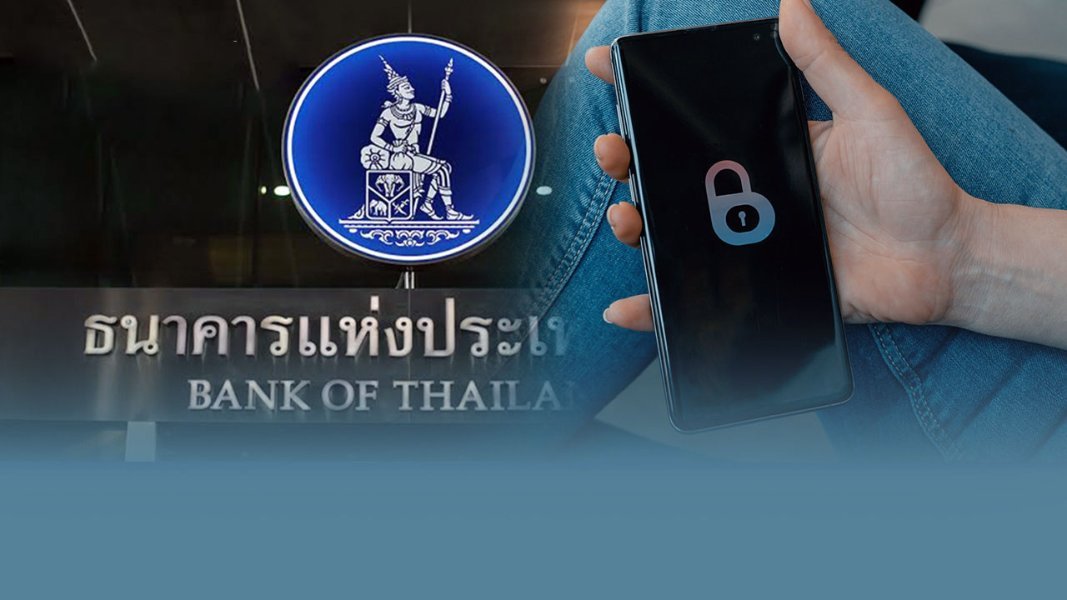
In addition to the TDAC, Duncan discussed recent changes in banking regulations and driving license processes in Thailand. The Bank of Thailand has tightened regulations to combat scams and money laundering, requiring verification of phone numbers associated with bank accounts. He also noted that many foreigners may face difficulties opening bank accounts or renewing driving licenses under the new rules.

Duncan explained that the process for obtaining or renewing driving licenses has become more complicated, with new requirements for documentation and proof of residency. In the past, one could use the "pink" ID card or House Yellow Book to prove residency. He advised that individuals must now go to immigration for a residency certificate before applying for a driving license.

In conclusion, Duncan emphasized the importance of staying informed about these changes in immigration and banking processes for anyone living in or traveling to Thailand.  To view a video of his presentation on the PCEC's YouTube Channel visit https://www.youtube.com/watch?v=KAPGL8mkPcY

The presentation was followed by the Open Forum where questions and comments about Expat living in Thailand can be made.  To learn more about the PCEC, visit their website at https://pcec.club.


Final version of Thai arrival card resolves some issues - Pattaya Mail

Final version of Thai arrival card resolves some issues

Thailand wrestles with the pros and cons of a very generous entry and visa system.

Foreigners can now register online for the actual TDAC (Thai Digital Arrival Card) where several grunts and groans have been resolved. Expats are now able, if they so wish, to request Thailand (THA) as their country of residence, whilst the earlier instruction to print your intended departure date from Thailand is no longer mandatory. There are no last-minute reprieves from filling in the TDAC: the only exceptions are those on diplomatic passports, airport transit transfers not proceeding through immigration and foreign traders and stall holders with "border passes".

Other causes of confusion will take time to settle. The term TDAC is sometimes confused with ETA (Entry Travel Authorization) but they are in fact synonymous in Thailand. The dropdown menu of foreign countries for the applicant's passport issuance contains some surprises. For example, Britain is spelt "Britian" and, whilst those countries with a monarchy are mostly so listed, Denmark appears as if it's in republican list. However, these are not serious form-filling blots. TDAC doubles as a health form which could cause some confusion for frequent travellers, although the foreign affairs ministry assures that help is available at major immigration entry points.

Although TDAC was marketed as a hi-tech convenience to visitors – avoiding filling in manual forms at the airport – the immigration bureau has now conceded that it will also target crime. Police major general Choengron RImpadee, chief of the immigration bureau, said TDAC will be synced with the bureau's biometric database which allows checks against criminal backgrounds. But it remains unsure if the new system will significantly dent well-publicized criminal behavior by ill-intentioned foreigners such as use of nominees in businesses, working without authorization and the illegal renting of condominium units for periods less than one month.
Meanwhile, the prime minister has asked several government departments to investigate abuse of the 60 days visa-exempt discretion. It is believed several options are being investigated. These could include maintaining the status quo, limiting extensions and border runs for individuals, or reducing 60 days to 30 days for some or all nationalities. Other suggestions include charging entry fees which could assimilate the long-delayed "tourist entry tax", or making it difficult for visa exempt tourists to transfer to longer-stay visas such as "student" status which is allegedly open to abuse.


Thailand to Verify 700,000 Foreigner-Registered Phone Numbers for Mobile Banking Use. Failure to comply could see their mobile banking services suspended come June. Banks have been instructed to communicate directly with customers whose numbers don’t match up, urging them to update their registration information promptly. ASEAN NOW


Picture courtesy of Thai Rath


Brace yourselves, foreign mobile users in Thailand! A sweeping verification is in motion, targeting 700,000 mobile numbers registered since January 1, 2022.


The checks, ordered by Thailand's minister of digital economy and society, Prasert Jantararuangtong, could lead to the termination of mobile banking services unless certain criteria are met.


The Thai government plans to scrutinise names linked to these mobile numbers and their mobile banking accounts. The aim is to clamp down on technology-related crimes by ensuring that the names on mobile banking services align perfectly with those on corresponding phone registrations.


A striking 1.8 million numbers currently lack registration, adding to the urgency of these checks.


Introduced on February 1, this regulation requires mobile banking service users to have their information sorted by April 30—this very Wednesday.


Failure to comply could see their mobile banking services suspended come June. Banks have been instructed to communicate directly with customers whose numbers don't match up, urging them to update their registration information promptly.


Those who don't receive such outreach can continue with their banking activities without worry.


This initiative throws a spotlight on Thailand's stringent efforts to stamp out technology crimes, tightening the noose around inconsistent mobile-registration pairs. As the deadline looms, affected users should act fast to avoid disruptions in their digital banking life.


  Adapted by ASEAN Now from Bangkok Post 2025-04-28

torsdag 24 april 2025

Collapsing the 60 days visa exemption only a partial answer. The problem for the Thai authorities is that restricting visa-exempt time scales isn’t straightforward. Would a revision apply to all nationalities, or only to some, or even only to the Chinese? Vacationers from China to Thailand are already in numerical decline and singling them out might prove to be counter-productive. Even if visa-exempt was reduced to 30 days, a further one month’s extension would presumably be available at local immigration. A lot of mischief can occur in two months.- Pattaya Mail

Collapsing the 60 days visa exemption only a partial answer
Controlling illegal working in Thailand requires a broad-brush approach.

The Thai premier has called for a reduction in the two months' visa exempt stamp which currently applies to over 90 percent of all tourist arrivals. She is concerned about the abuses which lead to foreigners defaulting on work permit regulations or indulging in nominee shareholding deals and allied iniquities.

Adith Chairrattananon, honorary secretary general for Thai travel agents, has agreed that grey businesses require preventive measures such as reducing the visa-free stay for Chinese travellers because of exploitation of loopholes in the rules. He suggests "15-30 days" should be enough for bona fide Chinese vacationers.


Other spokespersons have noted that foreigners, usually but not always Chinese, have been working as non-authorized tour agents and introducing clients to illegal practices such as renting condominium units on a short-term basis or the chance to make money by temporary working. Under current regulations, arrivals receiving 60 days visa-exempt can easily obtain an extra 30 days at local immigration.

The problem for the Thai authorities is that restricting visa-exempt time scales isn't straightforward. Would a revision apply to all nationalities, or only to some, or even only to the Chinese? Vacationers from China to Thailand are already in numerical decline and singling them out might prove to be counter-productive. Even if visa-exempt was reduced to 30 days, a further one month's extension would presumably be available at local immigration. A lot of mischief can occur in two months.

Moreover, much visa abuse is committed by foreigners on longer-stay visas such as Elite, Destination Thailand Visa or even retiree options. None of these allow work-related activity in Thailand but policing the system is proving to be beyond the resources of the immigration bureau or the investigators of the Labour department. Recent non-Chinese examples of malpractice have included a British man with an annual retirement visa who was running several nightclubs.

Immigration lawyer Jessataporn Bunnag believes that the government, in addition to squeezing visa exempt, needs to review the procedure for applying for work permits. "The procedure can be very complex and can take up to two months or even more," he said, "so some foreigners decide to take the risk." Other experts say that Thailand must reform the alien labour legislation to permit foreigners having majority sharers in some companies and to reduce the number of occupations reserved for Thais only.

"If Thailand is to address the very serious problems of visa abuse, she should examine all relevant legislation about employment and not just rely on restructuring the amount of time people can stay here," concluded Mr Bunnag.


International Tourist Arrivals Drop 9 Percent After Earthquake, Sharp Declines from East Asia. During the week of March 25th–31st, when the earthquake occurred, East Asian arrivals sharply declined due to heightened safety concerns amplified on social media. Japan saw a 36% drop, followed by Hong Kong and South Korea at 23%, Singapore 17%, Vietnam 16%, and China at 7%.- The Pattaya News

International Tourist Arrivals Drop 9 Percent After Earthquake, Sharp Declines from East Asia

Maya Bay in Krabi

Thailand, April 23rd, 2025 — The Tourism Authority of Thailand (TAT) reported that international tourist arrivals in March 2025 fell by 9% year-on-year to 2.72 million, following the earthquake that struck in late March.

During the week of March 25th–31st, when the earthquake occurred, East Asian arrivals sharply declined due to heightened safety concerns amplified on social media. Japan saw a 36% drop, followed by Hong Kong and South Korea at 23%, Singapore 17%, Vietnam 16%, and China at 7%.

Neighboring countries including Laos, Cambodia, and Myanmar recorded an average 15% decline, largely due to travel slowdowns through northern land border checkpoints near the quake's impact zone.
European markets also contracted by 4–9%, with travel hesitations anticipated during the upcoming Easter holidays.

Adith Chairattananon, Secretary-General of the Association of Thai Travel Agents (ATTA), stressed the importance of reassuring global travelers about Thailand's safety. He noted that only one building was seriously damaged in the March 28th quake, and other structures, including hotels and tourist sites, have passed safety inspections. New safety registration systems for car rentals and accommodations will launch May 1st.

He also called for increased government funding to support overseas promotions, especially targeting Asia-Pacific and short-haul markets. Adith warned that potential economic fallout from the US-China trade war may affect long-haul travel, making Asia even more vital.

He also criticized current tourist spending metrics that count two Asian travelers as equal to one European, arguing that many Chinese—especially from lesser-known cities—spend heavily on first-time experiences and souvenirs. Meanwhile, some European tourists, especially backpackers, often travel on tighter budgets, opting for guesthouses over hotels.

Thailand, he said, must actively promote in secondary Chinese cities where online marketing has limited reach, requiring more direct engagement to rebuild the country's tourism image.


onsdag 23 april 2025

Thai Prime Minister Orders Comprehensive Review of Visa-Free Entry Program, Changes Coming. The announcement has sparked mixed reactions. Tourism operators expressed cautious support but urged the government to avoid measures that could deter visitors. Meanwhile, local Thai communities in popular destinations like Phuket and Pattaya have welcomed the move, citing concerns over illegal foreign workers competing with locals for jobs.- The Pattaya News

Thai Prime Minister Orders Comprehensive Review of Visa-Free Entry Program, Changes Coming
oplus_2

Bangkok, Thailand – April 22, 2025 – Prime Minister Paetongtarn Shinawatra has ordered a comprehensive review of Thailand's visa-free entry scheme, citing concerns over the rising number of foreign visitors overstaying their permitted duration and engaging in illegal employment, according to government spokesman Jirayu Houngsub on Tuesday.

The visa-free program, which allows citizens of numerous countries to enter Thailand for up to 60 days without a visa, has been a cornerstone of the nation's tourism-driven economy. In 2024, Thailand welcomed over 35 million foreign visitors, contributing majorly to its GDP. However, authorities have reported a growing trend of visitors exploiting the scheme, with some staying beyond the allowed period and taking up unauthorized work in sectors such as hospitality, construction, and entertainment.

"The Prime Minister has stated the need to balance tourism promotion with national security and legal compliance," Jirayu said in a press briefing. "The revision will aim to tighten oversight while ensuring Thailand remains a welcoming destination for genuine tourists."

The move comes amid review of immigration policies following high-profile cases of foreign nationals involved in illegal activities. The government has not yet specified the exact changes to the visa-free scheme but indicated that measures could include stricter entry requirements, enhanced tracking of visitors, and harsher penalties for violators.

Thailand's visa-free entry currently applies to citizens of 93 countries, including major tourism markets like China, India, and several European nations. The scheme was expanded in recent years to boost post-pandemic tourism recovery, but critics argue it has strained immigration enforcement resources. The Tourism Authority of Thailand reported that Chinese visitors, who benefit from the visa exemption, accounted for the largest share of arrivals in 2024, with over 6 million travelers.

The revision is expected to involve consultations with the Ministry of Foreign Affairs, the Immigration Bureau, and tourism associations to ensure minimal disruption to the industry, which employs millions of Thais. "We want to maintain our reputation as the 'Land of Smiles' while protecting our economy and security," Jirayu added.

The announcement has sparked mixed reactions. Tourism operators expressed cautious support but urged the government to avoid measures that could deter visitors. Meanwhile, local Thai communities in popular destinations like Phuket and Pattaya have welcomed the move, citing concerns over illegal foreign workers competing with locals for jobs.

Details of the revised visa-free scheme are expected to be finalized in the coming weeks and months. Until then, current entry rules remain in effect, and travelers are advised to comply with existing visa regulations to avoid penalties.


tisdag 22 april 2025

Bangkok Post - PM orders revision of visa-free scheme. The prime minister ordered a comprehensive study of the impact of the visa-free scheme, including setting a suitable duration of visa-free stays so that the scheme meets its objective, to promote tourism, Mr Jirayu said. “Some groups of visitors have abused the scheme and violated the law. For example, they overstay their visas and work illegally in the country,” he said.

PM orders revision of visa-free scheme
Passengers stand in long queues at immigration counters, at Suvarnabhumi airport. (Photo: Bangkok Post)
Passengers stand in long queues at immigration counters, at Suvarnabhumi airport. (Photo: Bangkok Post) 

Prime Minister Paetongtarn Shinawatra on Tuesday ordered a revision of the visa-free entry scheme, prompted by the number of visitors overstaying and working illegally in Thailand, the government spokesman said.

Jirayu Huangsub said the order, given during the weekly cabinet meeting,  was directed at the Interior Ministry, the Foreign Affairs Ministry and the Tourism and Sports Ministry. 

"Some groups of visitors have abused the scheme and violated the law. For example, they overstay their visas and work illegally in the country," he said.

ADVERTISEMENT

The prime minister ordered a comprehensive study of the impact of the visa-free scheme, including setting a suitable duration of visa-free stays so that the scheme meets its objective, to promote tourism, Mr Jirayu said.

Visa-free entry is available to citizens of 93 countries to facilitate visits for purposes of tourism, business and temporary work in Thailand. Visitors can stay up to 60 days, with the option of a 30-day extension.

Tourism interests have urged the government to revise the policy, pointing  out that some visa-free visitors illegally run tour firms, restaurants and even hotels.