onsdag 16 juli 2025

Stakeholders claim victory over withdrawn Thai entry tax

Stakeholders claim victory over withdrawn Thai entry tax

There's a general sense of relief that a tax on foreigners arriving on Thai soil has been withdrawn.

A powerful combination of foreign airlines, international travel agents and lobbyists have persuaded the Thai government to withdraw the proposed 300 baht (US$9) entry tax on "tourist" foreigners arriving by air. Also cancelled is the proposed 150 baht on land or sea arrivals.

Deputy minister of tourism and sports, Jakraphon Tangsuttitham, told the press this week that the timing was inopportune, but the scheme "might" be brought back in the summer or autumn of 2026. This marks the last of several failed attempts to introduce a "charge for landing on Thai soil".


The tax was first envisaged eight years ago to raise revenue. The initial idea was to install booths at entry points into the kingdom to collect the cash. But the scheme fell through because of fears of tediously long and chaotic immigration lines as arrivals waited for change or had trouble processing their credit cards for small amounts.

In 2021 prime minister Prayut Chan-o-cha revived the plan, but again it collapsed because of the confusion about who would need to pay. Thai passport holders, diplomats and foreigners with Thai work permits were exempted. Thus airlines said the idea of adding the fee to all inbound air tickets was impractical because of the detail.

Moreover, longstay foreigners holding retirement or student visas were devastated to learn they were "tourists" for this purpose with a fee to pay on every entry. The more recent advent of Destination Thailand Visa holders, who have five year multi-entry passes but have to quit Thailand once or twice a year, creates yet more controversy.

The current plan, now discarded, envisaged the raised cash to be divided between restoring tourist sites (building toilets at temples or cleaning relics etc) and instituting medical insurance for some tourists during their first month of stay. Such cover would be discretionary and require an enormous bureaucracy.

Expats would not be included, whilst visa-exempt tourists who committed an offence (eg not wearing as crash helmet) would not have any chance post-accident. Many private hospitals expressed doubts about the sketchy details. Inpatient hospital cover in Thailand for foreigners is not compulsory except for a small number of visas including the 10- year Long Term Residence, retirement O/A visas originally awarded by Thai embassies and work permit holders.

Travel agents generally have welcomed the collapse of the current proposal. Grant Silvers, representing the US-based Exotic Tours and Travel, said, "We desperately need good news about travelling to Thailand and this cancellation certainly falls into that category." And so say all of us.

söndag 13 juli 2025

Bangkok Post - Poll: 80% of Thais want PM Paetongtarn to quit or dissolve House. An opinion survey by the National Institute of Development Administration early this month found more than 80% of respondents wanted suspended Prime Minister Paetongtarn Shinawatra to either resign or dissolve the House. Gen Prayut Chan-o-cha was the most favoured choice as the next premier.

Poll: 80% of Thais want PM Paetongtarn to quit or dissolve House
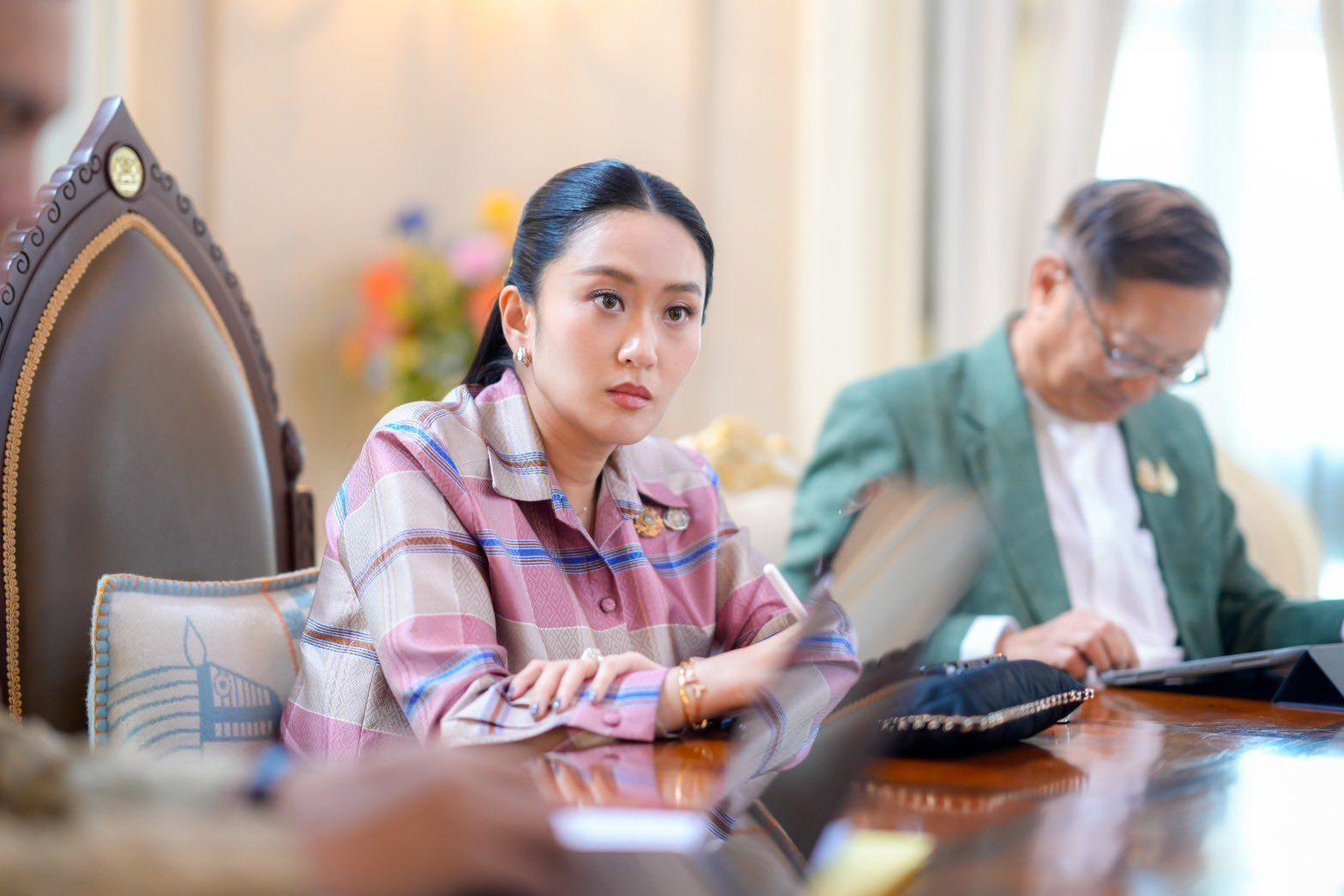
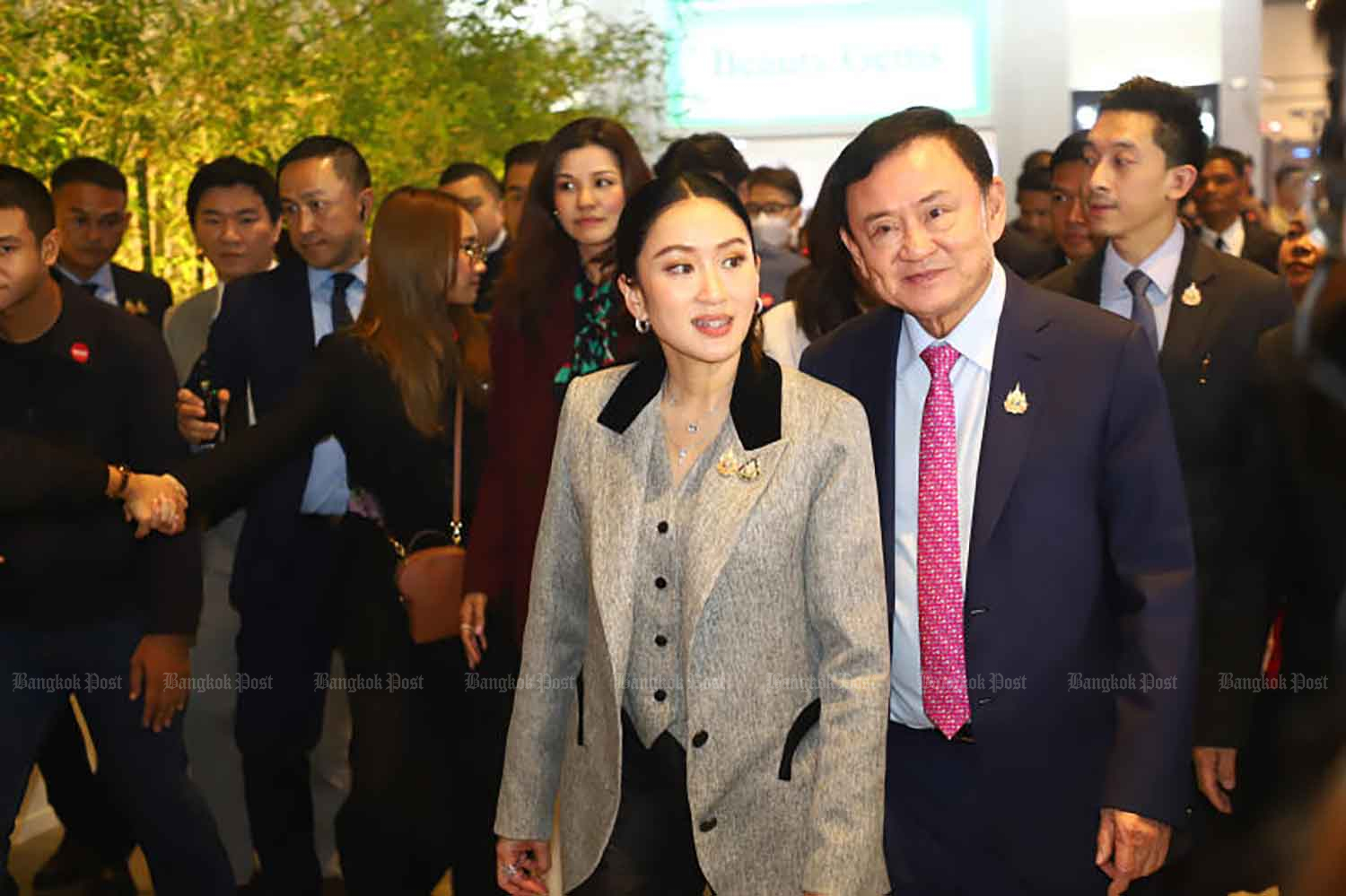
Suspended Prime Minister Paetongtarn Shinawatra and her father Thaksin Shinawatra arrive for a soft power forum at the Queen Sirikit National Convention Center in Bangkok on July 9. (Photo: Nutthawat Wichieanbut)
Suspended Prime Minister Paetongtarn Shinawatra and her father Thaksin Shinawatra arrive for a soft power forum at the Queen Sirikit National Convention Center in Bangkok on July 9. (Photo: Nutthawat Wichieanbut) 

An opinion survey by the National Institute of Development Administration early this month found more than 80% of respondents wanted suspended Prime Minister Paetongtarn Shinawatra to either resign or dissolve the House. Gen Prayut Chan-o-cha was the most favoured choice as the next premier.

Nida conducted the phone survey on 1,310 people sampled nationwide from July 4 to 7. Of the respondents, 42.37% of wanted Ms Paetongtarn to resign so that the nation would have a new prime minister.

Meanwhile, 39.92% of respondents called on her to dissolve the House of Representatives to pave the way for a fresh general election and 0.99% wanted to see a coup d'etat.

On the contrary, 15.04% of respondents wanted Ms Paetongtarn to continue with her national administration. The rest, 0.31% of respondents, did not give an answer.

When asked who among existing prime ministerial candidates should replace Ms Paetongtarn as the prime minister, the biggest group of respondents, 32.82%, favoured Gen Prayut Chan-o-cha, who is a privy councillor and is a prime ministerial candidate of the United Thai Nation Party (UTN).

The second biggest group of respondents, 27.94%, did not see a favourite among existing prime ministerial candidates; 11.53% pointed to Bhumjaithai Party leader Anutin Charnvirakul; and 10.92% favoured Chaikasem Nitisiri, the presently last prime ministerial candidate of the ruling Pheu Thai Party.

Meanwhile, 9.77% said they would be satisfied with any of the remaining prime ministerial candidates, 3.82% recommended UTN leader Pirapan Salirathavibhaga, 1.83% supported Democrat candidate Jurin Laksanawisit, 0.84% preferred Palang Pracharath Party leader Gen Prawit Wongsuwon, and 0.53% did not know or were not interested.

Opposition and People's Party leader Natthaphong Ruengpanyawut was not among existing prime ministerial candidates for this opinion survey because he is from the dissolved Move Forward Party which had nominated solely Pita Limjaroenrat as its prime ministerial candidate.

Of all the respondents, 8.55% lived in Bangkok, 18.70% in the Central Plains, 17.79% in the North, 33.28% in the Northeast, 13.82% in the South and 7.86% in the East.

Ms Paetongtarn was suspended as prime minister by the Constitutional Court on July 1 as a group of senators asked it to remove her from the prime ministerial seat after her leaked, controversial phone call with Cambodian Senate President Hun Sen.

She was appointed the culture minister at the same time.

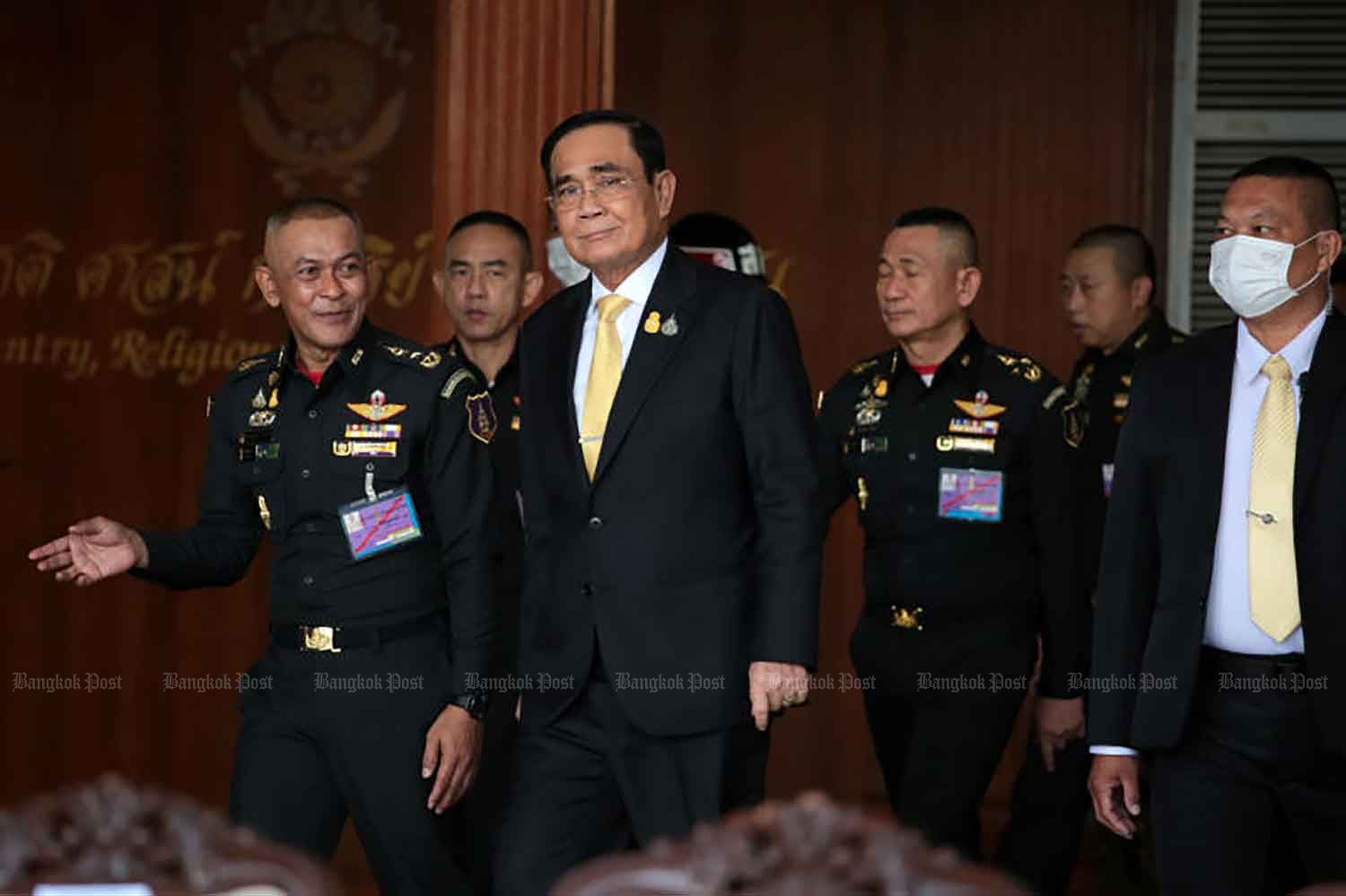
Gen Prayut Chan-o-cha


onsdag 9 juli 2025

Thai baht’s surge at risk from turmoil, top forecaster says. The Thai baht’s four-month rally is likely to falter as political turmoil is expected to weigh on the economy, according to the currency’s top forecaster. Bangkok Post

Thai baht's surge at risk from turmoil, top forecaster says
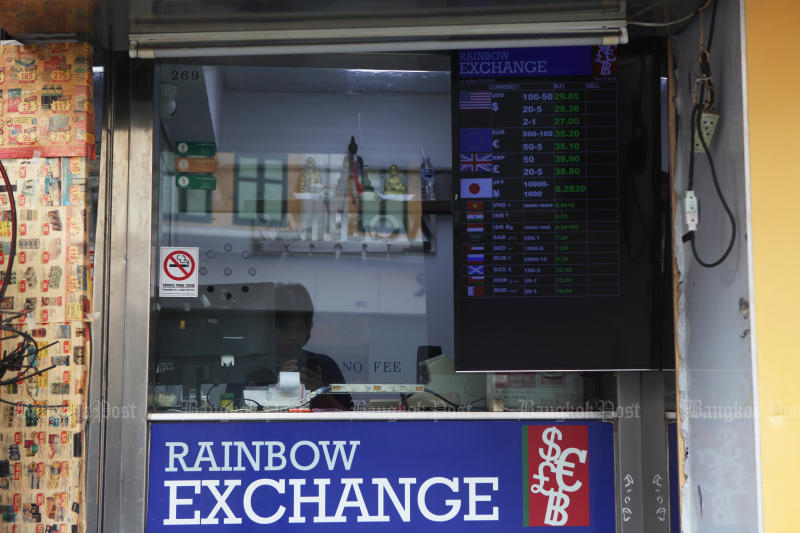
A currency exchange kiosk on Khao San Road. (Photo: Nutthawat Wicheanbut)
A currency exchange kiosk on Khao San Road. (Photo: Nutthawat Wicheanbut) 

The Thai baht's four-month rally is likely to falter as political turmoil is expected to weigh on the economy, according to the currency's top forecaster.

The local currency may trade at 32.30 per dollar at the end of the year and into the first quarter of 2026, said Christoper Wong, senior FX strategist at Oversea-Chinese Banking Corp. That implies the baht would be just 0.7% stronger than its level on Monday, after surging more than 5% in the four months through June.

"In the coming months, slower tourism, subdued domestic demand, political developments and tariff uncertainty are some factors that may hinder the baht's appreciation path," Wong said in an interview on Friday. "Relative to other Asian peers, I'm of the view that the baht may continue to stay back-footed." 

ADVERTISEMENT

The outlook comes as a suspension of Prime Minister Paetongtarn Shinawatra from office sparks concern over a delay in the new budget and economic stimulus, potentially worsening the country's already lagging growth. That may prompt the central bank to deliver deeper interest rate cuts, Wong said. 

Most Asian currencies have strengthened against the dollar in recent months as US growth and fiscal concerns weighed on the greenback. The baht has also typically been supported by gold prices, though a recent breakdown in correlation between the two indicates that domestic issues are of a bigger concern to investors, Wong said. 

Wong, who has yet to make any client-related work trips to Thailand, was the topped-ranked baht forecaster in the three months through June and the second best in the first quarter, according to data compiled by Bloomberg. The ranking is based on criteria such as margin of error, timing and directional accuracy. 

Investors are going to wait out how tariffs and politics play out, given that there's "too much uncertainty to pre-position for," Wong said.


Pheu Thai’s Casino Dream Collapses as Cabinet Bows to Public Pressure. In a dramatic turn of events, the Cabinet has scrapped the contentious Integrated Entertainment Complex bill from parliamentary discussion. PBS World


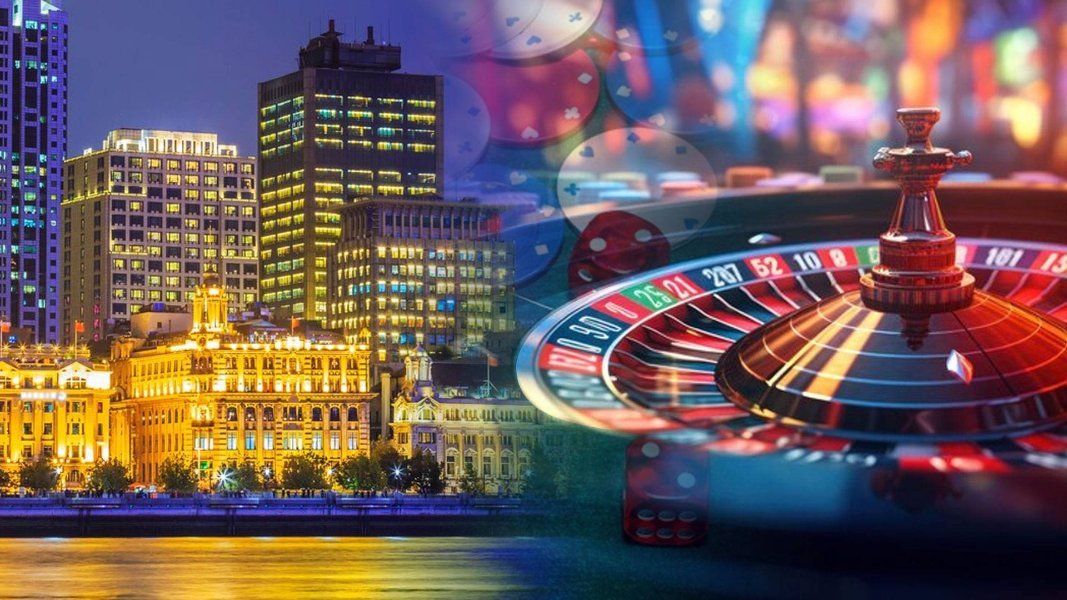
Composite courtesy of Thai PBS World


In a dramatic turn of events, the Cabinet has scrapped the contentious Integrated Entertainment Complex bill from parliamentary discussion. Dubbed the 'casino bill', this high-profile venture was a cornerstone of the Pheu Thai-led government, spearheaded by Paetongtarn Shinawatra.


Government spokesman Jirayu Houngsub announced the withdrawal post-Cabinet meeting, citing a request from the Finance Ministry. This decision effectively halts the government's vision for the complex, which was anticipated to feature a casino and various entertainment attractions.


The bill had met fierce opposition and sparked public protests, despite assertions from the government that it would lure investment, tackle illegal gambling, and boost tourism in Thailand. Plans indicated a casino occupying no more than 10% of the complex, with the rest devoted to amenities like amusement parks, theatres, and sports arenas.


Initially included in Paetongtarn's policy agenda upon her September appointment as prime minister, the bill had secured Cabinet backing on March 13. It was fast-tracked for a review by the Council of State, designed to ensure swift passage through Parliament.


However, an April announcement from Paetongtarn delayed its first reading, citing more pressing national priorities. She assured it was merely postponed, with a plan to reintroduce it during the July parliamentary session.


Following a Cabinet reshuffle on June 30, a reassessment led to the Finance Ministry's successful request for withdrawal. Jirayu noted broader social implications as a factor, stressing the need for extended public dialogue.


Political analysts suggest the move reflects Pheu Thai's precarious position in Parliament, especially after the Bhumjaithai Party's coalition exit.


Complications compounded when Paetongtarn faced suspension by the Constitutional Court for alleged ethical breaches linked to a leaked recording with Cambodian leader Hun Sen.


Deputy Finance Minister Julapun Amornvivat expressed regret over the decision, acknowledging, "it's not the appropriate time." He lamented the lost opportunity for economic stimulation and growth.


The bill's suspension underscores the complexities and challenges of navigating political and societal landscapes, as Thailand grapples with balancing economic development with public consensus and ethical governance.


  Adapted by ASEAN Now from Thai PBS World 2025-07-09


tisdag 8 juli 2025

Trump Dishes Out 36% Tariffs in Shock Move Against Thailand. In a bold trade manoeuvre, US President Donald Trump has imposed a hefty 36% tariff on Thai imports. ASEAN NOW


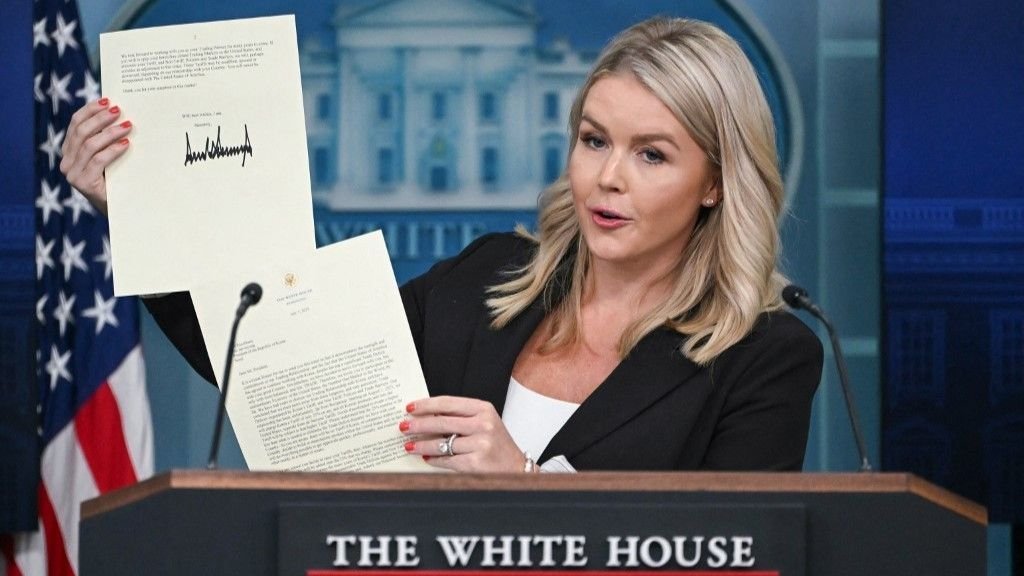
Picture courtesy of Thai PBS World via AFP


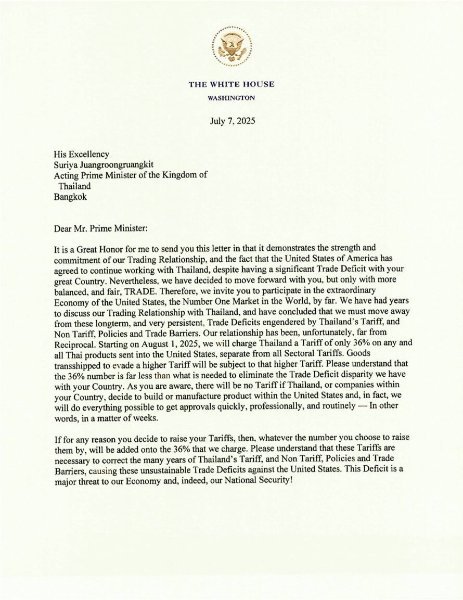
In a bold trade manoeuvre, US President Donald Trump has imposed a hefty 36% tariff on Thai imports. This significant levy is part of a sweeping action targeting over twelve countries, with the new tariffs set to take effect on 1st August 2025. 


Thailand finds itself in the crosshairs as Trump aims to secure more favourable trade conditions for the United States.


The broad strategy covers various nations with tariffs ranging from 25% to 40%, depending on the country. The tariffs are as follows:


  • Japan and South Korea: 25%
  • Malaysia, Tunisia, Kazakhstan: 25%
  • South Africa, Bosnia & Herzegovina: 30%
  • Indonesia: 32%
  • Bangladesh, Serbia: 35%
  • Cambodia and Thailand: 36%
  • Laos and Myanmar: 40%


Originally introduced in April, these tariffs were paused for 90 days, allowing for negotiations. However, Trump has extended the pause to 1st August through an executive order, granting extra time for affected nations.


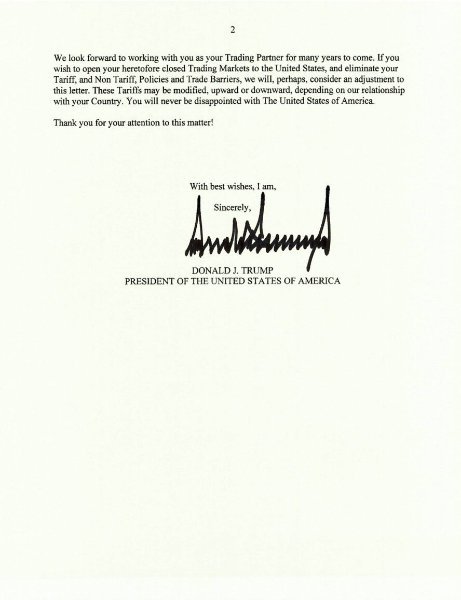
The pause came into effect after the tariffs were first announced in April and then suspended until July 9th. In recent communications, Trump has issued formal letters to the countries concerned, clearly outlining the looming consequences should they fail to seal a deal before the deadline.


The move raises questions about potential impacts on international relations and economic stability. The increased tariffs might lead to higher costs for US consumers, as well as strain on diplomatic ties.


As negotiations continue, eyes are on the affected countries to see how they will respond to secure better trade conditions.


This latest trade action underscores Trump's aggressive approach to international commerce, as the US seeks to renegotiate terms with key economic partners. Whether the initiative will yield the desired results remains to be seen, with the clock ticking towards the August deadline.


torsdag 3 juli 2025

Sverige: Passagerskat aflivet – men dyre flybilletter. Sverige fjernede fra denne måned flypassagerafgiften; Ryanair åbner 10 nye ruter. Men opgørelse fra den danske prissammenligningsside Travelmarket viser ”rekordhøje svenske flybilletpriser.”- STANDBY.DK

Sverige: Passagerskat aflivet – men dyre flybilletter

Sverige fjernede fra denne måned flypassagerafgiften; Ryanair åbner 10 nye ruter. Men opgørelse fra den danske prissammenligningsside Travelmarket viser "rekordhøje svenske flybilletpriser."

Fra starten af denne måned afskaffede Sverige passagerafgiften på flybilletter. Det forventes at gøre flyvninger fra Sverige ud i Europa cirka 50 danske kroner billigere og over 200 kroner lavere til rejsemål uden for Europa.

Men trods afskaffelsen af den svenske afgift på udenrigs flybilletter, er gennemsnitsprisen på flybilletpriser fra Sverige rekordhøj.

Det skriver i hvert fald den danske prissammenligningsside Travelmarket i en pressemeddelelse for sit Svensk Flygprisindex; Travelmarket har også en svensk hjemmeside: Travelmarket.se.

"Resultatet af undersøgelsen, foretaget i tirsdags, den 1. juli, viser rekordhøje flybilletpriser fra Sveriges to største lufthavne: Stockholm Arlanda og Gøteborg Landvetter," lyder det fra Travelmarket.

Svensk Flygprisindex overvåger prisudviklingen på disse ruter fra Gøteborg og Stockholm: Amsterdam, Barcelona, Berlin, København, London, Oslo, Paris, Prag, Rom og Wien.

Største prisstigninger fra Gøteborg
Fra Gøteborg er flyvninger ud i Europa i gennemsnit blevet 43 procent dyrere i Uge 31 (der starter mandag den 28. juli) sammenlignet med samme uge sidste år. Fra Stockholm er den gennemsnitlige prisstigning 33 procent, oplyser Travelmarket.

Svensk Flygprisindex har også medtaget priserne fra Københavns Lufthavn – cirka 40 procent af svenskerne bor tættere på den danske hovedlufthavn end Stockholm Arlanda. Fra København er de gennemsnitlige prisstigninger "kun" 28 procent for de 10 nævnte lufthavne, skriver Travelmarket.

Ole Stouby, ejer af og administrerende direktør for Travelmarket, siger i pressemeddelelsen: "Kapaciteten fra flyselskaberne er begrænset i den absolutte højsæson i forhold til efterspørgslen. Er efterspørgslen større end de udbudte flysæder, stiger prisen. Derfor ser vi meget store prisstigninger – og dermed er afskaffelsen af flyskatten i Sverige marginal."

Omvendt er, ifølge Svensk Flygprisindex, billetpriserne til oversøiske rejsemål fra Stockholm og Gøteborg i snit blevet cirka 400 svenske kroner billigere i Uge 31 sammenlignet med samme uge sidste år.

På denne konto holder Svensk Flygprisindex øje med disse 10 destinationer, de fleste kræver mellemlanding fra Sverige: Bangkok, Beijing, Dubai, Johannesburg, Los Angeles, Mexico City, New York, Rio de Janeiro, Sydney og Tokyo.

Ryanair skruer op i Sverige
Efter Ryanair fra starten af sommerkøreplanen i år lukkede sin betjening af Billund Lufthavn, er flyselskabets to basefly i Billund overført til henholdsvis Stockholm og Gøteborg. Dermed har Ryanair nu otte basefly i Sverige, seks i Stockholm og to i Gøteborg.

Og Ryanair oplyser, at man her fra 1. juli, hvor den svenske flypassagerskat blev aflivet, har øget med 10 nye destinationer, fem fra Stockholm: Cagliari, (Sardinien), Marseille, Sarajevo, Trieste (Italien) og den græske ø Zakynthos.

Fra Gøteborg er der kommet en eller flere ugentlige fly til disse nye Ryanair-ruter: Korfu, Dubrovnik, Milano (Malpensa), Pula (Kroatien) og Grækenlands næststørste by, Thessaloniki.


onsdag 2 juli 2025

Thai Booze Rules Set for Reform as New Laws Under Review. The Ministry of Public Health is in the final stages of revising the Alcohol Control Act 2008. The Senate is now reviewing the amendments, which aim to update sales restrictions and advertising curbs while imposing stricter regulations like heftier fines for selling alcohol to minors. The legislation will repeal military-era restrictions on legal drinking hours and allow updates approved by the National Alcohol Control Committee. ASEAN NOW


File photo for reference only


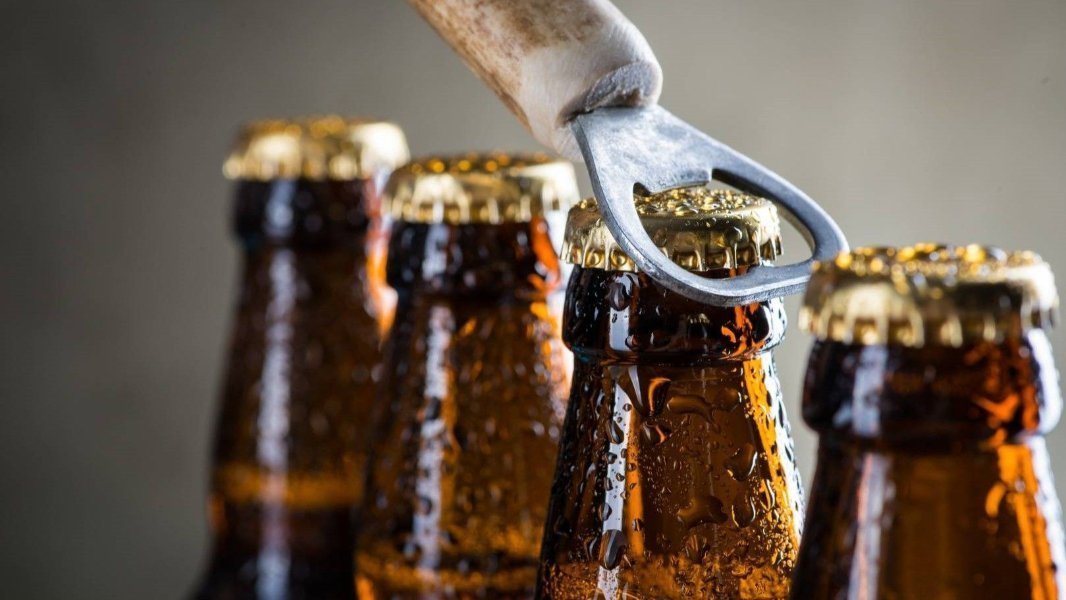
The Ministry of Public Health is in the final stages of revising the Alcohol Control Act 2008. Minister Somsak Thepsutin announced that the House's recent approval of the bill is part of efforts to liberalise a market expected to boost tourism and support smaller breweries. 


The Senate is now reviewing the amendments, which aim to update sales restrictions and advertising curbs while imposing stricter regulations like heftier fines for selling alcohol to minors.


The legislation will repeal military-era restrictions on legal drinking hours and allow updates approved by the National Alcohol Control Committee.


The Ministry will also manage further actions, including announcements about alcohol sales onboard trains and in designated areas. A significant change is the increase in fines for selling alcohol to minors, raising the maximum penalty from 20,000 to 50,000 Baht.


During the National No Alcohol Day campaign, coinciding with Buddhist Lent, the government is promoting a "Zero Drink, Zero Death" initiative to reduce alcohol-induced fatalities.


The Ministry aims to avoid legal conflicts and respect the rights of drinkers and non-drinkers alike. Despite 20–30% of Thais over 15 consuming alcohol, the majority of the population abstains.


Meanwhile, the Prime Minister will officially announce alcohol sales at Bangkok's Hua Lamphong railway station, taking into account the station's appropriate safety measures.


However, we will continue to ban alcohol sales at other stations and aboard trains. Outstanding directives regarding alcohol sales during major Buddhist holidays remain undecided until the Ministry of Interior provides its input.


These changes promise to modernise Thailand's alcohol laws, balancing economic interests with public health concerns.


  Adapted by ASEAN Now from Bangkok Post 2025-07-02

måndag 30 juni 2025

Thai Opposition Slams Rally Figures for Encouraging Military Coup. Held at Victory Monument, the event saw leaders from the “United Power of Land Group” controversially suggesting a coup, sparking fierce backlash. ASEAN NOW

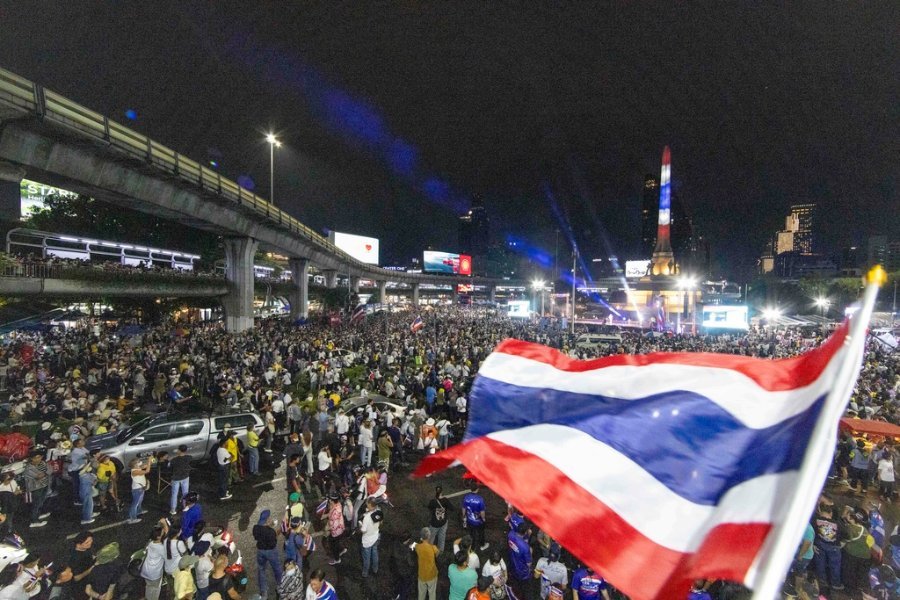
Protesters gather at Victory Monument demanding Thailand's Prime Minister Paetongtarn Shinawatra resign in Bangkok, Thailand, Saturday, June 28, 2025. (AP Photo/Wason Wanichakorn)


In a dramatic twist, Thailand's political scene heated up Saturday as both the opposition People's Party and the ruling Pheu Thai Party lashed out at leaders of a recent national unity rally.


Held at Victory Monument, the event saw leaders from the "United Power of Land Group" controversially suggesting a coup, sparking fierce backlash.


The People's Party took to Facebook, slamming rally figures for inciting a potential coup and promoting excessive nationalism. While typical demands like asking Prime Minister Paetongtarn Shinawatra to resign were voiced, certain rally speeches seemed to be laying groundwork for a coup.


"In the past 20 years, many have suffered and even perished resisting coups. We cannot accept a coup; it violates our democracy and constitution," the party declared.


Danupon Punnakan, a spokesperson for Pheu Thai, acknowledged the peaceful nature of the rally but echoed concerns over the coup talk. Stressing the importance of democracy with the Monarch as head of state, he warned that the nation could not endure another coup, reported Thai Newsroom.


Rallies are constitutional as long as they don't involve violence, but the rhetoric from certain leaders crossed a line, he added.


This growing tension highlights the fragility of Thailand's political landscape, as calls for democracy clash with militaristic undertones.


The potential implications for citizens and governance remain stark, with both parties underscoring the importance of adhering to a democratic system free from military intervention.


  Adapted by ASEAN Now from Thai Newsroom 2025-06-30


Cannabis in Thailand is now neither legal nor against the law. At the last minute, Thailand has delayed for a month or two the ministerial edict that customers will need a doctor’s prescription to buy cannabis. Weed cafes are also given a breather for now, although some smaller ones have already closed as they are not fully registered. - Pattaya Mail

 Thailand !!! 😂😂😂😂😂😂😂😂😂

Cannabis in Thailand is now neither legal nor against the law

Smoking pot can be a crime but is usually without a victim to make a complaint.

At the last minute, Thailand has delayed for a month or two the ministerial edict that customers will need a doctor's prescription to buy cannabis. Weed cafes are also given a breather for now, although some smaller ones have already closed as they are not fully registered. The police are likely to ignore most cannabis smokers for now on the grounds that the drug has not yet been recriminalized but is a controlled herb. So the enforcement, if any, will rest with the greatly underfunded food and drugs administration.

Even when the latest regulations do come into force, maybe in August, suck it and see will still be the norm. Who exactly qualifies as a doctor is debatable but apparently includes herbalists and even acupuncturists as well as traditional medics. An overseas doctor's report is also acceptable. Many so-called dispensaries, according to Writing Thailand's Cannabis Future Network, will have a doctor available on video link, rather than physically present, to agree a prescription for insomnia or pain in return for immediate payment.

All cannabis sold will need the official Good Agricultural and Collection Practices Certificate issued to make sure farmers are complying with the latest government edict. How this will be monitored is unknown, similar to the equally contentious issue of dispensaries keeping detailed notes of all sales. Computerized records of this sort can easily be faked, not to mention hacked. Online cannabis sales will be banned, but there are currently thousands of purchases via Line with a data base of many thousands of buyers already in existence.

Cannabis retail operator Ake Khattiyadamrong says the basic problem is that previous ministerial regulations in 2022 were not enforced. Teens have found it easy in practice to obtain ganja and even public smoking has usually been tolerated. The instruction to growers that the cannabis could only be sold to qualified medical groups was ignored. There is substantial evidence that dozens of prosecuted holiday Brits have been caught carrying in their suitcases cannabis which had been openly bought at cannabis farms in Thailand. Purchases were mostly made by local mafiosi who then encouraged the luckless vacationers to take the airport risks.

The underlying issue is that smoking cannabis without permission is usually a victimless crime without anyone complaining. Just as some pharmacies sell hospital medicines without the required authorization, or some mama and papa stores sell beer at unauthorized times, so it is difficult to see the enforcement strategies against some cannabis outlets only interested in boosting sales. On an entirely separate front, the Entertainment Venue Act of 1964 has criminalized prostitution in licensed premises for seven decades to very little effect.

The current Pheu Thai-led administration says it is reacting to growing public concern about abuse of cannabis and its negative effects on individuals and on society at large. Assuming there isn't a change of government or even a military "accident", significant doubts exist about the effectiveness of ministerial proclamations which, incidentally, do not require approval via the Royal Gazette. As Cannabis Legal Reform says, "Alternatives such as zoning cannabis use would have a much greater chance of achieving progress rather than trying to muddle through once again."


söndag 29 juni 2025

What is The Current Situation With Cannabis in Thailand? We Explain. -The regulatory changes, primarily requiring customers to have a prescription, will not be enforced for 30-90 days to give shops time to adjust. This could change by province and area.- The Pattaya News

What is The Current Situation With Cannabis in Thailand? We Explain

A few quick things about cannabis legality as we are being asked alot. For context see our prior article here:

-The regulatory changes, primarily requiring customers to have a prescription, will not be enforced for 30-90 days to give shops time to adjust. This could change by province and area.

-Cannabis is not recriminalized, banned, or a narcotic again-for now. There are distant proposals to do this but they would be fought vehemently and would need a lot more actions than the current sudden regulatory change. The current health minister said in meetings this weekend with business owners and activists he will not rush to make it a narcotic again unless shops ignore the new rules and don't issue prescriptions.

-There are no current penalties for USERS being caught without a prescription. It is also under Ministry of Health jurisdiction, not criminal. If it became a narcotic again that would change. Only sellers face fines and legal issues for selling without a prescription.

-This is also because growing at home for self consumption is still legal and doesn't need a prescription.

-Police are not drug testing people or throwing them in jail for cannabis again, as it is not a narcotic. For now.

-Cannabis dispensaries will be able to certify staff with a traditional Thai medical practitioner through online courses. They will then be able to legally issue certificates which will have dosage requirements and limits. You do NOT have to only get a prescription from full fledged medical doctors at hospitals. Even pharmacists and dentists can write prescriptions. Most shops will adjust to be able to immediately write prescriptions on site without a complicated process, like pharmacies. This is also why shops are being given a leeway period to get staff certified.

-Various conditions apply for a prescription including insomnia, anxiety/stress, and depression.

-A lot of the things people say are "new" have always been banned. Public smoking, smoking in shops, advertising, selling online, have been banned for years. Enforcement is a different matter. It is unclear if there will be stricter enforcement on these items or not at this time and again most of the jurisdiction falls not under police but the ministry of public health….unless it becomes a narcotic again.

-All of this could also change suddenly based on the status of the current government which is seeing significant protests. This information is also subject to change.


Thousands demand Thai prime minister quit over border dispute. In the largest such rally since the ruling Pheu Thai party came to power in 2023, crowds braved heavy monsoon rain to demonstrate against Paetongtarn, 38, who is also battling to revive a faltering economy and keep a fragile coalition together ahead of a potential no confidence vote next month. | Reuters

Thousands demand Thai prime minister quit over border dispute

BANGKOK, June 28 (Reuters) - Thousands of protesters rallied in the Thai capital Bangkok on Saturday to demand the resignation of Prime Minister Paetongtarn Shinawatra, piling pressure on a government at risk of collapse over a border dispute with neighbouring Cambodia.

In the largest such rally since the ruling Pheu Thai party came to power in 2023, crowds braved heavy monsoon rain to demonstrate against Paetongtarn, 38, who is also battling to revive a faltering economy and keep a fragile coalition together ahead of a potential no confidence vote next month.

"She should step aside because she is the problem," Parnthep Pourpongpan, a protest leader, said.

The latest dispute started with a skirmish between Thailand and Cambodia over a disputed patch of border territory in May. Thai nationalist groups called for Paetongtarn to go after she appeared to criticize a Thai army commander and kowtow to Cambodia's former leader, Hun Sen, in a leaked phone call with him.

Public criticism of the army is a red line in a country where the military has significant clout. Paetongtarn apologised for her comments after the call.

Parnthep, the protest leader, said many Thai people felt the prime minister and her influential father, Thaksin Shinawatra, were being manipulated by Hun Sen, a former ally of the family who has turned against them.

'UNG ING, GET OUT'

Blocking the busy intersection at Victory Monument, a war memorial, crowds including many elderly people waved flags bearing Thailand's national tricolor.

"Ung Ing, get out," the crowd occasionally chanted in unison, calling the premier by a nickname.

Thapanawat Aramroong, 73, said Paetongtarn's comments about the army commander and seeming eagerness to please Hun Sen were unacceptable.

[1/5]Anti-government protesters gather at the Victory Monument during a protest calling Thailand's Prime Minister Paetongtarn Shinawatra to resign after her leaked phone call with former Cambodian Prime Minister Hun Sen on the Thailand-Cambodia border dispute, in Bangkok, Thailand, June 28, 2025.... 

The demonstration was organised by the United Force of the Land, a coalition of largely nationalist activists who have rallied against other Shinawatra-backed governments over the last two decades.

In a statement read aloud before the crowds, the group said "the executive branch" and parliament were not working "in the interest of democracy and constitutional monarchy".

Remaining coalition partners should quit immediately, they said.

While past protests against the Shinawatras did not directly cause the downfall of those governments, they built up pressure that led to judicial interventions and military coups in 2006 and 2014.

Protester Somkhuan Yimyai, 68, said he did not want the military to end up staging a coup and that previous military takeovers had not "provided solutions for the nation in terms of solving corruption or the government's administration of the country."

ECONOMIC TURMOIL

The political turmoil in Thailand threatens to further damage the country's struggling economic recovery.

The prime minister now controls a slim majority coalition following the exit of former partner Bhumjaithai Party last week. Protesters on Saturday called for other coalition partners to quit.

Paetongtarn also faces judicial scrutiny after a group of senators petitioned the Constitutional Court and a national anti-graft body with a wide remit to investigate her conduct over the leaked phone call.

Decisions from either bodies could lead to her removal.

Hun Sen also launched an unprecedented public attack on Paetongtarn and her family, calling for a change of government, in an hours-long televised speech on Friday, which the Thai foreign ministry described as "extraordinary" while insisting that Thailand prefers to use diplomacy.

Reporting by Panu Wongcha-um; Additional reporting by Napat Wesshasartar; Editing by Sam Holmes and Poppy McPherson


lördag 28 juni 2025

Thailand Tightens Alcohol Sales: New Rules Take Effect. In a significant update to alcohol regulations, Thailand has announced new sales restrictions starting today, affecting bars, restaurants, and travelers nationwide. ASEAN NOW


Picture courtesy of Thai PBS World


In a significant update to alcohol regulations, Thailand has announced new sales restrictions starting today, affecting bars, restaurants, and travelers nationwide.


According to an official announcement by the Royal Gazette dated June 26, Prime Minister Paetongtarn Shinawatra issued new rules on alcohol sales. These changes update the 2015 regulations to better suit current conditions, based on recommendations from the National Alcoholic Beverage Policy Committee.


Effective June 27, sales will only be allowed during specific hours: from 11am to 2pm, and from 5pm to midnight. This applies throughout the country, but with the following exceptions:


  1. Airports: Alcohol sales are permitted in airport buildings servicing international passengers.
  2. Service Establishments: Businesses can sell alcohol during their legal operating hours.
  3. Hotels: Sales are allowed under the rules set by the Hotel Act.


Reasons for the Change


These new regulations aim to more effectively manage alcohol consumption while accommodating the needs of key sectors such as tourism and hospitality. By allowing sales in airports and hotels, the policy supports international visitors and business operations.


Businesses will need to adjust, particularly local bars and restaurants, which comprise a significant part of Thailand's vibrant nightlife. The goal is to strike a balance between curbing excessive drinking and supporting the hospitality industry.


Impact on Travelers and Businesses


Visitors to Thailand should be aware of these time restrictions and exceptions when planning their activities. Businesses, especially those outside of the exception categories, must adapt to the new sales windows.


Overall, this move represents a controlled approach to alcohol regulation, aiming for a healthier social environment without hindering tourism and business.


Stay informed about these changes to enjoy your Thailand experience smoothly under the new rules.


  Adapted by ASEAN Now from The Thaiger 2025-06-27

fredag 27 juni 2025

Experts divided on likelihood of imminent Thai coup. Several sources are warning that a new army putsch is a distinct possibility within weeks or months. The Council of Foreign Relations, Thailand’s Tourism Council and even the defence minister, Phumtham Wechayachai, have all warned that a “non-democratic accident” could occur in “coup-culture” Thailand.- Pattaya Mail

Experts divided on likelihood of imminent Thai coup

Thai premier Paetongtarn Shinawatra speaks to Lieutenant General Boosin Padklang, commander of the 2nd Army Area.

Several sources are warning that a new army putsch is a distinct possibility within weeks or months. The Council of Foreign Relations, Thailand's Tourism Council and even the defence minister, Phumtham Wechayachai, have all warned that a "non-democratic accident" could occur in "coup-culture" Thailand.

They note the two obvious dangers: the threat of bloodshed on the Thai-Cambodian closed borders, which are already under effective martial law on the Thai side, and looming anti-government street demonstrations getting out of hand. Behind both controversies is intense Thai patriotism and nationalism in sections of the Thai population.

Border territorial disputes were present in the previous coup years, 2006 and 2014, though not at simmering points as they are now. The two putsches dislodged a pro-Shinawatra administrations and the composition of the present government is another key similarity at the present time. There have been 22 Thai coup attempts, 13 successful, in the last 100 years.

On the other hand, there are reasons to question the imminence of another army takeover. Professor Thitinan Pongsudhirak, an international security expert, points out that the current military establishment is well aware that the economy at present is in a weak state which a coup could worsen. For example, international tourism could be hit especially if visitors found their insurances were invalid because of national martial law.

A new anti-democratic intervention would be the first in the new reign and might attract special unpopularity because of that. Moreover, the constitutional court could intervene and either clear prime minister Paetongtarn Shinawatra of alleged constitutional breaches, or order her suspension pending judicial investigation. The Cambodian border issue could either deteriorate or improve, for example by a mutual decision to reopen land exit and entry points.

But all commentators, optimistic and pessimistic, agree that the immediate issue will be the organized Bangkok demo set for the upcoming weekend. Whether this turns into a nasty and long-term standoff or is managed successfully by supervising police without army backup is likely the determinant. As former premier Prem Tinsulanonda once said, "All a coup achieves is to put a sticking plaster on a serious wound".