lördag 26 juli 2025

Official Statement by the Royal Thai Government on Thailand-Cambodia Situation. The following is an official Statement by the Royal Thai Government on the Thailand-Cambodia Situation - The Pattaya News

Official Statement by the Royal Thai Government on Thailand-Cambodia Situation

The following is an official Statement by the Royal Thai Government on the Thailand-Cambodia Situation

My fellow Thai citizens,

Currently, Thailand is facing threats to our sovereignty and territorial integrity from Cambodia. Although in the past few months we have exercised our utmost restraint and patience in the face of provocations and aggression, and have chosen to adhere to peaceful means in accordance with international law and humanitarian principles.

Therefore, it is deeply regretful that Cambodia has chosen to use military force and opened fire first. This is a severe violation of international law and humanitarian principles as their attack has targeted hospitals and residential areas resulting in the immense loss of lives and properties, including 13 civilian fatalities among which are women, children and the elderly. This can be considered a war crime.

Yesterday, the Thai Foreign Minister briefed the United Nations Secretary-General on the facts of the current situation.In addition, the Thai Government sent a letter to the United Nations Security Council to inform the Council of the facts and to condemn in the strongest terms these indiscriminate and armed attacks, especially against innocent civilians, as well as invite the international community to also condemn this inhumane attack.
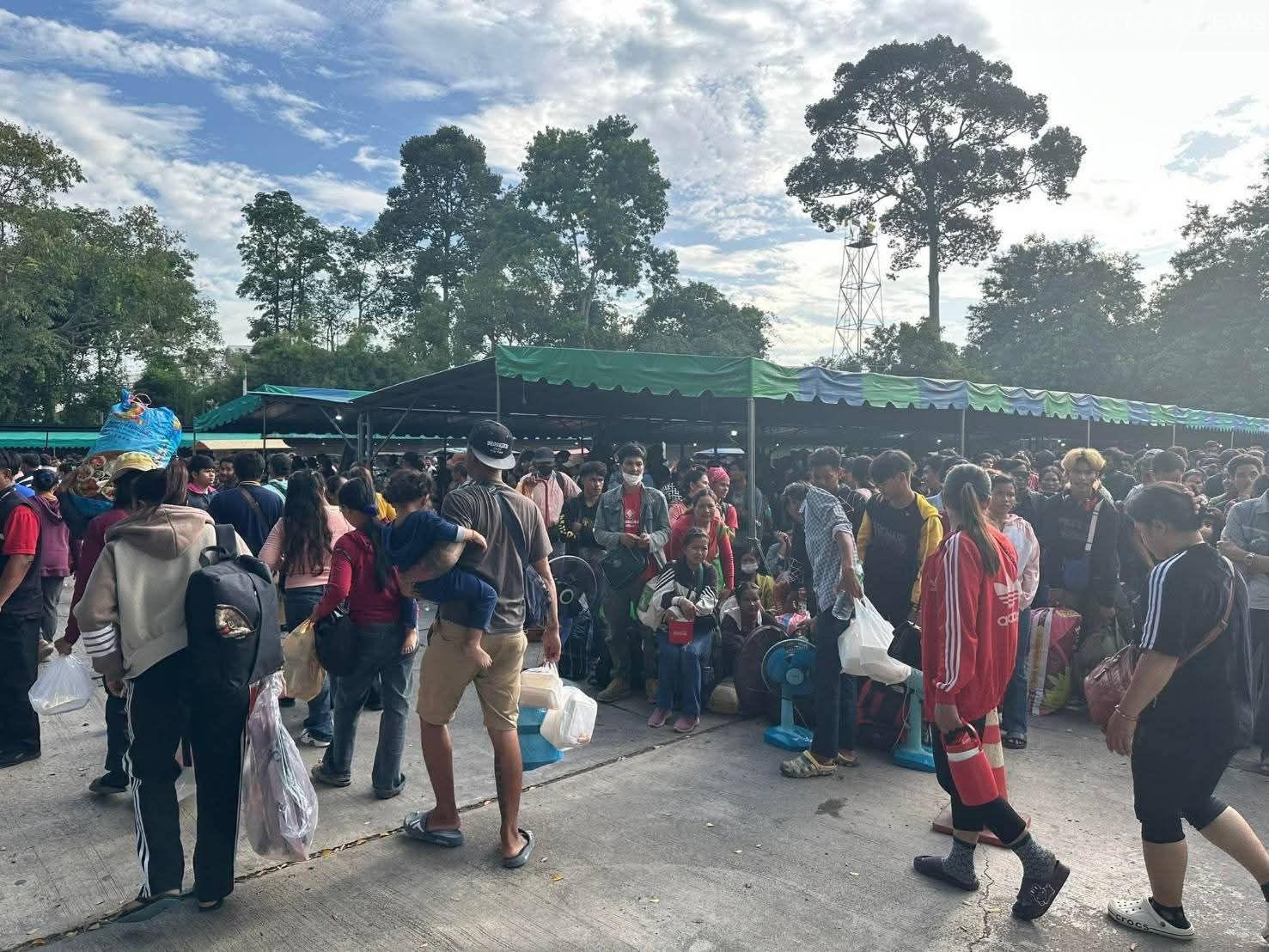
The government expresses its deepest condolences for the loss suffered by our citizens and reaffirms that throughout this period, the government has not stood idle since Cambodia fired the first shot. The Thai armed forces have responded within a limited perimeter targeting only key bases from which attacks against Thai civilians have been made, based on the inherent right of self-defense under international law and the United Nations Charter. They have destroyed Cambodian military bases.

We have now had to evacuate people numbering in the hundred thousand from the affected areas. We will also issue assistance in the form of compensation for the families of the deceased totaling 1 million baht per person; 700,000 baht for the disabled; 200,000 baht for the severely injured; and 100,000 baht for the injured.

Furthermore, we have coordinated with all airlines to arrange special flights to bring Thai nationals in Cambodia back home safely in the case of emergency. Tomorrow, the minister assigned will travel to the affected areas covering four provinces namely, Ubon RatchaThani, Si Sa Ket, Surin and Buriram. This is to instill confidence in the people in the affected areas to feel safe and togive them moral encouragement and support.

This is a time when all Thais must unite as one to send encouragement and moral support to all our soldiers who are on duty to protect our sovereignty and territorial integrity as well as the safety of the people in the affected areas.

I would like to emphasize that the current situation is a dispute between the governments and armed forces of both countries and not between the people. This is not a declaration of war but merely a clash along the border in order to protect our sovereignty and territorial integrity and to respond to the aggression.

Finally, it is with our utmost gratitude that Their Majesties the King and Queen have expressed their concern and given their encouragement to their subjects that have suffered losses from the current tensions in the area and have graciously placed all of the injured and wounded under their royal patronage.


fredag 25 juli 2025

Thailand ramps up flights as border unrest worsens. Emergency plan launched to bring citizens home safely as officials monitor volatile situation. The Thaiger

Thailand ramps up flights as border unrest worsens

Emergency plan launched to bring citizens home safely as officials monitor volatile situation

Cambodia’s Hun Sen’s hidden agenda for unprovoked, deadly and destructive actions may involve China. As Cambodia bombed Thai civilians and military sites, Hun Sen’s secret China flight sparks global alarm. Thailand hits back fast, urges UN action. With China’s shadow looming and ASEAN stability at risk, a hidden agenda may have driven the two countries to war.- Thai Examiner

Cambodia's Hun Sen's hidden agenda for unprovoked, deadly and destructive actions may involve China

As Cambodia bombed Thai civilians and military sites, Hun Sen's secret China flight sparks global alarm. Thailand hits back fast, urges UN action. With China's shadow looming and ASEAN stability at risk, a hidden agenda may have driven the two countries to war.

Thailand hit back hard and fast after Cambodia's unprovoked assault on civilians and military targets Thursday. The response was both decisive and effective. At the same time, the Ministry of Foreign Affairs wasted no time. With Minister Maris Sangiampongsa already in New York promoting Thailand's sustainability agenda, the crisis was immediately raised at the United Nations. Meanwhile, Thai military intelligence tracked Cambodian strongman Hun Sen's private jet heading to China. Despite rapid denials from Phnom Penh, few in Bangkok are convinced. Analysts believe the Cambodian regime is trying to pull Beijing into the conflict—a dangerous play Thailand must reject at all costs.

There was sudden violence on the Thai-Cambodian border on July 24, 2025. Cambodia launched a fierce military assault on Thai provinces. Consequently, Thai military intelligence closely monitored the situation. It gathered information that Hun Sen's private jet had departed Phnom Penh and was headed to China.

However, within hours, Hun Sen denied the allegations. Instead, he posted photos showing him meeting senior officials at his home. Moreover, he insisted he was commanding the military via video calls. Despite his denial, the verified reports highlight the close relationship between Cambodia and China.

Furthermore, intelligence indicated that other Cambodian officials might have travelled to China on the same day. This occurred as Cambodia's military attacked Thai civilian areas.

Cambodia attacks Thai civilians as reports emerge of officials and Hun Sen flying secretly to China

Meanwhile, analysts in Bangkok noted that Hun Sen might want China involved in the conflict. Perhaps, China would act as a mediator. Such involvement would strengthen Cambodia's and China's position in their relationship with Bangkok.

At the same time, most analysts agree that Thailand must use this crisis to bolster national unity. In addition, Thailand should present its case firmly to the United Nations as an independent and sovereign nation.

Certainly, Hun Sen's recent actions are puzzling. Particularly, his destruction of Cambodia's relationship with Thailand is difficult to understand. In addition, he sundered a personal friendship with Thailand's Shinawatra family.

Inside Cambodia, seeds of revolt are emerging. Furthermore, an international crackdown on scammer compounds is gaining momentum. At the same time, China is cutting back on funding through its Belt and Road Initiative.

Both developments have financial implications for the Phnom Penh regime. Thus, understanding Hun Sen's motives is vital to Thailand's interests. Put simply, there appears to be an unknown agenda behind this crisis.

Hun Sen's internal pressure grows as Bangkok warns against China's quiet hand in regional escalation

According to the Army Military Force Facebook page, Hun Sen's private jet—a Hawker 800XP—departed Phnom Penh toward China on July 24. The page posted an image of the plane and its flight number, MEDIC77. Consequently, this news attracted significant public and media attention.

However, Hun Sen countered the narrative. He claimed he was still in Cambodia, issuing orders through online communication. Yet, many remain sceptical given the close economic and military ties between Cambodia and China. Indeed, Chinese investment in Cambodian infrastructure and ports is extensive. These projects play a key role in China's Belt and Road Initiative strategy.

Moreover, China's military involvement is evident in Cambodia's Ream Naval Base and Kampot Port. Such proximity raises regional security concerns. Meanwhile, speculation continues that Cambodia may request Chinese weapons to bolster its military. This possibility alarms many observers.

Although officially denied, the chance of negotiations or military support from China cannot be ignored. Therefore, the situation demands close monitoring. It could affect ASEAN's security balance and future Thailand-Cambodia relations. At the same time, China's government stresses a neutral stance. It has expressed "deep concern" over the border clashes and offered to mediate the dispute.

Jet sightings, naval bases and arms speculation feed suspicion of Beijing's growing role in conflict

A Chinese foreign ministry spokesperson stated that China hopes both sides resolve their issues through dialogue. Furthermore, China emphasises its impartiality and long-term interests in the region. Despite this, analysts in Bangkok remain wary. They suspect China's involvement may be more strategic than neutral.

Meanwhile, hostilities between Thai and Cambodian soldiers have escalated on the border. Cambodian forces targeted civilians and sensitive sites, including homes and hospitals. In response, Thailand struck military targets selectively, using aircraft.

Lt. Gen. Pongsakorn Rodchomphu, former deputy secretary-general of Thailand's National Security Council, advised proportionate response tactics. He noted that Cambodia's use of multiple rocket launchers justified Thai air strikes. At the same time, he warned artillery should be avoided due to disproportionality.

Importantly, Cambodia's military aims resemble past clashes, especially at Preah Vihear. Cambodia seeks to provoke fighting and then appeal to the World Court.

This time, Thailand claims ownership of contested areas, such as Ta Muen Thom Temple. Historical treaties support Thailand's position, as no objection was raised during the French colonial era.

Military escalation mirrors historic tensions as Thailand strikes back with restraint and legal confidence

Moreover, Cambodia's use of rocket launchers has limits. They possess only six multiple-barrel systems with a 130-kilometre range. If expended, Cambodia will lose its main firepower. Thus, the use of F-16 jets, with a longer range, on Thursday highlighted not only Thailand's measured response but its military superiority.

Thai analysts recommend that the government continue to respond quickly and decisively. Delays could weaken Thailand's position. So far, the Royal Thai military forces have responded with professionalism and skill.

Meanwhile, China offers to mediate, but Thailand's acceptance might disadvantage it. Some observers suspect China wields power within the Cambodian regime. For instance, Beijing has established an unofficial naval base in Cambodia's Ream Port. Therefore, relying on China as a mediator poses a risk for Thailand.

Thai air power asserts dominance as warnings rise over China's mediation offer and hidden leverage

Instead, Thailand should pursue international platforms such as the United Nations. However, securing U.S. involvement may be complicated due to Thailand's close ties with China. The coming weeks will be critical for all parties involved.

Undoubtedly, the Thai-Cambodian border conflict has escalated with serious implications. Cambodia's aggressive military actions and attempts to secure Chinese involvement threaten regional stability. Consequently, Thailand must act swiftly to protect its sovereignty. In short, it must strengthen national unity and seek international support.

14 killed and over 100,000 evacuated as army brings in more guns trained on Cambodian border forces


torsdag 24 juli 2025

Oroligheterna


Clash between Thai and Cambodian troops spreads to 6 locations. AFTER a clash erupted between Thai and Cambodian troops near the disputed Prasat Ta Muen Thom temple, Surin province, at 8.20 a.m. this morning (July 24) the fighting has now spread to six locations, Naewna newspaper said. - Thai Newsroom

 Clash between Thai and Cambodian troops spreads to 6 locations

AFTER a clash erupted between Thai and Cambodian troops near the disputed Prasat Ta Muen Thom temple, Surin province, at 8.20 a.m. this morning (July 24) the fighting has now spread to six locations, Naewna newspaper said.

 Lt. Col. Richa Suksuwanon, deputy army spokesperson, said at 9.20 a.m.that clashes are taking place along the entire Pha Mor E Daeng – Khao Phra Viharn Temple zone.

The Cambodian side opened fire using all types of weapons including BM-21 Grads, a Soviet truck-mounted 122mm multiple rocket launcher, while Thai troops responded with artillery fire. Two Thai soldiers got injured in the fighting near Prasat Ta Muen Thom Temple.

Reporters in the area said the six areas where the two countries are clashing include Prasat Ta Muen Thom Temple, Prasat Ta Kwai Temple, Chong Bok,  Khao Phra Viharn (Huai Ta Maria/Phu Makhuea), Chong An Ma, and Chong Chom.

Bullets fired by Cambodian soldiers also hit a house in Surin's Ka Choeng district belonging to Mr. Suthee Boontaeng injuring one person.

Officials quickly evacuated residents at this border area as more bullets are expected to fly towards their homes.

The fighting erupted after the task force responsible for Pasart Ta Muen Thom temple heard the sound of a drone flying in front of the compound at 7.35 a.m. although they were not able to see it.

This was followed by six Cambodian troops bringing weapons, including rocket-propelled grenades (RPGs), to the barbed wire fence in front of the Thai base of operation, which is around 200 metres away from the temple. The Thai side tried to negotiate to avoid conflict.

However, at approximately 8.20 a.m.the Cambodian side opened fire.


Netizens Demand Justice After Disturbing Rabbit Abuse at Bang Saen Beach. In a deeply unsettling incident at Bang Saen Beach, Chon Buri, a video capturing a man abusing a rabbit has sparked a wave of outrage across Thailand. The footage, shared by witness Pattanapong Sririmala on the "Rabbit Lovers’ Community" Facebook page, shows the man repeatedly hurling the rabbit into the air and letting it fall onto the hot sand. ASEAN NOW


Photo via Facebook/ ชอบจัง บางแสน


In a deeply unsettling incident at Bang Saen Beach, Chon Buri, a video capturing a man abusing a rabbit has sparked a wave of outrage across Thailand. The footage, shared by witness Pattanapong Sririmala on the "Rabbit Lovers' Community" Facebook page, shows the man repeatedly hurling the rabbit into the air and letting it fall onto the hot sand.


The shocking video, posted on July 21, records the man not only throwing the rabbit but also pouring sand over its body, seemingly attempting to bury it. Pattanapong, who captured the distressing scene, noted that this cruel act had been repeated multiple times before he began filming.


Following the post, the man, identified online as "Aruneelengpo," reportedly contacted Pattanapong, demanding the video be removed and threatening legal action. Unfazed, Pattanapong refused to delete the footage.


The video quickly went viral, igniting widespread condemnation from Thai netizens. Comments ranged from despair at the rabbit's suffering to calls for justice and reflections on the man's upbringing.


Some distraught viewers questioned, "How was this man raised?" Others expressed immediate concern for the rabbit's well-being, fearing it could suffer severe stress and injuries.


Animal welfare organisations, including Watchdog Thailand, have been alerted by concerned citizens urging for the man's arrest and prosecution. The gravity of public sentiment underscores a collective demand for swift action against animal cruelty.


In an interview with ThaiRath, Pattanapong revealed that a local food vendor intervened to rescue the rabbit. The animal was reportedly found in a drowsy and lethargic state, illustrating the distress it endured.


Locals have informed reporters that the man resides near the beach and has a history of purchasing and mistreating rabbits.


As of now, authorities have not provided updates on any legal proceedings or arrests linked to this incident. The lack of immediate action has left many hoping for a robust response to underscore that such cruelty will not be tolerated.


This incident has not only highlighted the importance of animal welfare but also brought community vigilance into sharp focus. It serves as a clarion call for stronger protective measures and heightened awareness regarding animal treatment in Thailand.


  Adapted by ASEAN Now from The Thaiger 2025-07-23


tisdag 22 juli 2025

Thailand Tourism: Falling Behind or Ready to Evolve? Thailand faces an uphill battle to restore its tourism industry to its pre-pandemic heights. Despite a 26% increase in visitors, reaching 35.5 million in 2024, the nation remains unable to surpass its 2019 peak of nearly 40 million tourists. For the first half of 2025, only 16.6 million arrivals have been recorded, suggesting that previous records may remain unbroken for some time. ASEAN NOW

Picture courtesy of Andamanda Phuket


Thailand faces an uphill battle to restore its tourism industry to its pre-pandemic heights. Despite a 26% increase in visitors, reaching 35.5 million in 2024, the nation remains unable to surpass its 2019 peak of nearly 40 million tourists. For the first half of 2025, only 16.6 million arrivals have been recorded, suggesting that previous records may remain unbroken for some time.


Today, the Tourism Authority of Thailand (TAT) unveiled a new campaign, "Healing is a New Luxury," aiming for 36 million visitors and 1.63 trillion baht in revenue by 2026. Yet, this figure still falls short of the 1.9 trillion baht generated in 2019. An ambitious 2.8 trillion baht target for next year looms large, but reaching the 3 trillion baht milestone of the past remains elusive.


Although tourism saw a rebound in 2023 with the reopening of China's borders, enthusiasm has waned. The once-robust Chinese market, which comprised a quarter of Thailand's foreign tourists, has dwindled significantly. A significant rise in Chinese visitors in January 2024 was followed by steep declines, with first-half arrivals in 2025 down 34% year-on-year.


Former TAT governor Yuthasak Supasorn warns that only 4-5 million Chinese tourists may visit this year, marking a 12-year low, excluding the COVID-19 period. The issue isn't solely China's slowing economy, as Vietnam and Japan have seen substantial increases in Chinese visitors, while Thailand grapples with safety concerns stemming from high-profile incidents like the kidnapping of Chinese actor Wang Xing and the collapse of a Bangkok building.


Thailand's safety ranking has tumbled to 102nd out of 117 countries in the World Economic Forum's Travel & Tourism Index. Concerns over policing and personal safety at night have grown, with Chinese travellers' confidence in Thai safety plummeting from 26% in 2024 to 19% in 2025.


The challenge extends beyond numbers. Malaysian tourists have surged to become Thailand's top market in 2025, but they spend significantly less compared to Chinese visitors. A Chinese tourist spends an average of 42,428 baht over 7.35 days, whereas a Malaysian spends just 21,450 baht over 4.17 days.


Efforts to attract European travellers, who spend more on average, have helped locations like Phuket, but only temporarily. Occupancy rates in Phuket's low season dropped to 59% in June, down from 72% the previous year, with room rates dipping to 2,394 baht.


Thailand's appeal as a budget destination is fading, with its cost competitiveness ranking slipping to 48th. The rise of "Qióngyóu," budget travel among Chinese millennials, has diverted price-sensitive tourists elsewhere.


Yuthasak argues for a strategic pivot: attracting fewer, high-spending tourists to maximise economic impact. The country's historical resilience in crises is being tested amid this prolonged recovery effort.


To regain its stature, Thailand must focus on rebuilding trust, enhancing safety, and offering better value. Transforming from a budget haven to a quality destination could redefine its future. The clock is ticking, as regional rivals forge ahead.


Yuthasak underscores Thailand's potential: "We can't rest on past glories. It's time to evolve, or risk being left behind."


  Adapted by ASEAN Now from The Thaiger 2025-07-21


söndag 20 juli 2025

As Pattaya recovers, the debate continues over who the real big spenders on the streets are. Pattaya’s vibrant tourism scene has long been fueled by a diverse mix of visitors, but the question of who truly drives the local economy with their spending remains a hot topic among business owners, locals, and tourists alike.- Pattaya Mail

As Pattaya recovers, the debate continues over who the real big spenders on the streets are

As Pattaya bounces back, understanding visitor spending is key. Chinese tourists lead in numbers, while Indian and Western travelers pack a financial punch. (Photo by Jetsada Homklin)

PATTAYA, Thailand – Pattaya's vibrant tourism scene has long been fueled by a diverse mix of visitors, but the question of who truly drives the local economy with their spending remains a hot topic among business owners, locals, and tourists alike.

Chinese Tourists: Leading in Numbers

Chinese tourists have historically been a significant presence in Pattaya. Although their numbers have dropped by half since Songkran, Chinese travelers remain a vital force in retail, dining, excursions, and beach activities, known for traveling in groups and spending heavily on shopping and meals. Many locals anticipate a strong comeback from the Chinese market as the Tourism Authority of Thailand (TAT) works tirelessly to bring them back following pandemic-era travel restrictions by increasing service standards on chartered flights, fast lanes at airports, and personal security.


Indians: Increasing Spending Power

Indian tourists are rapidly gaining recognition for their growing presence and economic influence in Pattaya. According to the Tourism Authority of Thailand (TAT), Thailand welcomed approximately 1.18 million Indian tourists in the first half of 2025, making India the third-largest source market after Malaysia and China. The TAT projects a total of 2.5 million Indian arrivals by year-end.

Indian visitors' average spending ranges from 40,000 to 70,000 baht per person, often linked to destination weddings, business events, and leisure travel. This spending is notably high and contributes significantly to Pattaya's economy, especially through shopping, dining, and cultural experiences. Some insiders suggest Indian tourists' financial impact may be underestimated compared to other groups.

Western Tourists: Still Significant but Facing Challenges

Western visitors, particularly retirees and tourists from Europe, have traditionally been key contributors, especially in nightlife and hospitality sectors. Bar owners and hotel managers often highlight Westerners' willingness to spend generously on drinks, entertainment, and services. "Retirees can easily drop 10,000 baht a night," noted one bar owner, underlining their importance during the city's quieter periods.

However, recent economic factors, including a strong Thai baht, have caused some hesitation among Western tourists. Despite these challenges, the European market is showing signs of recovery, with double-digit growth reported from countries such as Germany, Italy, and Switzerland, whose visitor numbers have also increased steadily since January — as well as from the British, who are often drawn by the prospect of semi-retirement investments. What many of these travelers seek in Pattaya isn't the loud atmosphere or late-night chaos, but rather quiet corners, sunsets by the sea, and companionship during their retirement years.

Beyond Per Visit Spending: Frequency and Sector Impact

The debate over who is the "biggest spender" in Pattaya is nuanced. Western tourists may spend more per night on entertainment and nightlife, but Chinese and Indian tourists often contribute more overall through higher frequency visits, larger group sizes, and substantial spending during their limited days of stays.

As Pattaya continues to diversify its tourism base, understanding these spending patterns helps local businesses tailor their services and marketing strategies to attract and retain high-value visitors from all regions.

While Chinese tourists lead in sheer numbers, Indian tourists are emerging as powerful contributors with increasing spending capacity. Western visitors, though currently facing some economic headwinds, remain essential to Pattaya's tourism economy. The city's future success depends on leveraging the combined economic strength of all its guests — a true melting pot of global travelers.


Bangkok Post - Thaksin has 'nothing to lose'. Former prime minister Thaksin Shinawatra has stepped back into the political spotlight as the ruling Pheu Thai Party and his daughter, suspended Prime Minister Paetongtarn Shinawatra, find themselves on increasingly shaky ground.

Thaksin has 'nothing to lose'
Thaksin Shinawatra and his daughter Prime Minister Paetongtarn Shinwatra arrive at a soft power forum in Bangkok on July 9. Nutthawat Wichieanbut
Thaksin Shinawatra and his daughter Prime Minister Paetongtarn Shinwatra arrive at a soft power forum in Bangkok on July 9. Nutthawat Wichieanbut 

Former prime minister Thaksin Shinawatra has stepped back into the political spotlight as the ruling Pheu Thai Party and his daughter, suspended Prime Minister Paetongtarn Shinawatra, find themselves on increasingly shaky ground.

Thaksin's public appearances included an exclusive talk on July 9, a keynote speech on July 17 and a high-profile merit-making ceremony at Wat Ban Rai in Nakhon Ratchasima on Saturday.

Widely seen as the de facto leader of Pheu Thai, Thaksin addressed a broad array of topics including the Hun Sen clip and the Pheu Thai Party's directions following the Bhumjaithai Party's exit from the coalition and the looming Constitutional Court ruling in Ms Paetongtarn's case.

Thaksin, typically a vocal figure, had been unusually quiet for over three weeks. His re-emergence ignited chatter over whether it is intended to help Ms Paetongtarn and whether it will stabilise or add further complications for the Pheu Thai-led government.

Complicating the crisis

Phichai Ratnatilaka Na Bhuket, a political science lecturer at the National Institute of Development Administration, said Thaksin appears to be sending a message to the conservative camp that he is still playing by the rules.

Thaksin signalled that the party will not work with any party that supports changes to Section 112 of the Criminal Code, or the lese majeste law, and left the door open to working again with the Bhumjaithai Party, which is against amending the lese majeste law and granting amnesty to the lese majeste offence, he said.

"It's his way of telling the conservative bloc that between the People's Party (PP) and the Bhumjathai Party, he'd still rather work with Bhumjaithai despite the rift," said the academic.

He said that Thaksin's latest move is also an effort to help his daughter who he portrayed as a victim of Hun Sen's trickery. The party's popularity, especially in its northeastern stronghold, dropped from 40% to 10% in some polls.

However, he believed Thaksin's intervention has done more harm than good because the public sees Ms Paetongtarn as inexperienced when dealing with international affairs.

As for the party, the former prime minister's comments only reinforce the public perception that he is calling the shots in the government especially after his visit to Ban Phitsanulok to attend a meeting of "Team Thailand" for talks about Thailand's latest tariff proposal to the United States, Mr Phichai said.

There are already complaints he has influenced the party and if it can be proven that Pheu Thai has been following his orders, it could become a real issue, he added.

For the Pheu Thai Party to win back support, it has to take the political offensive, said Mr Phichai.

Pheu Thai's recent moves such as putting the brakes on the casino-entertainment complex plan and quietly undermining Bhumjaithai, which shares the same provincial power base, are part of a broader political strategy, he said.

Pheu Thai is also using the Klatham Party to pull influence away from rivals and going after senators with ties to Bhumjaithai. The 20-baht flat-rate electric train fare is also aimed at shoring up public support.

"I don't think it can really help his daughter or the party. If Thaksin really wants to help, the best thing he can do is step away. Don't pull the strings from behind the scenes. Just stay home with the grandchildren," he said.

Phichai: Pheu Thai playing by the rules

No longer about popularity

Stithorn Thananithichot, director of the Office of Innovation for Democracy at King Prajadhipok's Institute, said Thaksin's recent move is to help his daughter and show that the "deal" is, in fact, still intact.

However, he said the Pheu Thai-led coalition may not stay beyond the end of this year. A House dissolution is expected after the 2026 budget bill clears parliament and a rotation of positions is finalised.

Thaksin's visit to Ban Phitsanulok suggests the former premier is not concerned about allegations that he is pulling the strings and at this point he has nothing to lose and must demonstrate strength, said Mr Stithorn.

"He is sending a message that even without Bhumjaithai, Pheu Thai is still standing. It is to show his deal remains the primary deal. There's no need for a new formula. It's Thaksin and Pheu Thai only," he said.

However, Thaksin's move has done little to boost public support as reflected in recent opinion surveys, adding Thaksin himself seems to be aware that trying to complete with the orange camp on popularity is a losing battle.

Instead, his focus seems to be consolidating power through "big houses" whether by drawing them directly into Pheu Thai's fold or using allied parties to do work. The goal is to secure enough parliamentary support to build a majority when the time comes.

Looking ahead to the next polls, Mr Stithorn said Pheu Thai is unlikely to come out on top and could even fall to third place.

"It's going to be tough. And their best hope is to forge alliances with the Klatham Party and others. If they can get pass the 250-seat threshold, they have a shot [at forming the government," he said.

Stithorn: Govt may not see out the year

Pheu Thai's defence

Somkid Chueakong, deputy secretary-general to the prime minister for political affairs, defended Thaksin's return to the spotlight, saying it was planned well before the leaked audio clip surfaced.

He said the government has been tapping into Thaksin's experience to help steer the country through difficult economic conditions such as trade tensions with the US and politically, Thaksin's remarks supported the government stance and were not beyond what Pheu Thai has done and will do.

When asked whether Thaksin remaining quiet might actually help the government, Mr Somkid disagreed.

"Keeping silent might not be better. Ms Paetongtarn is being suspended and opinion polls reflect public sentiments. People are feeling uncertain about leadership," he said.

Somkid: Audio clip had no bearing


lördag 19 juli 2025

Doctor Tells Court 'Thaksin Could Have Returned to Prison Hospital Early'. A doctor from the Police General Hospital told a court on Friday that former prime minister Thaksin Shinawatra could have been returned to the Corrections Department hospital shortly after initial treatment. The statement comes amid allegations of preferential treatment during his prison sentence. ASEAN NOW


Thaksin again lures foreigners with promise to buy Thai land outright - Pattaya Mail

Thaksin again lures foreigners with promise to buy Thai land outright

Thaksin senses an easy way for Thailand to make billions from ultra-rich foreigners.

Ex premier Thaksin Shinawatra is once again floating that a new Golden Visa would bring the right for foreigners to own outright freehold land and property in Thailand. Speaking to a business conference in Bangkok, he projected that one million foreigners, each paying US$1 million or equivalent, would benefit the Thai treasury with 600 billion baht to unlock the country's economic future.

In his plan, Thaksin also included long-term residency for the ultra-rich. But it is not clear whether he meant a renewable 10 year visa (as in the current Long Term Residency Visa) or a certificate of permanent residency. Permanent residents in Thailand are foreigners who do not have a date when they must extend their visa or leave the kingdom. They can stay as long as they wish but, before going abroad, must obtain a re-entry permit if they wish to come back with their status intact.

This is not Thaksin's first foray into visas for the privileged minority. As prime minister in 2003, he announced the arrival of the Elite visa (later renamed Privilege) which guaranteed multiple entries for 20 years, the first residency by investment program in Asia. Initially, it seemed to include the right for foreigners to buy "one rai of land" to build their own property, but this was never enacted. The program then faced challenges such as operating deficits and accumulated losses.

The latest Golden Visa concept has attracted more criticism than support amongst financial gurus. They say that the best Golden Visas worldwide include the guarantee of citizenship with a second passport, as found in parts of the Caribbean. It is not clear how much freehold land the golden visa holders would be allowed to hold in their own name or whether purchase would be limited to off-plan developments in specific areas.

Thaksin's latest plan has fallen flat amongst hundreds of social media commentators. A Facebook regular wrote, "Thailand would do better to look after the thousands of foreigners who are retired in Thailand or have family responsibilities here instead of frightening them away with taxation threats and visa restrictions." International commentators such as Bloomberg and the EU Policies are doubtful that there is a large pool of super-rich foreigners out there willing to invest heavily in Thailand's future right now as she struggles with falling revenues, US tariffs and international image problems. Better think it out again.


fredag 18 juli 2025

Bangkok Post - Thaksin touts golden visa, higher travel fees to boost Thailand. AOT should raise its passenger service charges by as much as 300 baht ($9.22) per passenger to generate 40 billion baht in additional profit per year, he added. That would be a roughly 40% hike from the current level.

Thaksin touts golden visa, higher travel fees to boost Thailand
Former prime minister and business tycoon Thaksin Shinawatra. (File photo: Nutthawat Wichieanbut)
Former prime minister and business tycoon Thaksin Shinawatra. (File photo: Nutthawat Wichieanbut) 

Former prime minister Thaksin Shinawatra suggested Thailand create a golden visa scheme for wealthy foreigners to become long-term residents and called on Airports of Thailand Plc (AOT) to hike passenger service fees to boost the sluggish economy.

The golden visa scheme could potentially bring in the equivalent of Thailand's US$500 billion economy, Thaksin said in a speech at the "Unlocking Thailand's Future" conference hosted by Mcot Plc on Thursday evening. He suggested the country could attract 600,000 people who would deposit $1 million apiece for the visa. In return, they'd get rights to buy property in Thailand, helping the real estate sector, with the proceeds to fund education for Thai people. 

"It will drive GDP growth, reduce public debt, spur domestic consumption," Thaksin said. "It's new, fresh money, and so worth pursuing."

ADVERTISEMENT

Thaksin retains significant influence with policymakers through the ruling Pheu Thai Party, helmed by his daughter Paetongtarn, despite having no formal title in the government. His speech to business people on how to invigorate growth comes after the Constitutional Court recently suspended Ms Paetongtarnas prime minister while it deliberates on an alleged ethics violation case involving her handling of a border dispute.

Thaksin has his own legal troubles, including a decade-old royal defamation case that is due to be ruled on next month. He remains confident he will be found innocent, he told the seminar.

Thailand's economy, which relies heavily on exports and tourism, has expanded at an average of under 2% over the past decade, trailing other major Southeast Asian economies. Gross domestic product will likely grow 1.3% to 2.3% in 2025, constrained by high household debt and slowing tourist arrivals, while the economy is also at risk of a 36% tariff from the United States, its largest export market. 

AOT should raise its passenger service charges by as much as 300 baht ($9.22) per passenger to generate 40 billion baht in additional profit per year, he added. That would be a roughly 40% hike from the current level. 

"AOT should be an economic driver in terms of being an aviation hub, cargo centre, and aircraft maintenance centre, which can drive the economy much further," he said. The proceeds could be used to improve the authority's six airports and help Thailand become Southeast Asia's aviation hub, as well as drive businesses like cargo and aviation maintenance. 

AOT shares rose 11% in Thursday trading, closing at the highest since March, after local newspaper Kaohoon reported it planned to hike passenger service charges and landing and parking fees, and start collecting transit and transfer fees.

There are calls to revitalise the travel industry. Earlier this week, the Tourism Authority of Thailand (TAT) lowered its forecast for foreign tourist arrivals in 2025 to 35 million from 40 million, with Chinese visitors falling short of projections. 

Only 2.3 million Chinese visitors came to Thailand in the first half of 2025, compared with 3.4 million a year earlier, according to data from the Ministry of Tourism and Sports. News of a Chinese actor's kidnapping to Myanmar through Thailand increased safety concerns, said Thaksin, who suggested that he would personally insure any Chinese travellers to Thailand in order to win their confidence.