måndag 28 juli 2025

Thailand–Cambodia border conflict the true cost behind the bombs. While the headlines focus on the border skirmishes and political rhetoric, the true impact of the Thai-Cambodian clash lies deeper within the intricate web of regional trade, taxation policy, supply chains, and foreign investor confidence. - Pattaya Mail

Thailand–Cambodia border conflict the true cost behind the bombs

While headlines highlight border skirmishes and political rhetoric, the true impact of the Thai-Cambodian clash runs deeper — within the complex web of regional trade, taxation policy, supply chains, and foreign investor confidence.

While the headlines focus on the border skirmishes and political rhetoric, the true impact of the Thai-Cambodian clash lies deeper within the intricate web of regional trade, taxation policy, supply chains, and foreign investor confidence. As of July 24, 2025, what began as a localized military engagement has swiftly evolved into a transnational economic risk affecting not only border communities but the entire Eastern Economic Corridor (EEC), ASEAN logistics networks, and Thailand's export-import architecture.

Border Bombs, Broken Borders Logistics at Risk
The immediate economic casualty is cross-border trade. The Thai-Cambodian border sees an average of 16 billion baht in bilateral trade per month, with Surin, Sa Kaeo, and Ubon Ratchathani acting as key logistics nodes for agricultural commodities, construction materials, and consumer goods. As of now:

  • All checkpoints have been closed indefinitely, disrupting overland cargo shipments.
  • Thai SMEs relying on raw materials (e.g., timber, cassava, garments from Cambodia) now face delayed production.
  • Cambodian exporters of low-cost labor-intensive goods especially to Thai border processing zones are cut off.

This disruption may cause a 2–3% quarterly contraction in border-dependent industries if tensions continue past August.

Tax Revenue and Customs Fallout
Thailand's Customs Department collects substantial excise and import duties from overland trade with Cambodia mainly on fuel, alcohol, processed food, and machinery.

  • With cross-border movement halted, an estimated loss of 1.2–1.5 billion baht per month in customs revenue is projected.
  • VAT refund delays are expected to increase for exporters operating under AFTA and bilateral trade agreements, affecting liquidity of Thai traders.
  • Special Economic Zones (SEZs) along the border, granted incentives under BOI and IEAT regulations, face operational paralysis and possible downgrade in investment attractiveness.

Investor Confidence and Capital Flight
The Stock Exchange of Thailand (SET) experienced a minor dip on the morning of July 24, particularly in logistics, retail, and regional banking sectors. But the real risk is foreign direct investment (FDI)

  • Cambodia has increasingly been part of Thailand's "China+1" strategy, where Thai firms establish low-cost factories in Cambodia to serve as subcontracting arms.
  • Multinationals, especially in textiles and electronics, are now reconsidering Cambodian operations, while risk-averse capital may pivot to Vietnam or Indonesia.
  • Thailand's Eastern Economic Corridor (EEC), which banks on regional connectivity and multimodal logistics, now faces reputational risks as a "frontline logistics hub."

Tariff and Trade Policy Implications
Beyond physical disruption, the conflict undermines trust in long-term tariff cooperation under ASEAN Trade in Goods Agreement (ATIGA) and Cambodia-Thailand Bilateral Framework.

  • Cambodian authorities are likely to impose retaliatory import restrictions or delay cargo clearance of Thai goods.
  • Thai exporters of construction materials, processed food, and household items may lose market share to Vietnamese and Chinese competitors in Phnom Penh and Siem Reap.
  • Longer term, trade facilitation policies such as "National Single Window" integration and preferential duty waivers may be paused or revised.

Conclusion: Short-Term Volatility, Long-Term Realignment
While central banks and finance ministries may downplay the macro impact, the Thai-Cambodian conflict exposes the fragility of regional trade interdependence without robust conflict buffers. If the situation escalates beyond two weeks, Thailand risks:

  • Losing ground as a preferred hub for regional value chains.
  • A downgrade in ease-of-doing-business metrics, particularly for border-related sectors.
  • Postponement or redirection of FDI flows, especially from Japanese and Korean firms.

In a world where "geopolitical risk" is now embedded into financial modeling, the lesson is clear: bombs may explode at the borders, but the real damage detonates in spreadsheets, tax ledgers, and investor dashboards.

Victor Wong (Peerasan Wongsri)

Victor Law Pattaya/Finance & Tax Expert


Thailand and Cambodia Leaders to Meet in Malaysia for Discussions Around Border Conflict. The meeting is scheduled for tomorrow (Monday, 28 July 2025) at the Prime Minister’s Office in Kuala Lumpur. The Thai delegation will depart from the Royal Thai Air Force Base at approximately 10:30 a.m., and the meeting is set for 3:00 p.m. Malaysian time.- The Pattaya News

Thailand and Cambodia Leaders to Meet in Malaysia for Discussions Around Border Conflict

Mr. Jirayu Houngsub, Thai Government Spokesperson and Member of the Ad Hoc Centre for the Thailand-Cambodia Border Situation, revealed that the Thai Government has received an official invitation from Mr. Anwar Ibrahim, Prime Minister of Malaysia and current ASEAN Chair, to participate in a consultation on regional peace efforts.

The meeting is scheduled for tomorrow (Monday, 28 July 2025) at the Prime Minister's Office in Kuala Lumpur. The Thai delegation will depart from the Royal Thai Air Force Base at approximately 10:30 a.m., and the meeting is set for 3:00 p.m. Malaysian time.

The Thai delegation will be led by Mr. Phumtham Wechayachai, Acting Prime Minister, and include Mr. Maris Sangiampongsa, Minister of Foreign Affairs; General Nattaphon Narkphanit, Deputy Minister of Defense; Dr. Prommin Lertsuridej, Secretary-General to the Prime Minister; and Mr. Jirayu himself, as a committee member of the Ad Hoc Centre.

It has been confirmed that the ASEAN Chair has also invited representatives of the Cambodian government. Cambodian Prime Minister Hun Manet is expected to attend in person.

Mr. Jirayu went on to clarify that recent reports in certain Thai media outlets, citing anonymous sources, claiming that Thailand would agree to use Cambodia's 1:200,000-scale map in a ceasefire negotiation, are completely false and entirely unfounded. The Thai Government has consistently adhered to the 1:50,000-scale map.

"No government or individual would ever sell out their own country. At a time when the nation faces threats, spreading such misinformation must be approached with extreme caution," Mr. Jirayu added.

He also added that the upcoming consultation is intended to listen to all proposals that could contribute to restoring peace. The Thai Government remains committed to defending the nation's sovereignty and territorial integrity. Every square inch of it.

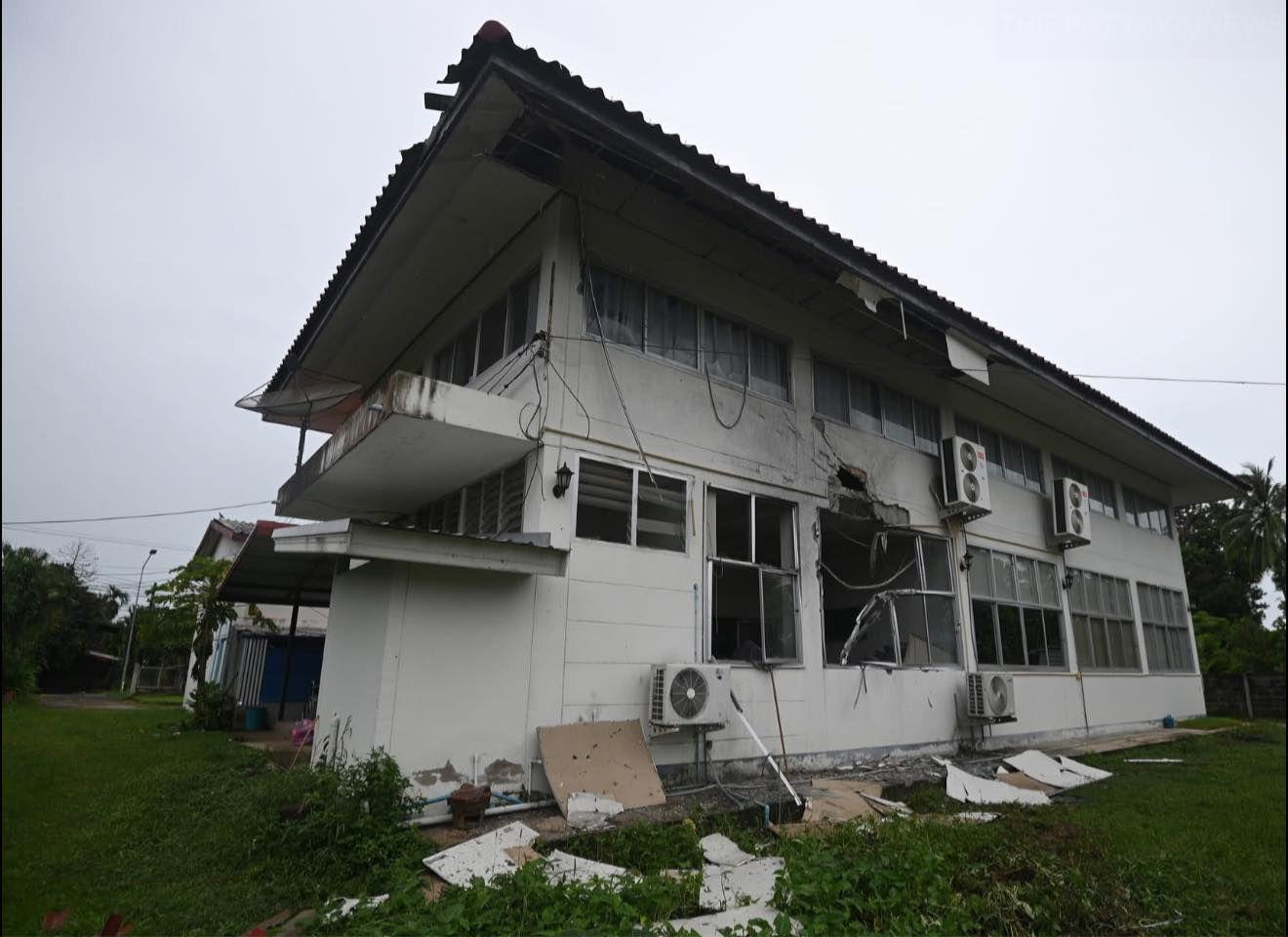
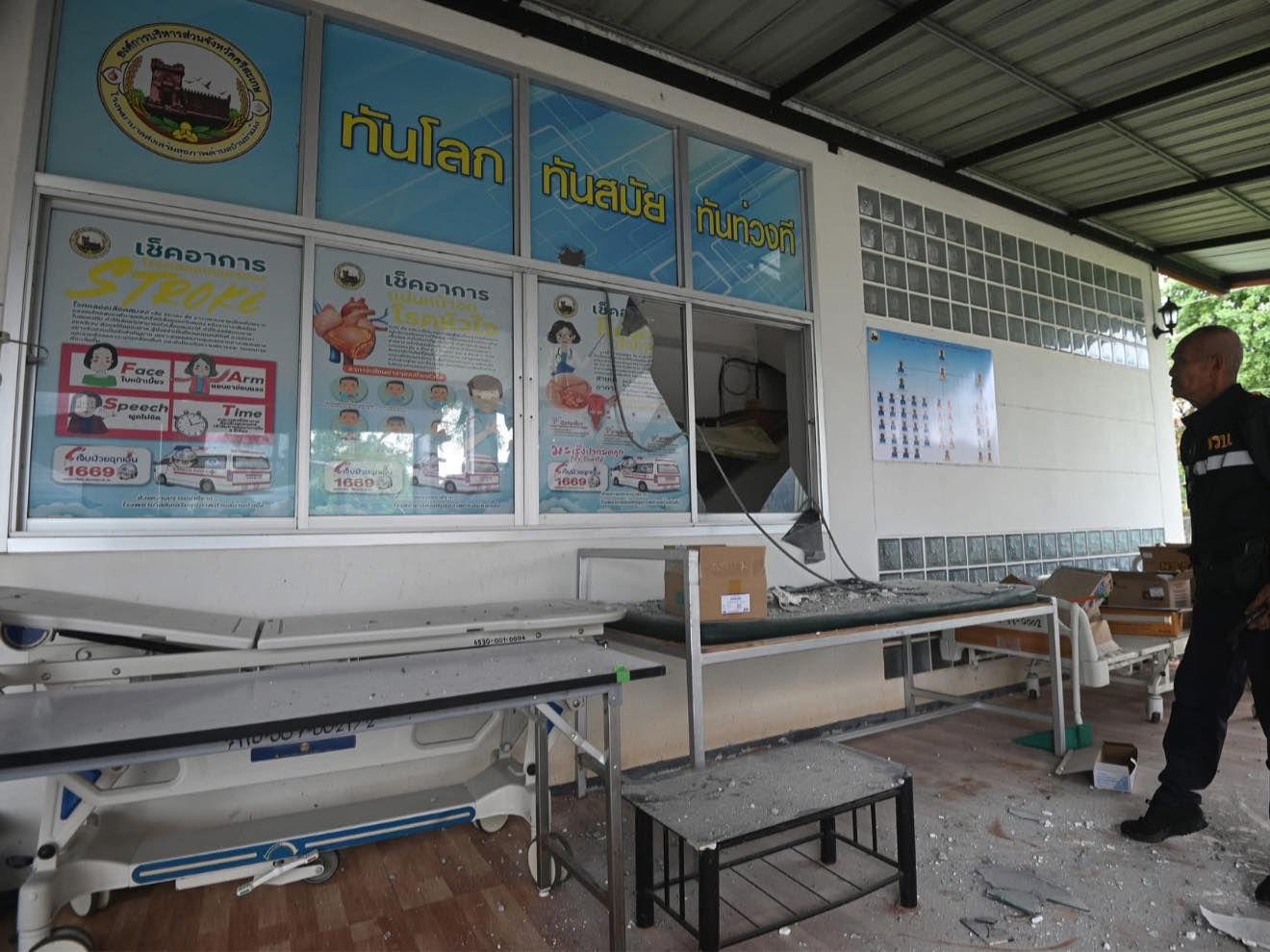
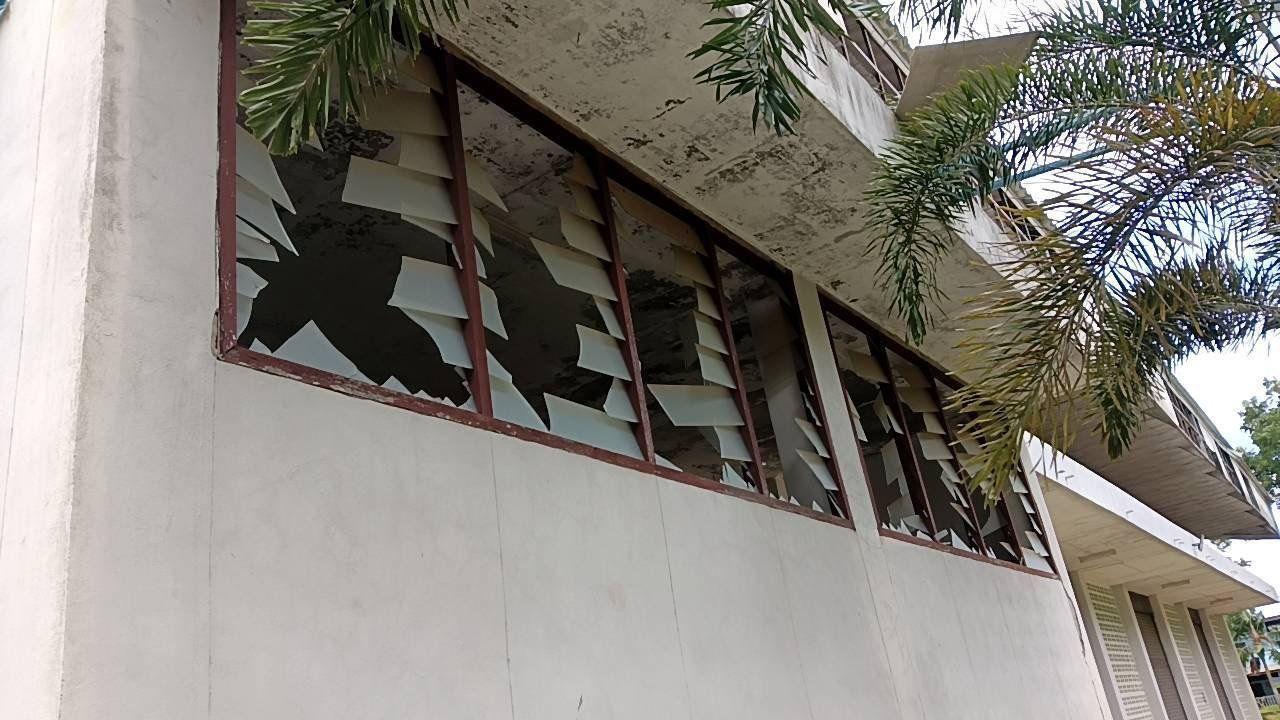
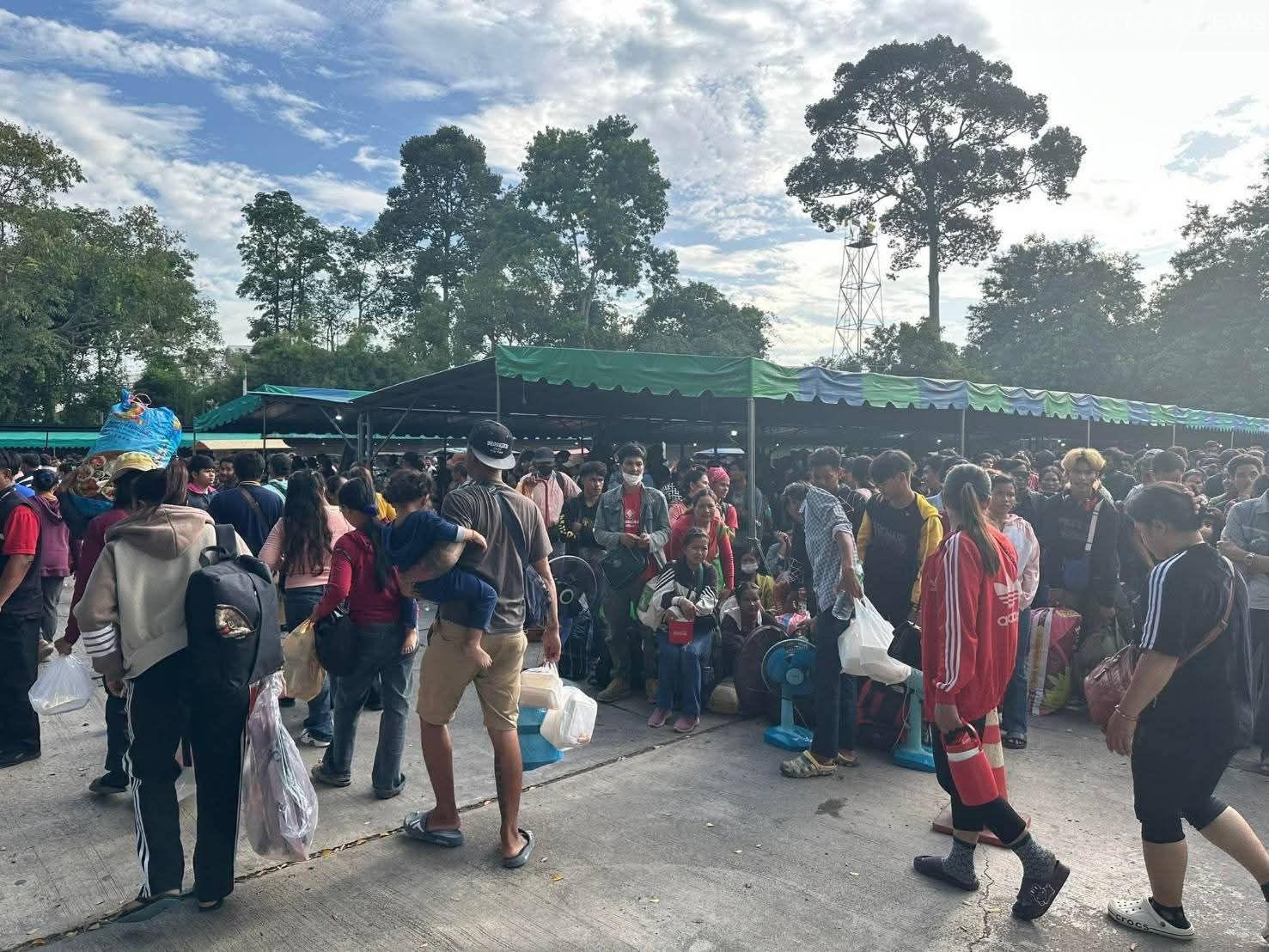
Photos: Various damage to civilian buildings from the recent conflict in Thailand. 


söndag 27 juli 2025

Bangkok Post - Pheu Thai blames scam crackdown, not family feud, for border hostilities. The Pheu Thai Party has dismissed allegations that the Thai-Cambodia border dispute stems from personal or political rivalries between the Shinawatra and Hun Sen families, instead attributing it to Phnom Penh’s dissatisfaction with Thailand’s aggressive crackdown on Cambodia-based online scam centres.

Thai blames scam crackdown, not family feud, for border hostilities
Pheu Thai Party spokesman Danuporn Punnakanta (Bangkok Post file photo)
Pheu Thai Party spokesman Danuporn Punnakanta (Bangkok Post file photo) 

The Pheu Thai Party has dismissed allegations that the Thai-Cambodia border dispute stems from personal or political rivalries between the Shinawatra and Hun Sen families, instead attributing it to Phnom Penh's dissatisfaction with Thailand's aggressive crackdown on Cambodia-based online scam centres.

Pheu Thai Party MP and spokesman Danuporn Punnakanta said on Sunday that the root of the issue lies in Cambodian leaders' discontent over Thailand's efforts to dismantle cross-border online scam operations based in Cambodia. He pointed to Phnom Penh's refusal to join a planned trilateral mechanism involving Thailand, Laos, and Myanmar to jointly tackle transnational cybercrime, claiming that it would handle the matter independently.

"It's not a conflict between individuals or political dynasties like the Shinawatra and Hun Sen families," Mr Danuporn said. "It's about the fallout from cybercrime suppression. Key figures in Cambodia are being affected, and there is growing evidence to support this."

He cited the Thai arrest warrant issued for Kok An, an alleged Cambodian scam-backer and casino owner who was reportedly close to Cambodian Senate President Hun Sen. Authorities have also frozen significant assets and are working with Interpol to pursue international legal action against those involved.

Mr Danuporn said although the situation along the Thai-Cambodian border remains tense, Thai security agencies are in full control and have put in place comprehensive measures to ensure public safety and defuse the situation.

He stressed that the government remains committed to resolving the issue peacefully through established bilateral channels. The Foreign Ministry has set up a task force to assess international impacts, coordinate with embassies, and prepare humanitarian measures should the fighting linger.

"The government places great importance on diplomacy in easing tensions, and we want the public to rest assured that we are addressing the issue on all fronts—security, military, diplomatic, and the protection of people's lives and property—all of which are top priorities for the government," said the Pheu Thai spokesman.


United Nations comes out neutral on Thai-Cambodian conflicts. The decision has been received with relief in Bangkok. Cambodia initiated the UNSC meeting held in New York on July 26 and several of the current members (5 permanent and 10 temporary) were thought to have closer ties with Cambodia than Thailand has.- Pattaya Mail

United Nations comes out neutral on Thai-Cambodian conflicts

The UN Security Council debates the ThaI-Cambodian border violence. (UN file photo)

The United Nations Security Council (UNSC) has drawn a non-partisan conclusion about the ongoing Thai-Cambodian border rows. Thai foreign affairs minister Maris Sangiampongsa, returning from New York, said the 15 UNSC members had advocated neighborly dialogue and peace, but had not issued a formal declaration nor taken sides. They had expressed support for Asean's role in enabling dialogue under the charter of the 10 grouped states in southeast Asia. But Asean is customarily very reluctant to become involved in the detail of territorial disagreements between members, many of which hark back to rulings by colonial powers 100 years or more ago.

The decision has been received with relief in Bangkok. Cambodia initiated the UNSC meeting held in New York on July 26 and several of the current members (5 permanent and 10 temporary) were thought to have closer ties with Cambodia than Thailand has. UNSC has the power actually to order a fact-finding mission, or to deploy its military forces to troubled areas or to fast-track the dispute to the International Court of Justice (ICJ) at The Hague, but has evidently not taken any such course. The ICJ in 1962 and in 2013 previously voted to endorse Cambodia's position on some border issues, especially the Preah Vihear temple, but left ambiguous ownership of surrounding land. However, Thailand had declined to accept ICJ rulings as early as 1960.

In fact, many countries have opted out of ICJ verdicts. Israel and China have both refused verdicts against their national interests, whilst the US has done so on multiple occasions. Only last week the US State Department said that an ICJ ruling that all states were obliged under international law to tackle climate change was no more than advisory. Donald Trump's administration has embraced a fossil-fuel agenda under the slogan Drill Baby Drill. The British government has also indicated it will study the international decision before deciding whether or not to accept it.

Associate professor Panitan Wattanayagorn, a security expert, said the UNSC outcome was promising for Thailand but was only the beginning of a long diplomatic struggle. Cambodia has already appealed independently to the ICJ, although the matter could take years without UN backing. The ICJ is already deluged with depressing cases including Haiti, the Congo, Syria and the Red Sea. Dr Panitan advised proactive engagements with third party countries and providing comprehensive information on Cambodia's alleged violations of Thai sovereignty. These include landmine placements, artillery shelling of hospitals, schools and civilian targets. These actions could even be classified as crimes against humanity.

Meanwhile, Thai activists at the border regions told reporters that it was obvious Cambodia had started the violence last week. Their evidence was that, whilst Thai children were at their desks when the trouble began, Cambodian youngsters had already been sent home in order to avoid any gunfire retaliation. It has also been suggested that satellite data imaging also shows that Cambodian forces attacked first, although this information was not presented to the UNSC.


”Opinion”. @Cambodianess

 Cambodianess reports on Sunday afternoon, July 27, 2025,  that the conflict between Cambodia and Thailand goes back to the 13th century, cting a Cambodian expert saying that, "following the decline of the Angkorian Empire. Thailand, as the successor to the Sukhothai and Ayutthaya Kingdoms, gradually encroached upon Khmer territory. Facing potential extinction, Khmer leaders sought French protection in the late 19th century, preserving their territory through the Franco-Siamese Treaties of 1904-1907, which resulted in the return of three provinces: Battambang, Siem Reap, and Sisophon." 
Khaosod English's Pravit Rojanaphruk initial take: This is an important admission, reflecting how history is dragging the two nations into endless conflicts and animosity.
Thailand, if you look beyond a narrow ultranationalist lense, is also an heir to the great Angkorian civilisation. We can choose our own favourite timeline to suit our nationalistic ideology, and some Thais still yearn for the days when Siam Reap, including Angkor Wat, was part of Thailand (Siam), before the French colonialists took it away from Thailand. 
While it's imperative to remember the pasts, in which we cannot change, our focus should be on how to put an end to the current senseless undeclared war between the two nations.
#Thailand #Cambodia #ThailandCambodia #ไทยกัมพูชา #ไทย #กัมพูชา

The Royal Thai Army Clarifies the Use of Cluster Munitions, Stating Consideration for Use as Necessary to Enhance Capabilities Against Military Targets Only. Regarding the Convention on Cluster Munitions (CCM), which prohibits parties from using, producing, or stockpiling this type of weapon, it is not binding on Thailand, as Thailand is not a party to that convention, similar to many other countries, such as the United States, Russia, and others.- The Pattaya News

The Royal Thai Army Clarifies the Use of Cluster Munitions, Stating Consideration for Use as Necessary to Enhance Capabilities Against Military Targets Only

Thailand-

On 25 July 2025, Major General Winthai Suvaree, Army spokesperson, clarified the case regarding Cambodia's statement about the Thai side's use of cluster munitions, stating that the Royal Thai Army will consider its use as necessary against military targets to enhance target destruction capabilities.

With cluster munitions, when the main projectile impacts the target, the submunitions contained within will detonate continuously. Such munitions are not anti-personnel landmines and have no long-term residual effects on civilians following their use.

Regarding the Convention on Cluster Munitions (CCM), which prohibits parties from using, producing, or stockpiling this type of weapon, it is not binding on Thailand, as Thailand is not a party to that convention, similar to many other countries, such as the United States, Russia, and others.

The Royal Thai Army affirms that its military operations adhere to the principle of "proportionality," whereby cluster munitions will be employed to enhance explosive destruction capabilities against military targets only.

………………………………………………………………………… Royal Thai Army Public Relations Center, Army Spokesperson Team,


lördag 26 juli 2025

Thailand’s holiday resorts unaffected by border crisis with Cambodia. Although several governments have issued travel warnings, none has advised against visiting Thailand and Cambodia. The British Foreign, Commonwealth and Development Office simply warns travellers not to go within 50 kms of the border in the at-risk provinces.- Pattaya Mail

Thailand's holiday resorts unaffected by border crisis with Cambodia

Thai citizens shelter in emergency accommodation after a Cambodian rocket attack in a disputed zone.

Although several governments have issued travel warnings, none has advised against visiting Thailand and Cambodia. The British Foreign, Commonwealth and Development Office simply warns travellers not to go within 50 kms of the border in the at-risk provinces. The most popular destinations – Bangkok, Pattaya, Phuket, Chiang Mai, Hua Hin – are hundreds of miles from the scene of any shootings or panic. Cambodia's main attractions in Phnom Penh and the famous archaeological site at Siem Reap are similarly free from border-related violence.

Few western vacationers to Thailand include border regions in their holiday itinerary, except to see the remains of 1,000 year-old temple ruins such as the magnificent Preah Vihear. These are closed anyway from either side for the duration of the conflict. Most of the land border's 800 kms are not under dispute. There is separately a longstanding warning by British authorities not to visit three deep-south Thai provinces with Muslim secessionist movements. They are rarely visited by holidaymakers and irrelevant to the current crisis.

Travellers intending to visit both Thailand and Cambodia should bear in mind that all land border crossings between the two countries are currently sealed. Although they occasionally open to let through emergency cases, such as the sick or young students, international tourists are banned from crossing. Air schedules between the two countries are reported as normal, but flights are said to be heavily booked. If the ongoing conflict were to get worse, air travel between the protagonists could be compromised in tat-for-tat name calling.

Thai citizens shelter in emergency accommodation after a Cambodian rocket att

Pattaya immigration lawyer Jessataporn Bunnag said, "Most western tourists coming to Thailand, including all Brits, now receive 60 days visa-exempt on arrival with the offer to extend a further month at local immigration. Thus there is no need for them to go on border hops or visa runs to neighboring Cambodia." He added that all international visitors should fill in the online form Thailand Digital Arrival Card not more than three days before arriving.

Border rows between the two neighbors go back over 100 years when disputed maps were drawn up by French colonialists who then ruled Cambodia but not Thailand. Over the years, 200 people have been killed or injured in periodic flareups at sensitive spots which mostly include temple ruins. Whilst Cambodia invariably seeks international rulings in its favour, Thailand's position is that territorial disputes should be settled by the two parties alone.

Both countries are members of the regional trading block ASEAN, but the organization almost never becomes seriously involved in disputes between members. Both the United States and China have offered to mediate the current issue, but there is unease in both countries and beyond about appealing to divergent superpowers. The most likely outcome at present seems to be a mutual withdrawal to perceived lines of control. Thailand and Cambodia have too much in common, economically and culturally, to declare war. Assuming, of course, that insanity doesn't break out.


Official Statement by the Royal Thai Government on Thailand-Cambodia Situation. The following is an official Statement by the Royal Thai Government on the Thailand-Cambodia Situation - The Pattaya News

Official Statement by the Royal Thai Government on Thailand-Cambodia Situation

The following is an official Statement by the Royal Thai Government on the Thailand-Cambodia Situation

My fellow Thai citizens,

Currently, Thailand is facing threats to our sovereignty and territorial integrity from Cambodia. Although in the past few months we have exercised our utmost restraint and patience in the face of provocations and aggression, and have chosen to adhere to peaceful means in accordance with international law and humanitarian principles.

Therefore, it is deeply regretful that Cambodia has chosen to use military force and opened fire first. This is a severe violation of international law and humanitarian principles as their attack has targeted hospitals and residential areas resulting in the immense loss of lives and properties, including 13 civilian fatalities among which are women, children and the elderly. This can be considered a war crime.

Yesterday, the Thai Foreign Minister briefed the United Nations Secretary-General on the facts of the current situation.In addition, the Thai Government sent a letter to the United Nations Security Council to inform the Council of the facts and to condemn in the strongest terms these indiscriminate and armed attacks, especially against innocent civilians, as well as invite the international community to also condemn this inhumane attack.

The government expresses its deepest condolences for the loss suffered by our citizens and reaffirms that throughout this period, the government has not stood idle since Cambodia fired the first shot. The Thai armed forces have responded within a limited perimeter targeting only key bases from which attacks against Thai civilians have been made, based on the inherent right of self-defense under international law and the United Nations Charter. They have destroyed Cambodian military bases.

We have now had to evacuate people numbering in the hundred thousand from the affected areas. We will also issue assistance in the form of compensation for the families of the deceased totaling 1 million baht per person; 700,000 baht for the disabled; 200,000 baht for the severely injured; and 100,000 baht for the injured.

Furthermore, we have coordinated with all airlines to arrange special flights to bring Thai nationals in Cambodia back home safely in the case of emergency. Tomorrow, the minister assigned will travel to the affected areas covering four provinces namely, Ubon RatchaThani, Si Sa Ket, Surin and Buriram. This is to instill confidence in the people in the affected areas to feel safe and togive them moral encouragement and support.

This is a time when all Thais must unite as one to send encouragement and moral support to all our soldiers who are on duty to protect our sovereignty and territorial integrity as well as the safety of the people in the affected areas.

I would like to emphasize that the current situation is a dispute between the governments and armed forces of both countries and not between the people. This is not a declaration of war but merely a clash along the border in order to protect our sovereignty and territorial integrity and to respond to the aggression.

Finally, it is with our utmost gratitude that Their Majesties the King and Queen have expressed their concern and given their encouragement to their subjects that have suffered losses from the current tensions in the area and have graciously placed all of the injured and wounded under their royal patronage.


fredag 25 juli 2025

Thailand ramps up flights as border unrest worsens. Emergency plan launched to bring citizens home safely as officials monitor volatile situation. The Thaiger

Thailand ramps up flights as border unrest worsens

Emergency plan launched to bring citizens home safely as officials monitor volatile situation

Cambodia’s Hun Sen’s hidden agenda for unprovoked, deadly and destructive actions may involve China. As Cambodia bombed Thai civilians and military sites, Hun Sen’s secret China flight sparks global alarm. Thailand hits back fast, urges UN action. With China’s shadow looming and ASEAN stability at risk, a hidden agenda may have driven the two countries to war.- Thai Examiner

Cambodia's Hun Sen's hidden agenda for unprovoked, deadly and destructive actions may involve China

As Cambodia bombed Thai civilians and military sites, Hun Sen's secret China flight sparks global alarm. Thailand hits back fast, urges UN action. With China's shadow looming and ASEAN stability at risk, a hidden agenda may have driven the two countries to war.

Thailand hit back hard and fast after Cambodia's unprovoked assault on civilians and military targets Thursday. The response was both decisive and effective. At the same time, the Ministry of Foreign Affairs wasted no time. With Minister Maris Sangiampongsa already in New York promoting Thailand's sustainability agenda, the crisis was immediately raised at the United Nations. Meanwhile, Thai military intelligence tracked Cambodian strongman Hun Sen's private jet heading to China. Despite rapid denials from Phnom Penh, few in Bangkok are convinced. Analysts believe the Cambodian regime is trying to pull Beijing into the conflict—a dangerous play Thailand must reject at all costs.

There was sudden violence on the Thai-Cambodian border on July 24, 2025. Cambodia launched a fierce military assault on Thai provinces. Consequently, Thai military intelligence closely monitored the situation. It gathered information that Hun Sen's private jet had departed Phnom Penh and was headed to China.

However, within hours, Hun Sen denied the allegations. Instead, he posted photos showing him meeting senior officials at his home. Moreover, he insisted he was commanding the military via video calls. Despite his denial, the verified reports highlight the close relationship between Cambodia and China.

Furthermore, intelligence indicated that other Cambodian officials might have travelled to China on the same day. This occurred as Cambodia's military attacked Thai civilian areas.

Cambodia attacks Thai civilians as reports emerge of officials and Hun Sen flying secretly to China

Meanwhile, analysts in Bangkok noted that Hun Sen might want China involved in the conflict. Perhaps, China would act as a mediator. Such involvement would strengthen Cambodia's and China's position in their relationship with Bangkok.

At the same time, most analysts agree that Thailand must use this crisis to bolster national unity. In addition, Thailand should present its case firmly to the United Nations as an independent and sovereign nation.

Certainly, Hun Sen's recent actions are puzzling. Particularly, his destruction of Cambodia's relationship with Thailand is difficult to understand. In addition, he sundered a personal friendship with Thailand's Shinawatra family.

Inside Cambodia, seeds of revolt are emerging. Furthermore, an international crackdown on scammer compounds is gaining momentum. At the same time, China is cutting back on funding through its Belt and Road Initiative.

Both developments have financial implications for the Phnom Penh regime. Thus, understanding Hun Sen's motives is vital to Thailand's interests. Put simply, there appears to be an unknown agenda behind this crisis.

Hun Sen's internal pressure grows as Bangkok warns against China's quiet hand in regional escalation

According to the Army Military Force Facebook page, Hun Sen's private jet—a Hawker 800XP—departed Phnom Penh toward China on July 24. The page posted an image of the plane and its flight number, MEDIC77. Consequently, this news attracted significant public and media attention.

However, Hun Sen countered the narrative. He claimed he was still in Cambodia, issuing orders through online communication. Yet, many remain sceptical given the close economic and military ties between Cambodia and China. Indeed, Chinese investment in Cambodian infrastructure and ports is extensive. These projects play a key role in China's Belt and Road Initiative strategy.

Moreover, China's military involvement is evident in Cambodia's Ream Naval Base and Kampot Port. Such proximity raises regional security concerns. Meanwhile, speculation continues that Cambodia may request Chinese weapons to bolster its military. This possibility alarms many observers.

Although officially denied, the chance of negotiations or military support from China cannot be ignored. Therefore, the situation demands close monitoring. It could affect ASEAN's security balance and future Thailand-Cambodia relations. At the same time, China's government stresses a neutral stance. It has expressed "deep concern" over the border clashes and offered to mediate the dispute.

Jet sightings, naval bases and arms speculation feed suspicion of Beijing's growing role in conflict

A Chinese foreign ministry spokesperson stated that China hopes both sides resolve their issues through dialogue. Furthermore, China emphasises its impartiality and long-term interests in the region. Despite this, analysts in Bangkok remain wary. They suspect China's involvement may be more strategic than neutral.

Meanwhile, hostilities between Thai and Cambodian soldiers have escalated on the border. Cambodian forces targeted civilians and sensitive sites, including homes and hospitals. In response, Thailand struck military targets selectively, using aircraft.

Lt. Gen. Pongsakorn Rodchomphu, former deputy secretary-general of Thailand's National Security Council, advised proportionate response tactics. He noted that Cambodia's use of multiple rocket launchers justified Thai air strikes. At the same time, he warned artillery should be avoided due to disproportionality.

Importantly, Cambodia's military aims resemble past clashes, especially at Preah Vihear. Cambodia seeks to provoke fighting and then appeal to the World Court.

This time, Thailand claims ownership of contested areas, such as Ta Muen Thom Temple. Historical treaties support Thailand's position, as no objection was raised during the French colonial era.

Military escalation mirrors historic tensions as Thailand strikes back with restraint and legal confidence

Moreover, Cambodia's use of rocket launchers has limits. They possess only six multiple-barrel systems with a 130-kilometre range. If expended, Cambodia will lose its main firepower. Thus, the use of F-16 jets, with a longer range, on Thursday highlighted not only Thailand's measured response but its military superiority.

Thai analysts recommend that the government continue to respond quickly and decisively. Delays could weaken Thailand's position. So far, the Royal Thai military forces have responded with professionalism and skill.

Meanwhile, China offers to mediate, but Thailand's acceptance might disadvantage it. Some observers suspect China wields power within the Cambodian regime. For instance, Beijing has established an unofficial naval base in Cambodia's Ream Port. Therefore, relying on China as a mediator poses a risk for Thailand.

Thai air power asserts dominance as warnings rise over China's mediation offer and hidden leverage

Instead, Thailand should pursue international platforms such as the United Nations. However, securing U.S. involvement may be complicated due to Thailand's close ties with China. The coming weeks will be critical for all parties involved.

Undoubtedly, the Thai-Cambodian border conflict has escalated with serious implications. Cambodia's aggressive military actions and attempts to secure Chinese involvement threaten regional stability. Consequently, Thailand must act swiftly to protect its sovereignty. In short, it must strengthen national unity and seek international support.

14 killed and over 100,000 evacuated as army brings in more guns trained on Cambodian border forces


torsdag 24 juli 2025

Oroligheterna


Clash between Thai and Cambodian troops spreads to 6 locations. AFTER a clash erupted between Thai and Cambodian troops near the disputed Prasat Ta Muen Thom temple, Surin province, at 8.20 a.m. this morning (July 24) the fighting has now spread to six locations, Naewna newspaper said. - Thai Newsroom

 Clash between Thai and Cambodian troops spreads to 6 locations

AFTER a clash erupted between Thai and Cambodian troops near the disputed Prasat Ta Muen Thom temple, Surin province, at 8.20 a.m. this morning (July 24) the fighting has now spread to six locations, Naewna newspaper said.

 Lt. Col. Richa Suksuwanon, deputy army spokesperson, said at 9.20 a.m.that clashes are taking place along the entire Pha Mor E Daeng – Khao Phra Viharn Temple zone.

The Cambodian side opened fire using all types of weapons including BM-21 Grads, a Soviet truck-mounted 122mm multiple rocket launcher, while Thai troops responded with artillery fire. Two Thai soldiers got injured in the fighting near Prasat Ta Muen Thom Temple.

Reporters in the area said the six areas where the two countries are clashing include Prasat Ta Muen Thom Temple, Prasat Ta Kwai Temple, Chong Bok,  Khao Phra Viharn (Huai Ta Maria/Phu Makhuea), Chong An Ma, and Chong Chom.

Bullets fired by Cambodian soldiers also hit a house in Surin's Ka Choeng district belonging to Mr. Suthee Boontaeng injuring one person.

Officials quickly evacuated residents at this border area as more bullets are expected to fly towards their homes.

The fighting erupted after the task force responsible for Pasart Ta Muen Thom temple heard the sound of a drone flying in front of the compound at 7.35 a.m. although they were not able to see it.

This was followed by six Cambodian troops bringing weapons, including rocket-propelled grenades (RPGs), to the barbed wire fence in front of the Thai base of operation, which is around 200 metres away from the temple. The Thai side tried to negotiate to avoid conflict.

However, at approximately 8.20 a.m.the Cambodian side opened fire.


Netizens Demand Justice After Disturbing Rabbit Abuse at Bang Saen Beach. In a deeply unsettling incident at Bang Saen Beach, Chon Buri, a video capturing a man abusing a rabbit has sparked a wave of outrage across Thailand. The footage, shared by witness Pattanapong Sririmala on the "Rabbit Lovers’ Community" Facebook page, shows the man repeatedly hurling the rabbit into the air and letting it fall onto the hot sand. ASEAN NOW


Photo via Facebook/ ชอบจัง บางแสน


In a deeply unsettling incident at Bang Saen Beach, Chon Buri, a video capturing a man abusing a rabbit has sparked a wave of outrage across Thailand. The footage, shared by witness Pattanapong Sririmala on the "Rabbit Lovers' Community" Facebook page, shows the man repeatedly hurling the rabbit into the air and letting it fall onto the hot sand.


The shocking video, posted on July 21, records the man not only throwing the rabbit but also pouring sand over its body, seemingly attempting to bury it. Pattanapong, who captured the distressing scene, noted that this cruel act had been repeated multiple times before he began filming.


Following the post, the man, identified online as "Aruneelengpo," reportedly contacted Pattanapong, demanding the video be removed and threatening legal action. Unfazed, Pattanapong refused to delete the footage.


The video quickly went viral, igniting widespread condemnation from Thai netizens. Comments ranged from despair at the rabbit's suffering to calls for justice and reflections on the man's upbringing.


Some distraught viewers questioned, "How was this man raised?" Others expressed immediate concern for the rabbit's well-being, fearing it could suffer severe stress and injuries.


Animal welfare organisations, including Watchdog Thailand, have been alerted by concerned citizens urging for the man's arrest and prosecution. The gravity of public sentiment underscores a collective demand for swift action against animal cruelty.


In an interview with ThaiRath, Pattanapong revealed that a local food vendor intervened to rescue the rabbit. The animal was reportedly found in a drowsy and lethargic state, illustrating the distress it endured.


Locals have informed reporters that the man resides near the beach and has a history of purchasing and mistreating rabbits.


As of now, authorities have not provided updates on any legal proceedings or arrests linked to this incident. The lack of immediate action has left many hoping for a robust response to underscore that such cruelty will not be tolerated.


This incident has not only highlighted the importance of animal welfare but also brought community vigilance into sharp focus. It serves as a clarion call for stronger protective measures and heightened awareness regarding animal treatment in Thailand.


  Adapted by ASEAN Now from The Thaiger 2025-07-23