Why tourists and locals keep colliding on Pattaya's dangerous roads
Another motorbike accident in Pattaya, where road safety rules are often ignored by both locals and tourists.
PATTAYA, Thailand — Another tourist on a rented motorcycle hit a pedestrian in Jomtien this week. No one was surprised. In Pattaya, these accidents are as common as motorbikes on sidewalks, red lights being ignored, or police checkpoints conveniently disappearing after dark.
Every few months, officials talk about "cracking down" on unlicensed drivers and reckless riders. But behind the slogans, little changes. The same pattern repeats: a driver without a valid license pays a token fine, the rental shop pays a small fee to get its bike back, and everyone goes home — until the next crash.
Locals remember a law introduced a few years ago meant to fix the problem. It required renters to show a valid Thai or international motorcycle license. Violators could face confiscation of vehicles and fines. It worked briefly, until enforcement quietly faded — like so many other well-intentioned regulations in Thailand.
The truth is simple: money matters more than safety. Rental companies keep handing out bikes to anyone with a passport and cash, regardless of experience. Tourists, many of whom have never ridden anything faster than a bicycle, climb aboard, convinced that "everyone drives like this." Meanwhile, Thai riders — including food delivery drivers and locals without insurance — set daily examples of chaos. As one long-term resident said, "They don't come to Thailand and suddenly behave like maniacs — they copy what they see."
Police could stop it overnight by seizing bikes from rental offices that ignore the law. But they don't. Why? Because fines and fees generate quick money, and there's no incentive to end a system that keeps cash flowing. As a result, pedestrian crossings remain bowling alleys, traffic lights are decorations, and tourists continue to learn the hard way that Pattaya's streets are not playgrounds.
In the end, the city's road safety problem isn't about foreigners or locals — it's about culture, complacency, and corruption. And until someone decides that lives are worth more than the next rental fee, Pattaya's roads will remain the same: fast, lawless, and lethal.
Thailand's Vijit Chao Phraya 2025 festival will now take place from November 9 to December 23, with drone shows replacing fireworks to honour the Queen Mother.
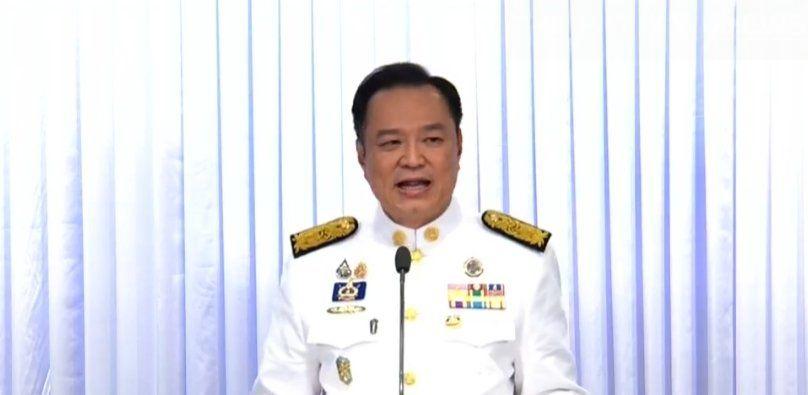
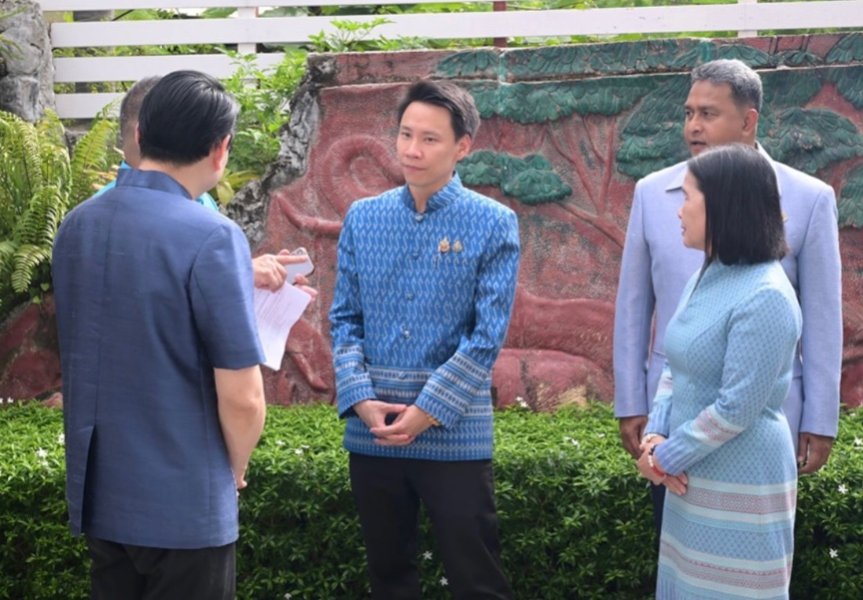
Atthakorn Sirilatthayakorn, Minister of Tourism and Sports, announced that the Vijit Chao Phraya 2025 festival has been postponed to November 9-December 23 to allow adjustments to the event's format in honour of Her Majesty Queen Sirikit the Queen Mother.
The minister confirmed that the government has no policy to ban or cancel year-end festivals or events, which play an important role in boosting tourism during the high season.
"We are simply asking organisers to adjust the content and tone of their events to suit the current atmosphere," Atthakorn said.
He explained that many organisers had already made significant investments, and both Thai and foreign tourists had booked travel plans in advance, so cancelling events would cause unnecessary losses.
#ThailandNews #TheNation #chaophrayariver #Bangkok
Full story link in first comment
The Tourism Authority of Thailand (TAT) has postponed its major 45- day "Vijit Chao Phraya 2025" light and sound show.
This decision was made in observance of a national mourning period following the passing of Her Majesty Queen Sirikit The Queen Mother.
While the light show is on hold, other cultural festivals like Loy Krathong will proceed but will be scaled back, with celebratory aspects removed to focus on tradition. Via: The Nation
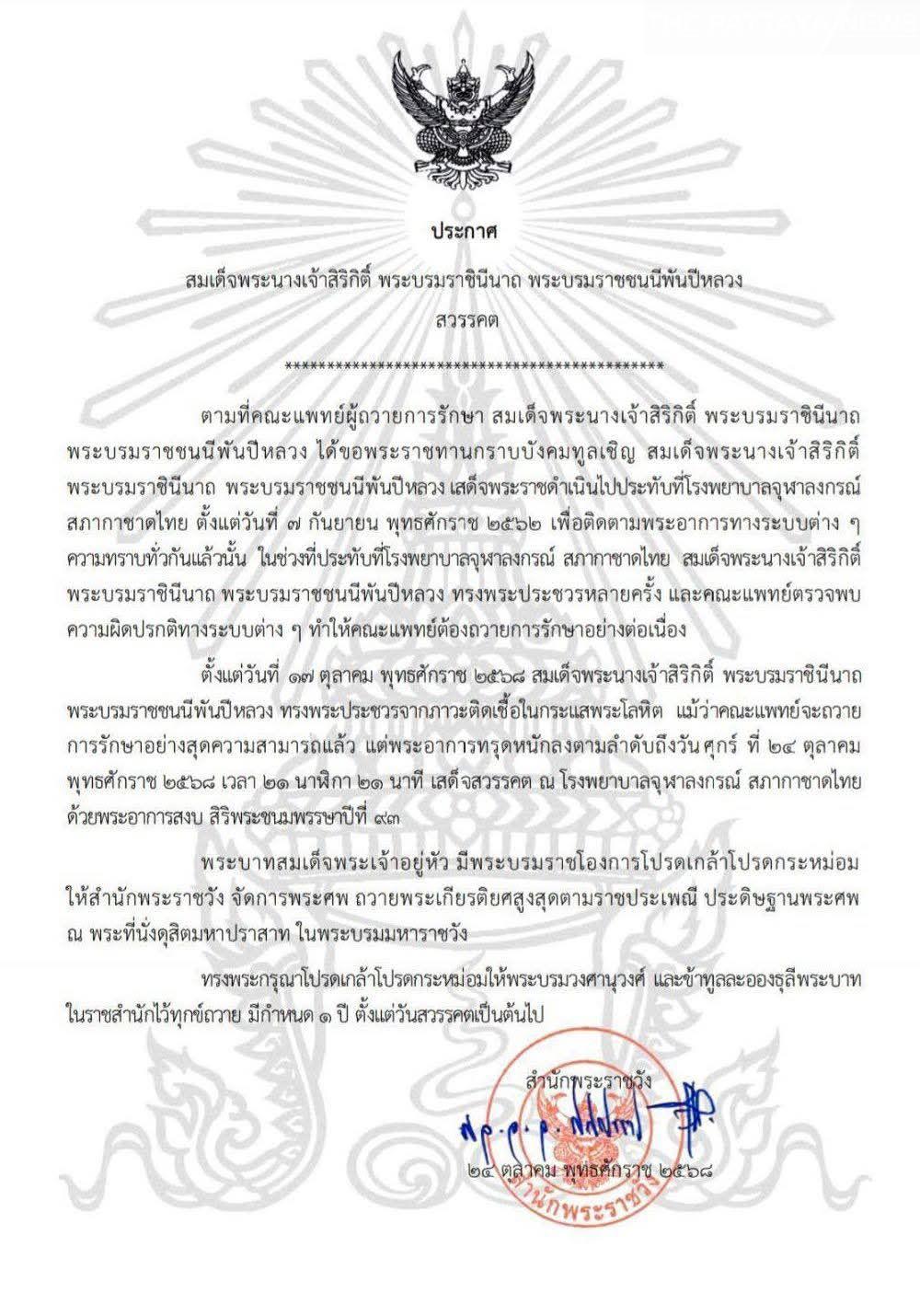
Bangkok, October 24, 2025 – The Bureau of the Royal Household announced the passing of Her Majesty Queen Sirikit, the Queen Mother of Thailand, on Friday, October 24, 2025, at 9:21 PM. She passed away peacefully at Chulalongkorn Hospital, Thai Red Cross Society, at the age of 93.
Her Majesty had been receiving medical treatment at Chulalongkorn Hospital since September 7, 2019, for ongoing health issues. During her stay, she experienced multiple episodes of illness, with medical examinations revealing abnormalities in various bodily systems, requiring continuous care from her medical team.
On October 17, 2025, Her Majesty developed a bloodstream infection. Despite the dedicated efforts of her medical team, her condition deteriorated progressively. She passed away on October 24, 2025, as confirmed by the Bureau of the Royal Household.
His Royal Majesty the King has issued a royal command for the Bureau of the Royal Household to arrange the funeral rites with the highest honors in accordance with royal traditions. Her Majesty's body will lie in state at the Dusit Maha Prasat Throne Hall in the Grand Palace. The King has also graciously ordered a mourning period of one year for the royal family and members of the royal court, effective from the date of her passing.
The nation mourns the loss of Her Majesty Queen Sirikit, a beloved figure whose grace and dedication to the Thai people will be remembered forever.
Thailand's $6.8 billion high-speed rail project, intended to connect Don Mueang, Suvarnabhumi, and U-Tapao airports, is on the verge of collapse nearly six years after the signing of a public-private partnership contract. Asia Era One Company, the project's private partner, has not met the required conditions to proceed, stalling development due to multiple factors, including the COVID-19 pandemic.
The delay has substantially affected the project's viability, with reduced investment returns and lower-than-expected passenger numbers undermining its feasibility. The consortium faced difficulties securing financing and paying the 10.67-billion-baht concession fee for the Airport Rail Link, halting construction. As a result, options considered included contract termination, amending the PPP agreement, or letting the State Railway of Thailand proceed independently.
To address these issues, the Eastern Economic Corridor Policy Committee approved contract amendments allowing government co-investment to be paid in installments. Asia Era One agreed to provide an additional 160 billion baht in guarantees, and the contract was reviewed by the Office of the Attorney General for Cabinet approval. However, a recent government change led by Prime Minister Anutin Charnvirakul disrupted this plan, with the administration opposing the revised contract terms citing legal concerns.
Transport Minister Phiphat Ratchakitprakarn rejected the revised payment structure, advocating for adherence to the original contract. Consequently, the amendment framework was nullified, and the SRT Governor's resignation plunged the project into further uncertainty. This stalled high-speed rail project jeopardizes the overall development of the Eastern Economic Corridor, including key projects like the U-Tapao Airport expansion.
The project's future remains unclear, with termination under the current PPP contract seemingly likely. Such a decision could lead to significant legal battles and compensation claims, impacting not only the rail line but the wider region's growth prospects.
Key Takeaways
Thailand's high-speed rail project is stalled with possible termination.
Government changes have halted progress on proposed contract amendments.
Broader EEC development is at risk due to the rail project's uncertainties.
MAMMA MIA! The Smash-Hit Musical Comes to Bangkok This November
Bangkok, Thailand – Bangkok Community Theatre (BCT), with the generous support of its sponsors St. Andrew's International School Sukhumvit 107, Bensley, and Aesop's Bangkok, will bring the world's ultimate feel-good musical to Bangkok this November. MAMMA MIA! will play six performances across two weekends at St. Andrew's International School Sukhumvit 107 Auditorium from 7–15 November 2025.
The much-loved musical tells the story of bride-to-be Sophie (Thanyathorn "Sea" Thaicharoen), who dreams of a perfect wedding on a sun-soaked Greek island; one that includes her father giving her away. As she prepares to marry Sky (Parriyme), she secretly tries to uncover her father's identity. After inviting three men from her mother Donna's (Jessica Richter) past – Sam (Nicholas Irvine), Bill (Derek Chan), and Harry (Chris Knight) – the stage is set for a heart-warming and hilarious tale of love, laughter, and friendship. Donna's lifelong best mates Tanya (Samantha Aria) and Rosie (Kate Prior) bring their trademark humour and support, as the story unfolds to ABBA's biggest hits including "Dancing Queen," "Super Trouper," and of course, "Mamma Mia!"
Directed by Severin Herbert, with musical direction by Tony Newman and choreography by Alexandra Cooper, Bangkok Community Theatre's production promises an evening of high-energy music, dazzling dance, and feel-good fun!
Performance Dates
Friday 7 November – 7:30 pm
Saturday 8 November – 2:30 pm & 7:30 pm
Friday 14 November – 7:30 pm
Saturday 15 November – 2:30 pm & 7:30 pm
Running Time & Age Guidance
Running time is approximately 2 hours 35 minutes including a 15-minute interval. MAMMA MIA! is recommended for ages 5 and above. Children under 3 will not be admitted. The show contains mild language, romantic scenes, suggestive content, and flashing lights.
Venue
St. Andrew's International School Auditorium, Sukhumvit 107 campus. The venue is accessible via BTS Bearing with limited parking via Sukhumvit 105 (Lasalle Road). Seating is unreserved and available on a first-come, first-served basis. Food and drinks will be available for purchase.
Tickets
Tickets are available through Ticketmelon. For enquiries, please email tickets@bangkokcommunitytheatre.com.
About Bangkok Community Theatre
Bangkok Community Theatre is Thailand's longest-running English language theatre group, established in 1972. The group is dedicated to supporting the arts by creating opportunities for members to perform, grow, and connect through theatre. BCT also welcomes collaboration, working with other groups to bring diverse and engaging performances to audiences across Bangkok.
The new minister of tourism and sports has pledged to implement a long-delayed 300-baht tourism tax within his four-month term in office, stressing the need to clearly communicate its benefits to international visitors. Artthakorn Sirilatthayakorn said on Friday, 3 October, that the proceeds from the levy would fund visitor insurance coverage and support tourism infrastructure development.
The minister acknowledged that the additional charge could affect traveller sentiment, with foreign tourists having raised concerns about the tax in past online discussions. He underlined the importance of ensuring tourists understand what they would gain from the scheme, saying, "If we impose this tax, we must communicate how much tourists could benefit from it."
The tourism tax was first proposed in 2020 and received cabinet approval in February 2023, but successive tourism ministers since then did not act to implement it. The approved rate is 300 baht per person for air arrivals and 150 baht for land or sea entries. Earlier this year, then-minister Sorawong Thienthong had also vowed to introduce the levy by the end of 2025 but later reversed his position.
Although a study was completed to assess the potential benefits, adoption of the scheme has repeatedly been delayed amid concerns over its impact on tourism sentiment. Four previous ministers either could not or would not begin collection. Mr Artthakorn now intends to move forward, setting the issue as a priority during his short tenure.
Alongside the tax plan, the minister announced new promotional campaigns for the fourth quarter to encourage spending and increase tourist arrivals. He said the ministry also intends to finalise allocation of funds left from a 1.76-billion-baht domestic subsidy programme by the end of October.
Tourism recovery remains a key focus for the government, with safety improvements and strategies to restore foreign arrivals to pre-pandemic levels of nearly 40 million visitors. Thailand expects around 33.4 million foreign arrivals in 2025, down from 35.5 million last year. Mr Artthakorn added that he has already set specific targets for the fourth quarter of this year and the first quarter of next year but has not yet disclosed the figures.
Key Takeaways
• Tourism minister Artthakorn Sirilatthayakorn aims to enforce the 300-baht levy within his four-month term.
• The tax has been repeatedly delayed since first being proposed in 2020 and approved in 2023.
• New campaigns and budget allocations are planned to boost arrivals and tourism spending in late 2025.
Thai visas are on the move, but those covering retirees are many and complex.
There are no regular Thai government updates on visa volume overall. Thus the commonly-asked question "how many retired foreigners live in Thailand?" can produce only a speculative answer. Several visa options are on the table with choice largely dictated by age, available finance and whether migration is intended to be more or less permanent.
The 10-year LTR (long Term Residence), introduced in 2022, currently has "more than 7,000 enrolments" according to a September 2025 report by the Board of Investment (BOI) secretary general Narit Therdsteerasaukdi. LTR is designed for several markets, including professionals in new industries requiring a digital work permit, but 2,658 "wealthy pensioners" are included in that summary, the biggest single category for eligible membership.
Retirees in the LTR program, at least 50 years old, need an income of at least US$80,000 annually or heavy cash investments in the Thai economy. The key advantages are no limit on the number of dependants, tax-free status for transmitted overseas income, annual reporting instead of the 90 days report and access to the BOI one-stop shop. Almost half the retirees in the program are Europeans with a further near-20 percent from The United States.
Another longterm visa, Elite or Privilege, has been a rolling program since 2003 and, according to the current website, has "over 40,000" members from 50 countries. There are no age restrictions. Visa length and bonuses vary according to the upfront payment, but the popular Bronze offers a five years validity for 650,000 baht or US$20,000. There are no figures on the number of retirees in Elite, though it is said to be most popular with foreigners who want to travel frequently in and out of Thailand with a permit which is multi-entry without re-entry bureaucracy.
Several annually renewable visas cater specifically for the retiree aged at least 50. The embassy-controlled "O/A" and the immigration-granted "0" differ in detail, but broadly require proof of 800,000 baht or US$25,000 in a Thai bank. "OA" has a requirement about medical insurance, variously interpreted. The UN Network on Migration in Thailand said that, in 2023, there were 126,654 retirees living in the kingdom. But the quoted data is soft. Whether that assumed total has since increased or gone down is disputed by immigration gurus. The immigration bureau itself remains strictly silent.
In July 2024 the 5-years validity Destination Thailand Visa made its appearance. The most recent government figures, in January 2025, show about 30,000 awarded to digital nomads and a further 50,000 to "soft power" applicants such as medical tourists, foreigners with Thai families and learners of Thai boxing or cookery. Some retirees are known to have switched to DTV from specific retiree visas by enrolling for eligible adult education classes. DTV, which requires the applicant to visit a Thai embassy abroad, does not require a Thai bank account as the 500,000 baht security bond can be in a foreign financial institution.
Although 100,000 (to 150,000) is a reasonable minimum guesstimate for retiree numbers, nobody knows a precise figure as there is no single definition of a retiree. Thus some are known to travel frequently to Thailand on the visa exempt category, but are not based here. Collecting data from embassies, for the O/A and DTV visas, is problematical as each consulate is semi-independent and operates its own protocols. Currently, there is no central Thai agency coordinating visas: the immigration bureau, the BOI and the foreign affairs and tourist ministries are all involved.
Moreover, the ground may well be shifting. Retirees on annually renewable visas, who rely on friends or third parties loaning them cash, are now having problems with some Thai banks requiring 800,000 baht to be frozen and untouched for up to four months. Some retirees are known to have panicked about personal income tax, prematurely as Thai lawyer Victor Wong stressed in a recent Pattaya Mail article. Meanwhile, there are calls for a Thai golden visa which would offer permanent residency or a second passport to the global wealthy.
But the most fundamental do-not-know is the recent change of government. With premier Anutin Charnvirakul at its head, we could see a new ministry coordinating all visas, changes to cash requirements, a new and comprehensive immigration act or maybe none of the above. What is clear is the administration's commitment to increasing digitalization and centralization of the whole immigration system. Further clarity will likely be delayed until after the next general election early next year.
Prime Minister Anutin Charnvirakul has announced that his Cabinet will take the oath of allegiance before His Majesty the King on September 24th, coinciding with Mahidol Day. He described the occasion as both a profound honor and an auspicious start to his administration.
Immediately following the royal audience, Anutin will lead the Cabinet's first meeting. The session is expected to include the distribution of responsibilities among Deputy Prime Ministers and the appointment of the Prime Minister's Secretary-General, who will serve as a key coordinator to ensure the government's operations begin smoothly.
The prime minister also said he will meet with the President of the National Assembly to arrange the presentation of the government's policy statement. The timing will depend on the Assembly President's ability to call members of both Houses, but Anutin indicated he wants the process to move forward quickly.
Attention has turned to the policy statement session, where opposition lawmakers are expected to challenge the qualifications of some Cabinet members. Anutin said the Cabinet Secretariat had already coordinated with seven relevant agencies, including the Office of the Council of State, to conduct thorough vetting. He added that individuals found to lack the required qualifications were removed from the list before submission.
With these steps in place, the government is preparing to formally begin its work by setting out its policy agenda before Parliament, a required process before implementing new programs and directives.
More bank accounts may be frozen: Bank of Thailand
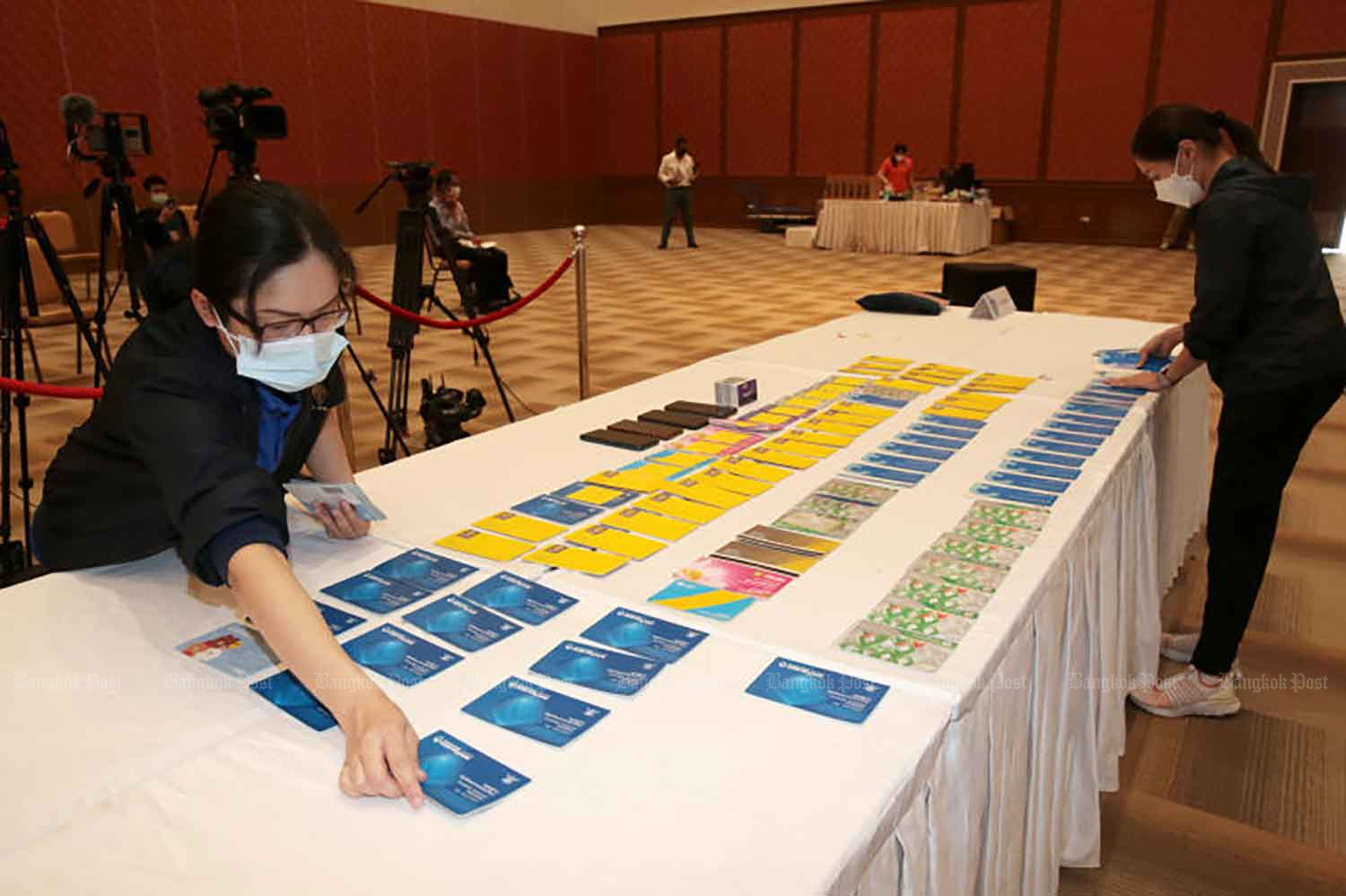
Police display bank books impounded from scam suspects at the Central Investigation Bureau in Nonthaburi province on Dec 23, 2021. (Photo: Chanat Katanyu)
More people could face frozen bank accounts as authorities widen investigations into transfers linked to mule accounts, in an effort to recover money for scam victims, the Bank of Thailand (BoT) has warned.
Daranee Saeju, BoT assistant governor in charge of consumer protection, said on Saturday that numerous accounts had already been frozen as the Anti-Online Scam Operation Centre (AOC), together with commercial banks, intensified operations to trace and return stolen funds.
"Only accounts that received money from mule accounts have been frozen. The AOC and commercial banks are expanding their probe into financial transactions to retrieve funds connected with mule accounts and return as much money as possible to affected victims," Ms Daranee explained.
She acknowledged that the measures could impact more people as the investigations progress.
According to Ms Daranee, the BoT has discussed the issue with the AOC and commercial banks, and they have tentatively agreed to adjust procedures for freezing and unfreezing accounts in order to reduce the impact on innocent account holders. Further talks were scheduled for Sunday, and new measures could be introduced immediately afterwards, she said.
She said the central bank investigated the incident and found that it stemmed from two causes.
The first involved a technical error on Sept 1 when some banks failed to update end-of-day transactions, leaving some accounts showing outdated balances.
This was corrected the following day, and the banks were instructed to compensate affected customers and put in place measures to prevent a recurrence.
The second occurred after police ordered banks to freeze suspected accounts linked to scams.
In some cases, the amount to be frozen exceeded the actual balance, causing the system to show negative figures.
The banks were asked to clarify such cases directly with customers.
Ms Daranee said freezing suspected accounts was vital for tracking and returning stolen funds to scam victims while stressing that authorities were working to improve the freezing and unfreezing procedures so scammers were dealt with effectively while ensuring ordinary customers were not affected.
She said agencies would speed up the release of funds for individuals found to be uninvolved in scams and urged customers to call its 1213 hotline for immediate assistance if their problem was not resolved by their banks.
The Bank of Thailand is holding urgent talks with the TCSD and commercial banks to ease account freezes linked to mule accounts, aiming to protect innocent citizens and simplify suspension procedures.
Daranee Saeju, assistant governor for payment systems oversight and financial consumer protection at the Bank of Thailand (BOT), clarified that in cases of account freezes linked to so-called "mule accounts", only those accounts found to be in the money trail receiving transfers from mule accounts are affected.
She noted that the Technology Crime Prevention and Suppression Center (TCSD) and commercial banks have stepped up efforts against mule accounts by widening the scope of money-trail tracking. The aim is to freeze funds connected to fraudulent accounts and return them to victims.
However, this broader approach has resulted in more accounts being temporarily suspended, affecting a larger number of citizens.
Amid growing public concern, the BOT has held discussions with the CCIB and commercial banks, reaching a preliminary agreement to accelerate revisions to both the account-freezing process and the procedures for lifting suspensions. These changes aim to ease the impact on law-abiding account holders.
A joint meeting is scheduled for Sunday (September 14), after which the new measures will be implemented immediately.
For innocent account holders affected by recent suspensions, the BOT advised contacting the AOC Centre on 1441 (extension 2) to request removal of restrictions.
Immigration police attend a new technology and artificial intelligence briefing in Bangkok.
New prime minister Anutin Charnvirakul has chosen to retain the separate role of interior minister, which he held in the now defunct Pheu Thai administration from 1 September 2023 to 19 June 2025. Whilst the motivation to maintain both portfolios is doubtless to keep control of local administrative units in the runup to a likely general election in 2026, Mr Anutin is keenly interested in the visa world.
Under Anutin's stewardship, Thailand in July 2024 permitted tourists from 93 countries to have two months' visa-free entry, with a further 30 days extension at local immigration. Whilst there has been some concern that this liberal policy has resulted in the entry of illegal workers, especially Chinese, it is unlikely there will be a major revision as Thailand struggles to keep the momentum in increasing tourist arrivals. The TDAC or digital arrival card, compulsory for all foreign entrants, potentially allows for a closer inspection of non-Thai nationals.
July 2014 also saw the introduction of the Destination Thailand Visa. Critics, such as Thai national and American attorney Benjamin Hart, have stressed that this visa was the brainchild of the Ministry of Foreign Affairs and likely did not have the support of either the interior ministry or the immigration police. "DTV," said Mr Hart in a feisty video, "is in need of revision or even cancellation as its purposes are ill-defined and open to abuse". Many observers believe changes are inevitable sooner or later.
Two years ago, Mr Anutin endorsed the idea of a new, overarching Department of Immigration which would swallow the responsibilities and overlap of other ministries. Currently, the Ministry of Foreign Affairs is responsible for visa policy in Thai embassies and consulates, but the Interior Ministry (through the immigration bureau) is in charge of foreigners once they arrive here at an airport or border post. Moreover, extensions are exclusively in the domain of the immigration police.
Prime minister and interior minister Anutin Charnvirakul has a track record of pioneering immigration-related reforms.
Another example of departmental overlap is in the issuing of work permits. These are traditionally the purview of the Ministry of Labour, but there are separate regulations for Board of Investment prompted companies with relaxed capital and employee requirements. BOI also registers applications for the 10-years Long Term Residence visa and the Smart visa which is now focused exclusively on startup entrepreneurs. Not to mention the Tourist Authority of Thailand which manages the Elite (now Privilege) visa. It's a confusing picture to say the least.
The premier has also expressed support for the streamlining of immigration policing in matters such as national security, residency permits, citizenship and civil registration. Artificial intelligence is also being developed to analyze data, offer language translation, create chatbots and catch criminals through linking photographs of persons to a central data base of criminals. This is the age of the surveillance camera.
In the past few years, immigration bureaucracy has become more digitalized with online facilities for specified functions. Under Anutin's stewardship, these developments will likely continue apace. There is even a government working party looking at the implications for an end to the issuing of traditional passports and their replacement by a digital system that uses biometric data like facial recognition and fingerprints for border control. The good news in such a transformed world is that foreigners won't have to worry about filling in manually so many forms before and after they set foot in the kingdom. Immigration reform in September 2025 is still in its infancy.
Thaksin Shinawatra, former prime minister of Thailand, began a one-year prison sentence for past convictions of corruption and abuse of power. This marks a significant downturn for Thaksin, 76, whose daughter, Paetongtarn Shinawatra, was recently ousted as prime minister and replaced by a rival. Thaksin's political party, Pheu Thai, has also been relegated to the opposition.
Thaksin, a contentious figure in Thai politics, has long challenged the royalist-military establishment. After being ousted in a coup, he spent years in exile before making a dramatic return to Thailand two years ago. His brief return to power was supported by former adversaries aiming to counter the progressive People's Party, though he was quickly sentenced to eight years in prison, received a royal pardon, and avoided serving time—until now.
Experts note that despite his setbacks, Thaksin may still hold value for the royalists wary of the progressive movement. Paul Chambers from Singapore's ISEAS-Yusof Ishak Institute suggests that Thaksin remains a strategic asset. After his sentencing, Thaksin pledged to devote his life to the monarchy and Thailand, signaling a shift in his public stance.
Thaksin's Pheu Thai Party, once a dominant force, has seen declining support, exacerbated by Paetongtarn's removal and nationalist uproar over a conversation with Cambodia's Hun Sen. Pheu Thai's loss of grassroots support is highlighted by defections to the now-ruling royalist party, Bhumjaithai. Critics argue Thaksin's focus on family leadership and failure to adapt to Thailand's changing political landscape have eroded his party's influence.
As Thailand prepares for elections next year, Thaksin's future role remains uncertain. The political climate is shifting, with parties like Bhumjaithai gaining ground and newer movements challenging traditional powers. Anutin Charnvirakul of Bhumjaithai is now the sitting prime minister.
Key Takeaways
Thaksin starts serving his prison sentence amid changing Thai politics.
His party's influence wanes as rivals gain power and support.
Future elections may determine Thaksin's enduring political relevance.