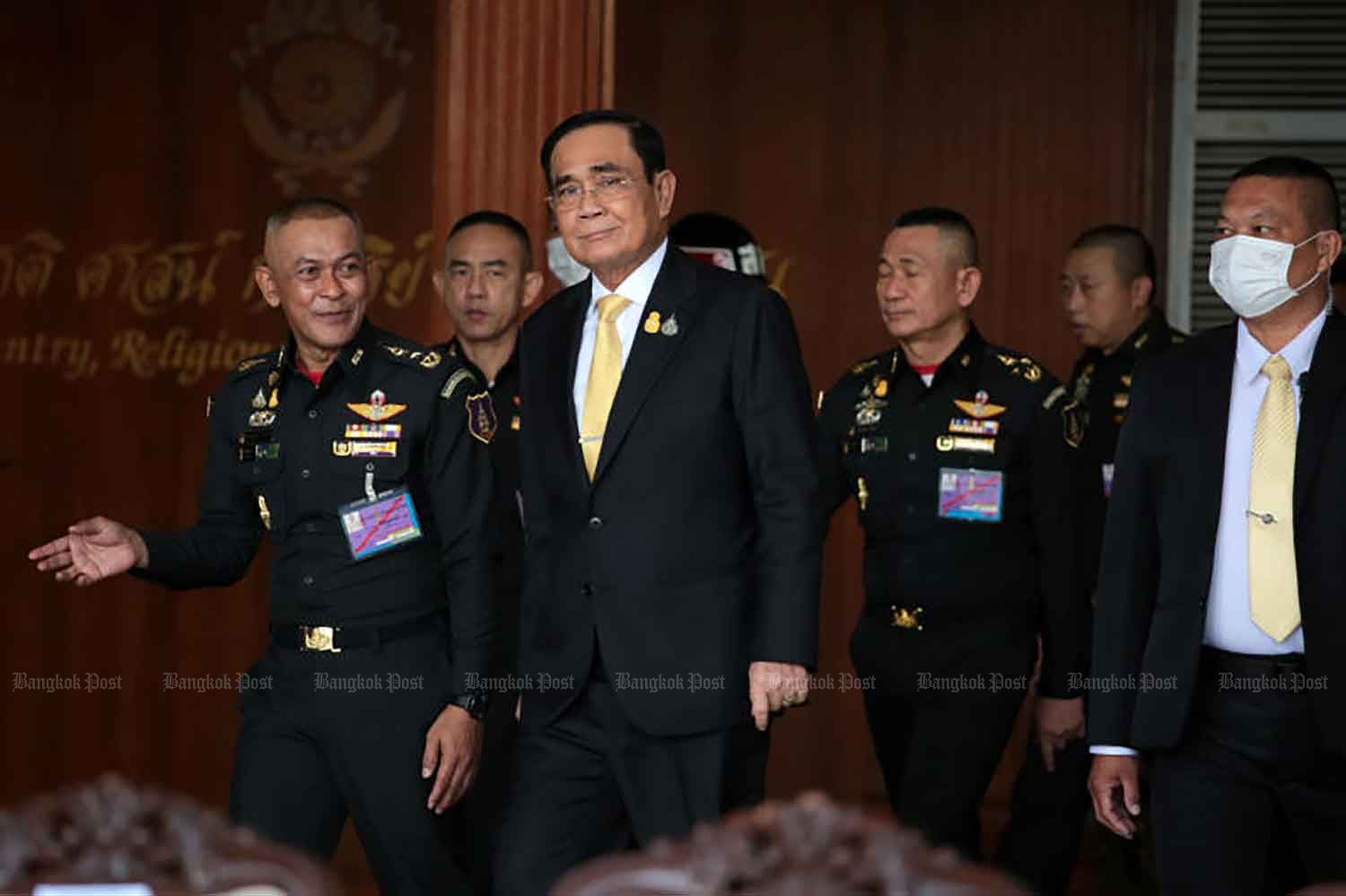
AFTER a clash erupted between Thai and Cambodian troops near the disputed Prasat Ta Muen Thom temple, Surin province, at 8.20 a.m. this morning (July 24) the fighting has now spread to six locations, Naewna newspaper said.
Lt. Col. Richa Suksuwanon, deputy army spokesperson, said at 9.20 a.m.that clashes are taking place along the entire Pha Mor E Daeng – Khao Phra Viharn Temple zone.
The Cambodian side opened fire using all types of weapons including BM-21 Grads, a Soviet truck-mounted 122mm multiple rocket launcher, while Thai troops responded with artillery fire. Two Thai soldiers got injured in the fighting near Prasat Ta Muen Thom Temple.
Reporters in the area said the six areas where the two countries are clashing include Prasat Ta Muen Thom Temple, Prasat Ta Kwai Temple, Chong Bok, Khao Phra Viharn (Huai Ta Maria/Phu Makhuea), Chong An Ma, and Chong Chom.
Bullets fired by Cambodian soldiers also hit a house in Surin's Ka Choeng district belonging to Mr. Suthee Boontaeng injuring one person.
Officials quickly evacuated residents at this border area as more bullets are expected to fly towards their homes.
The fighting erupted after the task force responsible for Pasart Ta Muen Thom temple heard the sound of a drone flying in front of the compound at 7.35 a.m. although they were not able to see it.
This was followed by six Cambodian troops bringing weapons, including rocket-propelled grenades (RPGs), to the barbed wire fence in front of the Thai base of operation, which is around 200 metres away from the temple. The Thai side tried to negotiate to avoid conflict.
However, at approximately 8.20 a.m.the Cambodian side opened fire.

Photo via Facebook/ ชอบจัง บางแสน
In a deeply unsettling incident at Bang Saen Beach, Chon Buri, a video capturing a man abusing a rabbit has sparked a wave of outrage across Thailand. The footage, shared by witness Pattanapong Sririmala on the "Rabbit Lovers' Community" Facebook page, shows the man repeatedly hurling the rabbit into the air and letting it fall onto the hot sand.
The shocking video, posted on July 21, records the man not only throwing the rabbit but also pouring sand over its body, seemingly attempting to bury it. Pattanapong, who captured the distressing scene, noted that this cruel act had been repeated multiple times before he began filming.
Following the post, the man, identified online as "Aruneelengpo," reportedly contacted Pattanapong, demanding the video be removed and threatening legal action. Unfazed, Pattanapong refused to delete the footage.
The video quickly went viral, igniting widespread condemnation from Thai netizens. Comments ranged from despair at the rabbit's suffering to calls for justice and reflections on the man's upbringing.
Some distraught viewers questioned, "How was this man raised?" Others expressed immediate concern for the rabbit's well-being, fearing it could suffer severe stress and injuries.
Animal welfare organisations, including Watchdog Thailand, have been alerted by concerned citizens urging for the man's arrest and prosecution. The gravity of public sentiment underscores a collective demand for swift action against animal cruelty.
In an interview with ThaiRath, Pattanapong revealed that a local food vendor intervened to rescue the rabbit. The animal was reportedly found in a drowsy and lethargic state, illustrating the distress it endured.
Locals have informed reporters that the man resides near the beach and has a history of purchasing and mistreating rabbits.
As of now, authorities have not provided updates on any legal proceedings or arrests linked to this incident. The lack of immediate action has left many hoping for a robust response to underscore that such cruelty will not be tolerated.
This incident has not only highlighted the importance of animal welfare but also brought community vigilance into sharp focus. It serves as a clarion call for stronger protective measures and heightened awareness regarding animal treatment in Thailand.


Picture courtesy of Andamanda Phuket
Thailand faces an uphill battle to restore its tourism industry to its pre-pandemic heights. Despite a 26% increase in visitors, reaching 35.5 million in 2024, the nation remains unable to surpass its 2019 peak of nearly 40 million tourists. For the first half of 2025, only 16.6 million arrivals have been recorded, suggesting that previous records may remain unbroken for some time.
Today, the Tourism Authority of Thailand (TAT) unveiled a new campaign, "Healing is a New Luxury," aiming for 36 million visitors and 1.63 trillion baht in revenue by 2026. Yet, this figure still falls short of the 1.9 trillion baht generated in 2019. An ambitious 2.8 trillion baht target for next year looms large, but reaching the 3 trillion baht milestone of the past remains elusive.
Although tourism saw a rebound in 2023 with the reopening of China's borders, enthusiasm has waned. The once-robust Chinese market, which comprised a quarter of Thailand's foreign tourists, has dwindled significantly. A significant rise in Chinese visitors in January 2024 was followed by steep declines, with first-half arrivals in 2025 down 34% year-on-year.
Former TAT governor Yuthasak Supasorn warns that only 4-5 million Chinese tourists may visit this year, marking a 12-year low, excluding the COVID-19 period. The issue isn't solely China's slowing economy, as Vietnam and Japan have seen substantial increases in Chinese visitors, while Thailand grapples with safety concerns stemming from high-profile incidents like the kidnapping of Chinese actor Wang Xing and the collapse of a Bangkok building.
Thailand's safety ranking has tumbled to 102nd out of 117 countries in the World Economic Forum's Travel & Tourism Index. Concerns over policing and personal safety at night have grown, with Chinese travellers' confidence in Thai safety plummeting from 26% in 2024 to 19% in 2025.
The challenge extends beyond numbers. Malaysian tourists have surged to become Thailand's top market in 2025, but they spend significantly less compared to Chinese visitors. A Chinese tourist spends an average of 42,428 baht over 7.35 days, whereas a Malaysian spends just 21,450 baht over 4.17 days.
Efforts to attract European travellers, who spend more on average, have helped locations like Phuket, but only temporarily. Occupancy rates in Phuket's low season dropped to 59% in June, down from 72% the previous year, with room rates dipping to 2,394 baht.
Thailand's appeal as a budget destination is fading, with its cost competitiveness ranking slipping to 48th. The rise of "Qióngyóu," budget travel among Chinese millennials, has diverted price-sensitive tourists elsewhere.
Yuthasak argues for a strategic pivot: attracting fewer, high-spending tourists to maximise economic impact. The country's historical resilience in crises is being tested amid this prolonged recovery effort.
To regain its stature, Thailand must focus on rebuilding trust, enhancing safety, and offering better value. Transforming from a budget haven to a quality destination could redefine its future. The clock is ticking, as regional rivals forge ahead.
Yuthasak underscores Thailand's potential: "We can't rest on past glories. It's time to evolve, or risk being left behind."


PATTAYA, Thailand – Pattaya's vibrant tourism scene has long been fueled by a diverse mix of visitors, but the question of who truly drives the local economy with their spending remains a hot topic among business owners, locals, and tourists alike.
Chinese Tourists: Leading in Numbers
Chinese tourists have historically been a significant presence in Pattaya. Although their numbers have dropped by half since Songkran, Chinese travelers remain a vital force in retail, dining, excursions, and beach activities, known for traveling in groups and spending heavily on shopping and meals. Many locals anticipate a strong comeback from the Chinese market as the Tourism Authority of Thailand (TAT) works tirelessly to bring them back following pandemic-era travel restrictions by increasing service standards on chartered flights, fast lanes at airports, and personal security.
Indians: Increasing Spending Power
Indian tourists are rapidly gaining recognition for their growing presence and economic influence in Pattaya. According to the Tourism Authority of Thailand (TAT), Thailand welcomed approximately 1.18 million Indian tourists in the first half of 2025, making India the third-largest source market after Malaysia and China. The TAT projects a total of 2.5 million Indian arrivals by year-end.
Indian visitors' average spending ranges from 40,000 to 70,000 baht per person, often linked to destination weddings, business events, and leisure travel. This spending is notably high and contributes significantly to Pattaya's economy, especially through shopping, dining, and cultural experiences. Some insiders suggest Indian tourists' financial impact may be underestimated compared to other groups.
Western Tourists: Still Significant but Facing Challenges
Western visitors, particularly retirees and tourists from Europe, have traditionally been key contributors, especially in nightlife and hospitality sectors. Bar owners and hotel managers often highlight Westerners' willingness to spend generously on drinks, entertainment, and services. "Retirees can easily drop 10,000 baht a night," noted one bar owner, underlining their importance during the city's quieter periods.
However, recent economic factors, including a strong Thai baht, have caused some hesitation among Western tourists. Despite these challenges, the European market is showing signs of recovery, with double-digit growth reported from countries such as Germany, Italy, and Switzerland, whose visitor numbers have also increased steadily since January — as well as from the British, who are often drawn by the prospect of semi-retirement investments. What many of these travelers seek in Pattaya isn't the loud atmosphere or late-night chaos, but rather quiet corners, sunsets by the sea, and companionship during their retirement years.
Beyond Per Visit Spending: Frequency and Sector Impact
The debate over who is the "biggest spender" in Pattaya is nuanced. Western tourists may spend more per night on entertainment and nightlife, but Chinese and Indian tourists often contribute more overall through higher frequency visits, larger group sizes, and substantial spending during their limited days of stays.
As Pattaya continues to diversify its tourism base, understanding these spending patterns helps local businesses tailor their services and marketing strategies to attract and retain high-value visitors from all regions.
While Chinese tourists lead in sheer numbers, Indian tourists are emerging as powerful contributors with increasing spending capacity. Western visitors, though currently facing some economic headwinds, remain essential to Pattaya's tourism economy. The city's future success depends on leveraging the combined economic strength of all its guests — a true melting pot of global travelers.

Former prime minister Thaksin Shinawatra has stepped back into the political spotlight as the ruling Pheu Thai Party and his daughter, suspended Prime Minister Paetongtarn Shinawatra, find themselves on increasingly shaky ground.
Thaksin's public appearances included an exclusive talk on July 9, a keynote speech on July 17 and a high-profile merit-making ceremony at Wat Ban Rai in Nakhon Ratchasima on Saturday.
Widely seen as the de facto leader of Pheu Thai, Thaksin addressed a broad array of topics including the Hun Sen clip and the Pheu Thai Party's directions following the Bhumjaithai Party's exit from the coalition and the looming Constitutional Court ruling in Ms Paetongtarn's case.
Thaksin, typically a vocal figure, had been unusually quiet for over three weeks. His re-emergence ignited chatter over whether it is intended to help Ms Paetongtarn and whether it will stabilise or add further complications for the Pheu Thai-led government.
Complicating the crisis
Phichai Ratnatilaka Na Bhuket, a political science lecturer at the National Institute of Development Administration, said Thaksin appears to be sending a message to the conservative camp that he is still playing by the rules.
Thaksin signalled that the party will not work with any party that supports changes to Section 112 of the Criminal Code, or the lese majeste law, and left the door open to working again with the Bhumjaithai Party, which is against amending the lese majeste law and granting amnesty to the lese majeste offence, he said.
"It's his way of telling the conservative bloc that between the People's Party (PP) and the Bhumjathai Party, he'd still rather work with Bhumjaithai despite the rift," said the academic.
He said that Thaksin's latest move is also an effort to help his daughter who he portrayed as a victim of Hun Sen's trickery. The party's popularity, especially in its northeastern stronghold, dropped from 40% to 10% in some polls.
However, he believed Thaksin's intervention has done more harm than good because the public sees Ms Paetongtarn as inexperienced when dealing with international affairs.
As for the party, the former prime minister's comments only reinforce the public perception that he is calling the shots in the government especially after his visit to Ban Phitsanulok to attend a meeting of "Team Thailand" for talks about Thailand's latest tariff proposal to the United States, Mr Phichai said.
There are already complaints he has influenced the party and if it can be proven that Pheu Thai has been following his orders, it could become a real issue, he added.
For the Pheu Thai Party to win back support, it has to take the political offensive, said Mr Phichai.
Pheu Thai's recent moves such as putting the brakes on the casino-entertainment complex plan and quietly undermining Bhumjaithai, which shares the same provincial power base, are part of a broader political strategy, he said.
Pheu Thai is also using the Klatham Party to pull influence away from rivals and going after senators with ties to Bhumjaithai. The 20-baht flat-rate electric train fare is also aimed at shoring up public support.
"I don't think it can really help his daughter or the party. If Thaksin really wants to help, the best thing he can do is step away. Don't pull the strings from behind the scenes. Just stay home with the grandchildren," he said.
No longer about popularity
Stithorn Thananithichot, director of the Office of Innovation for Democracy at King Prajadhipok's Institute, said Thaksin's recent move is to help his daughter and show that the "deal" is, in fact, still intact.
However, he said the Pheu Thai-led coalition may not stay beyond the end of this year. A House dissolution is expected after the 2026 budget bill clears parliament and a rotation of positions is finalised.
Thaksin's visit to Ban Phitsanulok suggests the former premier is not concerned about allegations that he is pulling the strings and at this point he has nothing to lose and must demonstrate strength, said Mr Stithorn.
"He is sending a message that even without Bhumjaithai, Pheu Thai is still standing. It is to show his deal remains the primary deal. There's no need for a new formula. It's Thaksin and Pheu Thai only," he said.
However, Thaksin's move has done little to boost public support as reflected in recent opinion surveys, adding Thaksin himself seems to be aware that trying to complete with the orange camp on popularity is a losing battle.
Instead, his focus seems to be consolidating power through "big houses" whether by drawing them directly into Pheu Thai's fold or using allied parties to do work. The goal is to secure enough parliamentary support to build a majority when the time comes.
Looking ahead to the next polls, Mr Stithorn said Pheu Thai is unlikely to come out on top and could even fall to third place.
"It's going to be tough. And their best hope is to forge alliances with the Klatham Party and others. If they can get pass the 250-seat threshold, they have a shot [at forming the government," he said.
Pheu Thai's defence
Somkid Chueakong, deputy secretary-general to the prime minister for political affairs, defended Thaksin's return to the spotlight, saying it was planned well before the leaked audio clip surfaced.
He said the government has been tapping into Thaksin's experience to help steer the country through difficult economic conditions such as trade tensions with the US and politically, Thaksin's remarks supported the government stance and were not beyond what Pheu Thai has done and will do.
When asked whether Thaksin remaining quiet might actually help the government, Mr Somkid disagreed.
"Keeping silent might not be better. Ms Paetongtarn is being suspended and opinion polls reflect public sentiments. People are feeling uncertain about leadership," he said.

Ex premier Thaksin Shinawatra is once again floating that a new Golden Visa would bring the right for foreigners to own outright freehold land and property in Thailand. Speaking to a business conference in Bangkok, he projected that one million foreigners, each paying US$1 million or equivalent, would benefit the Thai treasury with 600 billion baht to unlock the country's economic future.
In his plan, Thaksin also included long-term residency for the ultra-rich. But it is not clear whether he meant a renewable 10 year visa (as in the current Long Term Residency Visa) or a certificate of permanent residency. Permanent residents in Thailand are foreigners who do not have a date when they must extend their visa or leave the kingdom. They can stay as long as they wish but, before going abroad, must obtain a re-entry permit if they wish to come back with their status intact.
This is not Thaksin's first foray into visas for the privileged minority. As prime minister in 2003, he announced the arrival of the Elite visa (later renamed Privilege) which guaranteed multiple entries for 20 years, the first residency by investment program in Asia. Initially, it seemed to include the right for foreigners to buy "one rai of land" to build their own property, but this was never enacted. The program then faced challenges such as operating deficits and accumulated losses.
The latest Golden Visa concept has attracted more criticism than support amongst financial gurus. They say that the best Golden Visas worldwide include the guarantee of citizenship with a second passport, as found in parts of the Caribbean. It is not clear how much freehold land the golden visa holders would be allowed to hold in their own name or whether purchase would be limited to off-plan developments in specific areas.
Thaksin's latest plan has fallen flat amongst hundreds of social media commentators. A Facebook regular wrote, "Thailand would do better to look after the thousands of foreigners who are retired in Thailand or have family responsibilities here instead of frightening them away with taxation threats and visa restrictions." International commentators such as Bloomberg and the EU Policies are doubtful that there is a large pool of super-rich foreigners out there willing to invest heavily in Thailand's future right now as she struggles with falling revenues, US tariffs and international image problems. Better think it out again.
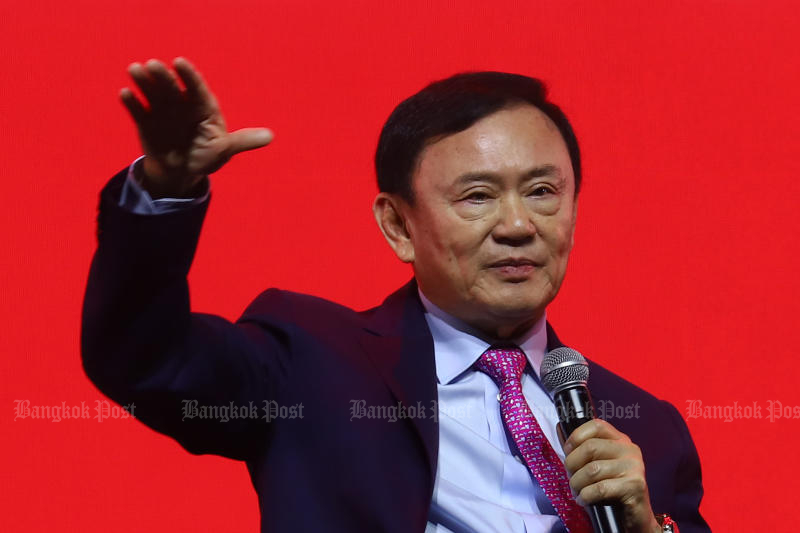
Former prime minister Thaksin Shinawatra suggested Thailand create a golden visa scheme for wealthy foreigners to become long-term residents and called on Airports of Thailand Plc (AOT) to hike passenger service fees to boost the sluggish economy.
The golden visa scheme could potentially bring in the equivalent of Thailand's US$500 billion economy, Thaksin said in a speech at the "Unlocking Thailand's Future" conference hosted by Mcot Plc on Thursday evening. He suggested the country could attract 600,000 people who would deposit $1 million apiece for the visa. In return, they'd get rights to buy property in Thailand, helping the real estate sector, with the proceeds to fund education for Thai people.
"It will drive GDP growth, reduce public debt, spur domestic consumption," Thaksin said. "It's new, fresh money, and so worth pursuing."
ADVERTISEMENT
Thaksin retains significant influence with policymakers through the ruling Pheu Thai Party, helmed by his daughter Paetongtarn, despite having no formal title in the government. His speech to business people on how to invigorate growth comes after the Constitutional Court recently suspended Ms Paetongtarnas prime minister while it deliberates on an alleged ethics violation case involving her handling of a border dispute.
Thaksin has his own legal troubles, including a decade-old royal defamation case that is due to be ruled on next month. He remains confident he will be found innocent, he told the seminar.
Thailand's economy, which relies heavily on exports and tourism, has expanded at an average of under 2% over the past decade, trailing other major Southeast Asian economies. Gross domestic product will likely grow 1.3% to 2.3% in 2025, constrained by high household debt and slowing tourist arrivals, while the economy is also at risk of a 36% tariff from the United States, its largest export market.
AOT should raise its passenger service charges by as much as 300 baht ($9.22) per passenger to generate 40 billion baht in additional profit per year, he added. That would be a roughly 40% hike from the current level.
"AOT should be an economic driver in terms of being an aviation hub, cargo centre, and aircraft maintenance centre, which can drive the economy much further," he said. The proceeds could be used to improve the authority's six airports and help Thailand become Southeast Asia's aviation hub, as well as drive businesses like cargo and aviation maintenance.
AOT shares rose 11% in Thursday trading, closing at the highest since March, after local newspaper Kaohoon reported it planned to hike passenger service charges and landing and parking fees, and start collecting transit and transfer fees.
There are calls to revitalise the travel industry. Earlier this week, the Tourism Authority of Thailand (TAT) lowered its forecast for foreign tourist arrivals in 2025 to 35 million from 40 million, with Chinese visitors falling short of projections.
Only 2.3 million Chinese visitors came to Thailand in the first half of 2025, compared with 3.4 million a year earlier, according to data from the Ministry of Tourism and Sports. News of a Chinese actor's kidnapping to Myanmar through Thailand increased safety concerns, said Thaksin, who suggested that he would personally insure any Chinese travellers to Thailand in order to win their confidence.

A powerful combination of foreign airlines, international travel agents and lobbyists have persuaded the Thai government to withdraw the proposed 300 baht (US$9) entry tax on "tourist" foreigners arriving by air. Also cancelled is the proposed 150 baht on land or sea arrivals.
Deputy minister of tourism and sports, Jakraphon Tangsuttitham, told the press this week that the timing was inopportune, but the scheme "might" be brought back in the summer or autumn of 2026. This marks the last of several failed attempts to introduce a "charge for landing on Thai soil".
The tax was first envisaged eight years ago to raise revenue. The initial idea was to install booths at entry points into the kingdom to collect the cash. But the scheme fell through because of fears of tediously long and chaotic immigration lines as arrivals waited for change or had trouble processing their credit cards for small amounts.
In 2021 prime minister Prayut Chan-o-cha revived the plan, but again it collapsed because of the confusion about who would need to pay. Thai passport holders, diplomats and foreigners with Thai work permits were exempted. Thus airlines said the idea of adding the fee to all inbound air tickets was impractical because of the detail.
Moreover, longstay foreigners holding retirement or student visas were devastated to learn they were "tourists" for this purpose with a fee to pay on every entry. The more recent advent of Destination Thailand Visa holders, who have five year multi-entry passes but have to quit Thailand once or twice a year, creates yet more controversy.
The current plan, now discarded, envisaged the raised cash to be divided between restoring tourist sites (building toilets at temples or cleaning relics etc) and instituting medical insurance for some tourists during their first month of stay. Such cover would be discretionary and require an enormous bureaucracy.
Expats would not be included, whilst visa-exempt tourists who committed an offence (eg not wearing as crash helmet) would not have any chance post-accident. Many private hospitals expressed doubts about the sketchy details. Inpatient hospital cover in Thailand for foreigners is not compulsory except for a small number of visas including the 10- year Long Term Residence, retirement O/A visas originally awarded by Thai embassies and work permit holders.
Travel agents generally have welcomed the collapse of the current proposal. Grant Silvers, representing the US-based Exotic Tours and Travel, said, "We desperately need good news about travelling to Thailand and this cancellation certainly falls into that category." And so say all of us.
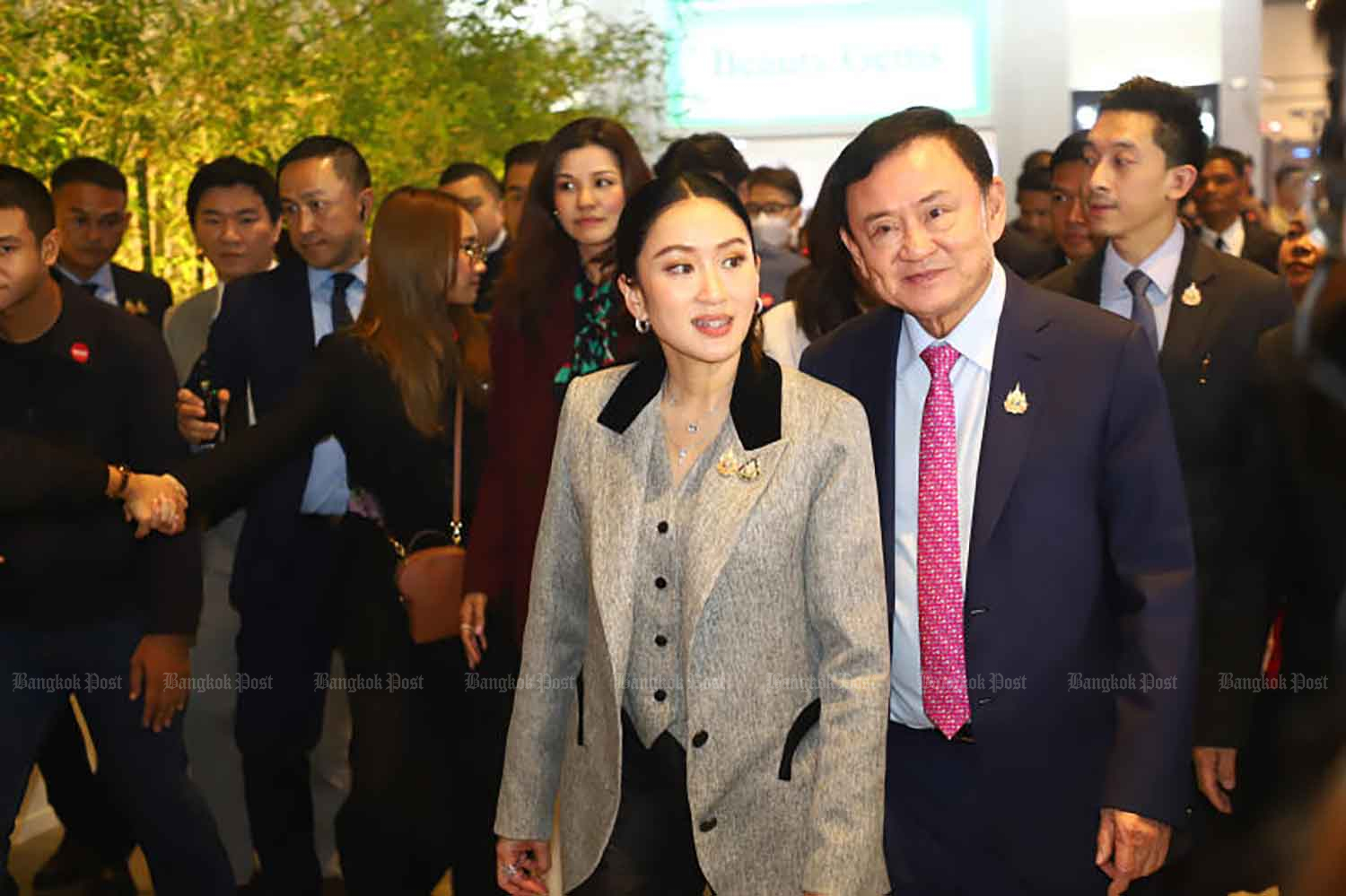
An opinion survey by the National Institute of Development Administration early this month found more than 80% of respondents wanted suspended Prime Minister Paetongtarn Shinawatra to either resign or dissolve the House. Gen Prayut Chan-o-cha was the most favoured choice as the next premier.
Nida conducted the phone survey on 1,310 people sampled nationwide from July 4 to 7. Of the respondents, 42.37% of wanted Ms Paetongtarn to resign so that the nation would have a new prime minister.
Meanwhile, 39.92% of respondents called on her to dissolve the House of Representatives to pave the way for a fresh general election and 0.99% wanted to see a coup d'etat.
On the contrary, 15.04% of respondents wanted Ms Paetongtarn to continue with her national administration. The rest, 0.31% of respondents, did not give an answer.
When asked who among existing prime ministerial candidates should replace Ms Paetongtarn as the prime minister, the biggest group of respondents, 32.82%, favoured Gen Prayut Chan-o-cha, who is a privy councillor and is a prime ministerial candidate of the United Thai Nation Party (UTN).
The second biggest group of respondents, 27.94%, did not see a favourite among existing prime ministerial candidates; 11.53% pointed to Bhumjaithai Party leader Anutin Charnvirakul; and 10.92% favoured Chaikasem Nitisiri, the presently last prime ministerial candidate of the ruling Pheu Thai Party.
Meanwhile, 9.77% said they would be satisfied with any of the remaining prime ministerial candidates, 3.82% recommended UTN leader Pirapan Salirathavibhaga, 1.83% supported Democrat candidate Jurin Laksanawisit, 0.84% preferred Palang Pracharath Party leader Gen Prawit Wongsuwon, and 0.53% did not know or were not interested.
Opposition and People's Party leader Natthaphong Ruengpanyawut was not among existing prime ministerial candidates for this opinion survey because he is from the dissolved Move Forward Party which had nominated solely Pita Limjaroenrat as its prime ministerial candidate.
Of all the respondents, 8.55% lived in Bangkok, 18.70% in the Central Plains, 17.79% in the North, 33.28% in the Northeast, 13.82% in the South and 7.86% in the East.
Ms Paetongtarn was suspended as prime minister by the Constitutional Court on July 1 as a group of senators asked it to remove her from the prime ministerial seat after her leaked, controversial phone call with Cambodian Senate President Hun Sen.
She was appointed the culture minister at the same time.
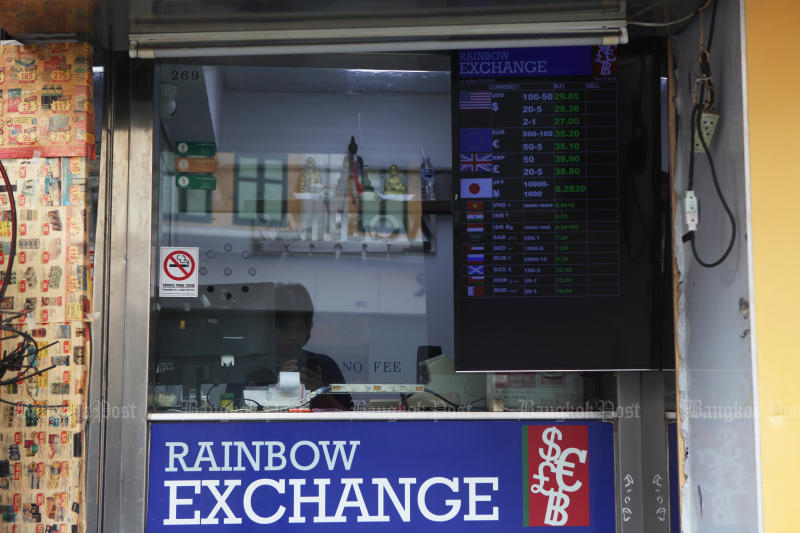
The Thai baht's four-month rally is likely to falter as political turmoil is expected to weigh on the economy, according to the currency's top forecaster.
The local currency may trade at 32.30 per dollar at the end of the year and into the first quarter of 2026, said Christoper Wong, senior FX strategist at Oversea-Chinese Banking Corp. That implies the baht would be just 0.7% stronger than its level on Monday, after surging more than 5% in the four months through June.
"In the coming months, slower tourism, subdued domestic demand, political developments and tariff uncertainty are some factors that may hinder the baht's appreciation path," Wong said in an interview on Friday. "Relative to other Asian peers, I'm of the view that the baht may continue to stay back-footed."
ADVERTISEMENT
The outlook comes as a suspension of Prime Minister Paetongtarn Shinawatra from office sparks concern over a delay in the new budget and economic stimulus, potentially worsening the country's already lagging growth. That may prompt the central bank to deliver deeper interest rate cuts, Wong said.
Most Asian currencies have strengthened against the dollar in recent months as US growth and fiscal concerns weighed on the greenback. The baht has also typically been supported by gold prices, though a recent breakdown in correlation between the two indicates that domestic issues are of a bigger concern to investors, Wong said.
Wong, who has yet to make any client-related work trips to Thailand, was the topped-ranked baht forecaster in the three months through June and the second best in the first quarter, according to data compiled by Bloomberg. The ranking is based on criteria such as margin of error, timing and directional accuracy.
Investors are going to wait out how tariffs and politics play out, given that there's "too much uncertainty to pre-position for," Wong said.

Composite courtesy of Thai PBS World
In a dramatic turn of events, the Cabinet has scrapped the contentious Integrated Entertainment Complex bill from parliamentary discussion. Dubbed the 'casino bill', this high-profile venture was a cornerstone of the Pheu Thai-led government, spearheaded by Paetongtarn Shinawatra.
Government spokesman Jirayu Houngsub announced the withdrawal post-Cabinet meeting, citing a request from the Finance Ministry. This decision effectively halts the government's vision for the complex, which was anticipated to feature a casino and various entertainment attractions.
The bill had met fierce opposition and sparked public protests, despite assertions from the government that it would lure investment, tackle illegal gambling, and boost tourism in Thailand. Plans indicated a casino occupying no more than 10% of the complex, with the rest devoted to amenities like amusement parks, theatres, and sports arenas.
Initially included in Paetongtarn's policy agenda upon her September appointment as prime minister, the bill had secured Cabinet backing on March 13. It was fast-tracked for a review by the Council of State, designed to ensure swift passage through Parliament.
However, an April announcement from Paetongtarn delayed its first reading, citing more pressing national priorities. She assured it was merely postponed, with a plan to reintroduce it during the July parliamentary session.
Following a Cabinet reshuffle on June 30, a reassessment led to the Finance Ministry's successful request for withdrawal. Jirayu noted broader social implications as a factor, stressing the need for extended public dialogue.
Political analysts suggest the move reflects Pheu Thai's precarious position in Parliament, especially after the Bhumjaithai Party's coalition exit.
Complications compounded when Paetongtarn faced suspension by the Constitutional Court for alleged ethical breaches linked to a leaked recording with Cambodian leader Hun Sen.
Deputy Finance Minister Julapun Amornvivat expressed regret over the decision, acknowledging, "it's not the appropriate time." He lamented the lost opportunity for economic stimulation and growth.
The bill's suspension underscores the complexities and challenges of navigating political and societal landscapes, as Thailand grapples with balancing economic development with public consensus and ethical governance.