.
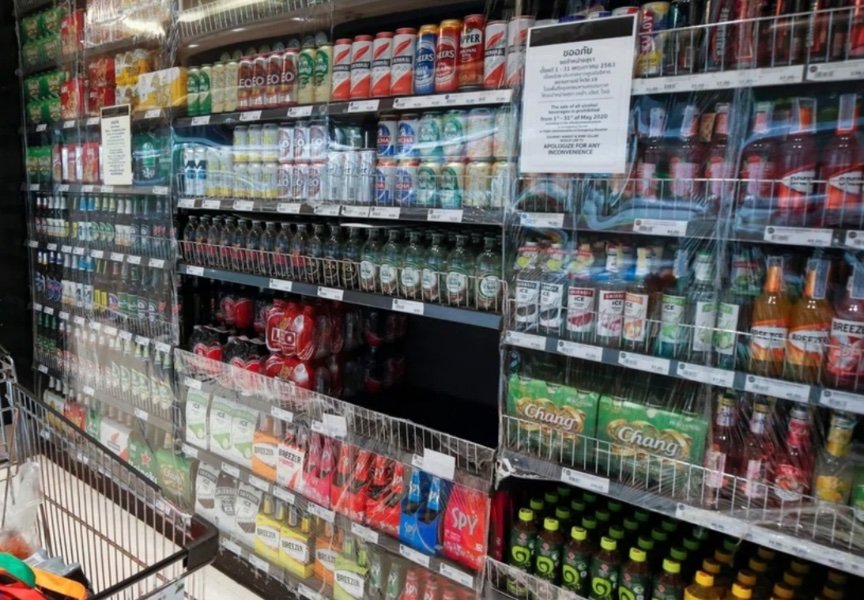
The new schedule allows the sale of alcohol from 2pm to 5pm, in addition to the existing 11am-2pm and 5pm-midnight
Listen to this story |
The National Alcoholic Beverage Policy Committee is scheduled to meet on November 13 to resolve public confusion over the new Alcoholic Beverage Control Act (No. 2) B.E. 2568 (2025), which came into effect on November 8. The Cabinet has instructed relevant agencies to urgently clarify the rules to the public, business operators, and tourists amid criticism that the law is affecting tourism and nightlife businesses.
Siripong Angkasakulkiat, spokesperson for the Prime Minister's Office, said Prime Minister Anutin Charnvirakul requested clarity following complaints about enforcement. The Ministry of Public Health and the Ministry of Tourism and Sports have been tasked with explaining which activities are allowed and which are prohibited under the Act, ensuring clear understanding and proper compliance. The committee aims to issue definitive guidance on the matter by December 4.

The law represents a major shift in Thailand's food and beverage industry. It modernizes the original 2008 Act to reflect digital-era sales practices and attempts to balance social control with economic growth. However, it has triggered backlash for directly penalizing consumers who drink during restricted hours, a legal turning point that has caused confusion and frustration across the hospitality sector.
The controversy centers on Section 32, which prohibits drinking in licensed premises or commercial venues during legally restricted hours. Violators face fines of up to 10,000 baht under Section 37/1. Previously, enforcement targeted vendors, such as selling to minors or intoxicated patrons; the new law places responsibility on the drinkers themselves, creating stricter personal accountability.
Under current regulations, alcohol consumption is prohibited from midnight to 11:00 a.m. and from 2:00 to 5:00 p.m. Even if a customer buys alcohol before midnight but continues drinking past 00:00, they are considered in violation. Certain venues remain exempt — licensed entertainment establishments such as pubs and bars, hotels, and international airport departure lounges. Smaller restaurants and cafés without an entertainment licence must stop alcohol consumption at midnight, raising concerns about revenue loss from late-night diners and drinkers.
People's Party Bangkok MP Taopiphop Limjittrakorn emphasized that drinking during prohibited hours in commercial venues is illegal, and fines apply directly to the drinkers. Siripong noted that the regulations may cause confusion, particularly for foreign tourists unfamiliar with the rules.


Prime Minister Anutin Charnvirakul on Monday suspended implementation of the Thai-Cambodian peace agreement and planned release of 18 captured Cambodian troops after four Thai soldiers were injured by a landmine while patrolling the border in Si Sa Ket province.
One of the Thai soldiers lost his right foot in the explosion about 9.30am on Monday. The other three suffered lesser injuries.
Mr Anutin said he agreed with the Defence Ministry and armed forces' recommendation to halt the implementation of the peace agreement.
"What happened demonstrates hostility towards Thailand and a continued security threat," the prime minister said.
He planned to visit the injured soldiers in Si Sa Ket on Tuesday, saying "our soldier lost his leg."
Defence Minister Nattapon Narkphanit said the landmine was likely freshly laid because the explosion occurred on a path regularly patrolled by Thai soldiers.
"This is an act by a Cambodia that does not observe the declaration signed on October 26, 2025," Gen Nattapon said.
The Defence Ministry had sent a written protest to Cambodia via the Foreign Affairs Ministry. It would take additional action if the investigation concludes that the explosion indicated an intention to violate Thai sovereignty, the defence minister said.

However, as the law takes effect amid the peak tourism season, it has ignited a firestorm of controversy. Businesses are scrambling for clarifications, entertainment districts face renewed scrutiny over late-night operations, and fears are mounting that unwary tourists could bear the brunt of on-the-spot fines especially from possibly corrupt officials. At the same time, ongoing proposals to liberalize certain restrictions and regulations signal a potential pivot toward tourism-friendly reforms.
The ABCA No. 2 builds on the original 1972 legislation, which banned alcohol sales at most retail outlets and supermarkets between 2 p.m. and 5 p.m. to allegedly curb daytime workplace drinking (especially at government offices) and accidents. While that core restriction remains, (For now, more below) the amendments shift significant responsibility onto consumers. For the first time, individuals caught drinking or being served alcohol during prohibited hours—now including midnight to 11 a.m.in some contexts—or in banned locations (such as temples, schools, or public transport) face fines starting at 10,000 baht (approximately $300 USD), with potential escalations to 100,000 baht or short jail terms for repeat offenders. Businesses risk even harsher penalties, up to 500,000 baht, for facilitating violations.
The law also clamps down on marketing tactics deemed to "induce consumption." Broadly defined "marketing communications" now encompass any direct or indirect promotion, including sponsorships, social media posts by influencers, and other vague activities that could subtly glamorize alcohol. Exceptions are narrow: Factual or educational content authorized by the Ministry of Public Health is permitted, but using brand logos on non-alcoholic products or tying promotions to public events is explicitly forbidden. This is already being fought by several major alcohol companies who have traditionally used soda water or other non alcoholic products to promote events with their brand name.
These changes, effective immediately, reflect Thailand's dual priorities: safeguarding public health—where alcohol contributes to thousands of annual road fatalities and productivity losses—while nodding to economic realities. As one legal expert from Baker McKenzie noted in a pre-enforcement analysis, "ABCA No. 2 updates and tightens Thailand's alcohol regulatory regime."
The rollout has been anything but smooth, with hospitality and retail sectors voicing frustration over ambiguities in the new rules. In Thai media outlets reports highlight a surge in appeals from business associations urging Prime Minister Anutin Charnvirakul to intervene as the busiest tourism part of the year begins.
"The law is confusing and counterproductive," lamented a Bangkok restaurant operator in an associated media interview, pointing to scenarios where patrons who order drinks legally before 2 p.m. but linger past the cutoff could still be penalized, along with concerns that unscrupulous law enforcement would specifically target foreign tourists presumed to have money and unaware of the rules to pay fines. Industry groups, including the Thai Restaurant Association, have formally petitioned the PM's office for guidelines on enforcement, fearing a 50% drop in afternoon sales could cripple recovery from pandemic-era losses. The Pattaya Nightlife Business Association, led by Lisa Hamilton, has taken the controversial law to the Senate, asking for codified exceptions and regulations for tourist zones.
These pleas echo broader economic anxieties. Thailand's tourism sector, which accounts for nearly 20% of GDP, is bracing for the "Amazing Thailand Grand Tourism and Sports Year 2026" campaign. Yet, with high-season arrivals from Europe and Australia ramping up, operators worry the fines will deter casual imbibing as international media begins to pick up the story. As Business Today reported on November 8th, "Restaurant owners say the changes could harm their business," with some estimating halved alcohol revenues during peak lunch hours. The PM's office has acknowledged the concerns, promising a review within a few weeks, but for now, businesses are left navigating a patchwork of local interpretations.
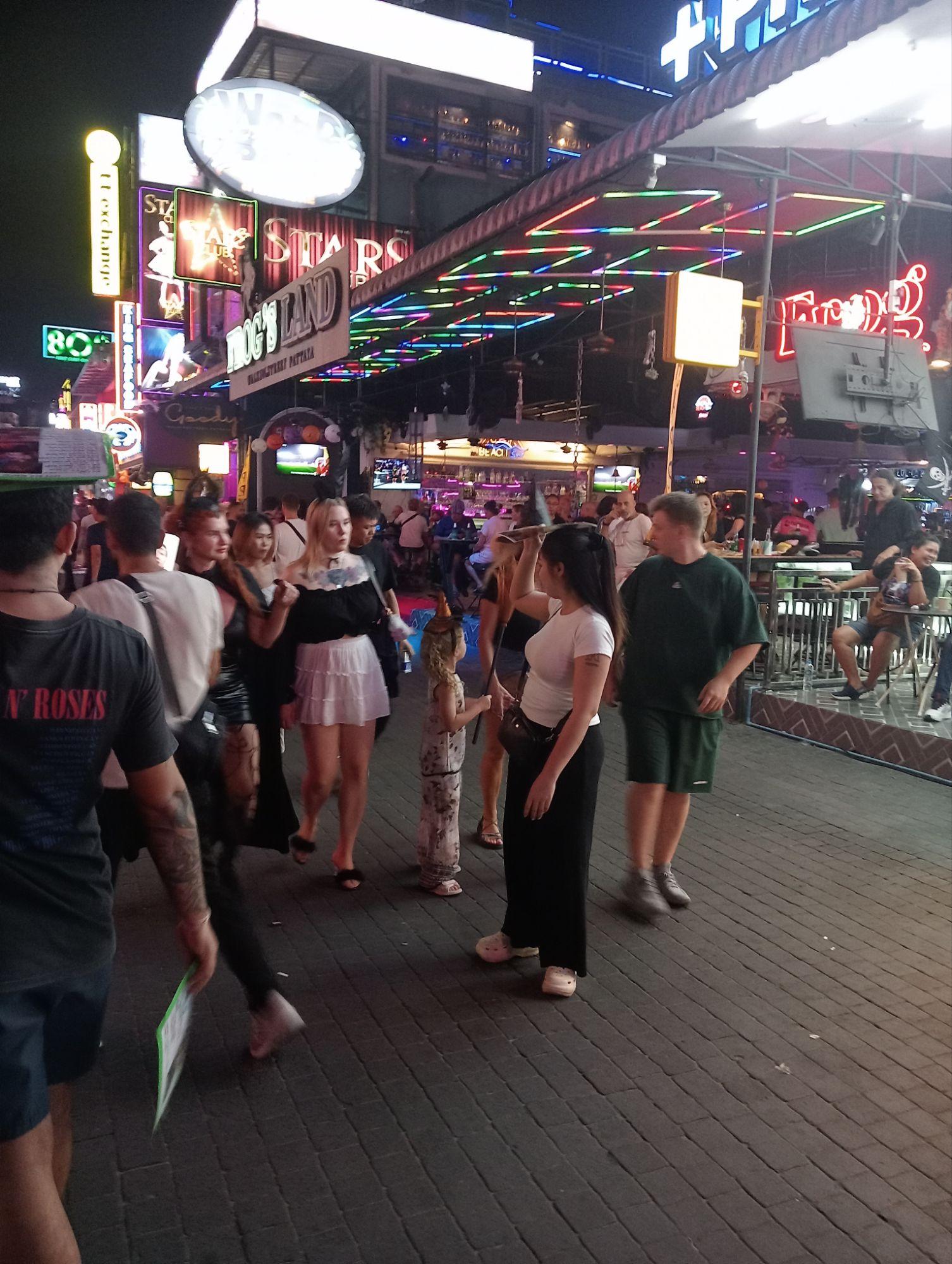
In bustling entertainment hubs like Bangkok's Khao San Road, Pattaya, and Phuket's Patong Beach, the spotlight has turned to closing times. Under existing zoning rules (not laws) tied to the Entertainment Places Act of 1966, licensed venues in designated tourist areas can operate until 4 a.m., while others must shutter by 2 a.m. The new ABCA No. 2 doesn't directly alter these hours but amplifies scrutiny: venues serving past legal limits now risk not just license revocation but joint liability with patrons for fines. This has prompted outcry from bar owners, who argue the "4 a.m. rule" is under threat from overzealous inspections or officials deciding to fine large groups of unsuspecting tourists. Meanwhile, some anti alcohol groups claim the new amendment bans the sale of alcohol entirely after midnight and the later hours of opening should only be to allow a venue to stay open but not sell or consume alcohol. Hospitality businesses of course say this would be ridiculous as alcohol during these hours is their main product. The Thai Alcoholic Beverage Control Department simply has said this is an amendment, not a new law, and that times remain the same. Regardless, business owners want clear clarity from the government to avoid possible unjust fines.
Thai-language coverage in Matichon and Thai PBS describes a "backlash wave" with venue associations decrying the policy as a "tourism killer". One Phuket operator told the Thai media "Extending to 4 a.m. was meant to compete with Singapore and Bali—now it's all at risk. If we are forced to stop selling alcohol at midnight tourists will go elsewhere."
Anti-alcohol NGOs, however, unsurprisingly, applaud the scrutiny, rallying against further extensions or any codification of legal later drinking hours, even in tourist areas, to 4AM. A coalition of drunk-driving victims and health advocates protested at Government House on October 23rd, warning that nationwide 4 a.m. allowances could spike accidents by 25%, citing data from pilot programs in Chon Buri and Chiang Mai. They are also against proposals to end the afternoon alcohol sales ban, claiming it will cause widespread drinking at work and accidents.
The Department of Provincial Administration (DOPA), under the Ministry of Interior and tasked with enforcing the ABCA, has issued measured statements ordering every province and leader to focus on education over punishment. In a November 8th press release translated from Thai, department director Thira Watcharapranee stressed, "The amendments promote responsible consumption to protect public health, but we will prioritize awareness campaigns in tourist areas without resorting to immediately fining tourists." DOPA verified the 10,000-baht consumer fines as a "necessary deterrent," shifting from vendor-only penalties to build personal accountability. Officials plan intensified patrols in hotspots like Sukhumvit and Silom, with on-site seizures and fines, but exemptions for hotels, international airports, and certified tourist venues remain intact. However, the exact definition of a certified tourist venue is legally shaky which also concerns business owners.
Critics, including opposition MP Taopiphop Limjittrakorn, lambast the approach as "pandering to anti-alcohol lobbies," arguing it ignores global norms where 24/7 sales thrive without catastrophe like anti-alcohol NGOs claim locally.
For the millions of visitors flocking to Thailand's beaches and bars, the new rules evoke dread of "tourist traps." Social media is ablaze with warnings with expats and influencers sharing tales of hypothetical fines for "innocent" sips. Travel and Tour World reported on November 7th that "tourists may be fined simply for holding an alcoholic beverage," even if ordered legally, amplifying perceptions of selective enforcement. In Khao San Road's backpacker scene, where afternoon beers are de rigueur, operators predict a chill on spontaneous revelry.
On the other hand, many calmer voices on social media predicted the amendment would be ignored or not enforced at all, especially in tourist areas, claiming that allegedly many other laws on the books are also not enforced strictly. They called for people to stop freaking out and relax.
Amid the uproar, glimmers of reform persist. Earlier in 2025, the Prime Minister ordered a February review of the 2-5 p.m. ban, heeding business pleas for tourism boosts. By October, New PM Anutin Charnvirakul floated ministerial regulations to scrap zoning limits, allowing uniform 4 a.m.closures nationwide and lifting the afternoon prohibition outright—a move projected to inject 8.7 billion baht into nightlife revenues. These proposals, under parliamentary debate since March, aim to "align with international norms" while mandating stricter DUI penalties and age checks. These are later proposals than the existing amendment that had already worked through Thailand's law system over the course of several years under prior regimes, and would change things once again.
Health advocates decry the push as reckless, but proponents like the Khao San Business Association hail it as overdue modernization. As Thai PBS noted in Thai dispatches, "Ongoing talks could see changes by mid-2026," balancing economic revival with safety nets like late-night cultural alternatives. However, for now, the current amendment is technically on the books. It remains unclear how well it will be enforced, if at all, and with the government itself calling for education versus punishment, especially with foreign tourists, is a sign of the direction so far.

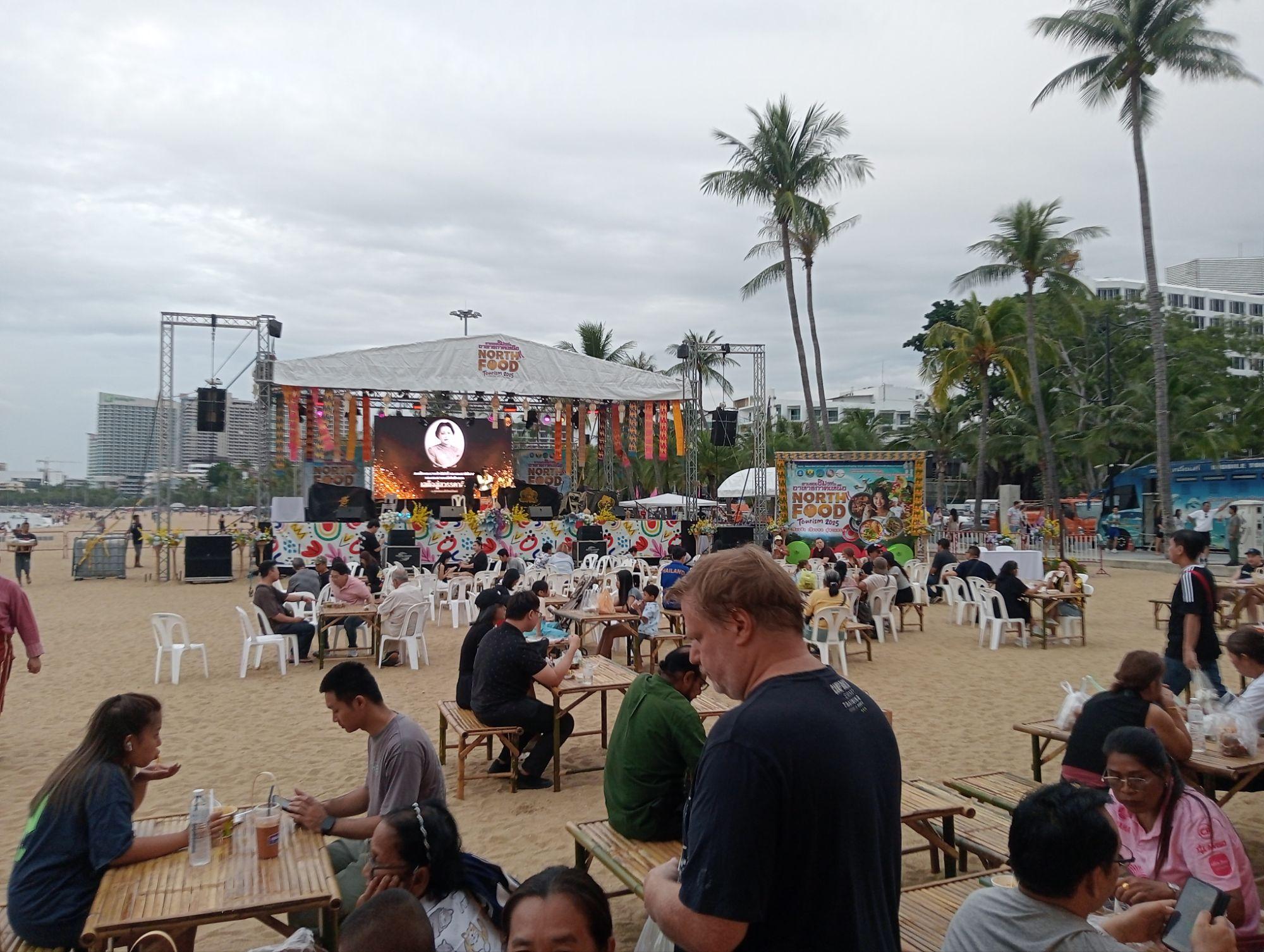
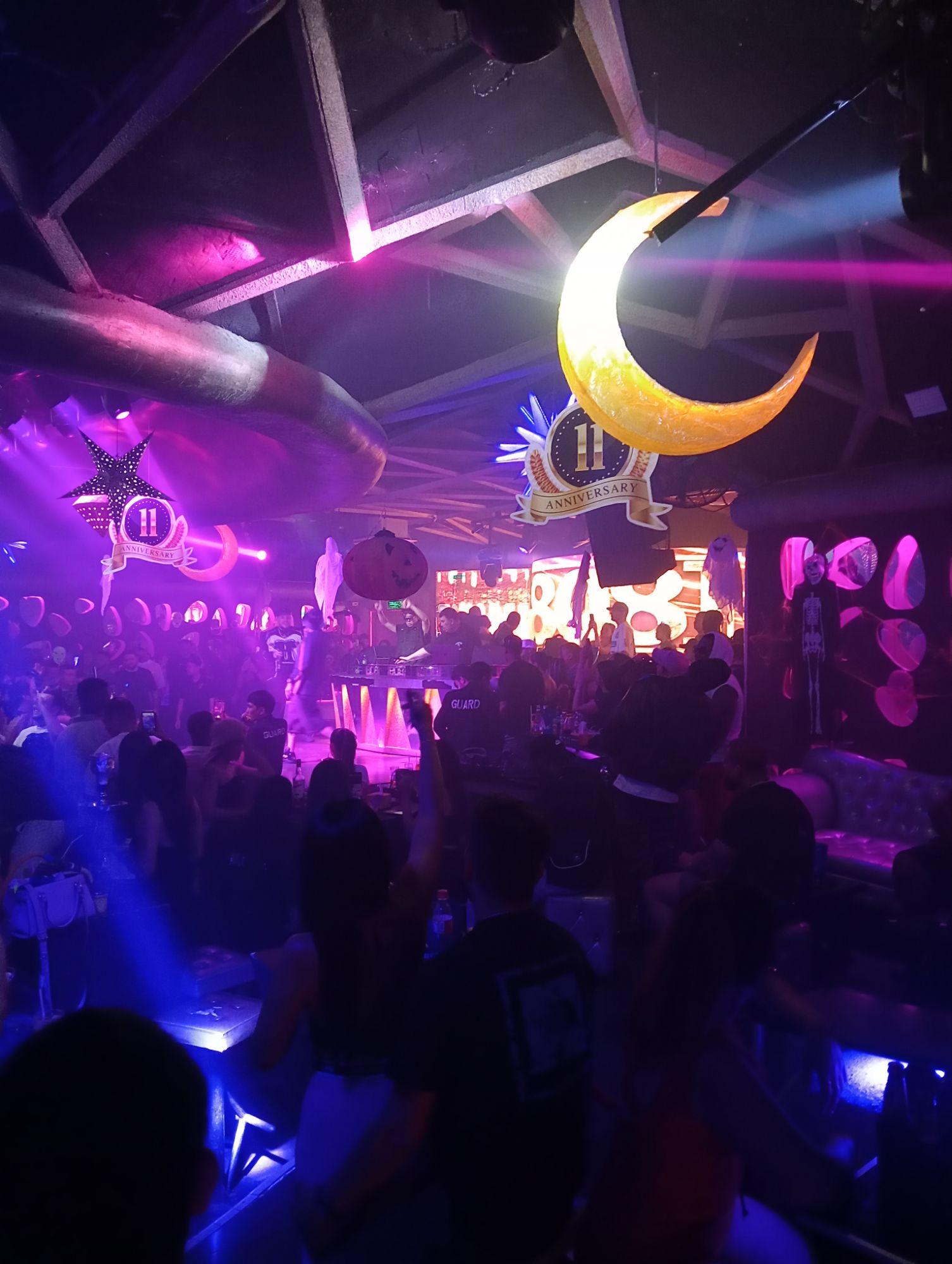
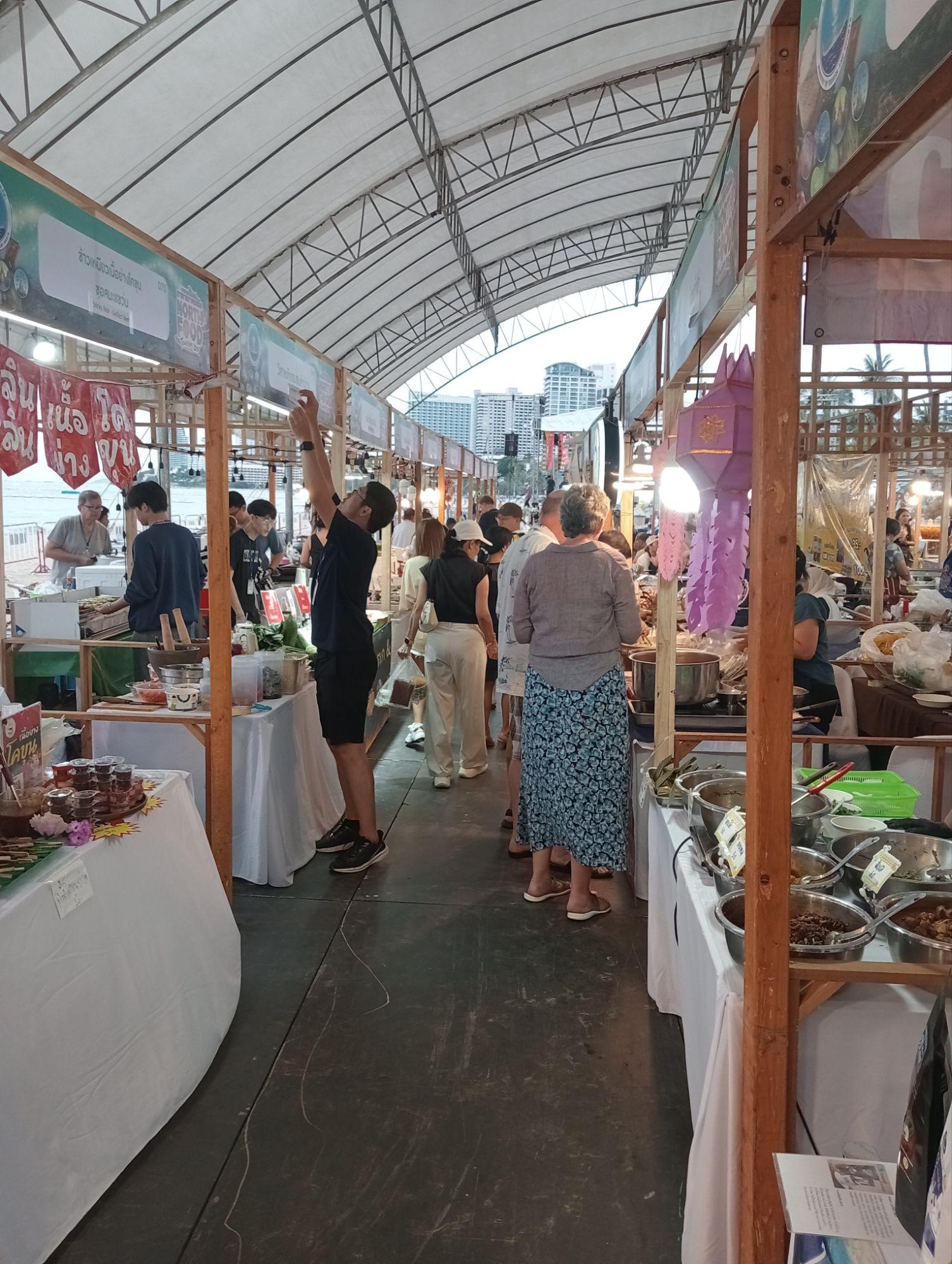
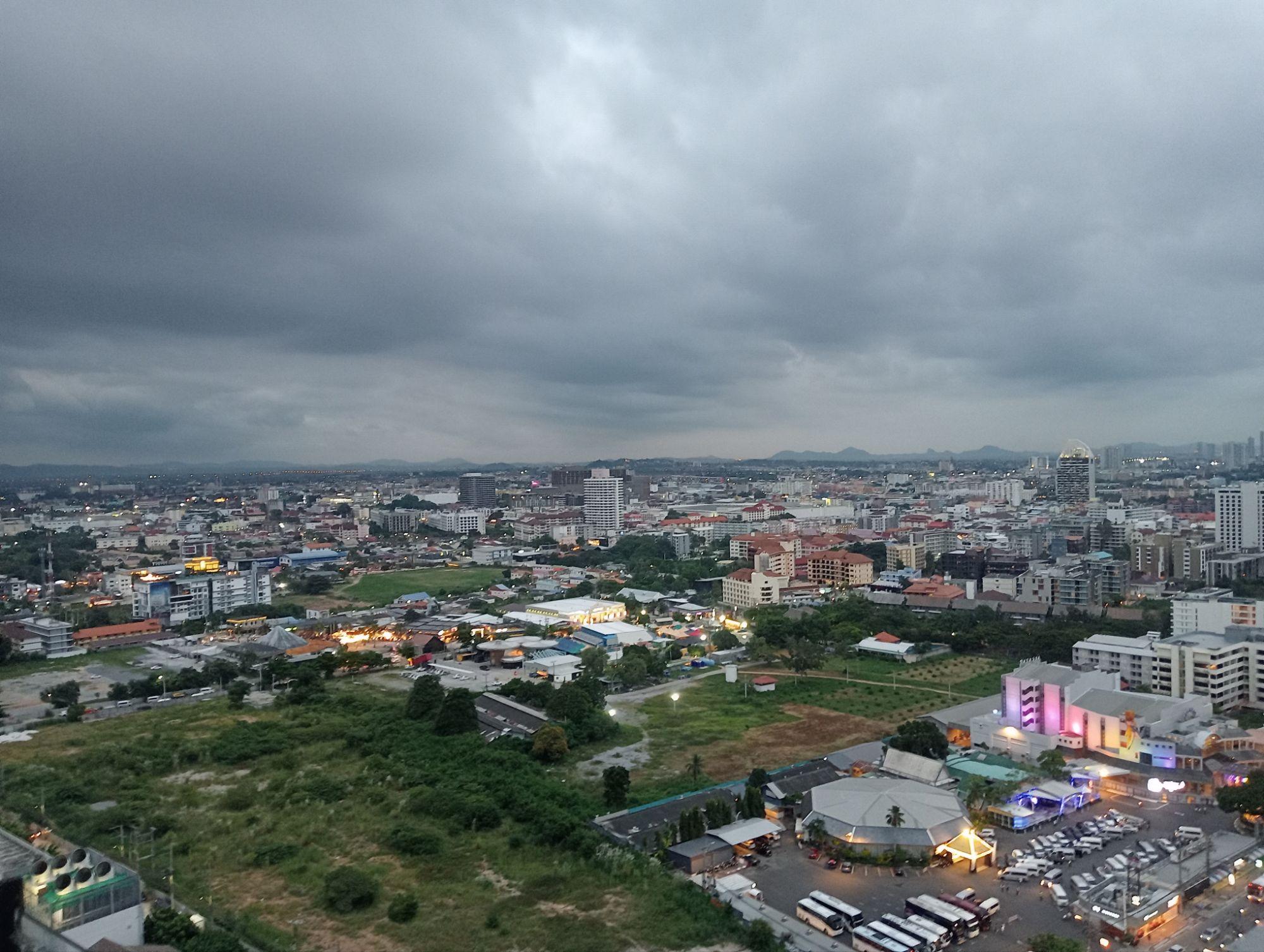
Photos: Recent shots and tourist events in Pattaya by Adam Judd for The Pattaya News
 Picture courtesy of Straitstimes
Drinkers face hefty fines from 8 November under new amendments to the Alcoholic Beverage Control Act, which strengthen restrictions on alcohol sales and consumption during prohibited hours. Individuals caught drinking or being served alcohol between 2pm and 5pm, or from midnight to 11am, could face penalties of 10,000 baht or more. The tightened rules also extend to advertising, with bans on promotional content featuring celebrities, influencers or public figures.
The law, first enacted in 1972 to restrict alcohol sales between 2pm and 5pm at most retail outlets and supermarkets, has now been updated to shift responsibility from sellers to consumers. Although licensed entertainment venues, hotels, certified tourist establishments and international airports are exempt, customers themselves are now liable for violations. Authorities say the move is aimed at curbing excessive drinking and promoting public order, though critics argue it will damage the hospitality sector.
Restaurant owners have voiced concerns that the legislation will harm their businesses. Thai Restaurant Association president Mr Chanon Koetcharoen said the restrictions will impede growth because customers are now directly penalised. He cited an example where a customer who buys a beer before 2pm but continues drinking after the cutoff could be fined under Section 32. "This will impede the growth of the restaurant industry," said Mr Chanon, who also operates a restaurant in Bangkok.
On Bangkok's Khao San Road, known for its nightlife and backpacker crowd, businesses are continuing to serve alcohol throughout the day, despite the restrictions. One assistant manager, who declined to give his full name, said sales could halve during the banned hours as customers become more cautious. "With the possibility of drinkers themselves being fined, sales of alcohol may halve during those times," he said.
Some observers warn that the stricter rules could open the door to misuse by officials seeking to fine customers or businesses for personal gain. Opposition MP Mr Taopiphop Limjittrakorn of the People's Party, who advocates for liquor liberalisation, said he believes alcohol should be available 24 hours a day. "The amended law aims to serve the purpose of those opposing alcohol," he said.
As the new rules take effect, enforcement and public awareness are expected to be key factors determining their impact. Industry groups are urging the government to clarify guidelines to prevent arbitrary penalties and reduce confusion among businesses and consumers alike.
Key Takeaways
• Thailand now could fine individuals 10,000 baht or more for drinking during prohibited hours.
• New rules shift responsibility from sellers to consumers, tightening advertising limits.
• Restaurant owners and opposition MPs warn the measures could hurt tourism and dining sectors.
Related Stories
Alcohol-research-centre-warns-of-risks-in-sales-deregulation
Anutin-plans-to-scrap-alcohol-zoning-extend-hours-to-4am


Banks pledge to maintain stringent monitoring and investigations of grey money transactions, in compliance with the Bank of Thailand's heightened measures.
According to Payong Srivanich, chairman of the Thai Bankers' Association (TBA), banks have fully complied with directives from all relevant agencies for monitoring and investigating suspicious financial activities potentially linked to grey money and online scams.
The banking sector has also upgraded its "Know Your Customer" systems to reflect current circumstances and enhanced technologies aimed at preventing financial fraud and scams.
ADVERTISEMENT
In terms of financial transactions and transfers, banks are supervised by the Bank of Thailand, the Anti-Money Laundering Office and the Securities and Exchange Commission, while also adhering to international compliance standards.
However, the central bank's tracking of money trails and financial transactions currently covers only regulated financial institutions.
Related regulatory agencies overseeing online scam prevention are encouraged to share information under the government's "Connect the Dots" framework to strengthen collaborative crime prevention efforts, he said.
Mr Payong said authorities may need to amend existing laws such as the Personal Data Protection Act to better address emerging challenges, or introduce new regulations, particularly those governing digital assets and cryptocurrencies.
On Tuesday, the central bank announced intensified efforts to tackle the problem of grey money -- funds linked to suspicious or unlawful activities -- by tightening monitoring and oversight measures throughout the financial system.
According to central bank governor Vitai Ratanakorn, the regulator is enhancing its processes for detecting and investigating undesirable transactions to address the growing problem of illicit funds and block the use of Thailand's financial system for illegal purposes.
Key measures include enhanced customer due diligence where commercial banks are being urged to place greater emphasis on verifying and investigating suspicious transactions involving deposits or transfers -- for example, accounts used in online gambling or operated by scammers.
The central bank will also tighten regulatory scrutiny of financial service providers under its supervision, including authorised money transfer agents, authorised money changers, e-wallet operators and entities involved in gold transactions that may be linked to illicit activities, he said.
The goal is to ensure comprehensive tracing and monitoring of financial flows that could be connected to fraud or corruption, in line with the evolving nature of financial crime.
Picture courtesy of Thai Rath
A staggering 1.64 million homes across Thailand lie empty, creating a huge economic waste valued at 3.45 trillion baht. This figure nearly equals the nation's yearly budget, according to a Thai Real Estate Research and Valuation Centre (AREA) survey. The "ghost housing" crisis is most severe in Bangkok, with more than 730,000 vacant units largely due to aggressive market speculation.
The issue is particularly acute in the condominium market, where the vacancy rate stands at a significant 24.8%. Condominiums make up 58% of all empty homes in Bangkok, with low-cost units especially vulnerable. Condos priced under 500,000 baht have a 21.1% vacancy rate, often leading to quick deterioration due to insufficient maintenance fee collection.
Detached houses and townhouses have lower vacancy rates, but the overall excess in housing stock is causing instability. Experts caution that rampant speculation complicates the sale of new developments and may threaten the financial stability of lending institutions. The AREA report estimates the value of these vacant homes at 3.45 trillion baht, a clear economic waste if not properly utilised.
Currently, Thai law lacks strong penalties for property owners keeping units vacant. The report proposes a Land and Building Tax to specifically target unoccupied homes as a solution. Such a tax could encourage sales and rentals, increase housing affordability, and stimulate the economy by getting properties back into use, reported The Nation.
Bangkok (730,000 units) and the rest of Thailand (900,000 units) share nearly equal numbers of unoccupied homes. Without policy intervention, this vast reserve of idle assets will continue hampering Thailand's economic potential.
Key Takeaways:


PATTAYA, Thailand — Another tourist on a rented motorcycle hit a pedestrian in Jomtien this week. No one was surprised. In Pattaya, these accidents are as common as motorbikes on sidewalks, red lights being ignored, or police checkpoints conveniently disappearing after dark.
Every few months, officials talk about "cracking down" on unlicensed drivers and reckless riders. But behind the slogans, little changes. The same pattern repeats: a driver without a valid license pays a token fine, the rental shop pays a small fee to get its bike back, and everyone goes home — until the next crash.
Locals remember a law introduced a few years ago meant to fix the problem. It required renters to show a valid Thai or international motorcycle license. Violators could face confiscation of vehicles and fines. It worked briefly, until enforcement quietly faded — like so many other well-intentioned regulations in Thailand.
The truth is simple: money matters more than safety. Rental companies keep handing out bikes to anyone with a passport and cash, regardless of experience. Tourists, many of whom have never ridden anything faster than a bicycle, climb aboard, convinced that "everyone drives like this." Meanwhile, Thai riders — including food delivery drivers and locals without insurance — set daily examples of chaos. As one long-term resident said, "They don't come to Thailand and suddenly behave like maniacs — they copy what they see."
Police could stop it overnight by seizing bikes from rental offices that ignore the law. But they don't. Why? Because fines and fees generate quick money, and there's no incentive to end a system that keeps cash flowing. As a result, pedestrian crossings remain bowling alleys, traffic lights are decorations, and tourists continue to learn the hard way that Pattaya's streets are not playgrounds.
In the end, the city's road safety problem isn't about foreigners or locals — it's about culture, complacency, and corruption. And until someone decides that lives are worth more than the next rental fee, Pattaya's roads will remain the same: fast, lawless, and lethal.

Her Majesty had been receiving medical treatment at Chulalongkorn Hospital since September 7, 2019, for ongoing health issues. During her stay, she experienced multiple episodes of illness, with medical examinations revealing abnormalities in various bodily systems, requiring continuous care from her medical team.
On October 17, 2025, Her Majesty developed a bloodstream infection. Despite the dedicated efforts of her medical team, her condition deteriorated progressively. She passed away on October 24, 2025, as confirmed by the Bureau of the Royal Household.
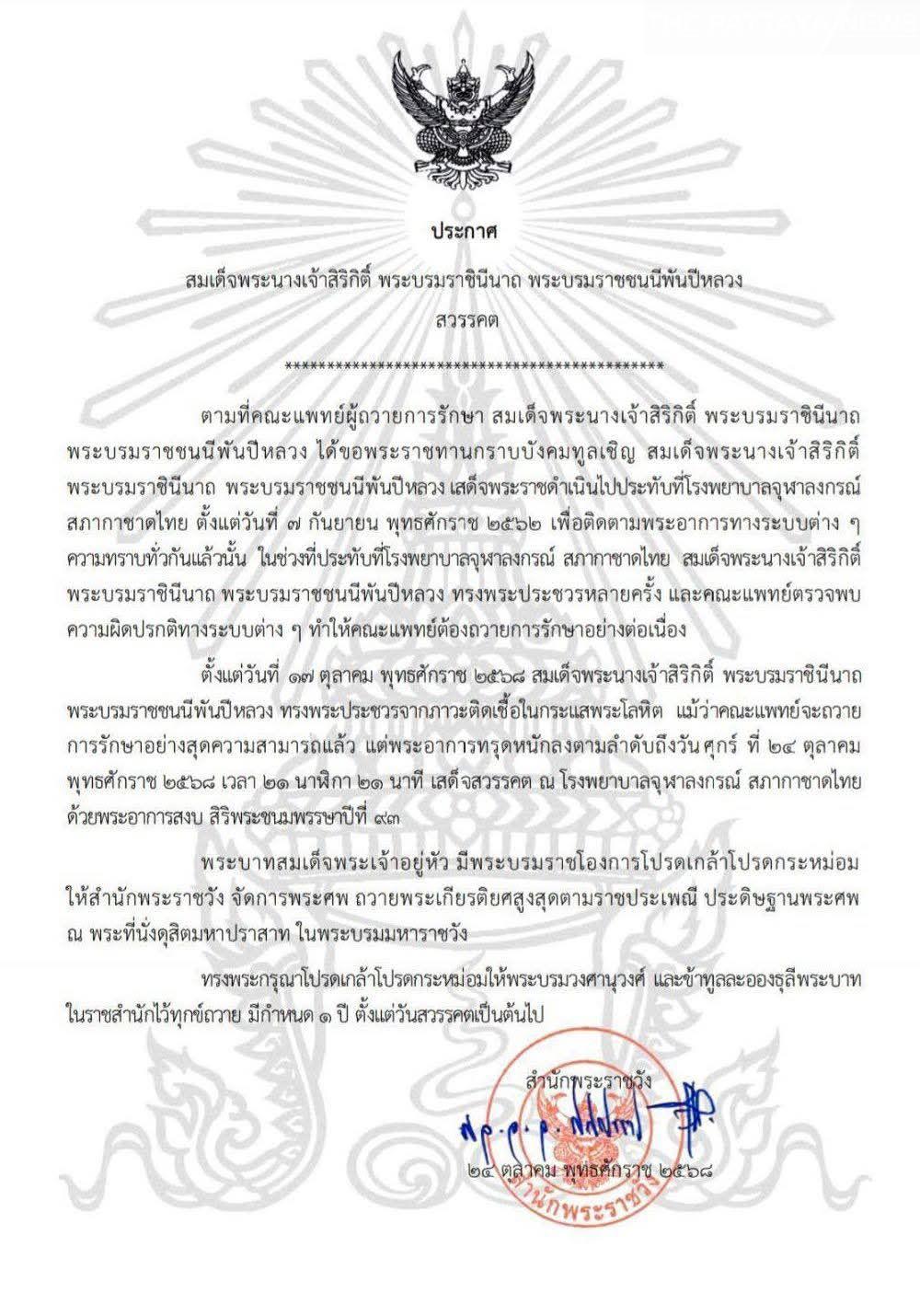
His Royal Majesty the King has issued a royal command for the Bureau of the Royal Household to arrange the funeral rites with the highest honors in accordance with royal traditions. Her Majesty's body will lie in state at the Dusit Maha Prasat Throne Hall in the Grand Palace. The King has also graciously ordered a mourning period of one year for the royal family and members of the royal court, effective from the date of her passing.
The nation mourns the loss of Her Majesty Queen Sirikit, a beloved figure whose grace and dedication to the Thai people will be remembered forever.
Bureau of the Royal Household
October 24, 2025
file photo Amid increasing cases of travellers being denied entry to Thailand , tourism operators are urging the government to consistent...