As the Covid-19 situation in Thailand worsened in the past several weeks, Prime Minister Pratu Chan-O'Cha officially gave full authority to provincial governors for curfews and tougher restrictions to control the breakout in different areas.
54 provinces nationwide have issued mask mandates with up to a 20,000 baht fine for violating. The law to prevent the spread of Covid-19 applies everywhere when you are in public places and even in your own car if with more than one person, regardless if they are family members or not.
PHOTO: Thairath
The list of provinces with mask mandates are:
Central and East
Kanchanaburi (only in markets, weekend markets, and floating markets), Prachinburi, Phetchaburi, Suphan Buri, Ayutthaya, Samut Sakhon, Lop Buri, Samut Prakan, Prachuap Khiri Khan, Chonburi, Sara Buri, Trat, Nonthaburi, Nakhon Pathom, Chanthaburi, Bangkok, Pathum Thani, Chachoengsao, Ang Thong, Sa Kaeo, and Nakhon Nayok
Sukhothai, Tak, Phetchabun, Utaradit, Lumpon, Phitsanulok, and Chiang Mai
South
Surat Thani, Trang, Nakhon Sri Thammarat, Narathiwat, Pattani, Phang Nga, Phuket, Ranong, Satun, Song Khla, and Yala
Additionally, the governors in six provinces, namely Nonthaburi, Pathum Thani, Surat Thani, Samut Prakan, Songkhla, and Samut Sakhon, have implemented a soft curfew, asking local residents not to leave their residential areas in the nighttime.
The scheduled times are:
Nonthaburi – from 9:00 PM. to 4:00 AM.
Pathum Thani – from 9:00 PM. to 4:00 AM.
Surat Thani – from 10:00 PM. to 4:00 AM.
Samut Prakan – from 9:00 PM. to 4:00 AM.
Samut Sakhon – from 11:00 PM. to 4:00 AM.
Songkhla: 10:00 PM to 4:00 AM
A variety of provinces have also implemented fourteen-day quarantines or Covid-19 tests for people traveling to them, especially from red zones. One should check in advance before traveling although the overall message right now is STAY HOME.
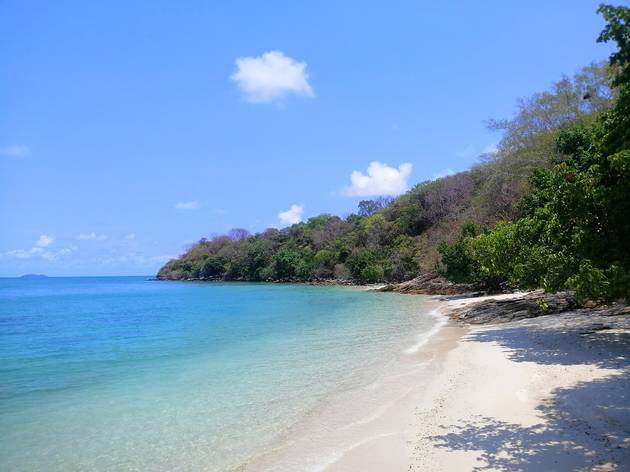
Many provinces have also closed venues above and beyond the government ordered restrictions which provincial governors have the ability to do. In some provinces, this includes massage shops, gyms, parks (such as Bangkok), alcohol sales bans everywhere in Sa Kaeo, and other provincial measures. One should check in their own province to determine what province-level restrictions may be. Some areas, like national parks or popular islands like Koh Samet or Koh Kood, have been closed entirely to the public.
There is no national Covid-19 curfew or lockdown, although the government is set to discuss further potential restrictions on Thursday.
The closure order also affects five other islands in the country.
Thailand has been facing some of the worst coronavirus crises since the very beginning of the outbreak back in early 2020. Mid-April was the start of widespread infections in Bangkok that has been affecting the whole country to regress into chaos, resulting in a series of governmental restrictions, including the closure of 31 types of venues in Bangkok and the face mask-wearing enforcement.
The upsetting events have not stopped coming, as the Facebook page of Samet National Park made an announcement last night (April 26) that Samet island, together with five nearby islands, is ordered by the government to suspend new entry to the area for 14 days in order to control and prevent the coronavirus infections. The other five islands are, namely, Koh Ku Dee, Koh Thalu, Koh Gruay, Koh Kham, and Koh Plai Tin. The area of Khao Laemya National Park is also included in the restriction.
All these aforementioned spots are widely known among both national and international tourists. Since the first phase of COVID-19 outbreak, these islands have been visited by travellers already residing in the kingdom, and now the incident has even made it more unlikely for the tourism to come back like the government had planned earlier.
The temporary closure will be in effect until at least May 10. Koh Chang, another renowned island in Trat, is considering to partake in the restriction. Stay tuned for an update.
BANGKOK (NNT) - Thailand is set to vaccinate 50 million people against COVID-19 this year with a target of 300,000 jabs daily, while the Prime Minister has ordered an improvement to the hospitalization and referral protocol for COVID-19 patients.
Prime Minister and Minister of Defence Gen Prayut Chan-o-cha has announced plans for Thailand's mass vaccination drive, with 50 million people to get their COVID-19 jabs by the end of this year.
According to a post on his Facebook page, the Prime Minister in a meeting today with his advisory team set a target of 10-15 million doses of vaccine to be supplied each month, acquired from a variety of manufacturers in a coordinated effort between the government and the private sector.
He has called for an inclusive distribution of the vaccine throughout the country, with the responsibility shared clearly between government agencies and private firms to proactively vaccinate the people.
Vaccination centers shall be set up at venues such as convention centers, sports centers, hotels, and private hospitals, to help alleviate the workload at general hospitals and the public health system currently taking care of COVID-19 patients.
The government will also encourage capable private firms to provide injections to complement the government's vaccination campaign.
With all government and private vaccination centers available, the government expects the country to give 300,000 or more jabs to the people each day, in order to achieve the 50 million people target by the end of this year or sooner.
The Prime Minister has ordered an overhaul of the screening, hospital admissions, and patient transfer protocols to improve the efficiency.
Thailand has purchased and received 2.5 million doses of Sinovac's vaccine, plus 117,600 doses of AstraZeneca's. The country has mainly been using Sinovac's vaccine in its initial phase of vaccine rollout, mostly to healthcare professionals and frontline workers.
The Chinese government will also be donating 500,000 more doses of Sinovac's vaccine to Thailand, making three million of this vaccine type available in the country.
Thailand's mass vaccination drive among the general public is scheduled to start in June with the availability of the first batch of domestically produced AstraZeneca's vaccine, with a total of 61 million doses on order.
Meanwhile, the country has reached out to the Russian government to purchase 5-10 million doses of the Sputnik V vaccine, and to Pfizer to purchase 5-10 million doses for their mRNA-based COVID-19 vaccine.
The government has also enabled private firms to order vaccines from the manufacturers to be used at private hospitals or for their employees, provided the vaccine types are first authorized for emergency use by the Food and Drugs Administration.
Hua Hin's red light district is deserted on April 12, 2021, following the closure of bars and a spike in Covid-19 cases in Hua Hin and other districts of Prachuap Khiri Khan province. (Photo by Dave Kendall)
Hua Hin is ready to follow the government's reopening plan and target vaccinated tourists without quarantine requirements in October under the Hua Hin Recharge campaign.
Krod Rojanastien, a member of the committee of Thai Chamber of Commerce, who is leading the collaboration from the private sector, said Hua Hin has the potential to be included in the reopening plan due to its reputation for wellness tourism and as a long-stay destination only a few hours away from Bangkok.
Under Hua Hin Recharge plan, the pilot areas will cover Hua Hin Municipality and the Nong Kae district, a total area of 86.36 sq km with 182 registered hotels.
Similar to the Phuket sandbox model, tourists with proof of vaccination will be able to take flights to Suvarnabhumi Airport or a private jet to Hua Hin airport. They will have to pass an RT-PCR test upon arrival and must activate Thailand Plus, a tracing application before transferring to hotels via private vehicle.
Mr Krod, who is also president of the Thai Spa Association, said operators are preparing to offer tour packages. They are also working with operators from different destinations, including Pattaya and Phuket, to swap tourists after they complete their seven-day trip in Hua Hin.
If Hua Hin Recharge can commence as scheduled, operators are expected to welcome around 100,000 international tourists, especially from China, Germany, Scandinavian nations, the UK and Japan, contributing 1.2 billion baht in tourism receipts.
"In order to achieve reopening, inoculations in Hua Hin must start by June 1 and continue until Sept 30 with the number of required doses needed being 353,498," said Mr Krod.
Of the total, there are 89,880 tourism workers who need to be vaccinated.
However, success will rely on 14 million doses to be given to 10 million people in Bangkok in May.
Mr Krod said that after discussions with the Tourism and Sports Ministry yesterday, this concept received approval but operators have to include vaccinations for people in the nearby areas also such as Pran Buri and Cha-am in Phetchaburi.
Hua Hin Recharge will be officially proposed to the National Tourism Policy Committee's meeting on May 6 before seeking further approval from the Centre for Covid-19 Situation Administration.
In this file photo, a healthcare worker prepares a syringe with a dose of Covid-19 vaccine as part of the government's inoculation programme. (Photo: Pattarapong Chatpattarasill)
The government will adopt a single command system to improve the efficiency of the national Covid-19 vaccination drive, with the aim of inoculating about 30 million people over the next three months and 50 million by the end of the year.
According to a post on Prime Minister Prayut Chan-o-cha's official Facebook page, the PM met with his advisers at Government House to discuss ways to ramp up the distribution of Covid-19 vaccines, which is a top national priority.
The government will do everything in its power to procure more doses to support the national vaccination drive, with a target to buy 10-15 million doses a month from several manufacturers, according to the post.
The government will also improve cooperation between state and private agencies to ensure broad distribution of the doses. A proactive vaccination plan will also be put in place to ease the burden on the public health system, it said.
Alternative vaccination centres will also be set up at appropriate locations, such as meeting halls, sport centres and hotels to prevent crowding at hospitals, whose main task is to look after infected patients, the post said.
At least 300,000 doses will be administered a day, with the goal of vaccinating 50 million people by the end of this year or sooner, Gen Prayut wrote in the post.
Speaking after the meeting, Danucha Pichayanan, secretary-general of the National Economic and Social Development Council (NESDC) said that the government plans to inoculate 30 million people over the next three months, or about 300,000 people a day.
At least 50 million people are expected to be vaccinated by year-end, he said.
Traisuree Taisaranakul, deputy spokesman for the government, previously said Thailand has received 2.5 million doses from Sinovac, including the recent batch of 500,000 doses which arrived on Saturday.
She said Sinovac Biotech will send one million doses to Thailand next month, which will bring the total to 3.5 million doses, Ms Traisuree said.
So far, Thailand has approved the use of Covid-19 vaccines from Sinovac, AstraZeneca and Johnson & Johnson, Mr Danucha said on Monday.
He said the government is also seeking to import the Pfizer and Sputnik V vaccines.
"The prime minister instructed all agencies involved to step up their efforts to procure more than 100 million vaccine doses by the end of this year. The vaccination drive will operate under a single command to ensure effective distribution," Mr Danucha said.
Mr Danucha said the prime minister will meet the private sector tomorrow to find ways for businesses and whole industries to procure Covid-19 vaccine doses for employees.
Tomorrow's meeting will also discuss venues which can be used to support the government's plan to inoculate 300,000 people a day, Mr Danucha said, before adding retired doctors and nurses will be asked to help with the programme.
Government spokesman Anucha Burapachaisri said Monday's meeting discussed the severity of the latest wave of infections, which has become a cause of public concern.
It was agreed at the meeting that the Centre for Covid-19 Situation Administration (CCSA) will resume its central role in the government's handling of the pandemic to ensure efficiency, as the centre had delegated some of its authority to other ministries before the latest wave, Mr Anucha said.
The CCSA has also been instructed to set up health screening centres in all 77 provinces. Major provinces, particularly Bangkok, must have several such hubs, he said.
On vaccine procurement, Mr Anucha said 28 million doses are due for delivery between May and August, and talks are underway to purchase 40 million more doses from various manufacturers.
Chonburi, Thailand- Additionally, 501 people in total have now been released from medical care and fully recovered since this current wave began, with 97 of those being released yesterday. This makes a total of 2045 cases of Covid-19 in the current round of Covid-19, with 1,543 still in quarantine/medical observation/medical care.The district-level cases were as follows today: Mueang Chonburi with 29, Si Racha 9, Banglamung (Pattaya) 33, Sattahip 1, Ban Bueng 1, Pan Thong 4, Bor Thong 3. The details on today's cases are: 1. Three cases of Covid-19 traced to a large cluster stemming originally from the Flintstone's Pub in the Don Hualor sub-district of Chonburi. There have been 171 cases since April 6th, 2021, from this venue. 2.1 Bone Pattaya- 4 people 2.2 Another Thoeng Institute in Pattaya Establishment 1 person 4. 3 close contacts of previously confirmed patients from Bangkok. 5. 2 close contacts from confirmed patients in Nakhon Si Thammarat Province 6. 1 close contact from a previously confirmed patient from Surat Thani 7. 1 close contact from a previously confirmed patient from the Nakhon Sawan Province 8. 2 close contacts from previously confirmed patients in Chonburi province. 9. 29 family members/household contacts found during the investigation and contact tracing. 10. In the process of investigation still are 33 cases.Details are other cases, as well as the death listed on today's report, was NOT given by the Public Health Office to the press or on social media.In the last day, a total of 267 close contacts were tested from contact tracing, and 68 people were tested in proactive testing when medical staff goes out into the community. All are pending results. Chonburi officials are asking people to continue to stay home, socially distance, and follow other Covid-19 related measures to control the situation.
The Center for Covid-19 Situation Administration (CCSA) which organizes and runs the Kingdom's overall Covid-19 response measures has stated through a spokesperson this morning that they are planning to discuss further restrictions and measures later this week in regards to Covid-19.
The measures had been proposed at an emergency meeting on Sunday, April 25th, by the Public Health Ministry led by Dr. Kiattiphum Wongrajit. These measures will go through several levels of approval before being discussed and potentially implemented by the overall CCSA on Thursday or Friday of this week.
It is important to note these are currently proposals and are "set in stone" to happen. However, some of them, according to Dr. Kiattiphum, are very likely to move forward.
The proposals include:
-Scrapping the current color-coding system by zone and implementing a stronger system with essentially three colors-Dark Red with "special restrictions", Red in terms of the current highly controlled measures seen in provinces like Chonburi and places like Bangkok, and orange. There would not be "lesser zones" or measures at this time as the government wants to discourage travel to zones that may have "more relaxed" rules.
-The "Dark Red" maximum control zone will have "special measures and restrictions meant to reduce points of contact" of people in those zones. Specific details on what provinces this would be or what these measures would be were not stated. The government does not want to use the word "lockdown."
-Measures to free up more hospital beds, including partnerships with hotels, sports stadiums, and other areas. Thailand has stated their policy of requiring all Covid-19 positive patients, even those who are asymptomatic, to require medical supervision and not self-isolate at home is not going to change for the time being.
These decisions should become more clear by the end of the week, as well as zones that could become "Dark Red" maximum control zones and what that would mean. Chonburi, being one of the provinces with the highest number of cases still, would likely be considered for a Dark Red zone, The Pattaya News notes.
Tyvärr tvingas vi konstatera att smittspridningen av Covid-19 ökar i Thailand. Infektionen är nu spridd till alla 77 provinser. Smittotalen är ännu så länge låga jämfört med omvärlden, men ökningstakten är markant högre än tidigare. Myndigheterna har infört nya restriktioner, inte minst har provinserna getts långtgående mandat att inför egna restriktioner, inklusive resandet. Här i Bangkok stängs flera ställen och aktiviteter helt eller delvis. Vi får anpassa oss och livet blir mer kringskuret. Jag tror inte jag är ensam om att vara rätt trött på alla digitala möten, men man får bita ihop ett tag till.
För att minska risken för smittspridning har ambassaden återinfört arbete i två olika skift och många jobbar också hemifrån. Vi vill också passa på att informera om möjligheten att få hjälp på distans med flera av våra konsulära tjänster. Längre ned återfinns en lista över vilka intyg och annat som man med fördel kan ansöka om elektroniskt utan att behöva besöka ambassaden. Nytt pass eller ID-kort kräver dock fortsatt personlig inställelse.
Jag är glad att jag trots allt hann genomföra ett par resor före de nya restriktionerna slog till. Bland annat besökte jag Chiang Mai i mitten av mars tillsammans med mina nordiska kollegor. Ett värdefullt besök med många intressanta möten, inklusive med guvernören. Uppskattade också möjligheten att få träffa (och fika med!) flera svenskar som bor i området. Har också besökt Ubon Ratchathani för att delta i invigningen av ett nytt institut för mänskliga rättigheter som är knutet till universitetet där. Provinserna Chonburi och Rayong, med besök i Pattaya, har också hunnits med. Spännande att få besöka bland annat Electrolux fabrik och Svenska Rymdbolagets verksamhet i området. Vill också lyfta fram våra honorärkonsulats fina och värdefulla verksamhet i både Chiang Mai och Pattaya.
Ambassaden fortsätter att följa den politiska utvecklingen i Thailand. Det finns alltjämt ett behov av dialog och försoning mellan olika grupper. Pågående rättsprocesser mot ledande studentrepresentanter väcker frågor. Jag deltog nyligen i Amnestys lansering av organisationens årsrapport och det finns en berättigad ökande oro över tillämpningen av landets unikt hårda majestätsbrottslagar. Vi har också behövt komplettera och skärpa till vår reseinformation med anledning av den nya utvecklingen.
Mycket av ambassadens tid ägnas åt den tragiska utvecklingen i Myanmar. Efter militärkuppen i februari har våldet och dödandet fortsatt. Hundratals människor har fått sätta livet till. Det är en förfärande utveckling som militären bär ansvaret för. Omvärldens ansträngningar fortsätter och bland andra EU har i omgångar infört sanktioner mot ledande militära företrädare. Jag hoppas att Myanmars grannar, inte minst ASEAN-länderna och Kina, nu förmås göra sitt yttersta för att våldet och lidandet upphör och det tidigare demokrati- och reformarbetet ska kunna återupptas.
Inom utvecklingssektionen arbetar vi för fullt med att ta fram den nya strategin för det regionala utvecklingssamarbetet. Ett spännande arbete som kommit långt redan och där den nya strategin kommer att gälla från årsskiftet 2021/22.
Med handelskammaren och Business Sweden jobbar vi också vidare inom Team Sweden, även om nuvarande restriktioner gör det mer svårjobbat då fysiska möten tyvärr ställs in eller skjuts upp. Men tillsammans med thailändska ambassaden i Stockholm planeras nu för en serie digitala aktiviteter med start andra hälften av maj med svenska företag där fokus ligger på samarbeten inom hållbarhetsområdet.
Jag hoppas avslutningsvis att Thailands vaccinationsprogram kan komma igång och att vi därmed sakta men säkert kan återgå till en mer normal tillvaro.
Önskar alla en fortsatt fin vår!
/Jon
Ambassaden har samlat reseinformation om covid-19 på en särskild sida som uppdateras löpande. På Covid-19: Lägesbild och reseinformation återfinns information och länkar till ansvariga myndigheter kring smittspridning i Thailand. Här finns även rekommendationer till dig som ska resa till Sverige.
One of the major reasons that road safety campaigns have failed in Thailand is their broad scope, and a failure to address the problem at its core.
Road safety campaigns, including anti-drunk driving measures for festivals like Songkran and New Year, have primarily focused on large vehicles — public buses and private vehicles.
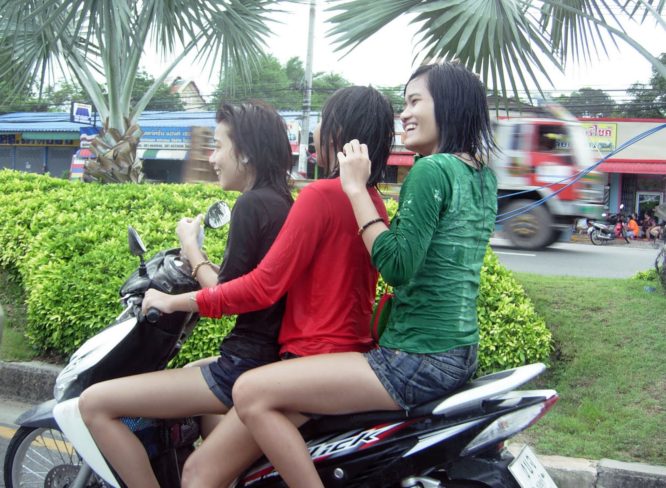
But in reality, most of the road accidents in Thailand involve motorcycles. Motorcycles accounted for 79.25% of the total accidents during the Songkran festival in 2019.
Data released by the Interior Ministry showed that 74.4% of all road accidents involved motorcycles.
Looking closer, recklessness was a major factor. Only about 53% of motorcyclists and 19% of pillion riders wore helmets.
According to the latest information from the ThaiHealth Foundation's Social Mobilisation for Motorcycle Safety Project, an average of two motorcyclists die every hour.
Furthermore, about 10 million motorcyclists in Thailand do not have driver's licences. Given that there are 21.1 million motorcycles registered with the Land Transport Department, this means almost half of the population routinely breaks the law.
Terrible example to set. Road safety campaigners were quick to point out the dangers of riding a motorbike without a helmet.
The biggest and most pertinent question is: How can the government let this happen? With such a large number of motorcyclists roaming the roads without driving licences and some without helmets, there must be something wrong with law enforcement.
There are also many motorcyclists still riding against traffic or on pavements, posing a risk not to themselves but also to the public at large.
So, the government needs to rethink its road safety campaign by targeting motorcycles.
There is no better time to start than this Songkran holiday. The government should launch a campaign about the importance of wearing a helmet — or even offer free helmets if need be.
Motorcyclists who get injured — or disabled — in a crash are a burden to the state budget one way or the other.
It will require stringent efforts on the part of the police and transport officials to discourage those who violate the law.
Without reducing the road accident rate among motorcyclists, every day including the upcoming Songkran period will be dangerous. – Bangkok Post
Phuket International Airport, April 12, 2021. Phuket, one of Thailand's top tourist havens, had an ambitious plan to reopen to the world this summer. But with a spike in cases, the island's desperate situation is unlikely to end anytime soon. (Adam Dean/The New York Times)
PHUKET: Around the corner from the teeth-whitening clinic and the tattoo parlour with offerings in Russian, Hebrew and Chinese, near the outdoor eatery with fried rice meant to fuel sunburned tourists or tired go-go dancers, the Hooters sign has lost its H.
The sign, in that unmistakable orange cartoon font, now simply reads, "ooters".
Like so much at Patong Beach, the sleazy epicentre of sybaritic Thailand, Hooters is "temporarily closed". Other establishments around the beach, on Phuket Island, are more firmly shuttered, their metal grills and padlocks rusted or their contents ripped out, down to the fixtures, leaving only the carcasses of a tourism industry ravaged by the coronavirus epidemic.
The sun, which usually draws 15 million people to Phuket each year, stays unforgiving in a downturn. The rays bleach "For Rent" signs on secluded villas and scorch greens on untended golf courses. They lay bare the emptiness of Patong streets where tuk-tuk drivers once prowled, doubling as touts for snorkelling trips or peep shows or Thai massages.
Only a few weeks ago, Phuket seemed poised for a comeback. After a year of practically no foreign tourists arriving in Thailand, the national government decided that Phuket would start welcoming vaccinated visitors in July, without requiring them to go through quarantine. The project was called Phuket Sandbox.
But the country is now gripped by its worst Covid-19 outbreak since the pandemic began, spread in part by well-heeled Thais who partied in Phuket and Bangkok with no social distancing. The confirmed daily caseload — albeit low by global standards — has increased from 26 on April 1 to more than 2,000 three weeks later in a country that had about 4,000 total cases in early December.
For months, Thailand's strict quarantines, lockdowns, border vigilance and rigorous use of masks kept the virus at bay, although the economy suffered. But even as the past couple of weeks have brought repeated daily caseload highs, the government is reacting slowly.
In early April, as cases began to mount, Prime Minister Prayut Chan-o-cha reacted with a verbal shrug.
"Whatever happens, happens," he said.
Desperate to resuscitate its tourism sector, Phuket, which had shut its airport during a Covid spike last year, continued to allow people in this spring on domestic flights, even as cases reached record highs. Only Thursday did authorities start requiring Covid-19 screening for those arriving on the island.
"If you ask me how optimistic I am, I cannot say," said Nanthasiri Ronnasiri, director of the tourism authority's Phuket office. "The situation changes all the time."
Karoh Beach in Phuket, April 11, 2021
On April 18, the tourism minister acknowledged that a July 1 opening for Phuket looked unlikely given that the plan depended on Covid being squelched in Thailand.
To prepare for Phuket Sandbox, the government funnelled many of its limited number of vaccines to the island, in hopes of achieving herd immunity by the summer. As of mid-April, more than 20% of Phuket's residents had been vaccinated. Nationwide, only about 1% of the population has received the needed doses.
"I am very relieved," said Suttirak Chaisawat, a grocery store worker who received his Sinovac vaccine this month at a resort repurposed for mass inoculations. "We all need some hope for Phuket."
While the vaccinations may have given Mr Suttirak some optimism, the present picture remains grim.
Normally at this time of year, Patong Beach's golden sands would be heaving with foreign holidaymakers.
But the beach is now almost deserted, save for a clutch of residents lining up for Covid tests at a mobile medical unit. Up the road, a monitor lizard, a creature more crocodile than newt, lumbered across the tarmac, with little traffic to impede its crossing.
Phuket's half-built condominium complexes are being reclaimed by nature — always a battle in the tropics but a lost cause when developer money dries up. Billboards for "Exclusive Dream Holiday Home" are stained by mildew and monsoon mud.
The Songkran period this month was supposed to be a dress rehearsal for Phuket's revival. Rather than foreign backpackers or business conference attendees, hotels tried to lure high-end Thai tourists who, were it not for the pandemic, might have decamped overseas for skiing in Hokkaido, Japan, or shopping in Paris.
But instead of prepping the island for its return as a global tourist haven, the Thai New Year may have wrecked the island's chances for a July reopening.
At festivals in Patong and at other beaches this month, thousands of affluent Thais partied, fewer masks in evidence than bikini tops. For some in Thailand's high society, Covid was seen as something that might infect vegetable sellers or shrimp peelers, not the jet set.
But then these beach revellers started testing positive, the virus spreading from luxe Bangkok nightclubs to Phuket.
The virus's resurgence after so many months of economic hardship is shattering for the majority of Phuket's residents, who depend on foreign tourists for their livelihoods.
As a 3-year-old elephant munched on sugar cane nearby, Jaturaphit Jandarot swung slowly in his hammock. There was little else to do.
Before the pandemic, he and the other elephant handlers on the outskirts of Patong used to lead more than 100 tourists a day, mostly from China, on 30-minute rides. Now there are no visitors.
"I was superexcited to hear they are going to open Phuket for foreign tourists," Mr Jaturaphit said. "Thai people don't ride elephants."
Whatever the state of international travel, the elephants still need to be fed. Each month, a dozen beasts consume at least 60,000 baht worth of sugar cane, pineapples and bananas. The 3-year-old, little more than a toddler in elephant years, eats as much as the adults.
Bars and nightclubs at Patong Beach that have been ordered closed because of a recent Covid-19 outbreak, April 11, 2021.
After Phuket's tin and rubber industries declined, tourism grew from a few bungalows on Patong Beach in the 1970s to a global phenomenon, attracting golfers, clubbers, yachters, sex tourists and Scandinavian snow birds.
Much of Phuket's high-end accommodation is clustered near the beach town of Bang Tao, a placid Muslim-majority community where placards for upscale wine bars mix with Arabic signs for Islamic schools.
Phuket's largest mosque is in Bang Tao, and this year the first day of Ramadan coincided with the beginning of the Songkran festivities, an auspicious augur after a year of economic hardship. The night before fasting was to begin, worshippers streamed to the mosque. Women chopped shrimp, banana flowers and armfuls of herbs for the feasting to come.
But at the last minute, Phuket authorities called off mass prayers for fear of the virus's spread. Iftar, the breaking of the fast, is taking place in homes, not at the mosque.
As authorities traced Covid-19 cases on the island to the upscale beach parties, residents of Bang Tao grew frustrated.
"We want to welcome people to Phuket, of course, but when they don't protect themselves and they bring Covid here, I'm a little bit angry," said Huda Panan, a primary schoolteacher who lives behind the mosque.
Ms Huda's husband is a taxi driver, but he has not worked for more than a year. Most of the mosque's community depended on tourism, working as concierges, cleaners, landscapers and water-sports guides. Now some locals sell dried fish and scavenge the hills for a fruit used to add pucker to a local curry — whatever they can do to survive.
On occasion, Buddhist temples, churches and mosques in Phuket distribute meals to the hungry. Lines are long. The food runs out.
"We can wait a little longer for Phuket to get better," Ms Huda said in the heat of the day as the daily fast grew long. "But not much more."
The Chonburi Public Health Office last night (April 25th) has released another short timeline to inform people who went to specific places this month to notify health authorities and monitor their health in regards to Covid-19. The following is an English translation of the release.
Woman's clothing shop (no name given) on the 2nd floor at Central Festival Pattaya Beach on April 10th to April 24th from 11:00 A.M. to 9:00 P.M..
Family Mart in Soi Na Jomtien 15, Nongprue on April 10th to April 18th and April 23rd from 2:00 P.M. to 11:00 P.M..
AKA at Central Festival Pattaya Beach on April 11th from 1:30 P.M. to 2:30 P.M..
Public transportation Nakhon Chai Air company depart from Central Pattaya on Sukhumvit Road – destination Buriram on April 13th at 8:15 P.M..
Shabushi at Central Festival Pattaya Beach on April 14thfrom 4:50 P.M. to 5:50 P.M..
Restaurant in Intercontinental Pattaya Resort on April 16thfrom 4:00 P.M. to 10:00 P.M..
KBBQ in Bang Saen on April 19th from 6:00 P.M. to 8:00 P.M..
Som Tam Larp Pupan Pawan in the Bueng sub-district, Si Racha on April 20th from 12:30 P.M. to 1:30 P.M..
Shabushi at Big C, Sattahip on April 20th from 1:00 P.M. to 2:00 P.M..
If anyone has problems with respiratory symptoms and/or a fever within 14 days from when they had visited those places, they must go to a hospital, according to the Chonburi Public Health Office.
Please inform the hospital that you visited the same place as a Covid-19 confirmed case, they continued.
The Chonburi Department of Public Health announced 104 new and confirmed cases of Covid-19 this morning. In great news, 404 people in total have now been released from medical care and fully recovered since this current wave began.
Read more about our previous story in the link below.