lördag 5 april 2025

Weak Baht Fails to Spark Tourism Boom, Safety Concerns Prevail. Thailand's tourism industry faces an uphill battle despite a weakened baht, say experts. Travellers' confidence in safety remains a bigger obstacle, with reports of scams and natural disasters looming larger than currency issues. ASEAN NOW

Photo courtesy of Asean Post


Thailand's tourism industry faces an uphill battle despite a weakened baht, say experts. The national currency's recent drop, a result of US tariff announcements, isn't attracting the hoped-for influx of tourists since similar economic trends affect other Asian currencies. 


Travellers' confidence in safety remains a bigger obstacle, with reports of scams and natural disasters looming larger than currency issues.


President Trump's tariffs affected the baht, reaching a three-month low before stabilising at around 34.15 per dollar (approx. 1,200 Baht).


However, it seems a weaker baht won't sway potential visitors, as the baht's competitive edge is lost amidst widespread regional currency depreciation.


Adith Chairattananon of the Association of Thai Travel Agents highlighted that foreign tourists continued to choose destinations like Japan, largely due to its safety record, despite a weaker yen.


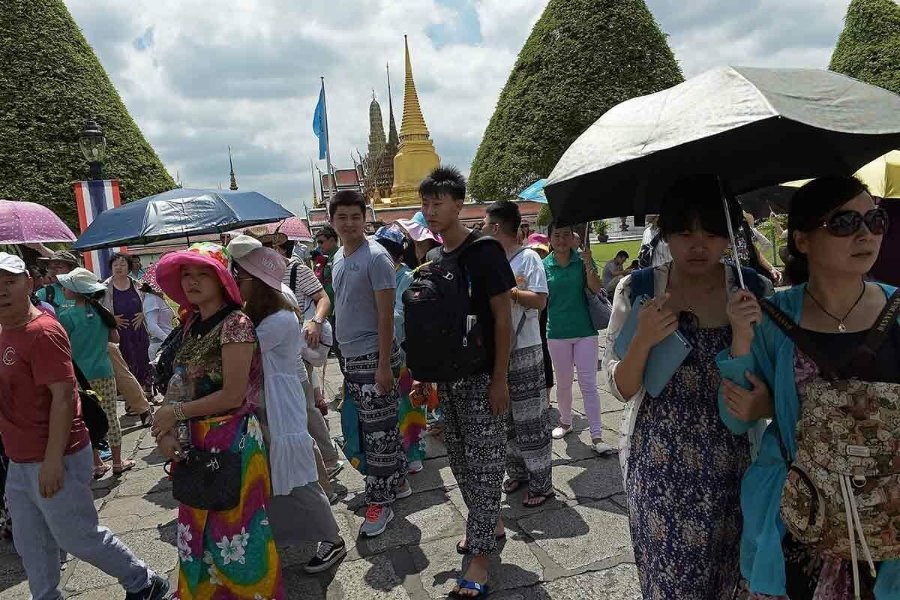
Chinese tourists, a vital demographic for Thailand, remain wary post-earthquake and following reports of scams. Even unaffected areas like Phuket aren't drawing expected numbers, with hotels reporting low bookings for the upcoming Songkran holiday starting April 11.


Suksit Suvunditkul from the Thai Hotels Association noted scant long-haul reservations during this low season, despite some beachfront resorts maintaining high occupancy.


Prospects appear clouded by global economic instability following US policies, though Phuket, having diversified its markets, may be less impacted.


According to the Thai Hotels Association's survey on April 3, major destinations like Bangkok and Chiang Mai recorded nearly a 25% drop in bookings year-on-year for the Songkran festival.


Although the weakened baht offers potential for growth, restoring confidence in safety and reliable travel experiences seems crucial. Amidst global economic uncertainties, Thailand's tourism sector remains challenged, striving to regain its former allure.


Based on a story by Bangkok Post


-- 2025-04-05

fredag 4 april 2025

Daily Earthquake Situation Update. PRD

Bangkok Post - Baht expected to skim 34.50 per dollar. The baht is expected to test a low of around 34.50 per US dollar over the next month amid heightened uncertainty following the US announcement of reciprocal tariffs of 37% on Thai imports. The baht hit its weakest level in 2.5 months on Thursday, reaching 34.38 per dollar in trade, mainly attributed to the impact of tariffs.

Baht expected to skim 34.50 per dollar
A customer exchanges currency at a branch of Travelex in Bangkok. (file photo)
A customer exchanges currency at a branch of Travelex in Bangkok. (file photo) 

The baht is expected to test a low of around 34.50 per US dollar over the next month amid heightened uncertainty following the US announcement of reciprocal tariffs of 37% on Thai imports.

The baht hit its weakest level in 2.5 months on Thursday, reaching 34.38 per dollar in trade, mainly attributed to the impact of tariffs.

During Thursday's trade, the baht tested 34.44 per dollar, the same level recorded when US President Donald Trump was sworn into office, said Kanjana Chockpisansin, head of banking and financial sector research at Kasikorn Research Center.

ADVERTISEMENT

With the US imposing a 37% reciprocal tariff on Thai imports — significantly higher than the expected range of 10-25% — the baht is likely to depreciate against the greenback, she said, weakening investor sentiment and contributing to a risk-off investment environment.

Ms Kanjana said the US tariff on Thailand would have a significant and widespread impact on the Thai economy, increasing uncertainties in the months ahead that will pressure the baht to depreciate against the dollar, despite some support from rising global gold prices.

"For the next month, we expect the baht to continue weakening, potentially testing its previous low of 34.85 per dollar," she said. "If the baht falls below this level, it could test a new support level at 35.50 per dollar."

According to Krungthai Global Markets, an arm of Krungthai Bank (KTB), the baht opened on Thursday at 34.38 per dollar, marking a sharp depreciation from the previous day's close of 34.16.

Following the US tariff announcement, the baht weakened, fluctuating between 34.07 and 34.45 per dollar.

The new tariff on Thai exports, although lower than the initial estimate of 72% by US authorities, was still higher than market forecasts, intensifying financial market pressure and driving a risk-off sentiment, said Poon Panichpibool, market strategy analyst at KTB.

Pipat Luengnaruemitchai, chief economist at Kiatnakin Phatra Financial Group, said negotiation is one avenue for Thailand to mitigate the impact of the reciprocal tariff, which should involve both internal and external discussions.

The government should collaborate with all relevant parties to manage the consequences effectively, he said.

In the initial stage, negotiations should focus on key sectors such as agriculture, food, energy and finance, said Mr Pipat.

Thailand must strategically balance opportunities and risks across industries affected by the new US tariff measures, he said.


Thailand Urged to Form ‘War Room’ in Response to US Tariffs. Thailand faces a major economic challenge as US President Donald Trump announced a 36% tariff on Thai imports. Dr. Santitarn Sathienthai, a member of Thailand’s Monetary Policy Committee, suggests the urgent creation of a “war room” to tackle the potential economic fallout. ASEAN NOW

File photo for reference only


Thailand faces a major economic challenge as US President Donald Trump announced a 36% tariff on Thai imports. Dr. Santitarn Sathienthai, a member of Thailand's Monetary Policy Committee, suggests the urgent creation of a "war room" to tackle the potential economic fallout.


Posting on Facebook, Dr. Santitarn, an adviser to the Thailand Development Research Institute, described the tariffs as an economic "earthquake" with severe global aftershocks. Many countries could erect tariff barriers, leading to deteriorating global trade.


The American market has become restrictive, making exports difficult. Consequently, countries, including Thailand, are keen to shift focus to other markets, intensifying competition. Goods from other regions might flood Thailand, complicating the economic landscape.


Although Vietnam faces a steeper 46% tariff, the Thai economy might see delayed investment from Chinese firms avoiding the US-China trade conflict. Negotiations could alter tariff levels, but the uncertainty is causing worldwide business hesitation, impacting investment immediately.


Dr. Santitarn warns that Trump's tariffs may impact Thailand's economy more than anticipated. He called for an urgent "war room" involving public and private sectors to strategize and mitigate risks. Businesses must adapt their strategies to identify opportunities amidst the crisis, as the economic impact might extend over the long term, reported Thai News Room.


-- 2025-04-03


torsdag 3 april 2025

Statement of the Prime Minister: Thailands Stance on U.S. Trade Policy and Reciprocal Tariffs - The Pattaya News

Statement of the Prime Minister: Thailands Stance on U.S. Trade Policy and Reciprocal Tariffs
The government wishes to inform the public that Thailand has signaled its readiness to engage in discussions with the U.S. government at the earliest opportunity to rebalance trade fairly for both sides, minimizing the impact on relevant sectors. A U.S. Trade Policy Task Force, established on January 6, 2025—prior to President Trump's official inauguration—has been tasked with working alongside government and private sectors. Over the past three months, this task force has closely and comprehensively monitored and assessed developments to prepare a "proposal to rebalance trade with the U.S." that is substantive enough to incentivize the U.S. to enter negotiations with Thailand. This proposal aims to minimize the impact on farmers, consumers, and businesses in related sectors. Simultaneously, Thailand may seize this opportunity to restructure production, reduce costs, and enhance long-term competitiveness in certain industries.


Bangkok Post - Thailand eager for trade talks with US. Thailand suffers 36% import tax hike under Trump’s Make America Wealthy Again.

Thailand eager for trade talks with US
Mr Vuttikrai, middle, says the US might impose additional tariffs on Thai imports in 2-3 categories, notably semiconductors, pharmaceuticals, wood and forest products.
Mr Vuttikrai, middle, says the US might impose additional tariffs on Thai imports in 2-3 categories, notably semiconductors, pharmaceuticals, wood and forest products. 

Thailand is keen to engage in constructive discussions with the US to foster mutual benefits amid trade tensions.

Higher US tariffs on Thai products could result in losses of US$7-8 billion, according to the Commerce Ministry.

Vuttikrai Leewiraphan, the permanent commerce secretary, said Thailand is prepared to navigate any trade policies from US President Donald Trump, including reciprocal tariffs expected to be announced on April 2.

ADVERTISEMENT

The US has proposed four types of tariff measures: country-specific tariffs; product-specific tariffs; tariffs on goods tied to issues such as drug trafficking, immigration and security; and reciprocal tariffs.

Mr Vuttikrai said the implications of these tariffs are notable, given that the US market makes up 20% of global trade and serves as a major partner for Thai exports.

The initial round of US tariffs has already affected Thai exports, particularly for steel and aluminium, where tariffs surged from rates of 0-12.5% to 25% for steel, and from 0-6.25% to 25% for aluminium, effective March 12.

For automobiles and auto parts, this sector is slated for tariff increases from 0-4.9% to 25%, beginning on Thursday.

He said the US might impose additional tariffs on Thai imports in 2-3 categories, notably semiconductors, which could see a 25% tariff, along with pharmaceuticals, wood and forest products.

Moreover, Thailand may face reciprocal tariffs that mirror the higher rates applied to US goods.

Thailand imposes tariffs on US industrial and agricultural products that are 11% higher than the US rate. If the US were to reciprocate with matching tariffs, the estimated loss could tally $7-8 billion, noted the ministry.

To address these challenges, Thailand is engaging with the US Trade Representative (USTR), members of Congress and other stakeholders. Although a formal meeting with the USTR has yet to be scheduled, Thailand is seeking an opportunity to discuss these issues further, said Mr Vuttikrai.

He said Thailand may consider proposing a reduction in import tariffs and increasing the volume of imports to help address the trade deficit. Potential imports could include animal feed, soybeans, beef, alcohol and aircraft.

Thai Airways is considering leasing or purchasing aircraft from the US, while the Energy Ministry has been in talks about importing crude oil, petrochemicals, natural gas and liquefied natural gas.

Meanwhile, the Thai private sector is eager to ramp up investments in the US, which would generate job opportunities in key states that strongly support Trump, said Mr Vuttikrai.

Addressing concerns regarding potential trade rule circumvention due to production shifts to Thailand, he said the Commerce Ministry is managing the situation, as the Department of Foreign Trade pinpointed 49 products at risk, with a particular focus on steel and items sourced from China.

To shield Thai businesses from negative impacts, the private sector proposed to the government two strategies.

The first is a short-term relief plan for small and medium-sized enterprises, which includes lowering interest rates and enhancing access to funding.

The second is a long-term strategy aimed at finalising free trade pacts with several markets, including the EU, to counteract the effects of US tariff retaliation.

Kriengkrai Thiennukul, president of the Federation of Thai Industries, said the private sector needs to prepare comprehensive plans and data for US tariff hikes on exports, particularly in the auto and steel industries.

Poj Aramwattananont, chairman of the Thai Chamber of Commerce, said Thailand should consider increasing imports from the US, particularly for agricultural goods such as maize, soybeans, seafood and animal offal, as well as whisky, wine and energy products.

He said the government needs to work to ensure fair and equitable negotiations on tariff quotas.


onsdag 2 april 2025

Thirty-four buildings in Thailand, including three in Bangkok, have been declared uninhabitable by the Department of Public Works and Town & Country Planning after Friday’s earthquake. Thai Enquirer


Thirty-four buildings in Thailand, including three in Bangkok, have been declared uninhabitable by the Department of Public Works and Town & Country Planning after Friday's earthquake.

The Earthquake-Damaged Buildings Inspection and Assessment Center under the Department of Public Works and Town & Country Planning, in collaboration with engineering organizations and 110 private-sector volunteer engineers, has been assessing buildings reported damaged by the recent earthquake.

Inspections have been categorized into three groups: government buildings, high-rises and commercial buildings, and residential structures.

Government Buildings:

This category includes hospitals, schools, and government offices in Bangkok.

Since March 28, inspectors have assessed 367 government buildings, with the following results:

- 334 buildings are safe for use (green).
- 30 buildings have moderate damage but remain usable (yellow).
- 3 buildings have been deemed unsafe and closed (red).

Additionally, one skybridge has been closed due to structural concerns.

High-Rises and Commercial Buildings:

This category includes hotels, condominiums, dormitories, and shopping malls, which are already subject to routine safety inspections. Owners have been advised to conduct post-earthquake assessments following official guidelines.

Since March 31, city officials have ordered 11,000 private buildings to undergo inspections, with 112 completed so far.

Residential and General Buildings:

This category covers houses, townhouses, and commercial shophouses in Bangkok. The Bangkok Metropolitan Administration (BMA) is managing inspections and assistance requests via the Traffy Fondue platform. As of April 1, residents have reported 15,514 cases, with 13,612 resolved.

For earthquake-damaged buildings outside Bangkok, the Department of Public Works has instructed provincial offices to conduct inspections in coordination with local engineers and volunteers. Special attention has been given to hospitals and government offices.

In 76 provinces, 3,008 buildings have been inspected:

- 2,796 buildings are safe for use (green).
- 181 buildings have moderate damage but remain usable (yellow).
- 31 buildings have been deemed unsafe and closed (red).

Total Buildings Inspected (March 28 – April 1): 3,375

- 3,130 buildings are safe for use (green).
- 211 buildings have moderate damage but remain usable (yellow).
- 34 buildings have been declared unsafe and closed (red).

#Thailand #Bangkok #แผ่นดินไหว #ตรวจตึก #EarthquakeThailand #Earthquake #Earthquakes

#Thailand #Bangkok #แผ่นดินไหว #ตรวจตึก #EarthquakeThailand #Earthquake #Earthquakes

tisdag 1 april 2025

Quake Hits Bangkok Condo Market: Sales to Plummet to 15-Year Low. In Bangkok, high-rise buildings are feeling the aftershock of a recent earthquake, with condo buyers' confidence shaken to its core. Damages found in many condos have homeowners worried, causing experts to predict a slump in condo sales and transfers to levels not seen since 2010. ASEAN NOW

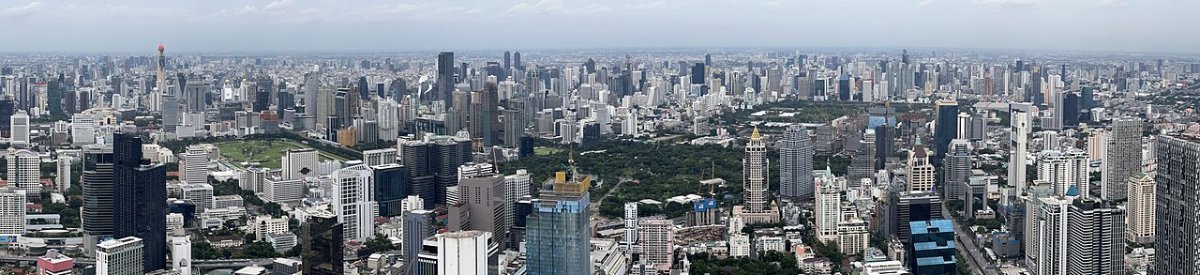
Bangkok. File photo for reference only


In Bangkok, high-rise buildings are feeling the aftershock of a recent earthquake, with condo buyers' confidence shaken to its core.


Damages found in many condos have homeowners worried, causing experts to predict a slump in condo sales and transfers to levels not seen since 2010. Industry professionals are bracing for the worst quarter for condo activity in over a decade.


Phattarachai Taweewong from Colliers Thailand reports that potential buyers and existing condo owners are hesitant, impacting sales for high-rise units.


Buyers with pending transfers are expected to delay as they assess the post-earthquake safety of buildings. New condo sales in April-June 2025 could hit a new low, following the previous low of 19 billion baht in mid-2024.


Looking at supply, 31.4 billion baht worth of condos in Greater Bangkok are scheduled for transfer by mid-2025. This compares to a 33 billion baht transfer scheduled in early 2025, with both numbers well below the peak of 85.9 billion baht seen in late 2024.


With a substantial unsold inventory of 458.4 billion baht, the market is flooded with options for wary buyers.


However, the silver lining lies in the low-rise housing market. These homes, seen as safer investments, are predicted to see stable or increased sales.


Surachet Kongcheep from Cushman & Wakefield notes that confidence in condos will take time to rebuild, and developers are urged to focus on safety reassurances. Comprehensive safety inspections and certifications are critical to restoring trust.


Developers may face a wave of cancellations, especially for new transfers. Many are delaying new project launches and marketing efforts until the market stabilises.


As the property market navigates these uncertain times, the emphasis remains on building safety and consumer confidence.


Based on a story by Bangkok Post


-- 2025-04-01


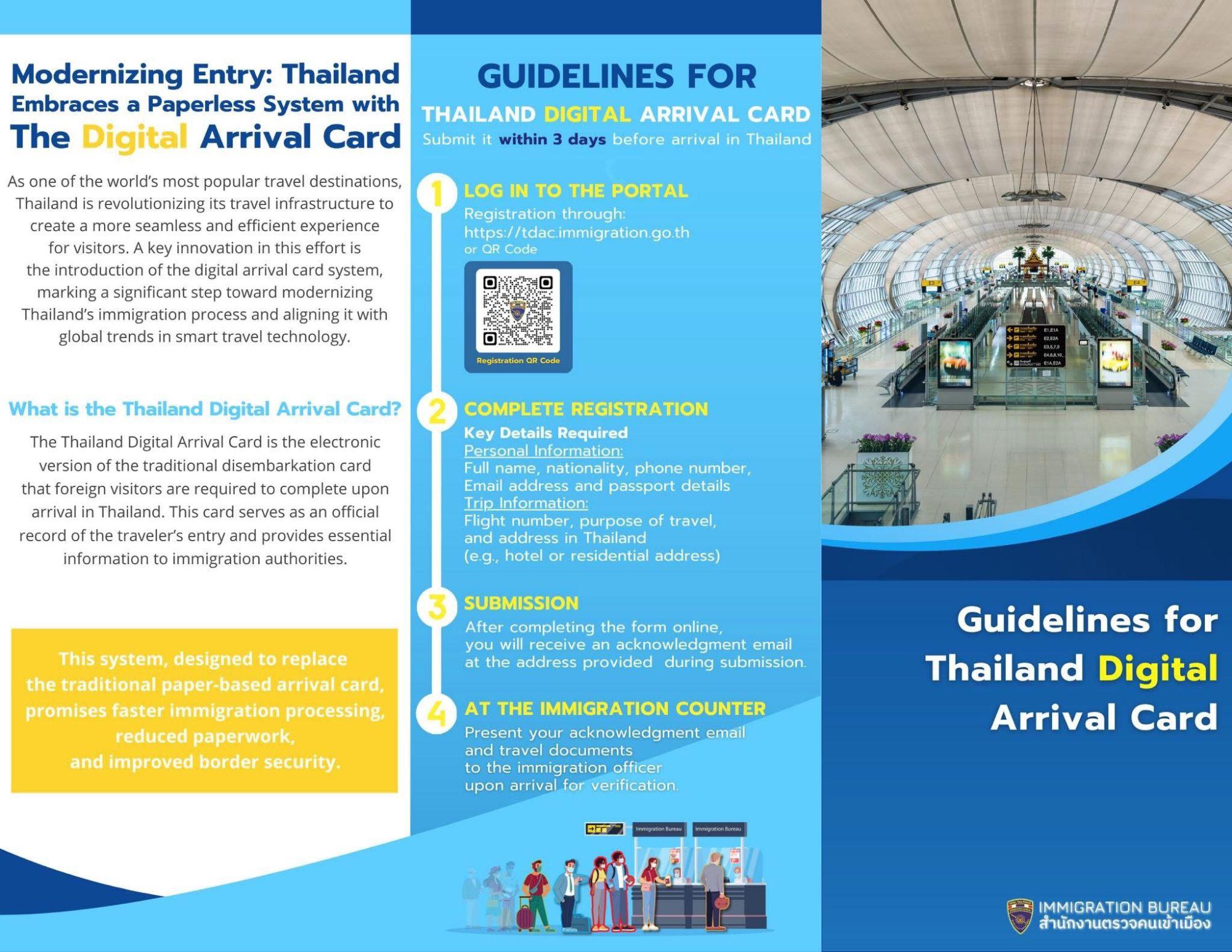
Thailands Upcoming Mandatory Digital Arrival Card Faces Online Backlash. As Thailand prepares to roll out its Digital Arrival Card (TDAC) on May 1, 2025, replacing the paper-based TM6 form, the initiative is meeting with a wave of criticism online.- The Pattaya News

Thailands Upcoming Mandatory Digital Arrival Card Faces Online Backlash

Thailand

As Thailand prepares to roll out its Digital Arrival Card (TDAC) on May 1, 2025, replacing the paper-based TM6 form, the initiative is meeting with a wave of criticism online.

Intended to modernize immigration and streamline tourist entry, the TDAC requires all foreign travelers to submit personal and travel details digitally before arrival as we detailed here in depth at TPN Media. However, instead of enthusiasm, the response from netizens has been largely negative, with frustration and confusion dominating the conversation.

Travelers have taken to platforms like X and Facebook to voice their concerns. Many argue that the shift to a digital system adds unnecessary complexity to an already straightforward process. One user lamented that scrapping the TM6 was a smart move, only for this "hot mess" of a replacement to undo that progress, calling it an annoyance that fails to enhance security or efficiency.

Others have pointed out practical issues, such as the lack of clarity around the application process, with reports of a glitchy website and an unhelpful video tutorial fueling the discontent. For those less tech-savvy, like elderly travelers or those with potential language barriers, the absence of a clear backup plan has sparked worries about accessibility.

Foreign residents of Thailand have added their own grievances to the mix, particularly over a glaring apparent oversight in the TDAC application: It currently doesn't allow users to select Thailand as their place of residence. Expats and long-term visa holders have flooded online forums and social media with complaints, arguing that the system seems designed solely for tourists, leaving them in a bureaucratic limbo. One X user, a retiree living in Chiang Mai, vented that after years of calling Thailand home, they're now forced to misrepresent their status or risk rejection at the border. This flaw has intensified perceptions that the rollout was poorly thought out, alienating a key group of Thailand's international community.

Social media posts also highlight fears of delays and technical hiccups. Commenters have questioned what happens if a QR code—meant to be presented at immigration—fails to generate, leaving travelers stranded after expensive flights. The integration with systems like e-Visa and tourist fee collection has some wondering if this is less about convenience and more about data harvesting or future fees, further souring perceptions.

While Thai officials tout the TDAC as a step toward efficiency and safety, the online reaction suggests a rocky road ahead, despite officials also saying there will be ample backup options to help people through Immigration who struggled with the form. With the launch date looming, the chorus of skepticism could pressure authorities to address these concerns—or risk alienating the very tourists and residents they aim to accommodate.


Thai Hotels Report 8-10 Percent Early Check-Outs After Recent Earthquake. The most affected areas include Bangkok, Chiang Mai, Chiang Rai, and Ayutthaya, while some travelers have chosen to change their destination to Pattaya or Phuket instead. - The Pattaya News

Thai Hotels Report 8-10 Percent Early Check-Outs After Recent Earthquake

National

Thailand sees a rise in early hotel check-outs after the recent earthquake.

Thai Hotels Association (THA) President Mr. Thienprasith Chaipattaranan revealed that following the earthquake in Myanmar, which was felt in Thailand, hotel members reported that 8-10% of tourists nationwide opted for early check-outs. The most affected areas include Bangkok, Chiang Mai, Chiang Rai, and Ayutthaya, while some travelers have chosen to change their destination to Pattaya or Phuket instead.

The association expected the earthquake to cause a short-term decline in foreign tourists' confidence over the next two weeks. This includes those who had already booked trips but decided not to come and those still considering their travel plans who may now postpone their visits. As a result, the hotel and tourism industry is projected to lose at least 10-15% in revenue.

Additionally, the THA anticipated that the earthquake's impact will extend into the upcoming Songkran festival, despite reassurances by the Thai Government that the festival would be held normally. It is estimated that it will take about a month for the situation to return to normal.

"The collapse of a building in Chatuchak has gone viral globally. It is now important to restore tourist confidence ahead of this year's Songkran festival," Mr. Thienprasith stated.


måndag 31 mars 2025

Earthquake Panic Empties Andaman Coast: Tourist Numbers Plunge. The Andaman coast is seeing an exodus of tourists following last Friday's powerful earthquake in Myanmar. Trang Deputy Governor Anan Boonsamran, reports over half the visitors have vanished amid a frenzy of misleading social media posts. These claims, though unfounded, have led to widespread panic, causing visitors to cancel their plans. ASEAN NOW

Quake Jolts Thai Tourism: Rising Concerns Over Safety. The tourism sector, vital to Thailand's economy, is bracing for a short-term impact as Minister of Tourism Sorawong Thienthong assured tourists of their safety. Meanwhile, an audit of hotels and tourist attractions is underway to ease fears. ASEAN NOW

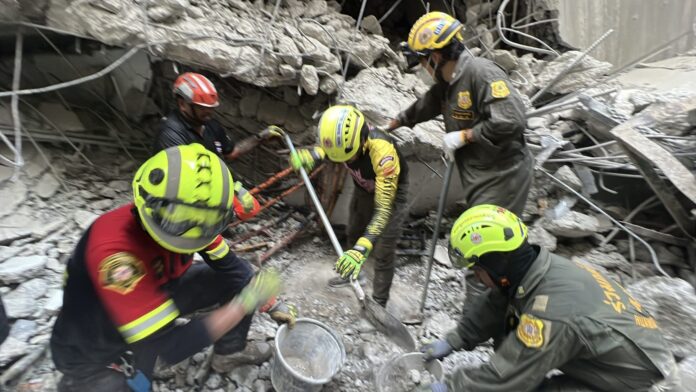
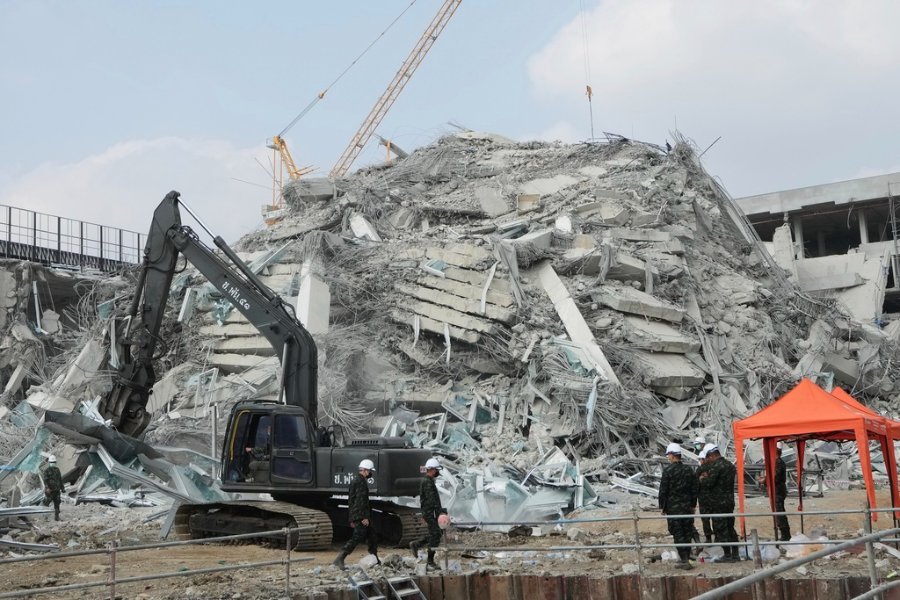
Rescuers use a heavy duty machine to clear the rubble in Bangkok, Thailand, Saturday, March 29, 2025, as they search for victims at the site of a high-rise building under construction that collapsed after Friday's earthquake. (AP Photo/Sakchai Lalit)


The recent 7.7 earthquake in Myanmar has shaken up Thailand's tourism, already wobbling under safety concerns.


The quake, which rocked buildings in Bangkok and other hot spots, may cause a drastic 10%-15% drop in international tourist arrivals over the next fortnight, according to the Thai Hotels Association. Concerns over safety have already led 10% of foreign tourists to check out early, though some returned due to lack of alternatives.


The tourism sector, vital to Thailand's economy, is bracing for a short-term impact as Minister of Tourism Sorawong Thienthong assured tourists of their safety. Meanwhile, an audit of hotels and tourist attractions is underway to ease fears.


The economy, where tourism fuels employment for about 20% of the workforce and accounts for 13% of GDP, is already striving for a 3% growth amid trade export challenges.


While Bangkok faced structural damage, most notably the tragic collapse of a high-rise construction site leading to fatalities, the swift assurance from Thai authorities aims to bolster tourism confidence.


Although the bustling Songkran festival approaches, current bookings are below pre-pandemic levels, reflecting persistent safety concerns. Chinese tourists, a significant demographic, remain hesitant due to past regional safety issues.


Despite the tremors, the year-to-date figures show a slight increase in tourism numbers, reaching 8.9 million, yet challenges remain with falling numbers since February's Lunar New Year surge.


Experts predict a potential decline from the forecasted 38.1 million arrivals this year, highlighting the urgent need to address safety perceptions. For Thailand, known for its enchanting beaches and cultural sites, the quake is yet another bump on an already rocky road in tourism recovery.


Based on a story by Bangkok Post


-- 2025-03-31


Bangkok Post - Bangkok buildings evacuated amid reported vibrations, cracks

Bangkok buildings evacuated amid reported vibrations, cracks
People are evacuated from buildings at the Government Complex in Laksi district, Bangkok. (Photo: Government Complex)
People are evacuated from buildings at the Government Complex in Laksi district, Bangkok. (Photo: Government Complex) 

Several buildings in Bangkok were evacuated late Monday morning amid reports of vibrations and cracks appearing in the buildings.

The evacuations occurred about 10am. Affected premises included Building A of the Government Complex on Chaeng Watthana Rd, the Ministry of Labour in Din Daeng district and court buildings on Ratchadaphisek Road.

People were also cleared from the headquarters of Government Housing Bank in Huai Khwang district, the Criminal Court on Ratchadaphisek and the Social Security Office in Din Daeng.

At the Government Complex and the Ministry of Labour there were reports of vibrations and cracks appearing.