måndag 9 juni 2025

Visa runners and hoppers to Cambodia affected by martial law imposition. This means that military orders are superior to civilian laws in affected border areas. The Thai army can, if necessary, close any or all border crossings without the approval of any civilian authorities.- Pattaya Mail

Visa runners and hoppers to Cambodia affected by martial law imposition

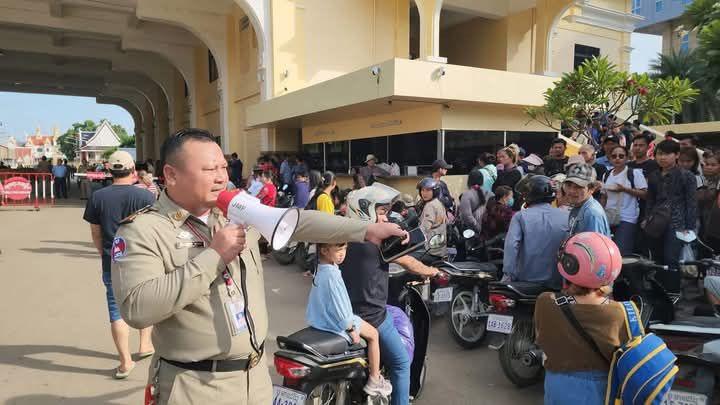
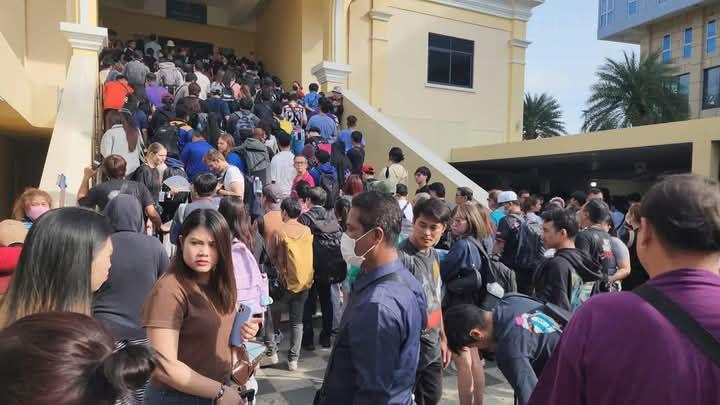
Long queues form at the Poipet Thai-Cambodian border, May 8 2025.

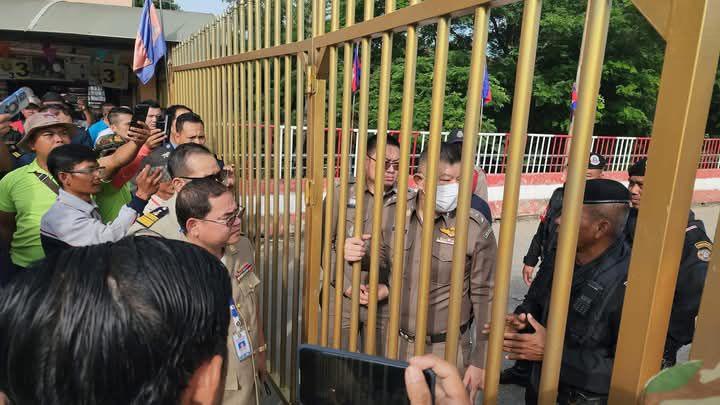
Most Thai-Cambodian border posts remain open or semi-open, but travel and visa agencies report inevitable disruption and delays. Using the 1914 martial law act, Thai army chief Gen Pana Klaewplodthunk has granted regional army units full authority to manage checkpoint operations on a case by case basis in seven provinces and at (currently) 16 crossing points. This means that military orders are superior to civilian laws in affected border areas. The Thai army can, if necessary, close any or all border crossings without the approval of any civilian authorities.

Although martial law is usually associated with military coups in Thailand, strictly regional implementation in a security emergency has several precedents. For example, it has been enforced on several occasions in three of Thailand's southern provinces with a secessionist Muslim movement wanting union with Malaysia. Martial law nationally was last declared by army leader General Prayut Chan-o-cha 48 hours before a bloodless coup in 2014.

Some border posts on the Thai side are now operating from 8 am to 4 pmrather than 6 am to 6 pm. They include the popular crossings at Aranyprathet-Poipet and Pong Nam Ron (Hot Water Spring) in Chanthaburi province popular with Pattaya-based hoppers. Latest reports say foreign tourists are not being hassled, but long queues have formed whilst ID checks are carried out on Thai nationals and local Cambodian traders.

In the eastern province of Trat, the Hat Lek checkpoint opened at 8 am on the Thai side but an hour later on the Cambodian. At some posts six wheel trucks are banned from entry and Thais hoping to visit casinos are being "discouraged". There are reports that some smaller posts in Trat and Ubon Ratchchathani are only open mornings for two or three days a week. The disputed northern border Emerald Triangle where a Cambodian soldier died after an exchange of gunfire last month is particularly sensitive.

Some foreigners are using land border crossings between Thailand and Laos or Malaysia which are unaffected, if busier than usual. Others are travelling by air. Those still persevering with Cambodian border posts are being advised to take the advice of Thai visa agencies which use minibuses for same-day service. Khun Veerut, who owns a fleet of minibuses in Pattaya, said, "Believe me, we won't be wasting our or your time unless we are sure that the border post can process customers efficiently."

There is at present a jumble of options for settling the border crisis. Both China and Malaysia have offered mediation in the 20 years old dispute, whilst ASEAN in theory has mechanisms to deal with members' quarrels. Cambodia wants to take the whole dispute to international arbitration, whilst Thailand wants direct negotiations between the two protagonists. The basic problem is that when Thailand and Cambodia make their public case, they produce different maps drawn up in vague colonial treaties more than a hundred years ago. 


Explainer: The Current Cambodian and Thailand Border Dispute Explained in Simple Terms. The Cambodia-Thailand border dispute remains a complex issue driven by history, nationalism, and unresolved territorial claims. While both sides express a desire for peace, the risk of further clashes persists due to the sensitive nature of the disputed areas.- The Pattaya News

Explainer: The Current Cambodian and Thailand Border Dispute Explained in Simple Terms

The Cambodia-Thailand border dispute is a long-standing issue rooted in historical territorial claims, colonial-era mapping, and nationalist sentiments. The conflict, centered around areas like the Preah Vihear Temple and other border regions, has flared up periodically, with the most recent escalation occurring in May and June of 2025. This article provides a clear and factual overview of the dispute's history, what triggered the latest tensions, and the situation as of June 8, 2025, for readers unfamiliar with the topic.

Historical Background

The Cambodia-Thailand border dispute traces back over a century, primarily tied to the 817-kilometer border established through treaties between France (Cambodia's former colonial power) and Siam (modern-day Thailand) from 1867 to 1907. A key issue stems from a 1907 French-drawn map that Cambodia uses to claim territories, including the area around the Preah Vihear Temple, while Thailand contests its accuracy, arguing the border should follow natural watershed lines.

The Preah Vihear Temple, an 11th-century Khmer Hindu temple in the Dângrêk Mountains, is at the heart of the dispute. Built during the Khmer Empire, which once controlled parts of modern Thailand and Cambodia, the temple's ownership has been contested due to its cultural and historical significance. In 1962, the International Court of Justice (ICJ) ruled that the temple and a small surrounding area belong to Cambodia, a decision Thailand disagreed with and continues to dispute regarding adjacent lands. The ICJ reaffirmed this in 2013, ordering Thai troops to withdraw from the area. However, believing the ICJ is biased to Cambodia, due to the France involvement, Thailand has essentially not recognized their authority or jurisdiction since 1960.

Other disputed areas include the Ta Moan Thom, Ta Moan Toch, and Ta Krabei temples (called Ta Muan Thom, Ta Muan Toch, and Ta Kwai in Thailand) in Cambodia's Oddar Meanchey province and Thailand's Surin province, as well as the Emerald Triangle (Mombei area) near the borders of Cambodia, Thailand, and Laos, and Koh Kood South of Pattaya. These sites fuel nationalist tensions due to their historical and cultural importance.

Tensions escalated significantly in 2008 when Cambodia successfully registered Preah Vihear as a UNESCO World Heritage Site, prompting Thai protests and military buildup. Between 2008 and 2011, clashes in the region killed around 40 people, including civilians, with a notable weeklong artillery exchange in 2011. Despite a 2000 Memorandum of Understanding establishing a Joint Boundary Commission (JBC) to resolve border issues peacefully, progress has been slow, with only 13 of 24 border segments demarcated as of 2022.

What Triggered the Latest Conflict?

The current escalation began on May 28, 2025, when a brief firefight broke out near Morokot village in Cambodia's Preah Vihear province (known as the Chong Bok area in Thailand's Ubon Ratchathani province). A Cambodian soldier was killed, and both sides accused the other of initiating the clash. Cambodia claimed Thai forces fired first on a Cambodian patrol, while Thailand stated that Cambodian soldiers entered a disputed area, prompting Thai troops to respond after failed negotiations.

This incident followed earlier tensions in February 2025, when Cambodian troops and their families entered the Ta Moan Thom temple, sang the Cambodian national anthem, and clashed verbally with Thai forces. Additionally, Thai sources reported that Cambodian soldiers burned a Thai-built pavilion in the Chong Bok area in March 2025, further escalating friction. These events, combined with ongoing disagreements over undemarcated border areas, set the stage for the May clash.

Current Situation (June 8, 2025)

As of June 8, 2025, the situation remains tense but has not escalated into large-scale conflict. Both countries have reinforced their military presence along the disputed border, with Thailand citing "worrisome" signs of Cambodian military buildup. The Thai military has stated it is prepared for a "high-level operation" to defend its sovereignty, while Cambodia stresses its defensive stance and commitment to international law.

Diplomatic efforts are ongoing. On May 29, 2025, the army chiefs of both nations—Cambodia's Mao Sophan and Thailand's General Pana Claewplodtook—met at a border checkpoint in Surin province to de-escalate tensions. Both sides agreed to pursue dialogue through the JBC, with a meeting scheduled for June 14, 2025. However, Cambodia has announced it will exclude four disputed areas (Ta Moan Thom, Ta Moan Toch, Ta Krabei, and the Emerald Triangle) from JBC talks.

Cambodian Prime Minister Hun Manet has called for calm and respect for international legal frameworks, while Thailand's Prime Minister Paetongtarn Shinawatra has expressed a commitment to peaceful resolution despite domestic pressures from nationalist groups.

On June 7, 2025, Thailand closed two border crossings to tourists as a safety measure, tightened hours at six others, and banned six-wheeled vehicles at some checkpoints, though trade and worker crossings remain unaffected. Social media posts reflect heightened nationalist sentiments, with images of military exercises circulating, but both governments continue to pledge peaceful resolutions.

Key Points to Understand

  • Historical Context: The dispute originates from colonial-era mapping and competing claims over culturally significant sites like the Preah Vihear Temple, awarded to Cambodia by the ICJ in 1962 and 2013, though Thailand disputes surrounding areas.

  • Recent Trigger: A May 28, 2025, clash in the Chong Bok/Morokot village area, resulting in a Cambodian soldier's death, reignited tensions, fueled by earlier incidents like the February 2025 Ta Moan Thom event.

  • Current Status: Both nations are reinforcing troops but engaging in diplomatic talks, with a JBC meeting planned for June 14. Cambodia seeks ICJ intervention, while Thailand favors bilateral solutions, and border crossings face restrictions.

The Cambodia-Thailand border dispute remains a complex issue driven by history, nationalism, and unresolved territorial claims. While both sides express a desire for peace, the risk of further clashes persists due to the sensitive nature of the disputed areas.


lördag 7 juni 2025

News management by Thai government sorely needed. As international tourist numbers fall and expat numbers remain in the doldrums, Thai authorities need to take steps to reverse the trend. There is negative news on practically a daily basis, publicized by local and social media and highlighted by the British press in particular.- Pattaya Mail

News management by Thai government sorely needed
International tourism policy in Thailand lacks a unified government response.

WEEKEND EDITORIAL

As international tourist numbers fall and expat numbers remain in the doldrums, Thai authorities need to take steps to reverse the trend. There is negative news on practically a daily basis, publicized by local and social media and highlighted by the British press in particular. Several popular daily UK newspapers have online Thailand pages only too happy to report awful conditions in Thai jails, public urination and other salaciousness. It's called clickbait, it's universal and we all have to live with it on a daily basis.

The news is the news, as Dr Goebbels used to say, but the Pheu Thai administration doesn't help in the policy arena. Take the mess-up about expats and income tax on transmitted overseas income. Longstay foreigners spent last year worrying about the Thai revenue department, only to be told earlier this year by the finance ministry that there had been a rethink. But we still don't know the small print as the promised ministerial order, when eventually written, has first to go to the Council of State and the Cabinet. More delays, head-scratching and damaging speculation.

Or take the TDAC (Thai Digital Arrival Card) initially announced as a friendly, online version of the old and discarded landing card written in scrawly handwriting. Then, amid a flurry of publicity about foreign criminals abusing Thai hospitality, we discover it's actually a rigorous police check linked to other government data bases. Public cameras in crowded spaces can also snap passersby and use artificial intelligence to check if they are on any "lists". Many – maybe most – other countries have adopted similar technologies, but Thai spokespersons somehow manage to give the false impression that this is a police state like no other

Not to mention visas. When the 60 days visa exempt discretion was introduced for 93 countries in July 2024 without any checks or paperwork of any kind, the Thai government realized (or should have) that there were bound to be abuses. Widespread illegal working, mule bank accounts galore and corrupt practices by police and bank officials were all predictable. Then there's the Destination Thailand Visa, a variety of non-immigrant visas and the schemes to encourage rich businessmen and wealthy retirees – Long Term Residence and Privilege – which have led to a somewhat bewildering field of choices.

Involvement now goes way beyond the Interior Ministry and Immigration, with the Ministries of Foreign Affairs and Tourism as well as the Board of Investment now apparently deciding some policies. Too many competing agencies and a lack of coordination are plain to see. Even the current crackdown on tourists opening bank accounts reflects confusion between banks and the Ministry of Finance. The former say they are acting under strict government orders whilst the latter says there's room for discretion.

In other words, international tourism in Thailand is the responsibility of too many competing departments. A single agency – responsible for marketing, visas and the media – is urgently required as suggested gingerly by deputy prime minister Anutin Charnvirakul, even though the practicalities are doubtless titanic. With a huge financial dependence on tourism, Thailand risks being overtaken by regional competitors only too keen to boost their national coffers at her expense. The case for overall tourism reform, both in formulating policy and making public announcements, is now overwhelming. A single governmental voice won't solve all the problems by any means. But it sure is necessary.


torsdag 29 maj 2025

Bangkok Post - Bangkok Bank tightens account rules for some foreigners. Bangkok Bank has adopted stricter requirements for opening new deposit accounts in Thailand for foreign customers, affecting tourists and potentially any expats who do not hold long-term visas. It said new conditions apply to opening new accounts and applications for credit cards and mobile banking services.

Bangkok Bank tightens account rules for some foreigners

Bangkok Bank has adopted stricter requirements for opening new deposit accounts in Thailand for foreign customers, affecting tourists and potentially any expats who do not hold long-term visas.

The bank said the tighter conditions align with Thailand's efforts to improve cybersecurity and combat financial scams.

It said new conditions apply to opening new accounts and applications for credit cards and mobile banking services. The aim is to prevent financial fraud, particularly the use of so-called mule accounts.

ADVERTISEMENT

The adjustment could affect certain foreigners, it said, and clients experiencing difficulties with financial transactions are encouraged to contact the bank through any of its available channels.

"If a customer is classified as suspicious under regulatory requirements, identity verification with the bank is mandatory," said a statement issued by Thailand's largest bank by total assets.

Foreign customers of other commercial banks are also encouraged to contact them if they have any concerns about the status of their accounts, given the likelihood that they too will adopt the new standards.

According to the Facebook page of the Bangkok Community Help Foundation, Bangkok Bank has reportedly begun freezing accounts and blocking the cards of Russian nationals who fail to meet the new eligibility criteria.

"There are also rumours that the bank may apply similar measures to all nationalities that don't meet the new criteria, raising serious concerns across Thailand's diverse foreign resident and traveler communities," it said. "If you have a Bangkok Bank account and don't meet the requirements we advise to contact the bank as soon as possible."

Russians having trouble

Some Russian nationals have also posted notes on social media saying they were having trouble accessing their accounts.

The official Russian news agency TASS quoted a BBL spokesperson as saying it stopped opening new accounts for foreign tourists, regardless of where they are from, at the beginning of this year.

"Since January, Bangkok Bank has been operating under new rules. Foreign tourists are no longer allowed to open bank accounts here," TASS quoted the spokesperson as saying.

"This also applies to holders of the Destination Thailand Visa (DTV), which allows them to stay in the country for up to 180 days, because it is categorised as a tourist one."

Commenting on reports that some Russians had had their accounts blocked, the spokesperson said: "I can't confirm that an account being blocked necessarily means it will be closed. In certain cases, bank clients are asked to come to the office to sort out the situation. Sometimes, we need to do a face scan so that we can confirm their biometric data."

To open new deposit accounts, the bank now requires applicants to hold long-term visas, be married to Thai nationals or own property in Thailand, among other criteria.

"An account with Bangkok Bank can be opened by foreigners present in the country under retirement or non-immigration visas," she stressed. The latter are issued to foreign nationals who come to the kingdom to work, study or due to family reasons. These people normally have work permits issued by Thai authorities.

Central bank push

Last week, the Bank of Thailand reiterated that in cases where foreigners wish to open deposit accounts in Thailand, banks are required to adopt stricter procedures for verifying identity documents and conducting thorough customer due diligence.

"If the process does not comply with central bank regulations, banks must take immediate corrective action," said Daranee Saeju, assistant governor for financial consumer protection and payment systems supervision.

The central bank's move follows a case last week in which four employees of an unidentified commercial bank (not Bangkok Bank) in Pattayafacilitated the opening of accounts that were later used for criminal activities by a call centre scam syndicate.

Ms Daranee said the central bank is preparing to issue new digital fraud management guidelines, enhancing "know your customer" and customer due diligence procedures to reduce the risk of financial scams.

Under the upcoming guidelines, banks will be required to verify not only customers' identities but also additional information. For instance, banks must cross-check client names against the mule account database of the Anti-Money Laundering Office and assess the risk of misuse.

Furthermore, banks must carry out customer profiling based on risk levels and adopt suitable risk mitigation measures, such as setting daily transaction limits or lowering the deposit amount for accounts opened via facial recognition.


Foreign Nationals Face Account Bans in Bangkok Bank Crackdown. Bangkok Bank has tightened account-opening rules for foreign nationals in Thailand, raising concerns among tourists and expats without long-term visas. This move is part of a broader effort by Thai authorities to crack down on financial fraud and the misuse of "mule" accounts. ASEAN NOW


BANGKOK – Bangkok Bank has tightened account-opening rules for foreign nationals in Thailand, raising concerns among tourists and expats without long-term visas. This move is part of a broader effort by Thai authorities to crack down on financial fraud and the misuse of "mule" accounts.


As the country's largest bank by assets, Bangkok Bank now requires foreigners to meet stricter eligibility criteria to open deposit accounts, apply for credit cards, or use mobile banking services.


Effective since January, these new conditions aim to bolster national cybersecurity efforts and prevent criminal syndicates from exploiting the banking system. In practical terms, tourists, including those on the newly introduced Destination Thailand Visa (DTV), are now prohibited from opening accounts with Bangkok Bank. Only foreigners with long-term visas, property ownership, or Thai spouses qualify under the updated requirements.


A Blow to Short-Term Visitors


This policy shift marks a significant change for travellers who have relied on local bank accounts for convenience during extended stays. It adds a layer of complexity for digital nomads and seasonal expats without permanent residency or work permits.


A Bangkok Bank spokesperson confirmed to Russia's TASS news agency that the policy applies to all tourists, regardless of nationality.


It includes DTV holders, who are technically classified as tourists despite being allowed to stay for up to 180 days. Social media posts, especially from Russian nationals, suggest the bank has started freezing accounts or restricting access for those who don't meet the criteria.


While some users report being locked out, the bank clarifies that not all blocked accounts are closed. In some cases, customers must visit a branch to verify their identity, including biometric scans.


Ripples Across the Foreign Community


The Bangkok Community Help Foundation, a local non-profit, has received reports of account issues affecting foreigners. "There are also rumours that the bank may apply similar measures to all nationalities who don't meet the new criteria, raising serious concerns across Thailand's diverse foreign resident and traveller communities," the group stated on its Facebook page.


Expats and travellers with existing accounts are urged to check their status and contact the bank if in doubt. This policy shift raises fears that other Thai banks may follow suit, imposing strict measures in response to rising fraud concerns.


Central Bank Sets the Tone


These changes come amid pressure from the Bank of Thailand, requiring financial institutions to enhance identity verification and due diligence processes. Recently, the central bank highlighted a case in Pattaya where four bank staff, not from Bangkok Bank, were implicated in opening mule accounts for call centre scams.


Daranee Saeju, assistant governor for financial consumer protection, confirmed that new digital fraud guidelines are being developed. These will require banks to screen customer names against the Anti-Money Laundering Office's database, assess individual risk profiles, and enforce stricter transaction limits as necessary.


"If the process does not comply with central bank regulations, banks must take immediate corrective action," Ms. Daranee said.


What Foreigners Need to Know


Currently, Bangkok Bank stipulates that only those with long-term residence, such as retirees, foreign workers, or individuals married to Thai nationals, can open new accounts. These individuals typically hold work permits or non-immigrant visas issued for employment, study, or family reasons.


The message to tourists is straightforward: if you're here for a short stay, don't expect to open a local account. If you already have one, it's advisable to verify your continued eligibility.


Though well-intentioned, this financial crackdown represents a sudden and disruptive development for many in Thailand's foreign community, potentially complicating financial management in the Land of Smiles.


  Adapted by ASEAN Now from Bangkok Post 2025-05-28


måndag 26 maj 2025

Pattaya named one of ASEAN's safest cities — but expats aren’t buying it and share their own stories. When Pattaya was recently named one of the safest cities in ASEAN by the data aggregator Numbeo — as reported by Pattaya Mail — the reaction online was swift, loud, and deeply divided.- Pattaya Mail

Pattaya named one of ASEAN's safest cities — but expats aren't buying it and share their own stories
Conflicting Views – While Pattaya was named one of ASEAN's safest cities by Numbeo, many long-term visitors disagree loudly online. (Photo – Pattaya Beach Road Soi 6, Thailand)

PATTAYA, Thailand – When Pattaya was recently named one of the safest cities in ASEAN by the data aggregator Numbeo — as reported by Pattaya Mail — the reaction online was swift, loud, and deeply divided. While some long-term visitors applauded the recognition, a flood of sarcastic, skeptical, and downright outraged comments from expats poured into social media threads, raising questions about how safety is truly measured in a city that's anything but quiet.

"Safest city? Lol, the craziest headline I've heard today," wrote one user. That tone set the stage for dozens more to weigh in, ranging from humorous disbelief to serious criticism.


"It is safe," another user chimed in sarcastically. "I went out for a bottle of milk at 4 a.m. last week and two ladyboys followed me to 7-Eleven, waited till I did my shopping, then followed me back to my digs to make sure I was safe. Unfortunately, the hotel security guard chased them away."

Another added, "Must be joking!! Daily fights in the bars, crazies running amok in town…"

Some challenged the survey's credibility directly. "Voted by whom? The bargirls?" and "A lot of envelopes changed hands!" were echoed by multiple commenters who seemed convinced the ranking was either paid for or simply inaccurate.

Others turned to humor with a dark edge.

"Is this a sick joke?" asked one.
"Yes, along with no prostitution," another added, mockingly.
"Safe for Russians," quipped one expat, while another said, "Worst place in the world is Pattaya. For Indians, it is paradise."

A few defended the city, noting that safety depends on behavior and perspective.

"I feel safer here than in the UK for sure," one said.

"Been going to Pattaya since 2017 — never seen any trouble. Very safe on my own," another added.
"Only those who put themselves in danger will die," said one commenter. "Stay away from drunk people and nothing happens."

Still, even those more measured in tone offered nuanced views:

"Although daily crime makes the news every day, the per capita crime rate is probably low," one user said.

"Been to Pattaya eleven times — not a problem if you do the right thing. Don't look for trouble," added another.

"Every little tiff quickly escalated by ten Thai men," a commenter warned.

"Look out! Thai gangsters everywhere," said one more.

Critics were especially vocal about visible crime, infrastructure, and traffic danger:

"Safe? Unless you want pavements to walk on. You get pushed into the road where idiots race up and down."

"Not the healthiest city! Pollution, road carnage, and aggression," another added.

"Unless you're an Indian wearing a 5-baht gold necklace at 3 a.m. on Beach Road," one joked grimly.

For some, the announcement was pure comedy.

"All those street fight videos must be AI-generated, right?"

"The place looks like a complete dump," claimed another.


Others dismissed the media coverage entirely:

"The f—in' news media in Thailand is nothing but crap."

"They must be on weed — safe??"

"With all the white and brown foreigners, the country is not safe."

"Pattaya officials must've paid to get on that list. It's the homicide capital of Thailand and only getting worse."

"Don't they count the daily stabbings and shootings?" another asked.


Still, a few lone voices stood firm in support:

"Why say one of the safest? It is the safest!"

As debate raged on, one user perhaps summed it up best:

"It's fine if you just stay in and don't go anywhere."

While rankings like Numbeo's offer a data-driven snapshot of safety based on reported crime, cost of living, and survey responses, public perception paints a far messier picture. In Pattaya — a city that blends beachside charm with nightlife chaos — the question of safety may be less about numbers and more about perspective.

Whether paradise or powder keg, Pattaya continues to be a place where reality depends on who you ask — and where you stand when the sun goes down.

Earlier Report: https://www.pattayamail.com/news/pattaya-named-one-of-aseans-safest-cities-for-2025-as-chiang-mai-tops-the-list-501179


Thailand records over 50,000 new Covid-19 cases in one week MONDAY, MAY 26, 2025. The Nation

The Covid-19 situation in Thailand continues to be a cause for concern. Between May 18 and 24, a total of 52,917 new cases were reported, with four additional deaths.
.
Of the new infections, 50,133 were outpatients, while 2,784 required hospitalisation, according to the Department of Disease Control (DDC). Since the beginning of 2025, the cumulative number of infections has reached 186,308, with a total of 44 deaths.
.
The five provinces with the highest number of cases were Bangkok (9,560 cases), Chonburi (3,337 cases), Samut Prakan (2,439 cases), Nonthaburi (2,279 cases) and Rayong (2,152 cases).
.
The DDC noted that Covid-19 cases continue to be reported, especially during the rainy season and the school term, which increases the risk of transmission in crowded places such as public transport, schools, hospitals and elderly care centres.
.
The department advised the public to take simple precautionary measures: wear a mask if experiencing fever or cough, avoid close contact with individuals showing respiratory symptoms, wash hands frequently, and use an ATK test if infection is suspected. If the test is positive, seek medical attention immediately.
.
"Do not bring the virus home to vulnerable groups such as the elderly or those with underlying health conditions," the DDC warned.
.

torsdag 22 maj 2025

The Department of Disease Control warns of rising Covid-19 cases—nearly 50,000 last week—and expects the outbreak to continue for 2–3 months. Flu cases are steady with 300,000+ infections and 33 deaths. The Nation

The Department of Disease Control warns of rising Covid-19 cases—nearly 50,000 last week—and expects the outbreak to continue for 2–3 months. Flu cases are steady with 300,000+ infections and 33 deaths.

Dr Jurai Wongsawat, an expert physician and spokesperson for the Department of Disease Control, provided an update on the current situation of Covid-19 and influenza outbreaks. As of May 21, 2025, Covid-19 cases are still on the rise. Over the past week (May 11–17), there were 49,065 new cases reported, while from May 18 to the present, 12,524 new cases have been recorded.

Meanwhile, the influenza situation remains steady. New cases for the week of May 11–17 totalled 6,837, and for this week so far, about 1,447 cases have been reported. The number of new flu cases is notably lower than Covid-19, as there was already a significant flu outbreak before the Songkran festival. Since then, the trend has stabilised but remains at around 6,000 to 8,000 cases per week.

Covid-19 and Influenza Fatality Rates

"Although Covid-19 cases are increasing, the mortality rate this year has not been as high as during the initial outbreak. The current death rate stands at 0.02%, down from 0.14% earlier, and slightly higher than the flu's fatality rate of 0.01%. This may be because antiviral treatments and vaccines are available for influenza," Jurai explained.

måndag 19 maj 2025

Thailand Plans 10-Year Tourist Visa and 99-Year Land Lease to Boost Economy. Thailand is gearing up to inject a fresh lease of life into its faltering economy with bold policy proposals. Deputy Prime Minister and Finance Minister Pichai Chunhavajira announced intentions to introduce a 10-year tourist visa, allowing foreigners extended stays and work opportunities in the Land of Smiles.

Picture courtesy of ET Travel world


Thailand is gearing up to inject a fresh lease of life into its faltering economy with bold policy proposals. Deputy Prime Minister and Finance Minister Pichai Chunhavajira announced intentions to introduce a 10-year tourist visa, allowing foreigners extended stays and work opportunities in the Land of Smiles.


This plan coincides with proposals to offer 99-year lease rights on government land, poised to attract international interest and spur various economic sectors.


In the "Thailand's Capital Market Forum 2025", Pichai outlined these ambitious measures as part of a broader strategy to counteract global economic issues, especially those triggered by US President Donald Trump's trade tariffs.


Scheduled for further discussion at the economic stimulus policy committee, chaired by Prime Minister Paetongtarn Shinawatra, these proposals aim to clarify responsible agencies and financial allocations necessary for implementation.


Tourism stands at the forefront of this economic revitalisation push. The proposed 10-year visa scheme intends to facilitate longer stays for foreigners, potentially transforming Thailand into a preferred hub for work and lifestyle.


Coupled with 99-year land leases under the "land use rights" framework, Thailand hopes to tap into the burgeoning demand for long-term international residency and business initiatives.


This isn't all; the Thai government is also focusing on long-term infrastructure and technological advancements. These include enhancing the digital economy, establishing Thailand as a regional data centre, boosting the electric vehicle industry, and expanding dual-track railway systems.


Moving towards a logistic powerhouse, the nation also plans the development of land bridges and essential water channels to drive agricultural productivity.


Pichai highlighted the fluctuating Thai stock market, which has dipped from 1,700 to 1,200 points over two years. He urged stability, noting the government's reluctance to introduce further capital market stimulus amidst existing, effective measures.


These strategic plans signify Thailand's approach to tackling external economic pressures while revitalising internal growth, potentially reshaping the country's global economic position.


  Adapted by ASEAN Now from Thai Newsroom 2025-05-19