lördag 27 december 2025

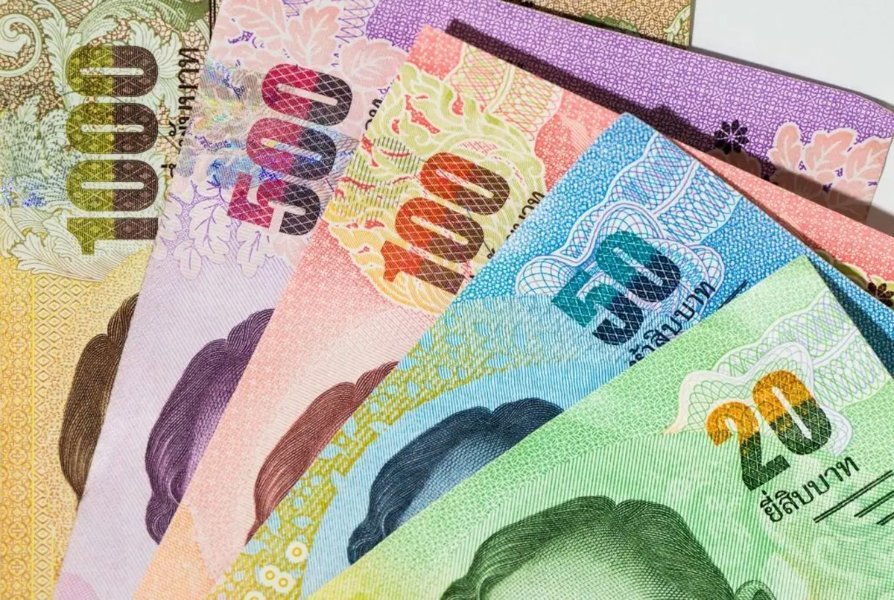
Thai Party Plans to Axe 1,000 and 500 Baht Notes. The Thai Pakdee Party has announced a plan to cancel the 1,000 and 500 baht banknotes throughout Thailand. This move aims to combat corruption and disrupt illicit cash flows. Warong Dechgitvigrom, the party leader, shared this anti-corruption policy on Facebook, asserting these notes enable grey money operations to disguise illegal wealth. ASEAN NOW


The Thai Pakdee Party has announced a plan to cancel the 1,000 and 500 baht banknotes throughout Thailand. This move aims to combat corruption and disrupt illicit cash flows. Warong Dechgitvigrom, the party leader, shared this anti-corruption policy on Facebook, asserting these notes enable grey money operations to disguise illegal wealth.


Warong believes eliminating these notes will restrict corrupt networks from using physical cash for storing, transferring, and paying bribes, which are difficult to trace. Unlike digital transfers, cash transactions in large amounts leave no record, making them ideal for underhand deals. He highlighted that even though mule accounts are used to cover up such transactions, money typically ends up being withdrawn in cash.


Warong cited previous instances in which investigators discovered hidden cash-filled rooms in politicians' homes. He outlined a broader anti-corruption plan, including harsher penalties for financial crimes, such as the death penalty for embezzling over 100 million baht, with executions mandatory within 15 days and no royal pardon eligibility. Additionally, he proposed empowering citizens to sue corrupt officials, offering monetary rewards upon successful legal actions.


He assured that cancelling these notes wouldn't impact honest citizens, as most use digital banking. For elderly individuals preferring cash, smaller denominations would suffice. If implemented in the next three months, deposits of large cash sums would require declarations of the money's source and appropriate tax payments.


Reactions online were mixed, with some praising the boldness of the proposal, while others questioned its practicality and potential public inconvenience. In a related development, the opposition People's Party has begun its early election campaign with a strong anti-corruption message, as the country nears a possible snap election, reported the Thaiger.


Key Takeaways:

  • Thai Pakdee wants to cancel high-denomination notes to deter corruption.
  • Warong argues that these notes help hide illegal financial activities.
  • Public reactions are mixed, with concerns over practicality and convenience.


  Adapted by ASEAN Now from The Thaiger 2025-12-26

fredag 26 december 2025

The 21st Anniversary of the 2004 Tsunami in Thailand: A Great Wave Tragedy. The Thaiger

The 21st Anniversary of the 2004 Tsunami in Thailand: A Great Wave Tragedy

Today marks 21 years since the 2004 Indian Ocean Tsunami. We pause to remember the hundreds of thousands of lives lost across Thailand and the ASEAN region. While two decades have passed, the memories remain vivid, and our hearts remain with the families affected. May we continue to honor their legacy through resilience and collective strength. 🕊️

#Tsunami2004 #Thailand #ThailandNews #Resilience #TheThaiger

onsdag 24 december 2025

Re: The Thai baht that looks too strong and the money no one sees. A strong baht may look impressive on paper. But if that strength is built on money the system cannot see, trace, or control, it is not a sign of health it is a warning. And in finance, warnings are usually ignored right up until the moment they are no longer theoretical.- Pattaya Mail

Es wird wie immer , sind Touristen weg also Mai bis August , ist der Kurs zum Euro 1 zu 39 THB 

Ola Jansved <olajnsvd@gmail.com> schrieb am Mi., 24. Dez. 2025, 16:43:
The Thai baht that looks too strong and the money no one sees
Pattaya-10-A-Thai-baht-that-looks-too-strong-and-the-money-no-one-sees.jpgThe Thai baht has strengthened to around 31.15 per US dollar, a move that appears reassuring but masks deeper concerns as exports remain fragile, growth uneven, and household debt high.

PATTAYA, Thailand – The Thai baht has strengthened to around 31.15 per US dollar. On the surface, this may appear reassuring. In reality, it should raise uncomfortable questions. This appreciation has occurred against the direction of the Dollar Index, and at a time when Thailand's domestic economy is not expanding fast enough to justify such currency strength. Exports remain fragile, investment growth is uneven, and household debt is stubbornly high.

Currencies do not move like this by accident. For a national currency to strengthen so sharply in less than a year, the inflows involved cannot be modest. They must be large, sustained, and systemic  on a scale comparable to national budgetary flows. In other words, money big enough to move the market itself. According to findings linked to the Bank of Thailand, one notable factor has been unusually high volumes of online gold trading, followed by the conversion of US dollars into baht through digital platforms. As dollars are sold and baht is aggressively bought, the currency naturally appreciates. Yet this has little to do with productivity, exports, or the real economy.

Alongside this sits a far more sensitive issue, grey money. It is widely estimated that funds linked to online scams and digital fraud circulating within Thailand may reach 200 billion baht. Of this, authorities have reportedly managed to freeze only a fraction measured in mere tens of billions. The gap between these numbers speaks volumes about the limits of enforcement in a digital financial ecosystem. And this does not include funds moving outside the traditional banking system altogether. Years ago, I warned that once online money systems became dominant, countries would begin to lose control over capital flows both inbound and outbound. That warning no longer sounds theoretical.

The real issue is not whether the baht is strong or weak. It is that large volumes of money are entering Thailand without passing through the central banking system. There are now multiple applications widely used by the public that offer better exchange rates, lower fees, and near instant transfers. Funds in the hundreds of thousands even millions can be moved from Europe to Thailand within an hour, often without meaningful visibility for monetary authorities. For individuals, this is convenience. For a nation, it is something else entirely. When capital flows bypass regulatory oversight, the state gradually loses its ability to manage monetary stability, enforce financial integrity, and understand what is truly driving its currency.

A strong baht may look impressive on paper. But if that strength is built on money the system cannot see, trace, or control, it is not a sign of health it is a warning. And in finance, warnings are usually ignored right up until the moment they are no longer theoretical.


The Thai baht that looks too strong and the money no one sees. A strong baht may look impressive on paper. But if that strength is built on money the system cannot see, trace, or control, it is not a sign of health it is a warning. And in finance, warnings are usually ignored right up until the moment they are no longer theoretical.- Pattaya Mail

The Thai baht that looks too strong and the money no one sees
The Thai baht has strengthened to around 31.15 per US dollar, a move that appears reassuring but masks deeper concerns as exports remain fragile, growth uneven, and household debt high.

PATTAYA, Thailand – The Thai baht has strengthened to around 31.15 per US dollar. On the surface, this may appear reassuring. In reality, it should raise uncomfortable questions. This appreciation has occurred against the direction of the Dollar Index, and at a time when Thailand's domestic economy is not expanding fast enough to justify such currency strength. Exports remain fragile, investment growth is uneven, and household debt is stubbornly high.

Currencies do not move like this by accident. For a national currency to strengthen so sharply in less than a year, the inflows involved cannot be modest. They must be large, sustained, and systemic  on a scale comparable to national budgetary flows. In other words, money big enough to move the market itself. According to findings linked to the Bank of Thailand, one notable factor has been unusually high volumes of online gold trading, followed by the conversion of US dollars into baht through digital platforms. As dollars are sold and baht is aggressively bought, the currency naturally appreciates. Yet this has little to do with productivity, exports, or the real economy.

Alongside this sits a far more sensitive issue, grey money. It is widely estimated that funds linked to online scams and digital fraud circulating within Thailand may reach 200 billion baht. Of this, authorities have reportedly managed to freeze only a fraction measured in mere tens of billions. The gap between these numbers speaks volumes about the limits of enforcement in a digital financial ecosystem. And this does not include funds moving outside the traditional banking system altogether. Years ago, I warned that once online money systems became dominant, countries would begin to lose control over capital flows both inbound and outbound. That warning no longer sounds theoretical.

The real issue is not whether the baht is strong or weak. It is that large volumes of money are entering Thailand without passing through the central banking system. There are now multiple applications widely used by the public that offer better exchange rates, lower fees, and near instant transfers. Funds in the hundreds of thousands even millions can be moved from Europe to Thailand within an hour, often without meaningful visibility for monetary authorities. For individuals, this is convenience. For a nation, it is something else entirely. When capital flows bypass regulatory oversight, the state gradually loses its ability to manage monetary stability, enforce financial integrity, and understand what is truly driving its currency.
A strong baht may look impressive on paper. But if that strength is built on money the system cannot see, trace, or control, it is not a sign of health it is a warning. And in finance, warnings are usually ignored right up until the moment they are no longer theoretical.


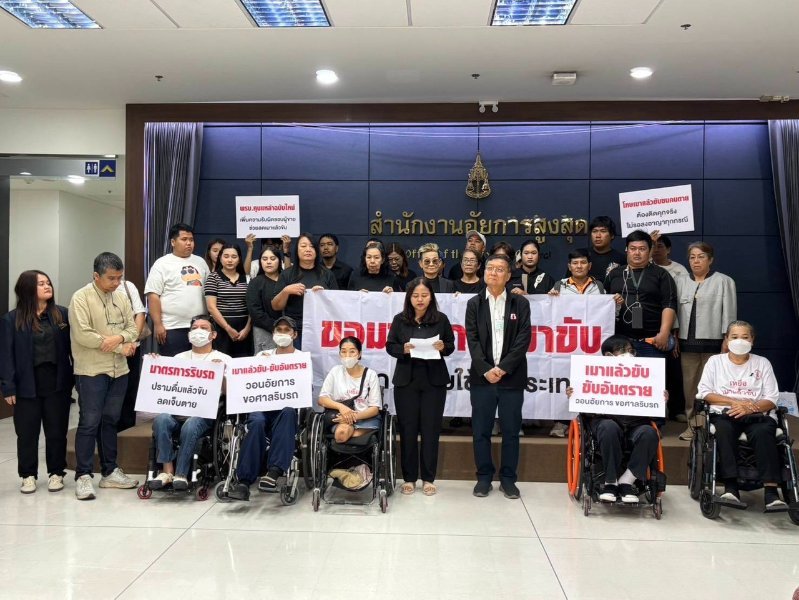
Thailand Faces 40 Road Deaths Daily as Drunk Driving Persists. Thailand's road crisis is making headlines as civil society groups highlight the grim reality of 40 fatalities daily and losses reaching 600 billion baht annually. These groups are advocating for tough measures against drunk drivers, including vehicle confiscation during the New Year 2026. ASEAN NOW


Thailand's road crisis is making headlines as civil society groups highlight the grim reality of 40 fatalities daily and losses reaching 600 billion baht annually. These groups are advocating for tough measures against drunk drivers, including vehicle confiscation during the New Year 2026.


In the lead-up to the upcoming New Year festivities, civil society networks, including the Foundation Against Drunk Driving, are raising alarm over the surge in road deaths, particularly during the "seven dangerous days."


On 22 December 2025, these networks presented a proposal to Mr. Ittiporn Kaewthip, the Attorney General, calling for vehicle confiscation from drunk drivers and tougher penalties for alcohol-related offences. They also demand stricter enforcement against those selling alcohol to minors and a push for legislative changes to increase legal repercussions for dangerous driving.


Experts, including Mr. Surasit Silapngam, manager of the Foundation Against Drunk Driving, stress the urgency, citing an annual loss of 500-600 billion baht due to road accidents. Drunk driving is identified as the leading cause. Relaxed alcohol regulations that allow sales until late hours have heightened concerns, potentially increasing road risks. The government's current stance on alcohol sales presents a challenge amidst efforts to improve road safety.


In the future, civil society groups are prepared to back legal actions that treat drunk driving as a serious threat to public safety. They are also calling for widespread public awareness campaigns on the consequences of drunk driving and vehicle confiscation. Proposed amendments to the Traffic Act would impose more severe penalties for drunk driving causing death, ensuring offenders face prison time without probation. Collaborative efforts with both government and private sectors aim to radically reduce road traffic incidents related to alcohol, reported Siam Rath.


Key Takeaways:

  • Civil society groups press for severe measures against drunk drivers, seeking vehicle confiscation and harsher penalties.
  • Relaxed alcohol laws may exacerbate road risks during high-traffic periods like the New Year.
  • Advocacy for legal amendments and public awareness campaigns aims at long-term road safety.


Related Stories:

Thailand Set to Enforce Stricter Penalties for Drunk Driving

Harsher Penalties for "Drunk Driving and Repeat Offenders" Demanded


  Adapted by ASEAN Now from Siam Rath 2025-12-23

måndag 22 december 2025

From tourists to residents, Thailand is quietly changing. What is different now is not the attraction itself, but who is staying and for how long. In 2025- Pattaya Mail

From tourists to residents, Thailand is quietly changing
Thailand has long drawn people in with its climate, affordability, cuisine, and easygoing lifestyle. What is changing now is not the appeal, but the growing number of visitors choosing to stay longer and put down roots.

PATTAYA. Thailand – Thailand has always been good at attracting people. For decades, visitors have come for the obvious reasons: climate, affordability, food, and a lifestyle that feels lighter than the one they left behind. What is different now is not the attraction itself, but who is staying and for how long. In 2025, Thailand recorded just over 30 million foreign arrivals, generating an estimated 1.4 trillion baht in tourism revenue. These figures are often quoted, usually to demonstrate recovery or growth. They matter but they do not tell the whole story. A quieter change is taking place beneath the headline numbers.


From visitors to residents
Cities such as Pattaya illustrate this shift clearly. Beyond the hotels and short stay tourists, Pattaya now supports a sizeable population of long term foreign residents, retirees, property owners, small business operators, and families who have chosen not merely to visit Thailand, but to live here. Estimates place the long term foreign population in Pattaya at between 40,000 and 70,000 people. These are not seasonal visitors. They rent or own homes, use local hospitals, shop locally, and remain in the city year after year. Their economic footprint is steady rather than spectacular, but it is substantial.

Who is coming has changed
For many years, Thailand's foreign facing mindset revolved around three languages, Thai, English, and Chinese. This reflected reality at the time. Today, that reality is more complex. Russian nationals now rank consistently among Thailand's top source markets, and in Pattaya they form one of the largest long term resident communities. Russian language signs are no longer aimed only at tourists; they exist because daily life requires them.

At the same time, visitors from the Middle East particularly the Gulf states and Dubai have become more visible. While their numbers are modest compared to mass tourism markets, their spending is not. Estimates suggest 150,000–200,000 visitors from the UAE each year, with per trip spending well above the global average. They stay longer, travel as families, and spend heavily on healthcare, property, and services. These are not passing trends.

Language as infrastructure
Language is often treated as a "soft" issue something desirable but not essential. In practice, it functions more like infrastructure. When communication works, business flows easily. When it does not, intermediaries appear, costs rise, and trust erodes.  In Pattaya, many businesses now rely on foreign staff or informal translators to serve Russian or Arabic speaking clients. This works, but it is not a sign of strength. It is a sign of adaptation happening without planning. The point is not that every Thai must speak Russian or Arabic. It is that the economic relevance of these languages now exists, whether acknowledged or not.


A country people choose
Thailand remains, by any measure, one of Southeast Asia's most desirable countries. People choose it not only for holidays, but for years of their lives. That choice brings opportunity, but also responsibility. Being welcoming is not enough. Preparedness matters. Quiet adjustments matter. Language, in this context, is not about identity or culture wars. It is about practicality. The countries that thrive are rarely the loudest. They are the ones that notice change early and respond without drama. Thailand has always been attractive. The question now is whether it is willing to adjust, calmly and deliberately, to the world it is attracting.


fredag 19 december 2025

Fem gange om ugen til Bangkok via Warszawa. LOT Polish Airlines lancerer endnu en ny langdistancerute, og denne gang til Bangkok. Ruten, der åbner i efteråret 2026, får fem ugentlige afgange fra Warszawa. check-in.dk

FLER MÖJLIGHETER ATT TA SIG TILL BANGKOK ✈️👍✈️👍

Fem gange om ugen til Bangkok via Warszawa

LOT Polish Airlines lancerer endnu en ny langdistancerute, og denne gang til Bangkok. Ruten, der åbner i efteråret 2026, får fem ugentlige afgange fra Warszawa.

Rejsende med LOT Polish Airlines får en ekstra oversøisk destination at vælge imellem til næste år.

Således oplyser det polske flyselskab, at det åbner en ny direkte rute fra Warszawa til Bangkok med første flyvning 26. oktober 2026. Ruten bliver helårlig, og der bliver afgange fra den polske hovedstad på mandage, onsdage, torsdage lørdage og søndage.

Ruten er interessant set i dansk perspektiv, eftersom Warszawa ligger i den naturlige rejseretning, når der flyves fra Danmark til Thailand. Danske rejsende vil således med et stop i den polske hovedstad kunne fortsætte på den nye rute til Bangkok.

Dermed er LOT klar med endnu en langdistancerute, efter selskabet i midten af november i år lancerede en ny sæsonrute fra Warszawa til San Francisco. Første afgang på denne rute bliver 6. maj 2026, og der vil være fire ugentlige afgange hen over sommeren.

Polske rejsende er glade for Thailand
LOT Polish Airlines har oplevet øget efterspørgsel på ruter til Asien – og særligt Thailand – hvorfor selskabet altså nu lancerer den nye Bangkok-rute.

Der bliver afgang fra Warszawa klokken 14.25 på rute LO65, mens returflyvningen fra den thailandske hovedstad begynder klokken 08.45lokal tid på rute LO66. Flyvetiden fra Warszawa bliver 10 timer og 20 minutter, mens tiden den anden vej bliver 11 timer og 55 minutter.

"Langdistanceforbindelser er en af ​​​​grundpillerne i LOT Polish Airlines' vækststrategi. Lanceringen af ​​​​ruten Warszawa-Bangkok er endnu et vigtigt skridt i udvidelsen af ​​​​vores globale rutenetværk," siger Robert Ludera, direktør for rutenetværksafdelingen hos LOT Polish Airlines.

"Thailand har i mange år været en af ​​​​de mest populære destinationer blandt polske rejsende. Det kombinerer et enormt turismepotentiale med den voksende forretningsmæssige betydning af Sydøstasien."

Ny rute betjenes med Dreamliner-fly
Cholada Siddhivarn, direktør for Thailands turistmyndighed på Prag-kontoret, ser frem til den nye rute fra LOT Polish Airlines.

"Vi tror på, at det i fremtiden ikke kun vil gavne turismen, men også skabe muligheder for handel, investering og uddannelse mellem de to lande. Vigtigst af alt er det thailandske folk klar til at byde alle besøgende velkommen med varm gæstfrihed," siger hun.

Ruten mellem Warszawa og Bangkok vil blive betjent med LOTs Boeing 787-8 Dreamliner, der har plads til i alt 252 passagerer fordelt på tre kabineklasser.

Danske rejsende vil generelt have masser af muligheder for at rejse til Thailand i vintertrafikprogrammet 2026/27. Foruden LOTs nye rute er der både SAS og Thai Airways fra Københavns Lufthavn, mens der eksempelvis også er muligheder med Emirates og Qatar Airways. Og så lancerede Finnair for nyligt det største trafikprogram nogensinde til Thailand i vinteren næste år.


onsdag 17 december 2025

Re: When Thai tax worries follow you to breakfast - Pattaya Mail

Danke Ola 

Ola Jansved <olajnsvd@gmail.com> schrieb am Mi., 17. Dez. 2025, 16:46:
When Thai tax worries follow you to breakfast

Discover more

Travel & Tourism Guides

Pattaya-10-When-Thai-tax-worries-follow-you-to-breakfast-pic-1.jpgFor many expatriates in Pattaya, mornings follow a familiar rhythm — coffee, the news, perhaps a glance at the bank app, and lately, an email or two that sends the pulse racing more than it should.

PATTAYA, Thailand – For many expatriates in Pattaya, mornings follow a familiar pattern. Coffee, the news, perhaps a glance at the bank app, and lately an email or two that raises the pulse more than it should.

Over the past year, a noticeable change has taken place. Not in the law itself, but in how it is perceived. My inbox reflects it clearly. Retirees who once thought little about tax are now counting days, rereading bank letters, and watching YouTube videos late into the night, hoping for reassurance.

Some arrived in August and wonder if 180 days really means what they think it means. Others have lived here for over a decade and are suddenly unsure whether money they saved long ago has quietly become "income" simply by crossing a border. None of this feels unreasonable. What feels new is the anxiety.

A Fog of Information
The emails are polite. Almost apologetic.
"I may be under the threshold."
"I've heard conflicting advice."
"My bank is asking for a TIN."
And perhaps the most telling line of all: "I'm worried this might affect my visa."

Pattaya-10-When-Thai-tax-worries-follow-you-to-breakfast-pic-2.jpgRetirees who once gave little thought to tax are now counting days, rereading bank letters, and watching late-night YouTube videos in search of reassurance—some questioning what "180 days" really means.

This fear has taken root despite the absence of any official policy linking tax compliance to visa renewal. Immigration officers do not collect tax, and the Revenue Department does not issue visas. These are separate systems, governed by separate laws, operating on parallel tracks. That distinction, once taken for granted, now seems to be fading in the public imagination.

When savings start to feel like income
Many retirees fund their lives in Thailand the same way they always have by drawing on savings built elsewhere, often long before Thailand entered the picture. Others are approaching pension or superannuation age and trying to plan ahead without stepping into a regulatory grey zone. The difficulty is not defiance, but interpretation. Double tax agreements are read one way by some, another way by others. Online commentators speak with confidence, often about scenarios that are not their own. What applies neatly in theory becomes far less tidy in practice. And so people hesitate. Or overreact. Or do nothing at all.

The visa question that won't go away
Among all the concerns expressed, the most persistent is the belief that failure to register for tax or registering incorrectly might somehow surface at immigration next year. To date, there is no evidence that it will. Thailand has never required proof of tax compliance as a condition for extending a retirement visa. That may change one day, but policy changes in Thailand tend to arrive with paperwork, announcements, and no shortage of queues. None of that has happened. For now, tax and immigration remain separate conversations, even if many expats feel caught between them.

Pattaya-10-When-Thai-tax-worries-follow-you-to-breakfast-pic-3.jpgAmong the many concerns voiced, the most persistent is the fear that failing to register for tax—or registering incorrectly—might surface at immigration next year. To date, there is no evidence that this will happen.

Living with uncertainty
What these emails reveal is not a community seeking loopholes, but one seeking clarity. People who chose Thailand for its stability now find themselves navigating ambiguity instead. Perhaps this is a temporary phase, part of a broader global tightening around tax transparency. Or perhaps it is simply the result of information moving faster than official guidance. Either way, the unease is real. And in Pattaya, where many came to simplify life rather than complicate it, that unease has become part of the morning routine right there on the table, next to the coffee.

Victor Wong (Peerasan Wongsri)

Victor Law Pattaya/Finance & Tax Expert


When Thai tax worries follow you to breakfast - Pattaya Mail

When Thai tax worries follow you to breakfast

Discover more

Travel & Tourism Guides

For many expatriates in Pattaya, mornings follow a familiar rhythm — coffee, the news, perhaps a glance at the bank app, and lately, an email or two that sends the pulse racing more than it should.

PATTAYA, Thailand – For many expatriates in Pattaya, mornings follow a familiar pattern. Coffee, the news, perhaps a glance at the bank app, and lately an email or two that raises the pulse more than it should.

Over the past year, a noticeable change has taken place. Not in the law itself, but in how it is perceived. My inbox reflects it clearly. Retirees who once thought little about tax are now counting days, rereading bank letters, and watching YouTube videos late into the night, hoping for reassurance.

Some arrived in August and wonder if 180 days really means what they think it means. Others have lived here for over a decade and are suddenly unsure whether money they saved long ago has quietly become "income" simply by crossing a border. None of this feels unreasonable. What feels new is the anxiety.

A Fog of Information
The emails are polite. Almost apologetic.
"I may be under the threshold."
"I've heard conflicting advice."
"My bank is asking for a TIN."
And perhaps the most telling line of all: "I'm worried this might affect my visa."

Retirees who once gave little thought to tax are now counting days, rereading bank letters, and watching late-night YouTube videos in search of reassurance—some questioning what "180 days" really means.

This fear has taken root despite the absence of any official policy linking tax compliance to visa renewal. Immigration officers do not collect tax, and the Revenue Department does not issue visas. These are separate systems, governed by separate laws, operating on parallel tracks. That distinction, once taken for granted, now seems to be fading in the public imagination.

When savings start to feel like income
Many retirees fund their lives in Thailand the same way they always have by drawing on savings built elsewhere, often long before Thailand entered the picture. Others are approaching pension or superannuation age and trying to plan ahead without stepping into a regulatory grey zone. The difficulty is not defiance, but interpretation. Double tax agreements are read one way by some, another way by others. Online commentators speak with confidence, often about scenarios that are not their own. What applies neatly in theory becomes far less tidy in practice. And so people hesitate. Or overreact. Or do nothing at all.

The visa question that won't go away
Among all the concerns expressed, the most persistent is the belief that failure to register for tax or registering incorrectly might somehow surface at immigration next year. To date, there is no evidence that it will. Thailand has never required proof of tax compliance as a condition for extending a retirement visa. That may change one day, but policy changes in Thailand tend to arrive with paperwork, announcements, and no shortage of queues. None of that has happened. For now, tax and immigration remain separate conversations, even if many expats feel caught between them.

Among the many concerns voiced, the most persistent is the fear that failing to register for tax—or registering incorrectly—might surface at immigration next year. To date, there is no evidence that this will happen.

Living with uncertainty
What these emails reveal is not a community seeking loopholes, but one seeking clarity. People who chose Thailand for its stability now find themselves navigating ambiguity instead. Perhaps this is a temporary phase, part of a broader global tightening around tax transparency. Or perhaps it is simply the result of information moving faster than official guidance. Either way, the unease is real. And in Pattaya, where many came to simplify life rather than complicate it, that unease has become part of the morning routine right there on the table, next to the coffee.

Victor Wong (Peerasan Wongsri)

Victor Law Pattaya/Finance & Tax Expert


When savings become untouchable: How Thai bank rules are reshaping expat retirement. How rigid bank balance rules are colliding with real life for Thailand’s retirees.- Pattaya Mail

When savings become untouchable: How Thai bank rules are reshaping expat retirement

Discover more

Thai sports apparel

When the time came to renew this expat's retirement visa, his bank balance fell below the 800,000-baht threshold — not through excess or mismanagement, but because the money had been spent on medical care.

How rigid bank balance rules are colliding with real life for Thailand's retirees.

PATTAYA, Thailand – For many years, Thailand's retirement visa was one of the country's most straightforward arrangements. The understanding was simple enough, live quietly, respect the law, and demonstrate that you have sufficient financial means to support yourself. No drama. No surprises. At least, that was the theory.

In recent times, however, that clarity has begun to blur, replaced by a rigidity that seems increasingly detached from the realities of ageing, illness, and ordinary life. Take the case of a European retiree who has lived in Pattaya for more than a decade. He has never overstayed, never caused trouble, and never asked the Thai state for assistance. Last year, he became seriously ill and required prolonged treatment in a Thai hospital. The bills were paid in full from his own savings openly, transparently, and exactly as savings are intended to be used.


When the time came to renew his retirement visa, his bank balance no longer met the required 800,000 baht threshold. Not because of extravagance. Not because of missing funds. But because the money had been used to stay alive. The response was brief and procedural: the requirement had not been met.

This story is no longer unusual. Around Pattaya, similar accounts are shared quietly over coffee or in hospital waiting rooms. Long-term retirees many with spotless compliance histories stretching back 15 or 20 years find themselves suddenly on the wrong side of the rules due to medical emergencies, family crises, or abrupt changes in how banks interpret longstanding requirements.

For retirees, savings exist to manage uncertainty, especially health crises. Yet when those funds are used as intended, they can jeopardize the right to remain in a place called home.

When rules drift away from reality
Few would dispute the rationale behind financial requirements. Thailand has every right to ensure that retirees are financially independent and not a burden on public services. The difficulty arises in how these rules are enforced.

Over the past year, expatriates have reported:

  • Sudden changes to required holding periods for funds.
  • Retroactive application of new banking policies.
  • Mandatory "freeze agreements" signed under time pressure.
  • Refusal to issue certification even after Immigration requirements are satisfied.

One long term resident holding a Long Term Resident Visa recently remarked that while banks appear increasingly vigilant with retirees, they seem far less animated when it comes to mule accounts, nominee structures, or the movement of vast amounts of so called grey money. The question many ask is not whether rules are necessary, but whether they are being applied with the right sense of proportion to the right people.

Money that must exist, but not be used
Perhaps the most curious feature of the current system is its underlying assumption, that funds required for visa purposes must remain untouched, regardless of circumstances. In other words, the money must be there but it should not be used.

For retirees, this is a striking contradiction. The very reason one sets aside savings is to deal with uncertainty, particularly health related uncertainty. Yet when those savings are used for their intended purpose, they can suddenly undermine a person's right to remain in the country they call home. A system designed to prove self-reliance ends up penalizing those who demonstrate it most clearly.

Long-term retirees, many with 15 or 20 years of spotless compliance, suddenly find themselves on the wrong side of the rules after medical emergencies, family crises, or abrupt shifts in how banks interpret long-standing requirements.

A quiet policy gap
There is little appetite among expats for abolishing financial requirements altogether. What many are asking for instead is clarity, consistency, and a measure of realism.

  • Clear rules that are not applied retroactively.
  • Better coordination between banks and Immigration.
  • Reasonable allowances for documented medical expenses.
  • And recognition of long term compliance and good faith.

Thailand has benefited for decades from a stable retiree population that spends locally, supports communities, and lives largely below the political radar. Policies that treat these residents as potential risks rather than proven contributors may deserve a second look. Sometimes the issue is not the amount of money in the account. It is the assumption that life, illness, and ageing will politely conform to a banking timetable.

Victor Wong (Peerasan Wongsri)

Victor Law Pattaya/Finance & Tax Expert

fredag 12 december 2025

Thailand Faces Calls to Publicise Updated Entry Rules. Amid increasing cases of travellers being denied entry to Thailand, tourism operators are urging the government to consistently publicise updated rules and enhance pre-screening measures, as the nation clamps down on multiple visa runs. ASEAN NOW

file photo


Amid increasing cases of travellers being denied entry to Thailand, tourism operators are urging the government to consistently publicise updated rules and enhance pre-screening measures, as the nation clamps down on multiple visa runs. 


Recently, the Immigration Bureau launched four strategies to stop foreigners from entering as tourists while engaging in unlawful activities, including cybercrime and money laundering. Restrictions on multiple 90-day visa-exempt entries have been tightened, limiting foreigners to two visa runs, with excess runs leading to denial of entry.


Thienprasit Chaiyapatranun, president of the Thai Hotels Association, highlighted incidents where guests were turned away under visa-free privileges, with similar reports surfacing on social media. Such occurrences could lead to confusion among potential tourists planning to visit Thailand.


Thienprasit stressed the need for clear communication of these updated rules to ensure tourists entering under the visa-free scheme are informed.


To alleviate any misconceptions, agencies must clarify why certain social media cases resulted in entry denial. "The situation now leads to speculations about tourists inadvertently breaking rules or potential exploitation by officials," said Thienprasit. He criticised the current random screening methods and suggested implementing pre-screening and automated immigration gates, similar to those used in other countries, according to a report by the Bangkok Post.


The Thai government is exploring a pre-approval system for visa-free travellers, akin to South Korea's model, which the private sector supports as a way to improve entry procedures and assure smooth travel. With the Thailand Digital Arrival Card already in use, these adjustments could streamline the process. As of December 7, Thailand has welcomed 30.2 million foreign visitors, a decrease from the previous year, with the majority arriving from Malaysia, China, and India.


Key Takeaways


  • Calls intensify for Thailand to publicise entry rule changes.
  • New measures limit visa runs, aiming to reduce illegal activities.
  • Tourism sector supports improved screening for seamless travel.


  Adapted by ASEAN Now from Bangkok Post 2025-12-11

Bangkok Post - Heritage sites 'are off limits'. The Thai army is warning Cambodia against using cultural heritage sites as bases for military operations, as such actions constitute a violation of the Hague Convention, according to Royal Thai Army spokesman, Maj Gen Winthai Suvaree, on Thursday.

Heritage sites 'are off limits'

The Thai army is warning Cambodia against using cultural heritage sites as bases for military operations, as such actions constitute a violation of the Hague Convention, according to Royal Thai Army spokesman, Maj Gen Winthai Suvaree, on Thursday.

The warning came as Cambodia's Ministry of Culture and Fine Arts issued several statements accusing Thailand of carrying out operations which resulted in damage to Ta Khwai and Preah Vihear temples along the border.

Maj Gen Winthai said that Thailand remains committed to the 1954 Hague Convention, which mandates the protection of cultural heritage sites and prohibits attacks or actions that could cause damage to such sites.

"In this instance, Cambodia deliberately used these heritage sites as military bases, establishing surveillance and strategic positions to target Thai forces," he said.

"Therefore, it is Cambodia, not Thailand, that is violating humanitarian and international conventions, as well as showing disregard for cultural heritage," he said.

He added that Thailand has the right to neutralise such threats in a proportionate and necessary manner, in line with international law, because Cambodia itself forced the situation.

Unesco has also voiced its concern over the renewed fighting between Cambodia and Thailand, warning that the escalating border conflict is putting cultural heritage sites in the area at risk, especially the Preah Vihear temple, which is inscribed on the World Heritage List.

Thai F-16 fighter jets carry out airstrikes on a casino target in Chup Koki, Oddar Meanchey, Cambodia, on Wednesday.  (Photo courtesy of Army Military Force Facebook Page)

The United Nations' cultural agency stressed that it is ready to provide technical support and emergency measures to protect cultural property "as soon as conditions allow".

Separately, Culture Minister Sabeeda Thaised said on Thursday that while ancient monuments must be protected, national sovereignty should come first.

She said that the permanent secretary of the Culture Ministry and the Fine Arts Department director-general had already discussed the matter.

Armed clashes along the Thai-Cambodian border continued into a fifth day on Thursday. According to the latest figures released by the Thai armed forces, three civilians and nine soldiers have been killed since the most recent clashes broke out. Approximately 200,000 residents have been evacuated from high-risk areas as the fighting continued.

The Second Army Region released a summary of operations along the Thai-Cambodian border from Dec 7 to Dec 11.

According to the report, 102 Cambodian soldiers were estimated killed, six T-55 tanks destroyed in Phanom Prasittho, one BM-21 multiple rocket launcher destroyed, 64 drones neutralised and one anti-drone system destroyed.

Lt Col Thitiphong Fuangchan, assistant spokesman for the Operations Centre of the Second Army Region, summarised key developments as of 9am yesterday.

At 10.42pm on Wednesday, a firefight broke out when Cambodian forces fired on Thai positions using artillery and mortars. They also deployed unmanned aerial vehicles to conduct surveillance over several critical areas, including Chong Bok, Chong Sa-ngam, Chong An Ma, Prasat Khna, Prasat Ta Khwai, and Preah Vihear temples.

The army responded in kind by employing artillery and mortars to destroy high-value military targets belonging to the opposing forces.

Thai forces also took control of the Chong Rayi-Plot Tang area in Surin's Kap Choeng district to prevent a counterattack.


onsdag 10 december 2025

Thailand has clarified 2024 tax regulations: individuals staying over 180 days are now tax residents, making foreign income brought into the country potentially taxable. A Bangkok Post podcast, featuring tax experts, addresses the complexities of these new rules. ASEAN NOW

Thailand has clarified 2024 tax regulations: individuals staying over 180 days are now tax residents, making foreign income brought into the country potentially taxable. A Bangkok Post podcast, featuring tax experts, addresses the complexities of these new rules.

Experts addressed what constitutes a taxable remittance, covering ATM withdrawals, credit card use, and the status of specific income like government pensions. They also clarified the tax implications of pre-2024 funds transferred later and money received from joint accounts.

Further guidance detailed how Double Tax Agreements operate, the limits of Thai access to overseas account information, and the requirement for Destination Thailand visa holders (digital nomads) to file tax returns.

More details: https://aseannow.com/topic/1381108-podcast-reveals-key-thailand-tax-changes-for-foreigners/

Photo via Expatica

onsdag 3 december 2025

The Royal Gazette published on December 2, 2025, a new announcement from the Alcohol Control Committee revising the permitted hours for alcohol sales nationwide. The Nation

The Royal Gazette published on December 2, 2025, a new announcement from the Alcohol Control Committee revising the permitted hours for alcohol sales nationwide.

The regulation, issued under the Alcoholic Beverage Control Act 2008 and its 2025 amendment, replaces an earlier directive from the Prime Minister's Office dated June 23, 2025, and takes effect from the day after its publication.

Under the new rules, the sale of alcoholic beverages is only allowed between 11am–2pm, 2pm–5pm, and 5pm–midnight, with the 2pm–5pm window approved on a trial basis for 180 days.

Read more: https://www.nationthailand.com/blogs/news/policy/40059159