måndag 14 april 2025

Drinking and Driving During Songkran - A dangerous tradition as authorities fight to reduce accidents. As the Songkran festivities continue in Thailand, a concerning trend has emerged: a significant number of revelers are choosing to drink and drive, putting themselves and others at risk. - Pattaya Mail

Drinking and Driving During Songkran – A dangerous tradition as authorities fight to reduce accidents

Drinking and driving continue to plague Songkran celebrations, with over 1,200 cases of drunk driving reported in the first two days.

PATTAYA, Thailand – As the Songkran festivities continue in Thailand, a concerning trend has emerged: a significant number of revelers are choosing to drink and drive, putting themselves and others at risk. Despite widespread awareness campaigns and traffic safety measures, driving under the influence remains a persistent problem during this time of year. The ongoing celebrations, with their heavy drinking culture and festive spirit, often contribute to a spike in accidents, making it a critical public safety issue.

According to the Department of Probation, over the first two days of Songkran, a staggering 1,363 cases of traffic violations have been recorded. This includes 1,258 cases of drunk driving, representing 92.3% of all offenses, with the rest related to reckless driving and driving under the influence of drugs. The statistics reveal a slight decrease compared to last year, where 1,131 drunk driving cases were recorded. However, the number remains alarmingly high.

On April 13, the Director-General of the Department of Probation, Pol. Maj. Col. Suriya Singhakamon, confirmed that 982 cases were reported on April 12 alone. As part of the preventative efforts, offenders are being monitored using electronic tracking devices (EM), with 15 individuals already under surveillance for the first two days of Songkran.

The top three provinces with the highest number of drunk driving cases are Samut Prakan, Bangkok, and Nonthaburi. Authorities have increased patrols and conducted joint operations with volunteer probation officers and local police to monitor high-risk areas and prevent further incidents. These measures include collaborating with traffic police to monitor driving behavior using CCTV cameras on major and secondary roads.

Officials are urging the public to celebrate Songkran responsibly. With the support of the Ministry of Justice, the government is encouraging everyone to follow traffic laws, avoid drinking and driving, and respect the safety of all road users. The goal is to reduce accidents and promote a safer driving culture during this joyous but dangerous time.


onsdag 9 april 2025

Chonburi real estate shifts strategy: From unsold housing projects to townhouse rentals amid declining sales for 2 consecutive years. The Nation

 Chonburi real estate shifts strategy: From unsold housing projects to townhouse rentals amid declining sales for 2 consecutive years

In recent years, the real estate market in Chonburi has been affected by several negative factors, particularly in the housing estate sector, where new sales have consistently declined since 2023-2024.

According to data from the Real Estate Information Center (REIC), new sales of housing estates in Chonburi in 2024 have decreased dramatically, with sales dropping between 10.3% to 51.7% from Q1 to Q4. This trend is similar to 2023, where sales were negative from 14.8% to 38.5%.

So, why has the real estate market in Chonburi experienced such a significant decline in new sales? The answer lies in the "shrinking purchasing power," which has led to financial institutions reducing the number of loans they approve.

#ThailandNews #TheNation #chonburi #REIC #realestate #rent

Full story link is in the first comment


måndag 7 april 2025

Sense and nonsense about Donald Trump. Understanding the American president is a box of tricks that not even his own family has managed to crack open. It is often said by commentators he is in serious mental decline when caught repeating himself or slurring words. On the other hand, he can answer reporters’ quickfire questions on all manner of subjects for an hour when standing up – which no other world leader dares to imitate- Pattaya Mail

Sense and nonsense about Donald Trump

The first foreigners kicked out of America were the Brits 200 years ago. (Photo: Wikimedia Commons)

EDITORIAL

Understanding the American president is a box of tricks that not even his own family has managed to crack open. It is often said by commentators he is in serious mental decline when caught repeating himself or slurring words. On the other hand, he can answer reporters' quickfire questions on all manner of subjects for an hour when standing up – which no other world leader dares to imitate.

Trump is a gifted orator when speaking to domestic audiences craving to hear the Make America Great Again slogan. He has taken clues from the 1930s when the America First Movement campaigned successfully for US isolationism, a grip only broken by the Japanese attack on Pearl Harbor in 1941. He shows some similarities with the rabble-rousing oratory of Adolf Hitler, especially the constant repeating of triumphant populist slogans, but Hitler was the result of an economic disorder whereas Trump is creating one.

The American president has skillfully used unpredictability to his advantage in many scenarios. It was assumed that his alleged sexual escapades and bribery would ruin his political career. Not so and bible thumpers adore him. He remains popular with the "moralistic" anti-abortion and anti-gay rights blocks in the Republican party. Trump claimed in the runup to the 2024 presidential election he would have no time for golf. Ugh! He successfully champions the poorer classes in America whilst indulging an eye-popping luxurious lifestyle.

If there is a key to Trump, it's likely his dyslexia which is obviously denied but is patent. He has no interest whatsoever in books or literature apart from praising his own ghost-written best seller. Many former staff members confirm his sources of information are charts, summaries, phone calls and conversations. Last month, Keith Starmer presented him with an invitation letter from King Charles. Trump was unable to scan it quickly and returned it to the British prime minister for the detail.

Being a slow reader is not a sin and a condition shared by many other influential people. But it leads to a lack of perspective on key issues when you are the so-called leader of the free world. Thus he quotes earlier examples of American tariffs 100 years ago, without any acknowledgement of the world recession which followed. He currently attacks Cambodia and Vietnam for cheating and robbing America without apparently appreciating that US planes bombed these countries almost to oblivion in the 1970s.

Donald Trump is a 20th century guy, in power in the 21st century but wanting to return his country to the 19th century. America then was isolationist, having recently kicked out the Brits, and tariffs on imports were indeed an alternative to federal income tax which was unknown before the American civil war. Trump's second term ends in under four years, assuming there is no palace coup to avoid his facing the electorate. As future British prime minister Winston Churchill said of Neville Chamberlain, "For now, he is somebody up with which we shall have to put."


Thailand Responds to U.S. Tariff Hike with Strategic Trade Measures. Deputy Prime Minister and Finance Minister Pichai Chunhavajira will travel to the U.S. next week to meet with government and business stakeholders, highlighting Thailand’s role not just as an exporter but as a reliable long-term economic partner.- The Pattaya News

Thailand Responds to U.S. Tariff Hike with Strategic Trade Measures

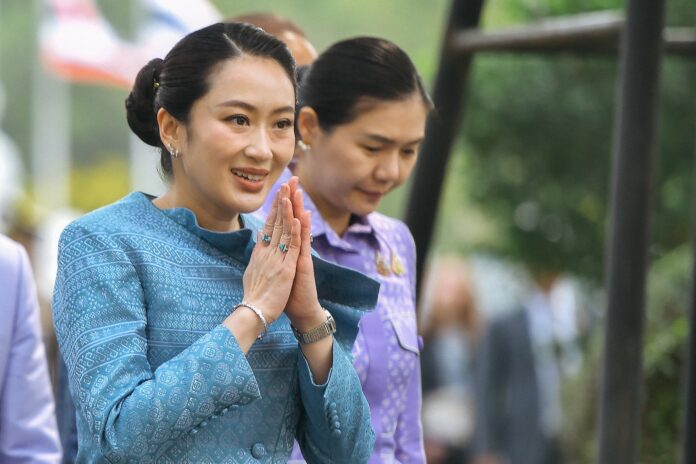
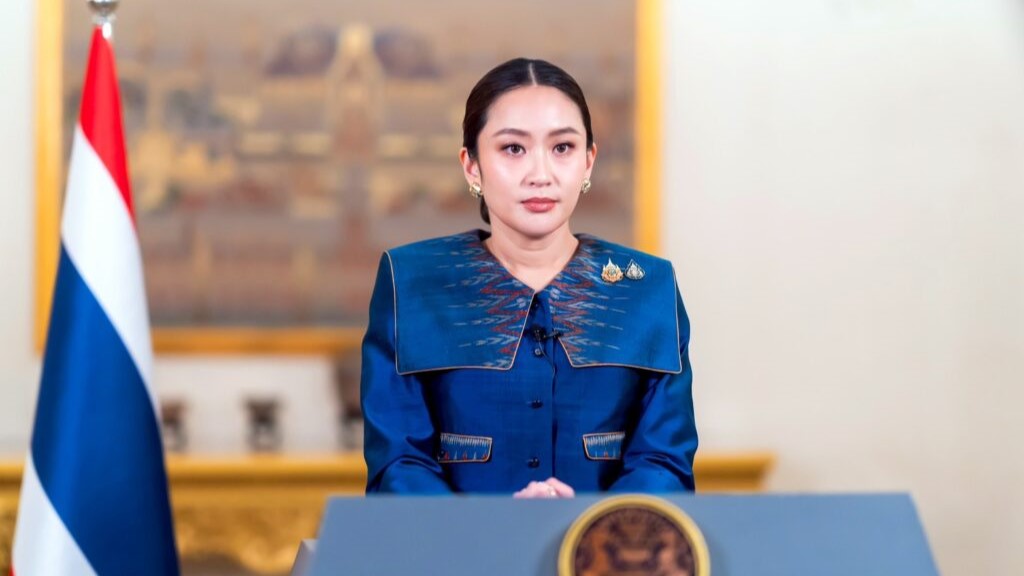
Thailand, April 6th, 2025 — Thai PM Paetongtarn Shinawatra issued a statement on Thailand's stance regarding the United States' new trade policy, which includes a 36% tariff on Thai exports

She acknowledged the serious impact on key sectors such as electronics, processed food, and agricultural products.

PM Paetongtarn emphasized the government's commitment to mitigating these effects. Deputy Prime Minister and Finance Minister Pichai Chunhavajira will travel to the U.S. next week to meet with government and business stakeholders, highlighting Thailand's role not just as an exporter but as a reliable long-term economic partner.

The government plans to propose increased imports from the U.S. in energy, aerospace, and agriculture, while also pushing for investment promotion and addressing trade obstacles. 

Thailand aims to expand new export markets in the Middle East, Europe, and India, and accelerate Free Trade Agreement negotiations. Emergency support for affected SMEs and large industries will also be provided.
A final policy direction will be announced after a national committee meeting on April 8th.


söndag 6 april 2025

Thailand Tourism Authority Moves to Ease Concerns and Fears Over Upcoming MANDATORY Digital Arrival Form. As Thailand gears up to welcome what they hope is an ambitious proposal for 40 million tourists in 2025, the Tourism Authority of Thailand (TAT) is rolling out a big update to its immigration process: the Thailand Digital Arrival Card (TDAC), which we covered in detail here previously.- The Pattaya News

Thailand Tourism Authority Moves to Ease Concerns and Fears Over Upcoming MANDATORY Digital Arrival Form
oplus_2

Thailand-

As Thailand gears up to welcome what they hope is an ambitious proposal for 40 million tourists in 2025, the Tourism Authority of Thailand (TAT) is rolling out a big update to its immigration process: the Thailand Digital Arrival Card (TDAC), which we covered in detail here previously.

Set to become mandatory for all foreign visitors starting May 1st, 2025, this shift from the traditional paper-based TM6 form to a fully digital system has sparked many concerns online, with some travelers afraid it will cause possible problems or delays to their trips. In response, the TAT is stepping up efforts to ease concerns, stating that the TDAC will be, according to them, a painless, user-friendly process designed to enhance—not hinder—the travel experience.

Thailand's tourism industry has seen a remarkable rebound, with over 35.54 million visitors in 2024 alone, a 26.27% increase from the previous year. This surge, fueled by relaxed entry policies and visa exemptions, has prompted the need for a more efficient and secure immigration system.

The TDAC, accessible online at tdac.immigration.go.th, replaces the paper arrival card that travelers once filled out by hand upon entry. The TAT views this as a natural evolution, aligning Thailand with global trends toward paperless travel seen in countries like Singapore and Malaysia.

"The TDAC is about making your arrival smoother and faster," a TAT spokesperson said. "We're not adding hurdles; we're removing them. This is a simple, modern tool to keep Thailand welcoming and accessible." The system allows travelers to submit their details—such as passport information, travel plans, and accommodation—up to three days before arrival, reducing wait times at immigration checkpoints.

Despite the promised benefits, the announcement of the TDAC has stirred some unease online as we have covered here, with travelers voicing worries about technical difficulties, accessibility, and potential delays. Posts on platforms like X and Facebook have highlighted fears of a cumbersome process or penalties for those unfamiliar with digital systems. The TAT is quick to counter these concerns, stressing that the transition will be straightforward and supported at every step.
"There's no need to panic," the TAT reassured in a recent statement. "This isn't a complex application or a barrier to entry—it's just the paper form you already know, now online."

The process is free, takes only a few minutes, and can be completed on any smartphone, tablet, or computer. For those less tech-savvy, the TAT is working with airlines, embassies, and tourism operators to provide assistance, including on-the-ground support at major entry points like Bangkok, Phuket, and Chiang Mai.

The TAT also points out that the TDAC is mandatory only for foreign nationals entering Thailand by air, land, or sea, with exceptions for those transiting without passing immigration or using a Border Pass. Thai nationals are also exempt, but not expats on various types of visas.Once submitted, travelers receive a confirmation—either digital or printable—to present at immigration, ensuring a seamless check-in.

To further calm nerves, the TAT is launching an international awareness campaign ahead of the May 1 deadline. This includes informational guides distributed at airports, partnerships with airlines to notify passengers, and multilingual resources online. The official TDAC website will open for submissions starting April 28, 2025, giving travelers ample time to familiarize themselves with the system. It is currently in beta mode and the TAT has stressed that certain features missing currently, like identifying Thailand as an expat's place of residence, will be added.

"We're here to help every step of the way," the TAT spokesperson added. "Whether it's a tutorial video, a helpline, or staff at the airport, no one will be left struggling or rejected from entry for failure to fill out the form." 

The TAT's message is clear: the TDAC is not a problem to dread. By cutting paperwork and streamlining arrivals, it's designed to keep Thailand competitive as a top global destination while managing the pressures of record-breaking tourism numbers. 

For travelers planning a trip to Thailand after May 1, the advice is simple: log on, fill out the form which is estimated to take less than a minute for most users, and enjoy your journey. The Tourism Authority of Thailand is determined to prove that this digital shift will be as painless as promised.

Photo credit: Adam Judd for The Pattaya News. 


lördag 5 april 2025

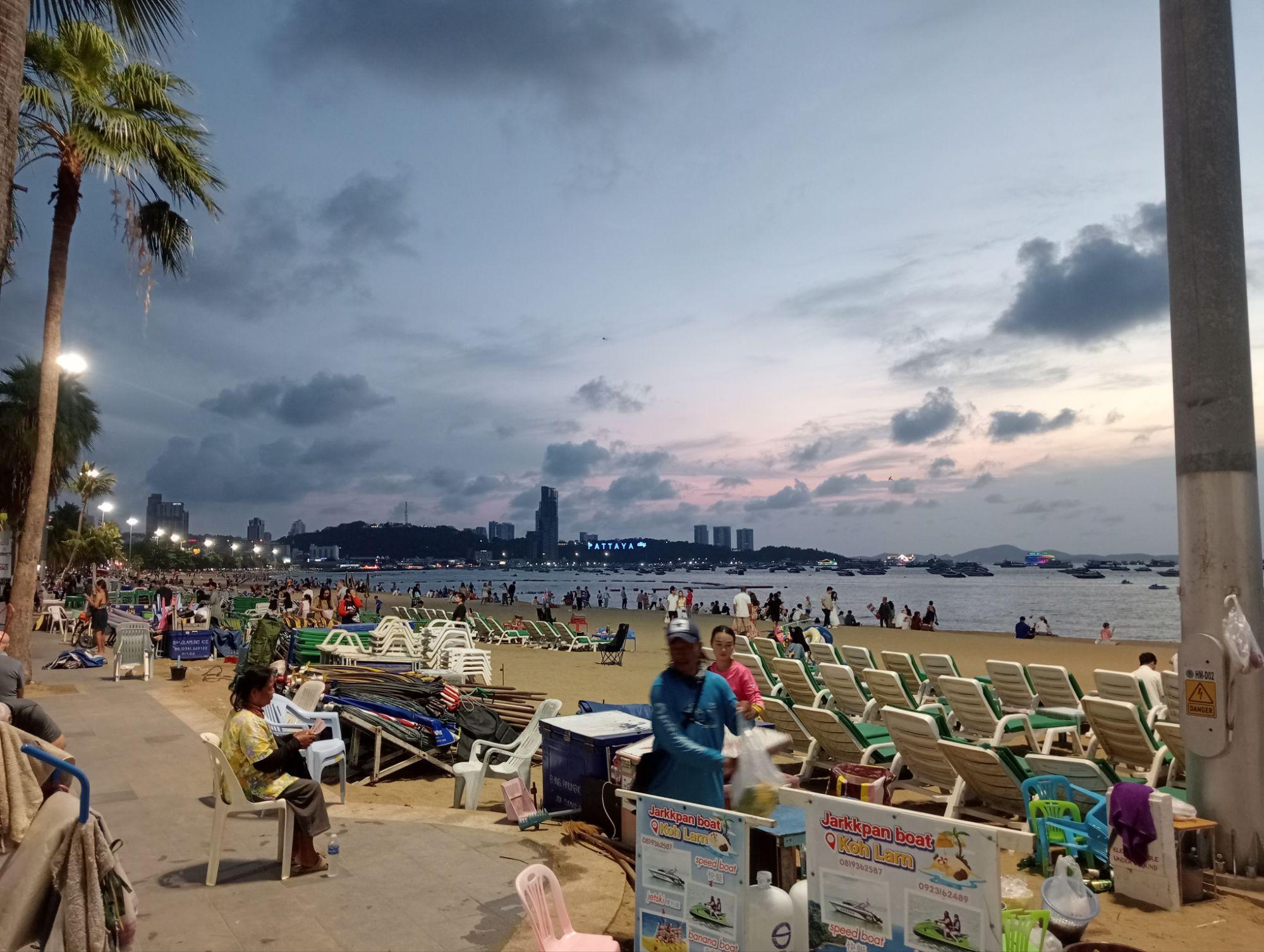
Donald Trump could determine the future of Pattaya. The first reaction in Bangkok to Trump’s new international tariffs was to assume they were an April Fool’s joke delivered a day late. The United States is Thailand’s biggest export market and, if a deal can’t be reached, billions of cash income in any currency you care to mention is at potential risk.- Pattaya Mail

Donald Trump could determine the future of Pattaya
Pattaya could be facing its greatest challenge yet in Trump's worldwide shock tariffs.

PATTAYA, Thailand – The first reaction in Bangkok to Trump's new international tariffs was to assume they were an April Fool's joke delivered a day late. The United States is Thailand's biggest export market and, if a deal can't be reached, billions of cash income in any currency you care to mention is at potential risk. The 36 percent tariff on imports to the US was much bigger than the Federation of Thai Industries predicted, but China, India, Vietnam and Cambodia amongst other Asian countries were also singled out.


One consequence, if the world chooses to retreat into 19th century trade wars, will be to send shocks to Asia's international travel ecosystem which leaves tourist cities such as Pattaya exposed. If world trade shrinks, business travel declines as reflected in Thailand's MICE conventions and exhibitions initiative which has to date been very successful in Pattaya. Then global mobility is suppressed as airlines reduce routes, the market for longterm visas becomes smaller and hotels see vacancies mushroom.

The worldwide holiday market also shrinks as it depends on discretionary income, that is what people have to spend after paying their bills. Tariff wars are usually accompanied by both unemployment and inflation, both of which discourage vacations abroad. Travel and Tour World is already predicting a negative impact on Asian beach resorts in Thailand, Vietnam, the Philippines and Cambodia as international numbers shrink. Cruises are another likely victim as cabins become harder to fill.

Pattaya may not be an industrial hub, but it is adjacent to the Eastern Economic Corridor (EEC), the advanced manufacturing and export base with infrastructure designed to attract international investors from many countries. In the past, the United States and the EEC have been linked through US investment in areas such as renewable energy and other strategic industries. US vice-president JD Vance has already ruled out that kind of international cooperation in future.

The Pattaya area has the second most valuable property assets in Thailand outside of Bangkok. The ongoing building program of luxury condominiums and gated estates assumes an ever-expanding number of rich expat and Thai communities. But there is also huge investment being poured into neon-lit entertainment districts across the city. In the past, Pattaya has weathered many challenges, most recently military coups and the covid crisis. But Pattaya's greatest challenge for the future could be unfolding right now before our very eyes.

Weak Baht Fails to Spark Tourism Boom, Safety Concerns Prevail. Thailand's tourism industry faces an uphill battle despite a weakened baht, say experts. Travellers' confidence in safety remains a bigger obstacle, with reports of scams and natural disasters looming larger than currency issues. ASEAN NOW

Photo courtesy of Asean Post


Thailand's tourism industry faces an uphill battle despite a weakened baht, say experts. The national currency's recent drop, a result of US tariff announcements, isn't attracting the hoped-for influx of tourists since similar economic trends affect other Asian currencies. 


Travellers' confidence in safety remains a bigger obstacle, with reports of scams and natural disasters looming larger than currency issues.


President Trump's tariffs affected the baht, reaching a three-month low before stabilising at around 34.15 per dollar (approx. 1,200 Baht).


However, it seems a weaker baht won't sway potential visitors, as the baht's competitive edge is lost amidst widespread regional currency depreciation.


Adith Chairattananon of the Association of Thai Travel Agents highlighted that foreign tourists continued to choose destinations like Japan, largely due to its safety record, despite a weaker yen.


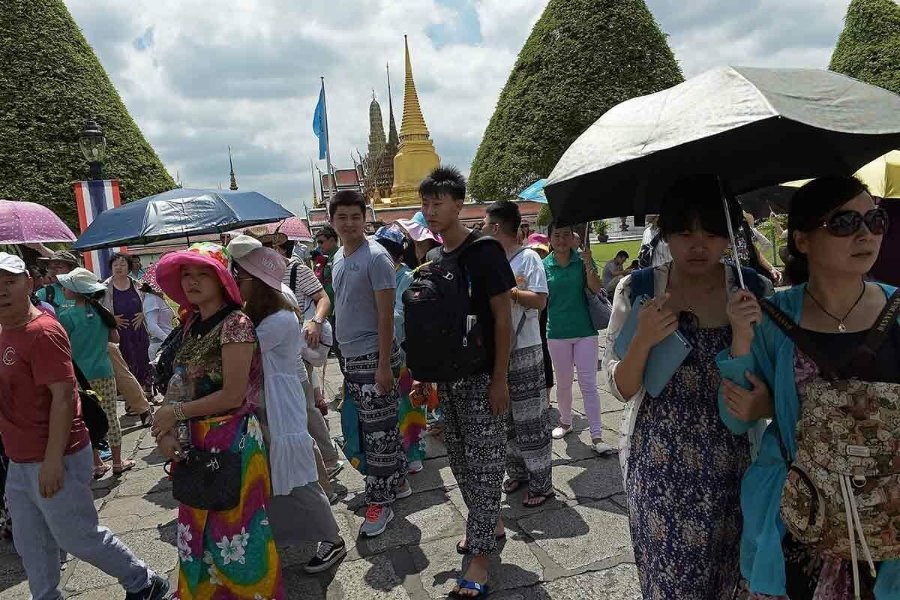
Chinese tourists, a vital demographic for Thailand, remain wary post-earthquake and following reports of scams. Even unaffected areas like Phuket aren't drawing expected numbers, with hotels reporting low bookings for the upcoming Songkran holiday starting April 11.


Suksit Suvunditkul from the Thai Hotels Association noted scant long-haul reservations during this low season, despite some beachfront resorts maintaining high occupancy.


Prospects appear clouded by global economic instability following US policies, though Phuket, having diversified its markets, may be less impacted.


According to the Thai Hotels Association's survey on April 3, major destinations like Bangkok and Chiang Mai recorded nearly a 25% drop in bookings year-on-year for the Songkran festival.


Although the weakened baht offers potential for growth, restoring confidence in safety and reliable travel experiences seems crucial. Amidst global economic uncertainties, Thailand's tourism sector remains challenged, striving to regain its former allure.


Based on a story by Bangkok Post


-- 2025-04-05

fredag 4 april 2025

Daily Earthquake Situation Update. PRD

Bangkok Post - Baht expected to skim 34.50 per dollar. The baht is expected to test a low of around 34.50 per US dollar over the next month amid heightened uncertainty following the US announcement of reciprocal tariffs of 37% on Thai imports. The baht hit its weakest level in 2.5 months on Thursday, reaching 34.38 per dollar in trade, mainly attributed to the impact of tariffs.

Baht expected to skim 34.50 per dollar
A customer exchanges currency at a branch of Travelex in Bangkok. (file photo)
A customer exchanges currency at a branch of Travelex in Bangkok. (file photo) 

The baht is expected to test a low of around 34.50 per US dollar over the next month amid heightened uncertainty following the US announcement of reciprocal tariffs of 37% on Thai imports.

The baht hit its weakest level in 2.5 months on Thursday, reaching 34.38 per dollar in trade, mainly attributed to the impact of tariffs.

During Thursday's trade, the baht tested 34.44 per dollar, the same level recorded when US President Donald Trump was sworn into office, said Kanjana Chockpisansin, head of banking and financial sector research at Kasikorn Research Center.

ADVERTISEMENT

With the US imposing a 37% reciprocal tariff on Thai imports — significantly higher than the expected range of 10-25% — the baht is likely to depreciate against the greenback, she said, weakening investor sentiment and contributing to a risk-off investment environment.

Ms Kanjana said the US tariff on Thailand would have a significant and widespread impact on the Thai economy, increasing uncertainties in the months ahead that will pressure the baht to depreciate against the dollar, despite some support from rising global gold prices.

"For the next month, we expect the baht to continue weakening, potentially testing its previous low of 34.85 per dollar," she said. "If the baht falls below this level, it could test a new support level at 35.50 per dollar."

According to Krungthai Global Markets, an arm of Krungthai Bank (KTB), the baht opened on Thursday at 34.38 per dollar, marking a sharp depreciation from the previous day's close of 34.16.

Following the US tariff announcement, the baht weakened, fluctuating between 34.07 and 34.45 per dollar.

The new tariff on Thai exports, although lower than the initial estimate of 72% by US authorities, was still higher than market forecasts, intensifying financial market pressure and driving a risk-off sentiment, said Poon Panichpibool, market strategy analyst at KTB.

Pipat Luengnaruemitchai, chief economist at Kiatnakin Phatra Financial Group, said negotiation is one avenue for Thailand to mitigate the impact of the reciprocal tariff, which should involve both internal and external discussions.

The government should collaborate with all relevant parties to manage the consequences effectively, he said.

In the initial stage, negotiations should focus on key sectors such as agriculture, food, energy and finance, said Mr Pipat.

Thailand must strategically balance opportunities and risks across industries affected by the new US tariff measures, he said.


Thailand Urged to Form ‘War Room’ in Response to US Tariffs. Thailand faces a major economic challenge as US President Donald Trump announced a 36% tariff on Thai imports. Dr. Santitarn Sathienthai, a member of Thailand’s Monetary Policy Committee, suggests the urgent creation of a “war room” to tackle the potential economic fallout. ASEAN NOW

File photo for reference only


Thailand faces a major economic challenge as US President Donald Trump announced a 36% tariff on Thai imports. Dr. Santitarn Sathienthai, a member of Thailand's Monetary Policy Committee, suggests the urgent creation of a "war room" to tackle the potential economic fallout.


Posting on Facebook, Dr. Santitarn, an adviser to the Thailand Development Research Institute, described the tariffs as an economic "earthquake" with severe global aftershocks. Many countries could erect tariff barriers, leading to deteriorating global trade.


The American market has become restrictive, making exports difficult. Consequently, countries, including Thailand, are keen to shift focus to other markets, intensifying competition. Goods from other regions might flood Thailand, complicating the economic landscape.


Although Vietnam faces a steeper 46% tariff, the Thai economy might see delayed investment from Chinese firms avoiding the US-China trade conflict. Negotiations could alter tariff levels, but the uncertainty is causing worldwide business hesitation, impacting investment immediately.


Dr. Santitarn warns that Trump's tariffs may impact Thailand's economy more than anticipated. He called for an urgent "war room" involving public and private sectors to strategize and mitigate risks. Businesses must adapt their strategies to identify opportunities amidst the crisis, as the economic impact might extend over the long term, reported Thai News Room.


-- 2025-04-03


torsdag 3 april 2025

Statement of the Prime Minister: Thailands Stance on U.S. Trade Policy and Reciprocal Tariffs - The Pattaya News

Statement of the Prime Minister: Thailands Stance on U.S. Trade Policy and Reciprocal Tariffs
The government wishes to inform the public that Thailand has signaled its readiness to engage in discussions with the U.S. government at the earliest opportunity to rebalance trade fairly for both sides, minimizing the impact on relevant sectors. A U.S. Trade Policy Task Force, established on January 6, 2025—prior to President Trump's official inauguration—has been tasked with working alongside government and private sectors. Over the past three months, this task force has closely and comprehensively monitored and assessed developments to prepare a "proposal to rebalance trade with the U.S." that is substantive enough to incentivize the U.S. to enter negotiations with Thailand. This proposal aims to minimize the impact on farmers, consumers, and businesses in related sectors. Simultaneously, Thailand may seize this opportunity to restructure production, reduce costs, and enhance long-term competitiveness in certain industries.


Bangkok Post - Thailand eager for trade talks with US. Thailand suffers 36% import tax hike under Trump’s Make America Wealthy Again.

Thailand eager for trade talks with US
Mr Vuttikrai, middle, says the US might impose additional tariffs on Thai imports in 2-3 categories, notably semiconductors, pharmaceuticals, wood and forest products.
Mr Vuttikrai, middle, says the US might impose additional tariffs on Thai imports in 2-3 categories, notably semiconductors, pharmaceuticals, wood and forest products. 

Thailand is keen to engage in constructive discussions with the US to foster mutual benefits amid trade tensions.

Higher US tariffs on Thai products could result in losses of US$7-8 billion, according to the Commerce Ministry.

Vuttikrai Leewiraphan, the permanent commerce secretary, said Thailand is prepared to navigate any trade policies from US President Donald Trump, including reciprocal tariffs expected to be announced on April 2.

ADVERTISEMENT

The US has proposed four types of tariff measures: country-specific tariffs; product-specific tariffs; tariffs on goods tied to issues such as drug trafficking, immigration and security; and reciprocal tariffs.

Mr Vuttikrai said the implications of these tariffs are notable, given that the US market makes up 20% of global trade and serves as a major partner for Thai exports.

The initial round of US tariffs has already affected Thai exports, particularly for steel and aluminium, where tariffs surged from rates of 0-12.5% to 25% for steel, and from 0-6.25% to 25% for aluminium, effective March 12.

For automobiles and auto parts, this sector is slated for tariff increases from 0-4.9% to 25%, beginning on Thursday.

He said the US might impose additional tariffs on Thai imports in 2-3 categories, notably semiconductors, which could see a 25% tariff, along with pharmaceuticals, wood and forest products.

Moreover, Thailand may face reciprocal tariffs that mirror the higher rates applied to US goods.

Thailand imposes tariffs on US industrial and agricultural products that are 11% higher than the US rate. If the US were to reciprocate with matching tariffs, the estimated loss could tally $7-8 billion, noted the ministry.

To address these challenges, Thailand is engaging with the US Trade Representative (USTR), members of Congress and other stakeholders. Although a formal meeting with the USTR has yet to be scheduled, Thailand is seeking an opportunity to discuss these issues further, said Mr Vuttikrai.

He said Thailand may consider proposing a reduction in import tariffs and increasing the volume of imports to help address the trade deficit. Potential imports could include animal feed, soybeans, beef, alcohol and aircraft.

Thai Airways is considering leasing or purchasing aircraft from the US, while the Energy Ministry has been in talks about importing crude oil, petrochemicals, natural gas and liquefied natural gas.

Meanwhile, the Thai private sector is eager to ramp up investments in the US, which would generate job opportunities in key states that strongly support Trump, said Mr Vuttikrai.

Addressing concerns regarding potential trade rule circumvention due to production shifts to Thailand, he said the Commerce Ministry is managing the situation, as the Department of Foreign Trade pinpointed 49 products at risk, with a particular focus on steel and items sourced from China.

To shield Thai businesses from negative impacts, the private sector proposed to the government two strategies.

The first is a short-term relief plan for small and medium-sized enterprises, which includes lowering interest rates and enhancing access to funding.

The second is a long-term strategy aimed at finalising free trade pacts with several markets, including the EU, to counteract the effects of US tariff retaliation.

Kriengkrai Thiennukul, president of the Federation of Thai Industries, said the private sector needs to prepare comprehensive plans and data for US tariff hikes on exports, particularly in the auto and steel industries.

Poj Aramwattananont, chairman of the Thai Chamber of Commerce, said Thailand should consider increasing imports from the US, particularly for agricultural goods such as maize, soybeans, seafood and animal offal, as well as whisky, wine and energy products.

He said the government needs to work to ensure fair and equitable negotiations on tariff quotas.


onsdag 2 april 2025

Thirty-four buildings in Thailand, including three in Bangkok, have been declared uninhabitable by the Department of Public Works and Town & Country Planning after Friday’s earthquake. Thai Enquirer


Thirty-four buildings in Thailand, including three in Bangkok, have been declared uninhabitable by the Department of Public Works and Town & Country Planning after Friday's earthquake.

The Earthquake-Damaged Buildings Inspection and Assessment Center under the Department of Public Works and Town & Country Planning, in collaboration with engineering organizations and 110 private-sector volunteer engineers, has been assessing buildings reported damaged by the recent earthquake.

Inspections have been categorized into three groups: government buildings, high-rises and commercial buildings, and residential structures.

Government Buildings:

This category includes hospitals, schools, and government offices in Bangkok.

Since March 28, inspectors have assessed 367 government buildings, with the following results:

- 334 buildings are safe for use (green).
- 30 buildings have moderate damage but remain usable (yellow).
- 3 buildings have been deemed unsafe and closed (red).

Additionally, one skybridge has been closed due to structural concerns.

High-Rises and Commercial Buildings:

This category includes hotels, condominiums, dormitories, and shopping malls, which are already subject to routine safety inspections. Owners have been advised to conduct post-earthquake assessments following official guidelines.

Since March 31, city officials have ordered 11,000 private buildings to undergo inspections, with 112 completed so far.

Residential and General Buildings:

This category covers houses, townhouses, and commercial shophouses in Bangkok. The Bangkok Metropolitan Administration (BMA) is managing inspections and assistance requests via the Traffy Fondue platform. As of April 1, residents have reported 15,514 cases, with 13,612 resolved.

For earthquake-damaged buildings outside Bangkok, the Department of Public Works has instructed provincial offices to conduct inspections in coordination with local engineers and volunteers. Special attention has been given to hospitals and government offices.

In 76 provinces, 3,008 buildings have been inspected:

- 2,796 buildings are safe for use (green).
- 181 buildings have moderate damage but remain usable (yellow).
- 31 buildings have been deemed unsafe and closed (red).

Total Buildings Inspected (March 28 – April 1): 3,375

- 3,130 buildings are safe for use (green).
- 211 buildings have moderate damage but remain usable (yellow).
- 34 buildings have been declared unsafe and closed (red).

#Thailand #Bangkok #แผ่นดินไหว #ตรวจตึก #EarthquakeThailand #Earthquake #Earthquakes

#Thailand #Bangkok #แผ่นดินไหว #ตรวจตึก #EarthquakeThailand #Earthquake #Earthquakes